Jeremejevite is a striking and exceptionally rare mineral that has captured the attention of mineralogists, gemologists and collectors for more than a century. Although seldom seen outside specialized collections and a handful of gem markets, its delicate colors, prismatic crystals and intriguing chemistry make it an object of fascination. This article explores the mineral’s discovery and history, its chemistry and physical properties, where it is found, how it is used — principally as a collector’s gemstone — and other interesting aspects that connect jeremejevite to broader themes in mineralogy and economic geology.
Discovery, name and historical notes
Jeremejevite was first described from classic localities in Russia during the late 19th century. The name honors a Russian mineralogist whose work helped document the new species; transliteration variations of his surname give rise to the familiar name jeremejevite in English-language literature. From the outset it was recognized as unusual: a boron-bearing aluminum fluoride/hydroxide that forms transparent, often sharply terminated prismatic crystals. Early Russian specimens came from granitic pegmatites and associated hydrothermal pockets, where jeremejevite formed in restricted volumes, limiting the size and abundance of good crystals.
Historically, jeremejevite remained a mineralogical curiosity for decades because gem-quality material was so scarce. Only in the late 20th century did new localities — notably in southern Africa and Madagascar — begin to produce facetable stones and larger single crystals that could be cut or exhibited. As more specimens entered the market, jeremejevite transitioned from obscure textbook mention to a prized rarity in fine mineral and gem collections.
Chemistry and crystal characteristics
Chemically, jeremejevite is an aluminum borate that commonly contains fluoride and hydroxyl in its structure. Its approximate stoichiometry places it among complex borate minerals, and the presence of fluoride often influences crystal habit and stability. The combination of aluminum and boron in the lattice creates a network of linked polyhedra that results in robust, often well-formed crystals.
Physical appearance and color
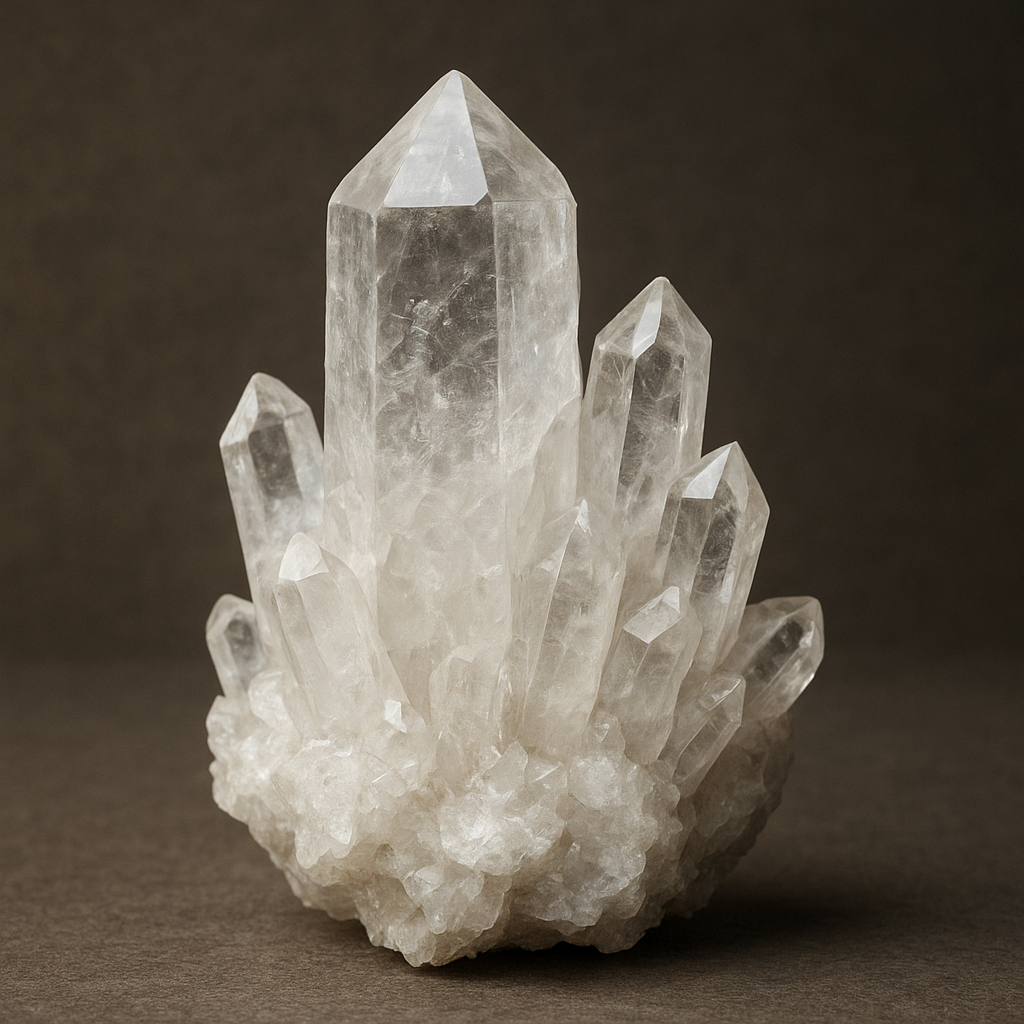
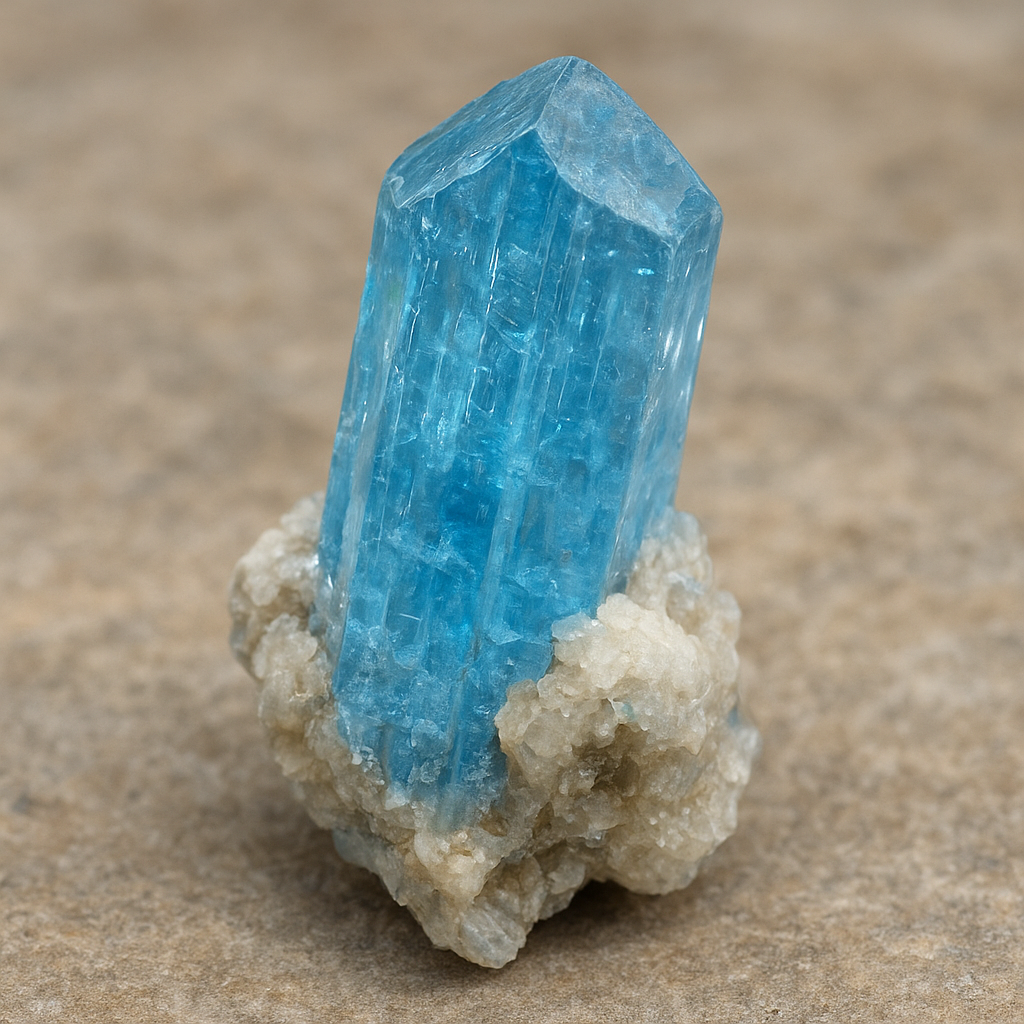
Typical crystals are prismatic and can be transparent to translucent, with glassy luster that makes small faceted stones especially attractive. Color is one of jeremejevite’s most appealing features: specimens appear in a range that includes colorless, pale yellow, pale brown, light green and the much sought-after pale to medium sky blue. The blue hue is often the most desirable for gem use, but even colorless and pale-yellow crystals are valued for their translucency and crystal form. Some specimens show zoning, subtle color banding or partial alteration surfaces that add character.
Hardness, density and optical properties
Jeremejevite is moderately hard — hard enough to be cut as a gemstone but not as durable as corundum or diamond. Its Mohs hardness typically falls in the intermediate range, which means it can be worn in jewelry with care but can be scratched by harder materials. Specific gravity is above average for light-colored silicates and borates, giving jeremejevite a satisfying heft in hand. Optically, jeremejevite can show weak to moderate pleochroism — a change in color when viewed from different angles of a faceted stone — and transparent crystals often exhibit high clarity that enhances brilliance when expertly cut.
Where jeremejevite occurs: classic and modern localities
Jeremejevite forms in specialized geological settings, typically associated with late-stage granitic pegmatites and with albitized host rocks or hydrothermal alteration zones where boron and fluoride are concentrated. Its restricted geochemical requirements mean occurrences are scattered and generally small, but several notable localities are documented worldwide.
- Russia — The mineral was first described from deposits in the Russian Empire, and Russian localities remain important historically. Pegmatites and vein systems in certain Siberian and eastern districts produced the earliest known specimens.
- Namibia — The Erongo Mountains and nearby areas have yielded some of the finest and most famous jeremejevite crystals, including attractive pale blue gem material. Namibian material helped elevate the mineral’s profile among gem collectors during the late 20th century.
- Madagascar — Several pegmatite fields in Madagascar are known to produce gem-quality jeremejevite; the island’s complex pegmatitic systems frequently supply rare borosilicate and borate minerals, and jeremejevite fits that pattern.
- Other occurrences — Smaller finds have been reported from parts of Europe, Africa, South America and Asia where pegmatitic activity or hydrothermal alteration created pockets of boron and fluorine enrichment. These finds are often limited to museum-sized specimens rather than commercial gem production.
Because jeremejevite’s formation depends on particular fluid chemistries — especially the presence of boron and fluoride in late-stage pegmatite fluids — new finds are usually unexpected and localized. Explorers and mineralogists prospecting in fertile pegmatite districts sometimes encounter jeremejevite as a surprise association with more common pegmatite minerals such as tourmaline, topaz, quartz and albite.
Uses and value: gemstones, specimens and research
The primary uses for jeremejevite are as a collector’s mineral and, when quality permits, as a gemstone. Commercial or industrial uses are essentially nonexistent because there is no large-scale source or unique industrial property that would justify broader exploitation.
Gemstone use
Faceted jeremejevite stones are rare but highly prized. When cut, transparent crystals can display attractive brilliance and delicate color, particularly the sought-after pale blue stones. Because gem-quality crystals are scarce, prices for faceted stones can be high relative to their size. Jewelry containing jeremejevite is usually custom-made and marketed toward collectors or clients seeking a rare, conversation-starting gem. Gem cutters need to account for the crystal’s moderate hardness and possible cleavage or parting, so expert lapidary work is essential to maximize beauty and avoid breakage.
Specimens and museum pieces
Fine, well-formed crystals — complete with sharp terminations and minimal damage — command attention in mineral exhibitions and fetch premium prices among serious collectors. Because jeremejevite crystals can form attractive clusters or singly terminated prisms, they photograph well and add rarity to any display. Museum specimens often come from the classic localities and are prized not only for rarity but for scientific interest.
Research and scientific interest
From a scientific perspective, jeremejevite contributes to understanding borate mineralogy, late-stage pegmatite evolution and fluid chemistry in granitic systems. Studies of jeremejevite’s structure and trace-element composition can shed light on the role of fluoride and boron in crystal growth, stability fields and the partitioning of elements during pegmatite differentiation. Because it incorporates boron in an aluminum framework, jeremejevite is also relevant to petrologists studying boron transport and deposition.
Cutting, treatments and gemological identification
Because natural treatments such as heating or irradiation are common for many gem species, gemologists ask whether jeremejevite is subject to enhancements. The reality is that because jeremejevite is so rare, there is little commercial incentive to treat it extensively — most gem-quality jeremejevite is sold untreated. Heat treatment could alter color or clarity but is not a recognized or widely practiced enhancement for jeremejevite. Consequently, natural, untreated stones are the market norm and are considered more desirable.
Identification
Gemological identification relies on a suite of tests because jeremejevite’s colors can superficially resemble other light-blue gems. Key diagnostic properties include crystal habit, refractive behavior, pleochroism, and reaction to standard gem tests. Experienced gemologists use microscopy to study inclusions and growth patterns, and they may apply spectroscopic methods to confirm boron-related absorption features. Because jeremejevite is not routinely synthesized, the presence of natural growth zoning, specific inclusion types and typical optical properties helps confirm authenticity.
Similar minerals and distinguishing features
A few minerals might resemble jeremejevite in hand specimen or faceted form — notably certain beryls (light blue aquamarine), tourmalines, and lesser-known borates. What distinguishes jeremejevite are its crystal habit in uncut samples and its specific combination of boron, aluminum and fluoride in chemical analysis. In the gem trade, careful measurement of refractive index, specific gravity and pleochroic character, combined with microscopic study, prevents misidentification. For collectors, provenance and credible documentation from reputable dealers or dealers’ laboratories add confidence.
Field occurrence, formation processes and paragenesis
Jeremejevite typically forms during the late stages of crystallization of granitic pegmatites, when volatile-rich fluids become concentrated in incompatible elements like boron and fluorine. In these late fluids, unusual borate phases can nucleate and grow in pockets and cavities where temperature and chemistry favor their stability. The presence of albitization — sodium-rich alteration of feldspars — often accompanies jeremejevite and related borate minerals, signaling late-stage fluid circulation and metasomatic alteration.
Paragenetically, jeremejevite is frequently associated with other late pegmatite minerals: albite, quartz, tourmaline, topaz, and sometimes fluorapatite and unique borosilicates. Geochemically, its formation indicates a local enrichment in boron and a supply of fluoride; the balance between fluoride and hydroxyl in the structure can reflect the fluid’s composition and the temperature-pressure conditions during growth.
Collecting, care and market considerations
For collectors seeking jeremejevite, provenance and documentation are essential. Given its rarity, frauds and mislabeling are possible — especially when small faceted stones can be mistaken for more common gems. Buying from reputable dealers, obtaining laboratory reports for significant purchases, and requesting photographs of specimens in situ (if available) are prudent practices.
- Care: Avoid knocks, harsh chemicals and ultrasonic cleaners for faceted jeremejevite; gentle cleaning with warm water and mild soap is recommended.
- Setting: Jewelry settings that protect the stone’s edges and prevent abrasion are preferred for wearer comfort and stone safety.
- Insurance: Valuable jeremejevite stones and specimens should be insured and documented with professional appraisals.
Interesting facets and cultural context
Beyond its mineralogical attributes, jeremejevite has interesting cultural and market dimensions. Because of its scarcity, owning a fine jeremejevite specimen often confers status among collectors and gem enthusiasts. The mineral’s association with exotic localities like Namibia and Madagascar adds to its mystique, and its inclusion in museum exhibits helps educate the public about the diversity of borate chemistry in nature.
In a more speculative vein, jeremejevite’s aesthetic qualities — pale blues and light yellows — resonate with modern tastes for understated, subtle-colored gems distinct from more common bright-colored stones. This aesthetic appeal, combined with real rarity, places jeremejevite in a niche market where aesthetics and scarcity combine to drive value.
Research directions and unanswered questions
Although jeremejevite is well-characterized at a basic level, there are ongoing scientific questions and research angles. Mineralogists remain interested in the precise thermodynamic conditions of formation, the role of trace elements in coloring and stabilizing particular crystal faces, and the full extent of potential localities that might yield new material. Geochemists study jeremejevite as part of larger efforts to understand boron transport in the crust, while crystallographers examine its structural relationships with related borates.
Exploration-minded geologists also note that because jeremejevite signals specific geochemical environments, its presence — even in minute amounts — could indicate the nearby occurrence of other rare borate or fluoride minerals. This has implications for targeted fieldwork and for constructing more complete paragenetic models of pegmatite evolution.
Final observations
Jeremejevite occupies a special place among rare minerals: scientifically interesting, aesthetically pleasing and so scarce that each fine specimen tells a story of unique geologic circumstances. Whether admired for its glassy prisms, sought as a rare cut stone, or studied for what it reveals about boron-rich fluids in pegmatites, jeremejevite remains a mineralogical gem in more than one sense.