Jade is one of the most admired and enigmatic minerals in human history, prized equally for its physical resilience and its deep cultural resonance. This article explores the stone’s geology, global distribution, traditional and contemporary uses, the science of identification and treatment, and the social and ethical issues surrounding its extraction and trade. Along the way we will encounter famous artifacts, modern applications, and the reasons why jade has endured as a symbol of status, spirituality, and artisanal mastery across continents.
Geology and the Two Jades: What Makes the Stone Special
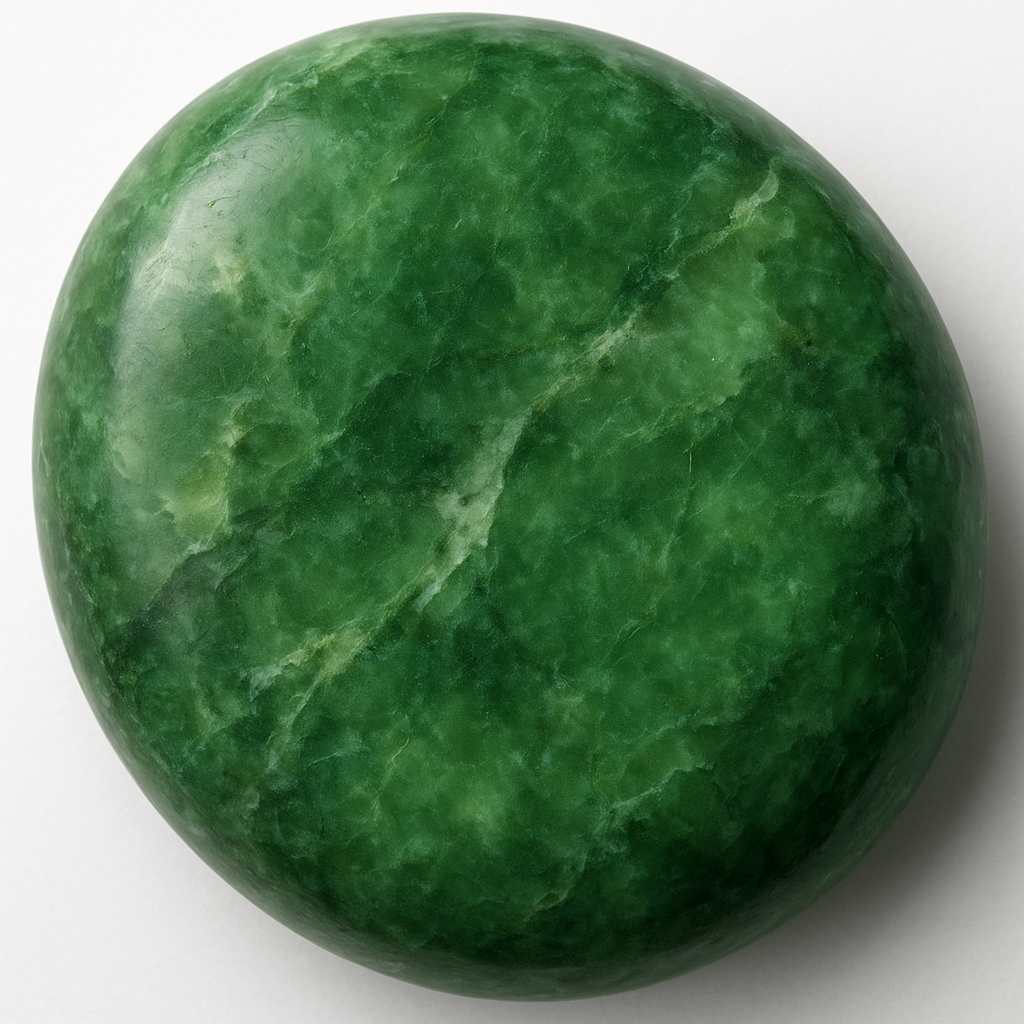
What the world commonly calls jade actually refers to two distinct mineral families: nephrite and jadeite. Both are tough, fine-grained rocks that resist breaking and can be polished to a lustrous finish, but their chemical composition and geological origins differ. Nephrite is a calcium-magnesium-rich amphibole (actinolite-tremolite series) while jadeite is a sodium-aluminum pyroxene. The difference in mineralogy results in slightly different physical properties: nephrite is often tougher and more fibrous, while jadeite can display a broader range of colors and higher values in the gem market when highly translucent and vividly colored.
Key properties of both varieties include remarkable toughness (resistance to fracture), fine microcrystalline texture, and the ability to take a high polish. These features made jade ideal for both functional tools and decorative objects in many pre-industrial societies.
Where Jade Occurs: Major Deposits Around the World
Natural occurrences of jade are associated with specific geological settings, typically high-pressure metamorphic environments and certain subduction-zone conditions where fluids and pressure create jadeite or nephrite bodies. Important sources and notable facts include:
- Myanmar (formerly Burma) — The most famous and historically significant source of gem-quality jadeite, especially the highly prized imperial green material. Large-scale mining has occurred in the Kachin State for centuries, and the finest stones often command the highest prices on the international market.
- Guatemala — A key pre-Columbian source of jade used by the Olmec and Maya. Guatemalan jadeite often exhibits rich green and blue-green hues and played a central role in Mesoamerican ritual and status.
- China — While China historically used mostly nephrite, abundant deposits exist in regions like Xinjiang, Liaoning, and the famous ancient sources in the Kunlun and Hetian (Hotan) areas of Xinjiang. Chinese nephrite has been central to Chinese art and ritual for millennia.
- British Columbia, Canada — An important modern source of nephrite, producing large quantities of dark green to blackish material often used for carvings and jewelry.
- New Zealand — The Maori value their nephrite jade, called pounamu or greenstone, which is culturally significant and protected by local law. Pounamu is used for tools, ornaments, and as taonga (treasured items).
- Russia (Siberia), Kazakhstan, Taiwan, and parts of Central America — Also yield jade, though often of different qualities and quantities.
Historical and Cultural Significance
Across many cultures, jade has been more than a decorative stone; it has been a material of social and spiritual power. In ancient China, nephrite was associated with moral virtues such as benevolence, wisdom, and purity. Confucius famously compared the qualities of jade to human virtues. Stone axes, ritual blades, burial objects, and intricately carved pendants (bi discs, cong tubes) illustrate its many roles.
In Mesoamerica, civilizations such as the Olmec, Maya, and Aztec used jadeite in masks, beads, and ritual offerings. Jade objects were associated with life, fertility, and the wind; they often accompanied elite burials. In New Zealand, Maori carvings and adzes made of pounamu carried ancestral and spiritual significance; items were passed down as family heirlooms and were believed to contain mana (spiritual force).
Religious and imperial symbolism also elevated jade in many contexts. Buddhist iconography sometimes used jade for small Buddha images and ritual implements. Emperors and nobles across Asia used jade to mark status, with specific colors and translucency prized as indications of rank.
Uses, Techniques, and Artistic Traditions
Traditionally, artisans exploited jade’s toughness by using abrasive techniques rather than chisel-and-hammer methods suited to brittle stones. Carving requires patience, specialized tools (diamond or carborundum abrasives in modern workshops), and deep knowledge of grain and flaws. The result can be exquisitely thin, translucent forms or massive, highly polished objects.
- Functional items: Early peoples fashioned axes, knives, and ornaments from nephrite because its durability made it suitable for edge tools.
- Ritual and ceremonial objects: Discs, masks, and amulets were crafted with iconography and motifs relevant to the culture.
- Fine jewelry: Pendants, beads, cabochons, and inlays, often set in precious metals to emphasize the stone’s color and translucency.
- Decorative carvings and sculptures: From small seals to large sculptures and architectural elements, jade continues to be used by contemporary artists.
- Cosmetic and wellness items: Modern trends have popularized jade rollers and gua sha tools, typically made of common varieties of the stone or other green minerals, marketed for skincare and massage purposes.
Grading, Identification, and Treatments
Understanding jade’s value requires knowledge of color, translucency, texture, and craftsmanship. Highly translucent, vivid-green jadeite (often called imperial jade) is among the most valuable gemstones, while opaque, darker nephrite is prized more for carving than gem-setting. Modern gemology uses many tests to distinguish jadeite from nephrite and to detect treatments:
- Spectrum and refractive index testing — Different minerals give distinct readings; jadeite and nephrite can be differentiated by their refractive index ranges and specific gravity.
- Microscopy — Reveals microstructure. Nephrite typically shows fibrous, interwoven texture, while jadeite has granular, sugary microcrystalline texture.
- Infrared and Raman spectroscopy — Identify mineral composition and detect polymer impregnation or dyeing.
- UV fluorescence — Some treated or dyed materials fluoresce differently under longwave or shortwave UV light.
- X-ray and electron microprobe — Used in advanced labs to determine precise mineral chemistry.
Because raw jade is increasingly valuable, treatments and imitations have proliferated. Common practices include dyeing, bleaching, and polymer impregnation to improve color and durability. Glass-filled imitations and entirely different green stones (serpentine, chrysoprase, aventurine) are sometimes sold as jade. Reputable appraisal and certification from recognized gemological laboratories are essential for high-value purchases.
Mining, Trade, and Ethical Considerations
Large-scale jade mining—especially the jadeite mines of northern Myanmar—has significant social, environmental, and political implications. Mining can generate substantial revenue but has also been linked to environmental degradation, unsafe working conditions, and conflicts over land and profits. Consumers and institutions increasingly ask questions about provenance, fair labor practices, and ecological restoration.
Efforts to improve transparency include chain-of-custody initiatives, government regulations on export and sales, and artisanal mining programs aimed at reducing harm and increasing community benefits. For cultural heritage, some Indigenous communities have legal protections over certain jade sources (as in New Zealand’s regulations for pounamu), reinforcing the cultural and spiritual value of the stone beyond commerce.
Famous Artifacts and Iconic Examples
Throughout history, jade has been used to create objects that now sit in national museums and private collections. A few notable examples:
- Chinese imperial carvings — Bi discs, cong, and intricately carved ornaments found in royal tombs and archaeological sites illustrate millennia of craftsmanship.
- Mesoamerican masks and ritual objects — Olmec and Maya jade masks displayed in museums reveal ancient lapidary skill and religious significance.
- New Zealand hei tiki — Small neck pendants carved from pounamu that remain powerful family heirlooms and symbols of identity.
- 20th-century masterpieces — Large, single-stone carvings and modern sculpture pieces have been commissioned by collectors and public institutions, demonstrating contemporary applications of traditional techniques.
Contemporary Market, Collecting, and Care
The modern market for jade is complex. High-end jadeite from Myanmar sells like fine art at auctions, while lower-grade nephrite supplies the mass market for jewelry and souvenirs. Collectors focus on quality factors: color intensity and uniformity, translucency, texture, and the skill of the carving. Provenance and certification are increasingly critical for high-value stones.
To care for jade objects, avoid harsh chemicals and extreme temperature changes. Clean gently with warm water and a soft cloth; for intricately carved pieces, use a soft brush. Polishing by amateurs is discouraged for valuable items because improper techniques can remove surface character and reduce value. Many collectors also follow cultural protocols—such as treating certain carved items as taonga (treasures)—that guide storage, handling, and display.
Science, Symbolism, and Modern Inspiration
Beyond aesthetics, jade continues to inspire scientific and artistic exploration. Mineralogists study its formation in subduction zones to better understand tectonic processes. Conservation scientists develop non-destructive methods to analyze and date carved pieces. Artists and designers reinterpret jade’s textures, colors, and cultural meanings in new media, blending traditional lapidary techniques with modern tools like lasers and CAD-guided cutting.
Symbolically, jade retains a global resonance: it remains a material of protection and prestige, a medium for storytelling and lineage, and an example of how geology intersects with human culture. Contemporary designers and jewelers often reference historical motifs while pushing the boundaries of form, scale, and application.
Practical Tips for Buyers and Enthusiasts
- When purchasing high-value jade, seek documentation from recognized gemological laboratories. Certificates will indicate whether a piece is natural, treated, or an imitation.
- Learn basic visual cues: high translucency and rich color in jadeite often indicate value; even texture and absence of fractures improve desirability.
- Respect cultural contexts: Some jade forms are sacred or carry cultural rights; buying through ethical channels supports source communities and cultural heritage.
- Explore contemporary and historical collections—museums and specialist galleries provide insight into technique, form, and regional variations.
- For skincare tools marketed as jade, verify the material. Many rollers are made from other green stones; authenticity matters mainly for collectors rather than for the tool’s massage function.
Techniques of Carving and the Art of the Lapidary
Mastery of jade carving blends an understanding of stone structure with patient technique. Traditional lapidaries used abrasive threads, silicon carbide, and water-driven tools to slowly shape and polish. Modern studios rely on diamond-tipped tools and rotary systems that allow finer detail while preserving integrity. Knowledge of grain direction, inclusions, and color zoning is critical: carving against the grain can cause cracking; following the grain allows the creation of delicate, translucent features.
Carvers also manage the relationship between form and surface finish. A satin matte face can emphasize texture, while a glassy polish enhances color and translucency. The most revered pieces balance technical difficulty with expressive design, creating forms that would be impossible in harder or more brittle materials.