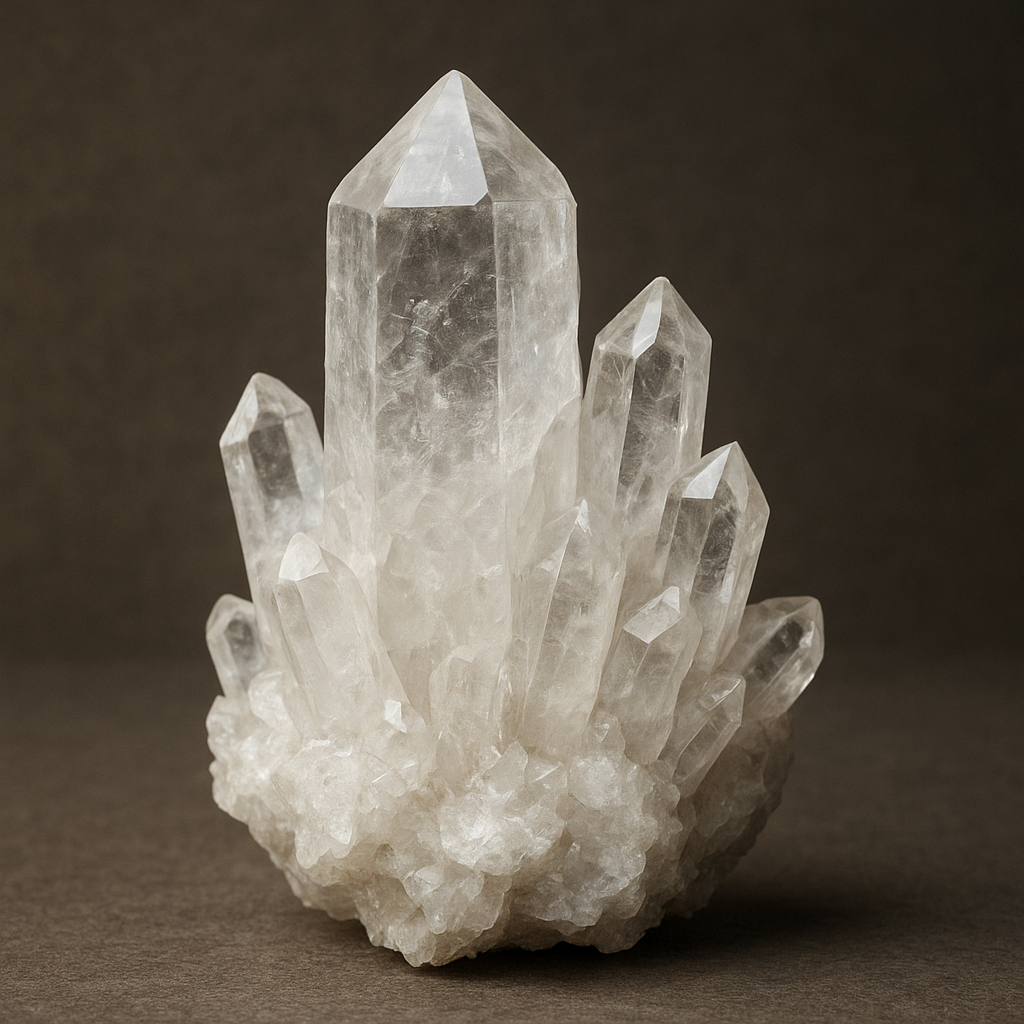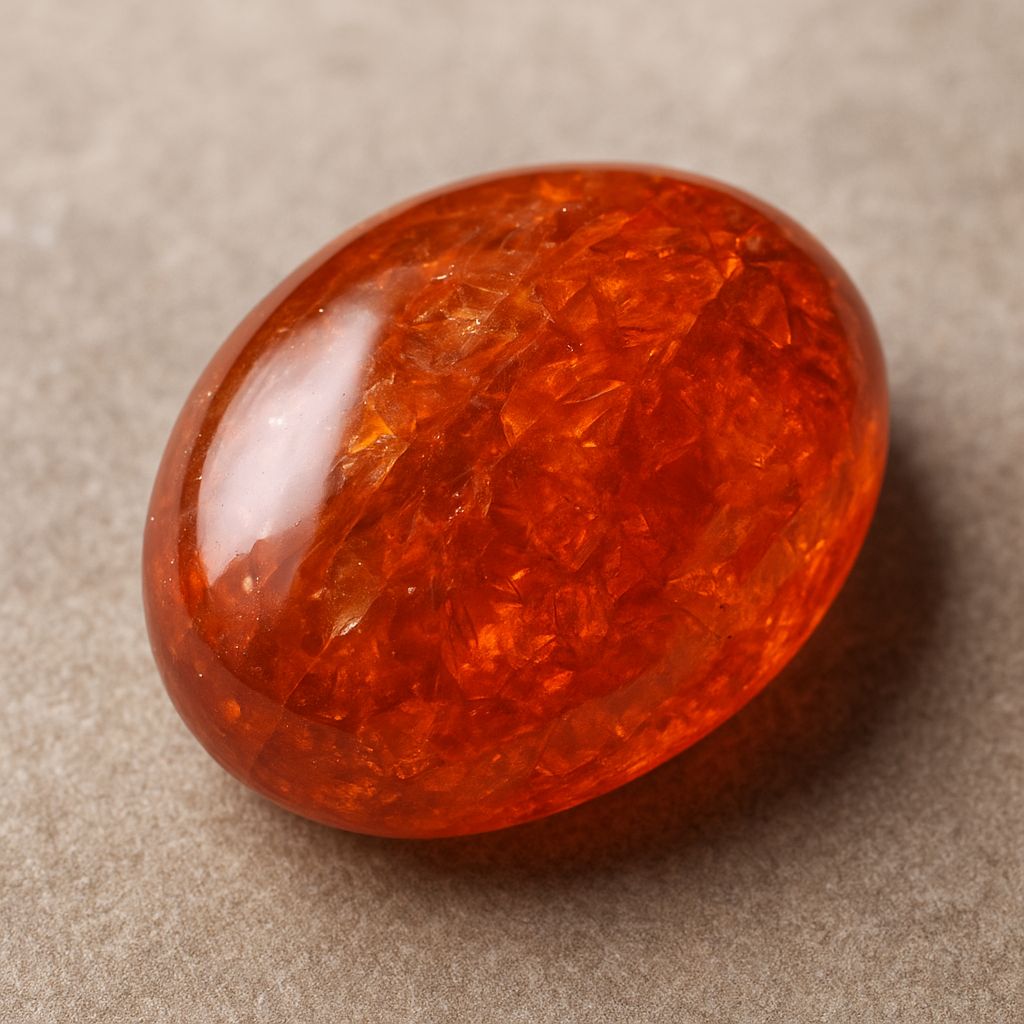
The name jacinth evokes images of warm, fiery color and ancient lore. In gemology the word most commonly refers to a reddish-orange variety of the mineral zircon, prized for its brilliance and historical resonance. This article explores the mineralogical nature of jacinth, where it forms and is mined, its uses in jewelry and industry, methods for identifying and treating it, and the cultural and scientific topics that make it an enduring subject of interest.
Geology, Formation and Natural Occurrence
At its core, jacinth is a variety of the mineral zircon (ZrSiO4). Zircon crystallizes in tetragonal prismatic forms and is chemically a zirconium silicate with possible trace impurities such as iron, uranium and thorium that may influence color and structural integrity. While many people associate zircon with the modern synthetic substitute cubic zirconia, natural zircon is a distinct mineral with unique optical and physical properties.
Where jacinth is found
Deposits yielding gem-quality jacinth are widely distributed but commercially significant sources include:
- Sri Lanka — famous for a long history of gem mining and some of the finest zircons, including richly colored jacinths.
- Myanmar (Burma) — known for a variety of gem minerals, including zircon of strong colors.
- Cambodia and Vietnam — hosts of alluvial and primary deposits producing attractive zircons.
- Madagascar and Tanzania — contributors to modern gem markets with both gem and near-gem zircons.
- Australia and parts of the United States — occur but are less prominent in the gem trade for jacinth.
Jacinth commonly occurs in placer deposits — concentrations of dense, resistant minerals left behind by erosion — and sometimes in metamorphic or igneous host rocks. Because zircon is exceptionally resistant to weathering, it accumulates in sediments leading to pockets of gem-grade material. Trace amounts of radioactive elements such as uranium and thorium may become incorporated into the crystal lattice over geological time, sometimes producing structural damage known as metamictization that affects clarity and stability.
Gemological Properties and Identification
Identifying jacinth requires attention to several measurable and observable properties. Unlike many gemstones, natural zircon is strongly birefringent and has a high dispersion, which can give it a lively fire when properly cut. Common gemological characteristics include:
- Refractive index: Zircon has a relatively high refractive index (typically around refractive index n≈1.92–2.01 for zircon), contributing to its brilliance.
- Birefringence: A strong double refraction is one of zircon’s diagnostic traits; the apparent doubling of back facets under magnification can distinguish it from singly refractive stones.
- Specific gravity: High density (about 4.6–4.7) makes zircon heavier than similarly sized quartz or topaz.
- Hardness: Mohs hardness ranges roughly from 6.5 to 7.5; hard enough for many types of jewelry but not as resistant as sapphire or diamond.
- Pleochroism: Some jacinths show weak pleochroism (color changes when viewed along different crystallographic axes).
- Luminescence: Under ultraviolet light, zircon sometimes fluoresces, aiding identification when combined with other tests.
Gemological labs often use refractometers, polariscope, spectrometers and microscopy to identify jacinth and separate it from lookalikes. It can be confused with garnet varieties (such as hessonite), tourmaline, or certain topazes by untrained observers, but careful testing reveals its birefringence and other diagnostic traits.
Treatments, Color Origins and Stability
The colors of jacinth — typically warm tones from orange to red-brown — arise from trace impurities and, in some cases, defects within the crystal structure. Heat treatment is a common practice to enhance or change colors in zircon. Two major points are important:
- Many brown or yellowish zircons can be heated to produce attractive blue colors. This process is widely practiced for blue zircon but is less common specifically for jacinth because the warm hues themselves are desirable.
- Because zircon may contain radioactive elements, its crystal structure can suffer metamictization over time. Heat treatment can sometimes partially recrystallize damaged zircons, improving transparency and color, but high temperatures require careful control to avoid fracturing.
Care: despite reasonable hardness, zircon can be brittle and sensitive to sudden temperature changes. Elevated heat used in repair (soldering) near mounted stones should be managed to avoid altering color or causing cracking. Avoid steam and ultrasonic cleaners for weaker, fracture-prone stones or those with fissure fillings.
Uses in Jewelry and Design
Jacinth has long been used as a faceted stone in rings, pendants and earrings. Its lively brilliance and warm tones make it an attractive alternative to rarer red gemstones. Typical applications and considerations:
- Center stones in rings and pendants — when properly protected in settings they make striking focal pieces.
- Accent stones — smaller jacinths can complement diamonds or colored gems in cluster settings.
- Antique and period jewelry — jacinth appears often in Victorian and earlier pieces where warm red-orange stones were fashionable.
Because jewelry usage must balance beauty and durability, cutters and designers tend to protect larger stones with bezel or halo settings and educate buyers about care. The stone’s refractive brilliance makes it particularly effective when cut to maximize light return; step cuts can show color while brilliant cuts emphasize fire.
Historical, Cultural and Symbolic Aspects
Jacinth carries significant historical weight. The stone appears in ancient texts and religious writings — for example, classical translations and interpretations of certain biblical passages mention a stone called “jacinth” or “hyacinth” as one of the foundation gems in visionary descriptions. The etymology connects to classical names and sometimes to the flower hyacinth, though meanings shifted across languages and eras.
Beyond scripture, the warm hue of jacinth linked it to symbolic themes:
- Protection and vitality: In some traditions, red and orange gems were believed to bolster life force and shield wearers.
- Regalia and status: Richly colored gemstones often signified rank and wealth in monarchic societies.
- Art and color nomenclature: The term jacinth has also influenced color names in literature and art, denoting a specific reddish-orange shade.
Modern metaphysical practitioners sometimes attribute healing or energetic properties to jacinth (comparable to other red stones), though these claims remain outside scientific validation.
Industrial Connections and the Broader Zircon Family
It is important to distinguish between gem-quality zircon (including jacinth) and zircon’s wider industrial relevance. The mineral is a principal natural source of the element zirconium, used in high-tech applications:
- Zirconium metal and alloys serve in nuclear reactor cladding, chemical processing equipment and corrosion-resistant parts.
- Zirconia (zirconium dioxide, ZrO2) is used in advanced ceramics, dental crowns and thermal barrier coatings. Synthetic cubic zirconia (CZ) is a separate, lab-made material often used as a diamond simulant, not the same as natural zircon.
- While gem-quality deposits are often mined selectively, bulk zircon sand is mined for industrial feedstocks in places such as Australia and South Africa.
Thus a discussion of jacinth sits at the intersection of gemology and materials science: one side celebrates history, color and cut; the other examines zircon minerals as sources of economically vital elements.
Market, Valuation and Ethical Considerations
Valuing jacinth relies on the common criteria for colored gemstones: color, clarity, cut and carat weight. Ideal jacinth showcases saturated, even color without excessive brown tones, good clarity, and a cut that maximizes brilliance. Prices vary widely; high-quality historic or untreated stones command premiums, while heat-treated or heavily included pieces are less valuable.
Ethical considerations mirror those across the gem trade. Responsible sourcing involves:
- Transparency about origin and treatments — reputable dealers disclose heat treatments and enhancements.
- Mining impacts — alluvial mining can be low-impact but poor practices lead to erosion, sedimentation and community disruption.
- Traceability initiatives — some suppliers and cutting centers maintain chain-of-custody documentation to ensure legal and ethical sourcing.
Buyers who value ethical sourcing should inquire about origin certificates, laboratory reports and the policies of retailers and cutters.
Cutting, Care and Practical Advice
Cutters working with jacinth aim to balance color saturation and brilliance while avoiding loss of weight. Because of the strong birefringence and dispersion, certain faceting styles bring out the stone’s fire more dramatically.
- Setting: choose protective bezels or secure prongs for rings and bracelets where impact is likely.
- Cleaning: mild soap and water with a soft brush is safest; avoid high heat and rough ultrasonic cleaning for stones with fractures or fillings.
- Insurance and maintenance: high-value pieces benefit from periodic inspection and professional cleaning under controlled conditions.
Collectors often favor stones with documented untreated provenance. Lab grading reports can clarify whether color enhancements such as heating or irradiation have been applied.
Scientific and Collecting Curiosities
Beyond jewelry, jacinth and zircon have intrigued scientists and collectors for reasons such as:
- Age dating: Zircon crystals often retain uranium and thorium, enabling U-Pb radiometric dating. Some of the oldest known terrestrial minerals are zircons, which provide key insights into Earth’s early crustal formation.
- Metamict structures: The radiation damage phenomenon in zircons fascinates mineralogists studying crystal lattice recovery and annealing processes.
- Optical phenomena: The combination of dispersion and birefringence makes zircon a rich subject for optical modeling and gemological education.
Collectors prize distinct, well-formed crystals and historical pieces. Museum specimens that combine exceptional color with interesting inclusions or provenance can be both beautiful and scientifically informative.
Interesting Anecdotes and Cultural Notes
Several anecdotes and lesser-known facts add color to the story of jacinth:
- The term jacinth has shifted across centuries between references to different red-orange gems; older texts sometimes applied it to stones that modern gemology would classify differently.
- Because of its color range, jacinth has sometimes been substituted or confused with garnet in antique jewelry, leading to detective work by gemologists and conservators.
- In literature and heraldry, the warm tone of jacinth has been used metaphorically to evoke sunset, courage, or sacred light, reflecting the stone’s strong visual impression.
For anyone intrigued by minerals that bridge ancient symbolism and modern science, jacinth offers a compelling study: visually striking, materially significant and historically layered.