
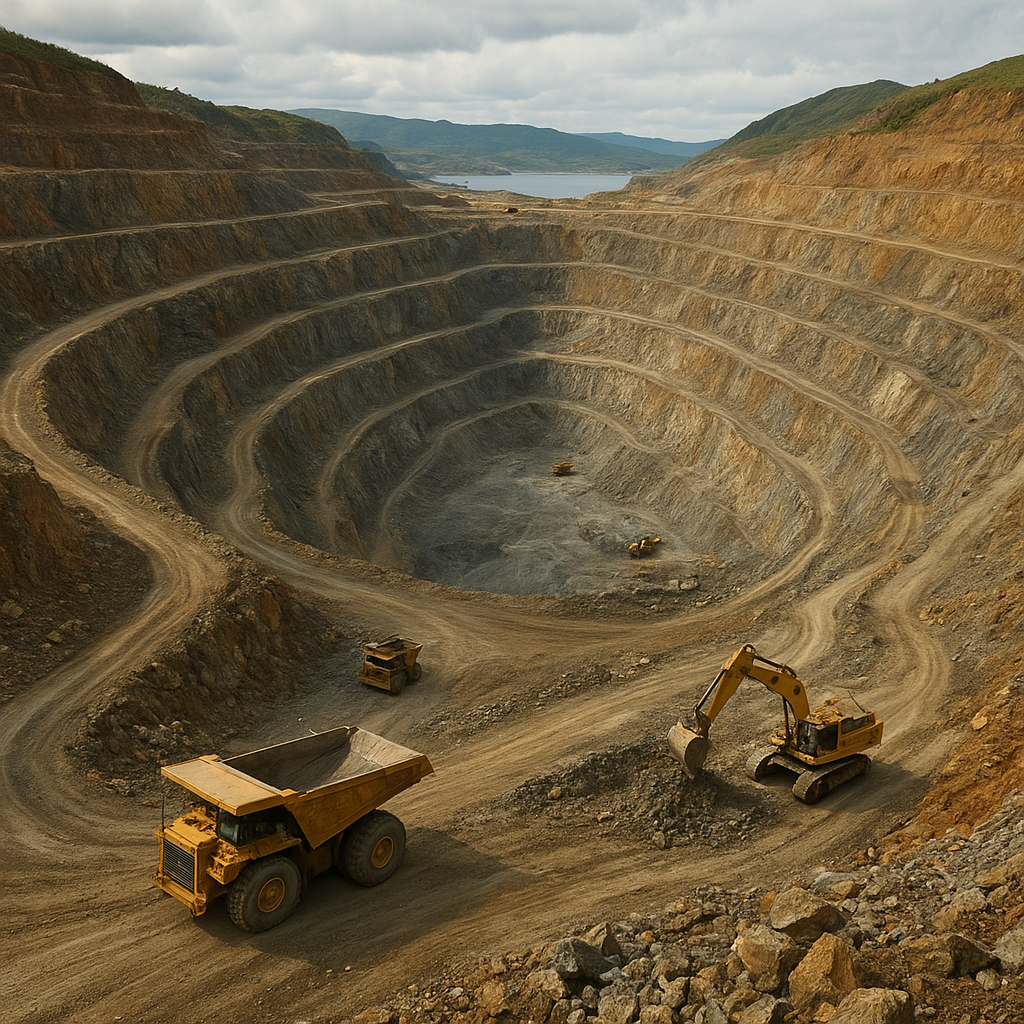
The Island Gold Mine is one of the notable modern gold operations in Canada. Situated in the mineral-rich landscape of Ontario, it exemplifies the interplay between high-grade geology, careful underground mining engineering, and significant regional economic contribution. This article describes where the mine is located, what is extracted there, the economic importance of the operation, and a selection of technical and human-interest features that make Island Gold compelling within the contemporary mining world.
Location and geological setting
The Island Gold Mine is located in Ontario, Canada, within a highly prospective portion of the Canadian Shield. The property sits inside one of the country’s most productive greenstone belts — part of the larger geological province that has hosted generations of mining activity. That regional context places Island Gold among a series of deposits characterized by structurally controlled, high-value mineralization.
Regional geology
The mine occupies rock units typical of Archean greenstone belts: metavolcanic sequences, interlayered sedimentary rocks, and various intrusive bodies. Mineralization is commonly associated with quartz veins, sulphide-rich veining and structural corridors where fluids concentrated and deposited gold. In such environments, ore tends to occur in relatively narrow, high-grade shoots rather than broad, low-grade disseminations. This geology supports selective underground mining approaches that prioritize extraction of concentrated mineralized zones.
Local setting and access
Access to the Island Gold Mine combines road infrastructure with site-specific portals and shafts. Modern mines in this region balance operational accessibility with the need to manage environmental impacts; roads and processing facilities are designed to minimize disturbance while maintaining year-round operations. The mine’s proximity to regional service centres allows for a steady supply of skilled labour, equipment maintenance, and logistical support.
What is extracted: mineralogy and production
As the name implies, the primary commodity produced at Island Gold is gold. The deposit is typically described as a high-grade, underground gold system where the metal occurs in quartz-hosted veins and adjacent altered rock. Gold at Island Gold is commonly accompanied by silver and variable amounts of sulphide minerals (pyrite, arsenopyrite), which can serve as indicator minerals during exploration and processing.
Mining methods
- Selective underground mining—because of the concentrated nature of the ore, operations favor methods that allow precise extraction of ore shoots while minimizing dilution.
- Mechanized drill-and-blast cycles and long-hole stoping—suitable where ore bodies are relatively continuous and accessible by development headings.
- Backfill systems—paste or cemented backfill is commonly used to fill mined-out voids, improving ground stability and enabling safe extraction of adjacent ore.
- On-site processing—milled ore is processed to recover gold, typically producing doré bars or concentrate for further refining. Processing circuits are optimized for high recovery from sulphide-associated gold.
Production profile and reserves
Island Gold is known for producing relatively high grades compared to many open-pit operations worldwide. High-grade underground mines like this can deliver substantial gold output per tonne mined, even if total tonnage is smaller than some bulk operations. The economic viability of the mine rests on both the inherent grade of the mineralization and an organized approach to continuous exploration and reserve conversion, extending mine life through systematic drilling programs.
Economic significance
The Island Gold Mine contributes to local and provincial economies in several concrete ways. Mining operations of this type produce direct employment, create demand for local services and suppliers, generate tax revenue and royalties, and often foster broader industrial development through the procurement of goods and infrastructure improvements.
Employment and local business
A modern underground operation employs a diverse workforce: miners, geologists, engineers, electricians, mill operators, environmental specialists, and administrative personnel. Many positions are filled by workers from nearby towns and First Nations communities, with contractors providing specialized services. Indirect job creation amplifies the mine’s economic footprint — suppliers, transportation firms, construction companies and local retailers all benefit from sustained operations.
Government revenue and royalties
Gold mining contributes to provincial coffers through corporate taxes, payroll taxes and mineral royalties. Those funds support public services such as healthcare, education and infrastructure. For many remote or rural municipalities, a major mine becomes a key pillar of the local tax base, enabling improved community facilities and programs.
Economic resilience and commodity exposure
Gold remains a globally traded commodity whose price can be volatile; nevertheless, gold’s enduring role as a store of value and hedge in investment portfolios supports long-term demand. High-grade mines like Island Gold can be particularly resilient because they generate significant margins when prices rise and can maintain viability at lower production volumes if costs are managed prudently.
Community relations, Indigenous partnerships, and social investment
Contemporary mining projects are expected to engage with local communities in meaningful ways. Island Gold’s operations reflect that shift: community engagement, employment programs, and long-term partnership agreements help align mining activities with local priorities. Many Canadian mines now negotiate impact-benefit or participation agreements with Indigenous communities, which can include training, employment, revenue-sharing, and environmental stewardship clauses.
Local procurement and capacity building
- Procurement policies often prioritize local and regional suppliers when feasible, boosting the economic multiplier effect.
- Workforce development programs — apprenticeships, training courses and scholarships — help build sustainable local capacity so community members can access skilled, well-paid jobs.
- Support for small businesses and community organizations contributes to social stability and improves quality of life in host towns.
Environmental management and sustainability
Environmental performance is central to the operation of modern mines. Island Gold implements a range of practices meant to minimize ecological impact, manage water use, treat effluent, and control emissions. Environmental monitoring, progressive reclamation, and rehabilitation planning are integral through the mine life and beyond.
Water and tailings management
Water stewardship is critical in northern environments. Mines are required to treat water to meet regulatory standards before discharge, and tailings facilities must be designed to ensure long-term stability. Many operations have adopted filtered tailings, paste backfill, or engineered storage solutions to reduce environmental risk and footprint.
Energy and emissions
Mining is energy intensive, so operators continually test strategies to reduce greenhouse gas emissions and increase energy efficiency. Electrification of underground fleets, optimized ventilation systems, and site energy management play roles in lowering carbon intensity, while corporate sustainability reporting increases transparency for stakeholders.
Technical and operational highlights
Island Gold demonstrates several technical features characteristic of successful modern underground gold mines.
High-grade focus and selective extraction
Because the deposit is concentrated into narrower, high-grade zones, the mine emphasizes selective extraction to maximize recovered ounces per tonne. This approach reduces waste rock handling and minimizes processing of low-grade material, improving overall project economics.
Continuous exploration and resource growth
One of the most valuable aspects of an operating mine is the ability to convert exploration success into mill feed and reserve extensions. Systematic drilling campaigns at and near the mine infrastructure can reveal new ore shoots at depth or along strike. Extending the life of mine through near-mine discoveries leverages existing infrastructure and yields a strong return on exploration investment.
Safety and workforce practices
Underground operations carry inherent hazards, so robust safety systems are a priority. Modern mines use comprehensive training, real-time monitoring, controlled ground support protocols and emergency response planning. Innovations such as remote-controlled equipment and enhanced communication networks bolster worker safety.
Interesting facts and lesser-known aspects
Beyond raw production statistics, several features make Island Gold notable.
- High-grade pockets: Some underground shoots at Island Gold have delivered grades well above regional averages, making the mine economically attractive even at relatively modest tonnages.
- Exploration upside: The structural complexity of the host rock means there are frequent targets for follow-up drilling. This offers the potential to add value through incremental reserve growth.
- Local stewardship: Operators often fund community initiatives — from education to health services — and run internship programs that create pathways into mining careers.
- Modern processing: On-site recovery circuits are optimized for sulphide-associated gold, maximizing recovery rates even for complex ores.
- Technological adoption: The mine integrates digital geology, fleet tracking and data-driven maintenance programs that improve reliability and reduce downtime.
Challenges and risk management
No mine operates without risk. Island Gold faces typical industry challenges such as fluctuating commodity prices, permitting and regulatory requirements, geotechnical unpredictability, and the need to maintain social license to operate in surrounding communities.
Managing price volatility
Because gold prices fluctuate, financial planning incorporates conservative assumptions, hedging strategies when appropriate, and programs to control operating costs. High-grade mines are sometimes better positioned to weather price downturns because each tonne mined yields more precious metal, improving margin resilience.
Geotechnical and operational risks
Working underground requires vigilant ground control, ventilation management and emergency preparedness. Continuous geotechnical assessment and adaptive mine planning help mitigate subsidence, rock burst and other rock mechanics-related risks.
Regulatory compliance
Mines in Canada operate under stringent environmental and workplace regulations. Maintaining up-to-date permits, completing baseline environmental studies and engaging with regulators and Indigenous groups are ongoing responsibilities.
Outlook and future potential
The long-term value of Island Gold rests on three pillars: continued discovery through exploration, efficient and safe extraction of high-grade ore, and strong community and environmental stewardship. If exploration success continues and market conditions remain favorable, the mine can extend its life and increase its annual production profile.
Exploration-driven growth
Most mines with nearby infrastructure prioritize near-mine exploration because the costs of extending mine life are lower than greenfield development. Targeting extensions down-plunge or along strike from known shoots often yields the highest probability of discovery and conversion to reserves.
Integration of innovation
As the industry adopts electrification, automation and better data analytics, operations like Island Gold will be able to further reduce costs, improve worker safety and lower environmental impacts. These innovations increase the competitiveness of underground gold operations in Canada and globally.
Conclusion
Island Gold Mine represents a modern, high-grade underground gold operation within Ontario’s rich mining landscape. Its significance spans geological interest, economic contribution and social engagement. By combining targeted mining methods, ongoing exploration and a commitment to environmental and community performance, the mine exemplifies how contemporary mining projects can deliver value while navigating the technical and social complexities of resource development.

