
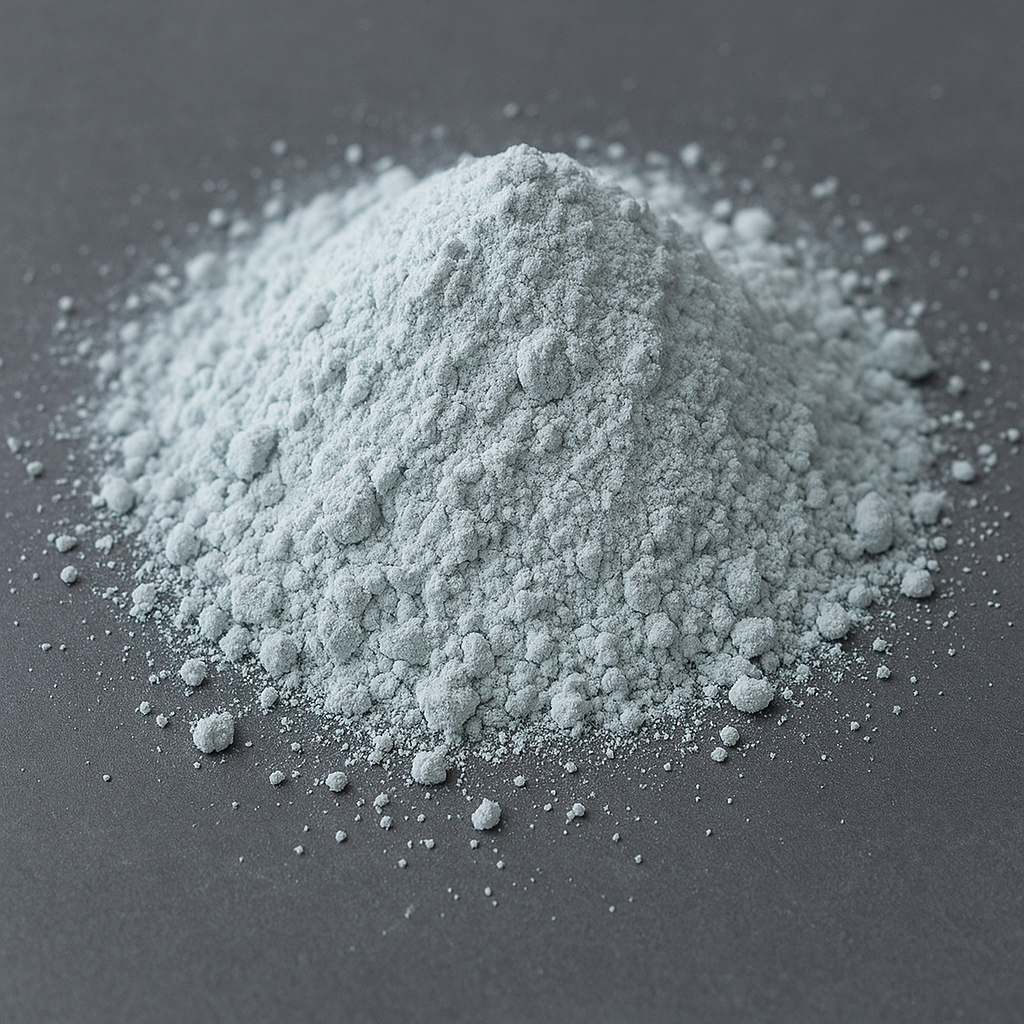
Indium tin oxide is a material that sits at the crossroads of **electronics**, **optics**, and **materials science**. Its unique combination of high electrical conductivity and optical transparency has made it indispensable in a wide variety of devices that shape modern life — from flat-panel displays to solar panels. This article explores what Indium Tin Oxide is, where it occurs and how it is produced, the principal methods used to deposit it as thin films, the many applications that depend on its properties, and the challenges and research directions that surround this strategic material.
What is Indium Tin Oxide: Composition and Fundamental Properties
Indium tin oxide, commonly abbreviated as ITO, is a ternary compound usually described as a solid solution of tin dioxide (SnO2) in indium oxide (In2O3). Typical commercial compositions contain roughly 90% indium oxide and 10% tin oxide by weight, though the tin content can range from about 5% to 15% depending on the targeted electrical and optical properties. ITO belongs to a broader class of materials known as transparent conductive oxides (TCOs).
Key physical and electronic characteristics that make ITO valuable include:
- Wide optical band gap: ITO’s band gap is in the range of approximately 3.5–4.3 eV, which means it is largely transparent to visible light.
- High carrier concentration: Due to oxygen vacancies and substitutional tin doping, ITO exhibits free-electron concentrations typically on the order of 10^20–10^21 cm^-3.
- Low resistivity: Well-deposited and annealed ITO films can achieve bulk resistivities around 10^-4 Ω·cm and sheet resistances from a few ohms/square to a few hundred ohms/square depending on thickness.
- High refractive index: The optical refractive index in the visible range is relatively high (around 1.9–2.2), which affects anti-reflection and optical stack design in devices.
- Work function: The work function of ITO commonly lies in the 4.6–4.9 eV range, an important parameter for electronic interface engineering, especially in organic electronics.
The electrical conductivity of ITO arises from substitutional doping (Sn4+ replacing In3+) and intrinsic defects such as oxygen vacancies that donate free electrons. This combination yields a material that conducts like a metal in terms of carrier density while remaining optically transparent across the visible spectrum — a balance that is difficult to achieve with other materials.
Occurrence, Extraction, and Production of Indium
Unlike elements such as silicon or iron, indium is not found in large, pure ore deposits. Instead, indium is a relatively rare, low-concentration element typically recovered as a byproduct from the processing of zinc, tin, and copper ores. The most common source is sphalerite (zinc sulfide), where indium substitutes into the crystal lattice at trace levels. Because indium is mainly a byproduct, its supply is tied to the production volumes of the host metals, making its availability and price susceptible to fluctuations in unrelated mining markets.
The typical steps in obtaining indium for ITO production are:
- Mining and concentration of base metal ores (e.g., zinc, tin, copper).
- Extraction of indium from leaching solutions produced during smelting and electrorefining, often through solvent extraction or ion exchange processes.
- Refining and conversion to metallic indium or indium oxide precursors suitable for target fabrication.
After refining, the oxide powders (In2O3 and SnO2) are combined to form sputtering targets, evaporation sources, or solution precursors for various deposition techniques. The global nature of indium supply, coupled with its limited natural abundance, has driven interest in recycling and substitution strategies.
Thin Film Deposition and Processing Techniques
ITO’s primary commercial form is as a thin film deposited onto glass, plastic, ceramic, or semiconductor substrates. The film thickness often ranges from a few tens to several hundred nanometers depending on the application. Several deposition methods are used, each with trade-offs in film quality, uniformity, deposition rate, and cost.
Sputtering
Sputter deposition, particularly radio-frequency (RF) and direct current (DC) magnetron sputtering, is the predominant industrial method for producing ITO films. A ceramic or metallic target of In-Sn oxide is bombarded with argon ions in a vacuum chamber, ejecting atoms that condense on the substrate. Benefits of sputtering include excellent uniformity, scalability to large-area substrates, and good control over stoichiometry. Process parameters such as target composition, substrate temperature, oxygen partial pressure, and sputtering power strongly influence film resistivity and transparency.
Pulsed Laser Deposition and Evaporation
Pulsed laser deposition (PLD) can produce high-quality crystalline films with excellent stoichiometric transfer from target to substrate, useful for research and high-performance optics. Thermal evaporation and electron-beam evaporation are also used, especially where equipment cost and simplicity matter, although they often require post-deposition annealing to improve film conductivity.
Solution Methods and Sol–Gel
For flexible substrates and lower-cost production, solution-based approaches such as sol–gel coating, spin coating, and chemical bath deposition are explored. These methods can be compatible with roll-to-roll manufacturing but typically yield films with higher resistivity unless carefully processed and annealed.
Post-deposition Treatments
Annealing (thermal or laser), plasma treatments, and hydrogen doping are commonly used to optimize film properties by repairing defects, promoting crystallinity, and adjusting carrier concentration. However, films on plastic substrates limit sintering temperatures, motivating low-temperature processing innovations.
Applications: Where ITO is Used and Why
ITO’s defining advantage — being both transparent and conductive — enables many technologies that require an electrically functional surface without obstructing light. Below are principal application areas and the role ITO plays in each.
- Flat-panel displays and touchscreens: ITO is the standard transparent electrode in LCDs, OLED displays, and capacitive touchscreens because it provides uniform, low-resistance electrical contacts over large areas while maintaining high optical clarity. Practical device performance requires sheet resistances often in the tens of ohms per square.
- Photovoltaics: Many thin-film and some silicon solar cells use ITO as a front contact or as part of a transparent electrode stack, particularly in building-integrated photovoltaics and thin-film architectures.
- Organic electronics: Organic light-emitting diodes (OLEDs), organic photovoltaics (OPVs), and organic thin-film transistors frequently employ ITO as the anode because of its suitable work function and transparency.
- Smart windows and electrochromic devices: ITO serves as an electrode in systems that modulate light transmission electrically, such as electrochromic glazing for energy-efficient buildings and adaptive optics.
- Heaters and defogging elements: Thin ITO coatings can act as transparent heaters on glass for defogging, de-icing, or anti-condensation applications.
- Sensors and biosensors: Because ITO can be microfabricated into electrodes and patterned with chemical functionality, it is widely used for electrochemical sensors, biosensors, and lab-on-chip devices.
- Electromagnetic shielding and antennas: In some niche applications, ITO layers provide lightweight, transparent EMI shielding or form transparent conductive patterns for antennas and transparent circuits.
Material and Device Engineering Considerations
Designers and engineers must balance a number of trade-offs when using ITO in devices:
- Conductivity versus transparency: Increasing film thickness or carrier concentration improves conductivity but can reduce optical transmittance or increase free-carrier absorption in the near-infrared. Optimizing film thickness (often 100–300 nm for display use) is essential.
- Adhesion and mechanical robustness: ITO can be brittle, especially on flexible polymer substrates, leading to cracking under bending. Strategies such as patterned metal grids, multilayer stacks, or hybrid coatings (e.g., silver nanowires plus ITO) mitigate this problem.
- Interface engineering: The work function and surface chemistry of ITO influence charge injection and collection in organic and hybrid devices; surface treatments (e.g., UV-ozone, plasma, self-assembled monolayers) are often applied to tune interface properties.
- Patterning: ITO films are patterned by photolithography and wet or dry etching to create electrodes and pixel lines. Laser scribing is another common method for rapid patterning in manufacturing.
Environmental, Economic, and Supply Challenges
A major non-technical issue for ITO is the limited and uneven global supply of indium. Because indium production depends on the mining and refining of other metals, the supply chain can be constrained, leading to price volatility and strategic concerns for manufacturers. These factors have motivated several responses:
- Efforts to recycle indium from end-of-life displays and photovoltaic modules to recover ITO material and targets.
- Development of alternative transparent conductors such as aluminum-doped zinc oxide (AZO), gallium-doped zinc oxide (GZO), silver nanowire networks, copper mesh, conductive polymers, graphene, and carbon nanotube films.
- Material optimization to reduce indium usage by making thinner films, using hybrid architectures (metal grids plus thin ITO), or improving deposition efficiency.
Each alternative brings trade-offs: AZO is attractive because of the abundant zinc supply, but it often suffers from lower stability and poorer conductivity under some processing conditions. Silver nanowires provide excellent flexibility and low sheet resistance but can have scattering issues and cost concerns for large-area use. Graphene and other emerging materials promise unique advantages but face manufacturing scale-up challenges.
Research Directions and Emerging Trends
Research on ITO and transparent conductors extends across materials synthesis, device integration, and sustainability. Key areas of active investigation include:
- Nano-engineered ITO: Nanostructured films, patterned ITO meshes, and graded-index coatings that combine optical and electrical optimization for higher performance.
- Low-temperature processing: Methods to deposit high-quality ITO on temperature-sensitive polymer substrates for flexible and wearable electronics, including photonic curing and plasma-assisted processes.
- Indium reduction and substitution: Hybrid electrodes that incorporate small amounts of indium with other conductive networks to reduce total indium demand while preserving performance.
- Improved deposition control: Advanced sputtering techniques, reactive sputtering recipes, and in-situ diagnostics to tune carrier concentration and optical properties precisely.
- Recycling technologies: Mechanical and chemical processes to reclaim indium and tin from end-of-life devices at industrially viable cost points.
Interesting Technical Notes and Lesser-Known Uses
Several interesting technical and niche applications of ITO illustrate the material’s versatility:
- ITO coatings can act as optically transparent heaters that are used on automotive rear windows and aircraft windows for localized anti-icing.
- Because ITO is chemically inert under many conditions, it finds uses as a stable electrode in electrochemical sensors and microfluidic devices where optical access is required.
- Thin ITO films are sometimes used as semi-reflective electrodes in tandem photovoltaic stacks or photodetectors, where partial light transmission and electrical contact are both needed.
- Patterned ITO layers, when combined with micro-lenses and waveguided structures, form components in advanced optoelectronic modules such as heads-up displays and augmented-reality optics.
Despite the rise of potential substitutes, ITO remains the industrial workhorse for transparent electrodes because of the combination of bulk manufacturability, well-understood properties, and mature process integration. The future landscape will likely be a hybrid one in which ITO continues to serve many mainstream applications while novel materials replace or augment it in emerging markets and flexible form factors.