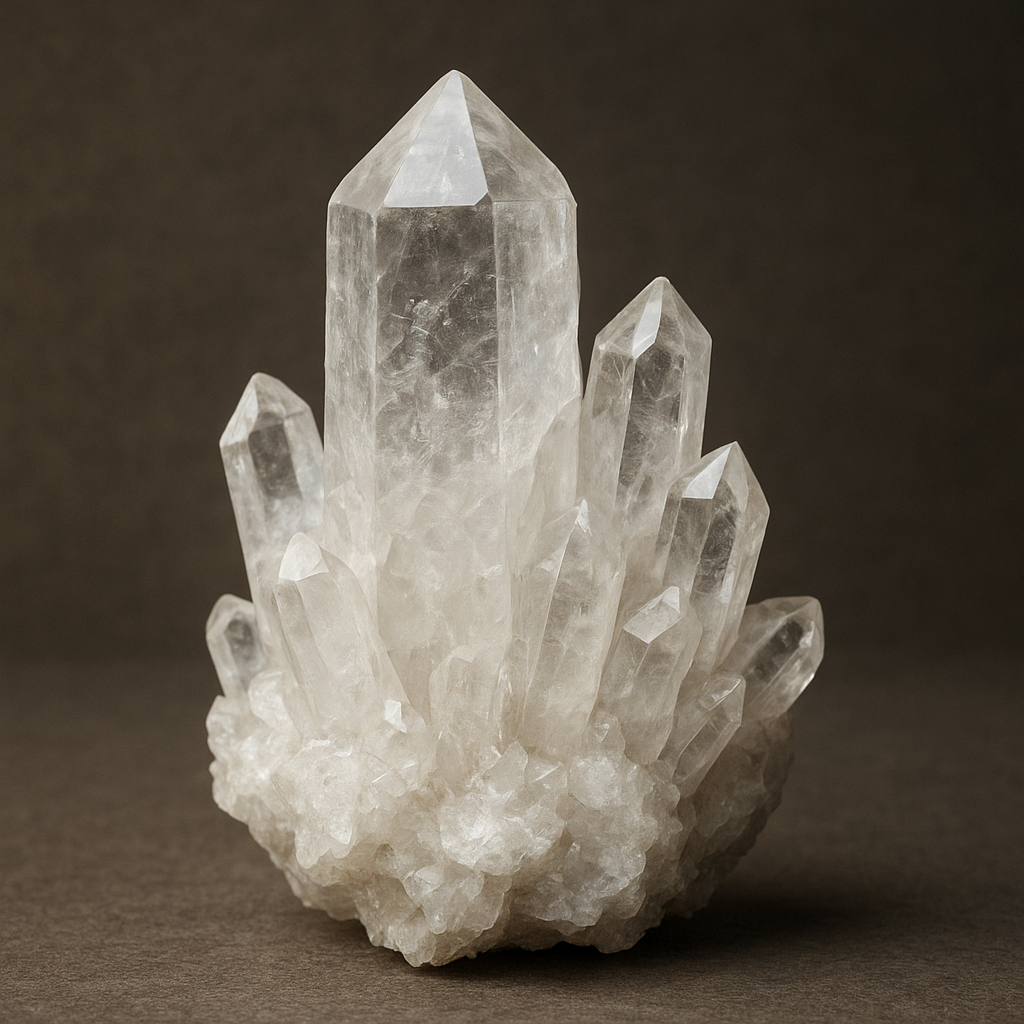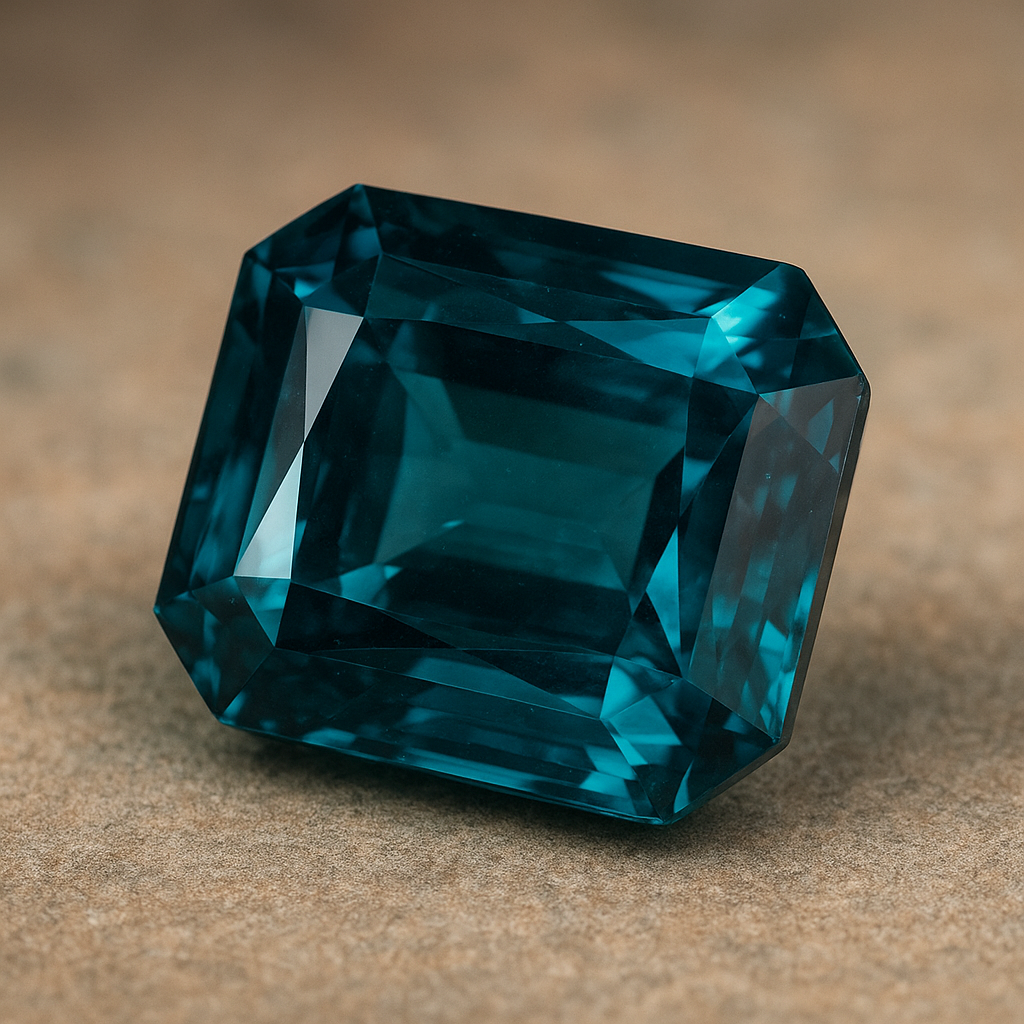
Indicolite is a captivating variety of blue-to-blue-green tourmaline prized by gem collectors and jewelers for its deep, oceanic hues and remarkable optical behavior. Though often overshadowed by more famous siblings like rubellite and paraíba, indicolite offers a wide range of colors and forms that make it a fascinating subject for gemology, lapidary work, and mineralogical study. This article explores what indicolite is, where it forms, how it is used, and several interesting aspects that connect it to broader themes in geology, the gem market, and cultural lore.
What Indicolite Is
Indicolite refers to the blue and blue-green members of the tourmaline group, a complex family of boron silicate minerals with variable chemistry. The characteristic colors of indicolite are usually caused by iron in different oxidation states, producing tones that range from pale sea-blue to deep, almost inky shades. Tourmaline is known for its strong pleochroism — the ability to show different colors or intensities when viewed from different directions — which is especially pronounced in indicolite and contributes to its appeal when cut and polished.
The tourmaline group is chemically diverse, with species and color varieties formed by substitutions of elements such as sodium, calcium, magnesium, iron, manganese, lithium, and aluminum in its crystal structure. Indicolite typically falls within the iron-dominant spectrum of tourmalines. Physically, tourmalines are sturdy gems with a Mohs hardness of about 7–7.5 and a vitreous luster, making them suitable for everyday jewelry when properly set.
Where Indicolite Occurs
Indicolite is primarily found in granitic pegmatites and, less commonly, in metamorphic rocks where boron-rich fluids have altered the host material. Pegmatites are coarse-grained igneous bodies that offer the perfect environment for large, gem-quality crystals to grow due to slow cooling and volatile-rich melts. Key sources for indicolite include several well-known mineral provinces:
- Brazil — Minas Gerais and other pegmatite districts have historically produced attractive indicolite crystals that populate museum collections and the gem market.
- Afghanistan and Pakistan — Mountain pegmatites and hydrothermal systems in the Himalayas and adjoining ranges yield deep-blue tourmalines prized by collectors.
- Madagascar — Newer deposits have become important suppliers of varied tourmaline colors, including blue-green material suitable for faceting.
- Mozambique and Nigeria — African localities have provided both gem and collector specimens, sometimes with unusual color zoning.
- United States (Maine, California) — Historically significant for tourmaline mining, these areas still produce specimens for collectors and lapidaries.
- Sri Lanka — Known more for secondary deposits, Sri Lanka also yields gem-quality tourmalines, including blue varieties.
While not as restricted in occurrence as some rarer gemstones, the combination of color intensity and crystal size required for top-quality indicolite is relatively uncommon, which elevates the desirability of particularly fine stones.
Uses and Applications
The most obvious and widespread application of indicolite is in jewelry. Faceted indicolite gems appear in rings, pendants, earrings, and brooches, often set in yellow or white gold to accentuate their cool tones. Because tourmaline is durable yet can be brittle along cleavage directions, mountings are chosen to protect the stone from knocks while allowing light to play through its body and pleochroism.
Beyond adornment, tourmaline including indicolite has industrial and technological relevance. Tourmaline crystals are naturally piezoelectric and pyroelectric — they generate electric charges when mechanically stressed or heated. Historically, small tourmaline crystals were used in early electronic experiments and in pressure-sensing devices. In modern times, however, synthetic materials have largely supplanted natural tourmaline for technical applications; gem-quality indicolite remains most valued for aesthetic and collector uses.
Gemological Properties and Identification
Identification of indicolite involves a combination of visual observation and gemological testing. Key diagnostic properties include:
- Pleochroism — Indicolite commonly shows strong pleochroism, exhibiting different shades of blue and green depending on the crystal axis and the observer’s angle.
- Refractive indices and birefringence — Tourmalines typically fall within a narrow refractive index range and show moderate birefringence. These optical values, measured with a refractometer, help distinguish tourmaline from look-alikes.
- Specific gravity — Tourmalines have a specific gravity that is moderate for gemstones; variations can hint at composition (e.g., iron-rich types are denser).
- Inclusions — Natural indicolite often contains characteristic inclusions such as slender rutile or tourmaline needles, two-phase fluid inclusions, and growth zoning. These inclusions can confirm natural origin and sometimes reveal formation conditions.
Because several other gems and simulants can mimic the color of indicolite — for example, aquamarine (beryl), blue topaz, and certain glasses or synthetic spinels — testing for pleochroism and refractive index is essential for confident identification. Gem labs may also use advanced techniques such as infrared spectroscopy and electron microprobe analyses to determine precise chemical composition.
Cutting, Treatment, and Market Considerations
Lapidaries prize indicolite for its potential to yield richly colored, well-saturated faceted gems. Because of pleochroism, cutters must orient rough stones carefully to maximize the most desirable color while maintaining weight. Common shapes include ovals, cushion cuts, and emerald cuts that emphasize depth of color and reduce the appearance of any color zoning.
Treatments for indicolite are less extensive and less common than for some other gems, but a few processes exist:
- Heat treatment — Sometimes applied to improve clarity or modify unwanted brownish tones. The outcome can be subtle and is often dependent on the stone’s chemistry.
- Irradiation — Rarely used for tourmaline; irradiation can alter color but is uncommon for blue tourmalines due to stability concerns.
It is important that any enhancement or treatment be disclosed to buyers. On the market, top-quality indicolite commands premium prices when color, clarity, and cut align. However, prices vary widely based on size, hue, and provenance — a deep, saturated blue-green with good clarity from a respected locality will fetch the highest values.
Care, Cleaning, and Jewelry Settings
For daily wear and long-term preservation, follow these practical care tips:
- Cleaning — Warm soapy water and a soft brush are usually safe for tourmaline. Ultrasonic cleaners can be used with caution when stones are free of fractures or filled cavities; avoid ultrasonic cleaning for heavily included or fracture-filled stones.
- Exposure — Avoid prolonged exposure to strong heat or sudden temperature changes, which can damage clarity or affect mounted stones.
- Chemicals — Household chemicals and cosmetics should be kept away from tourmaline to preserve metal settings and prevent residue accumulation on the gemstone surface.
- Settings — Protective mountings such as bezel settings are advisable for rings; prong settings that expose the stone to light are common for pendants and earrings but should be used with care.
Cultural, Historical, and Interesting Facts
The name indicolite likely derives from the Latin or Greek root associated with blue, and early gem dealers used it to describe blue tourmalines that did not fit neatly into other color categories. Throughout history, tourmalines have been admired in many cultures for their kaleidoscopic colors — old trade catalogs and mineralogical texts frequently mention blue varieties alongside more famous reds and greens.
Several interesting facets of indicolite and tourmaline more broadly are worth noting:
- Collectors prize large, lustrous crystal specimens that display well-defined prismatic faces and termination points; such crystals often show dramatic color zoning that appears almost painterly.
- Museum displays sometimes include indicolite crystals associated with other pegmatite minerals like feldspar and quartz, illustrating the geological environments that produce gem-quality material.
- In metaphysical and New Age circles, blue tourmaline is associated with communication, calm, and clarity. While these beliefs are not scientific, they influence demand and the language used by some sellers and collectors.
- Ethical and environmental issues in pegmatite mining are increasingly prominent. Artisanal miners often extract tourmaline by hand in remote areas; responsibly sourced stones and certification schemes are becoming more important to conscientious buyers.
Identification Challenges and Imitations
Because attractive blue-green colors are popular, several imitations and synthetics sometimes enter the marketplace. Common issues include glass imitations, dyed quartz, and other blue gems sold as tourmaline. Knowledgeable buyers and gemologists rely on a combination of tests — pleochroism, refractive index, specific gravity, and microscopic inclusion study — to distinguish natural indicolite from imitations.
Laboratory-grown tourmalines exist but are relatively uncommon compared with synthetic corundum or spinel. The technology to create high-quality synthetic tourmaline is more complex, so most of the indicolite in circulation is natural. Certification from a reputable gemological laboratory can provide confidence about origin, treatment, and authenticity.
Collecting and Display Advice
Whether you are a collector, jeweler, or buyer, a few guidelines help when considering indicolite specimens:
- Examine the stone in natural light to assess true color and pleochroic behavior.
- Ask about treatment disclosure and request a lab report for unusually large or expensive pieces.
- For collectors of mineral specimens, seek well-formed crystals with minimal damage and appealing associations with matrix minerals.
- Support ethical sourcing by inquiring about mining practices and choosing sellers who provide transparency about provenance.
Final thoughts on an enduring gem
Indicolite may not always command the headlines like some of its tourmaline cousins, but it offers a rich combination of geological intrigue, optical complexity, and aesthetic beauty. From the deep, ocean-like blues favored by gem cutters to the scientific stories told by inclusions and growth zoning, indicolite rewards close attention. Collectors and jewelers alike value its versatility — suitable for modern, minimalist settings as well as classic vintage designs — and its ability to evoke the natural world through color and light.