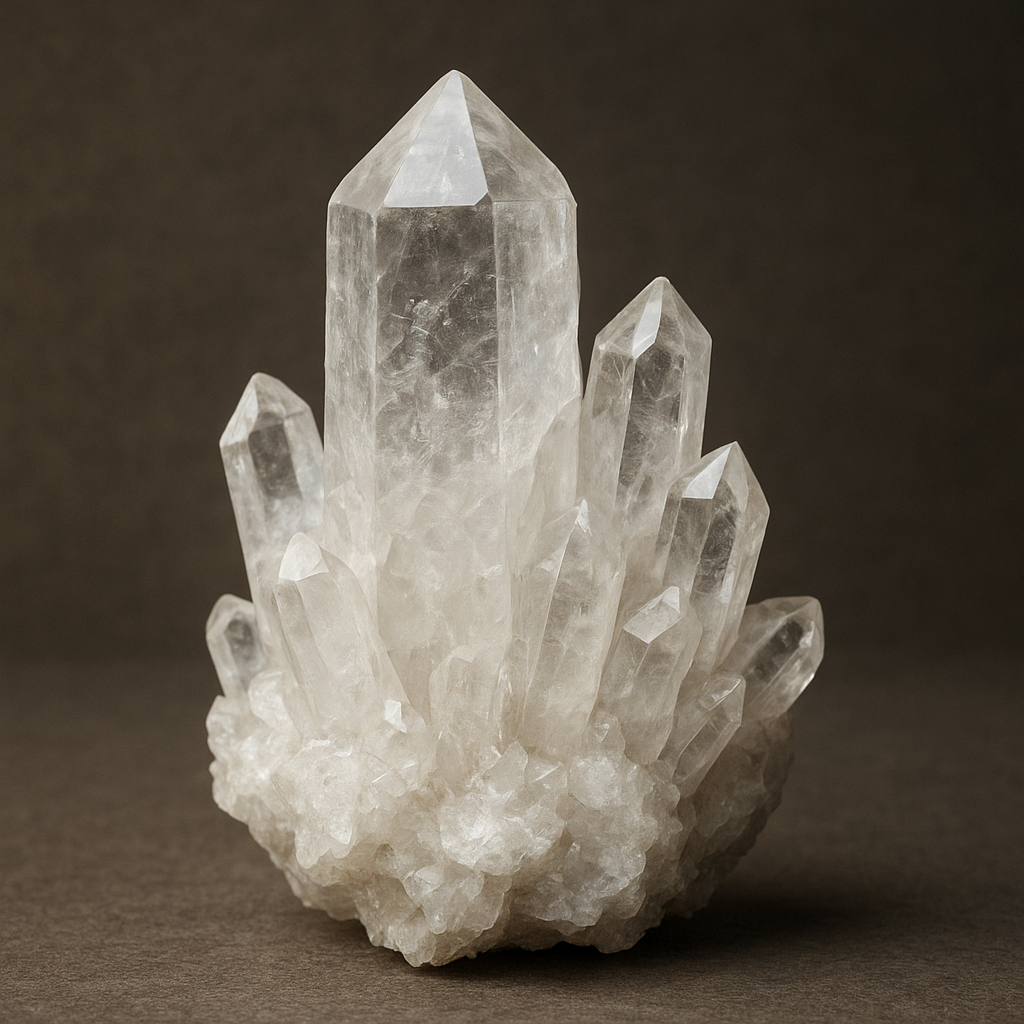
Hypersthene is a mineral that has captured the attention of geologists, gem enthusiasts, and planetary scientists alike. Though its name is less common in modern mineralogical nomenclature, hypersthene remains an important term for describing a specific group of orthopyroxenes distinguished by their chemical composition, optical behavior, and geological significance. This article explores where hypersthene is found, how it forms, what it is used for, and why it continues to matter across several fields of Earth and planetary science.
Nature and Properties of Hypersthene
At its core, hypersthene belongs to the broader pyroxene group and is an orthopyroxene with a general chemical formula that can be expressed as (Mg,Fe)SiO3. It is a solid-solution series between the magnesium-rich endmember enstatite and the iron-rich endmember ferrosilite. The exact composition of a hypersthene crystal influences its color, density, and optical properties.
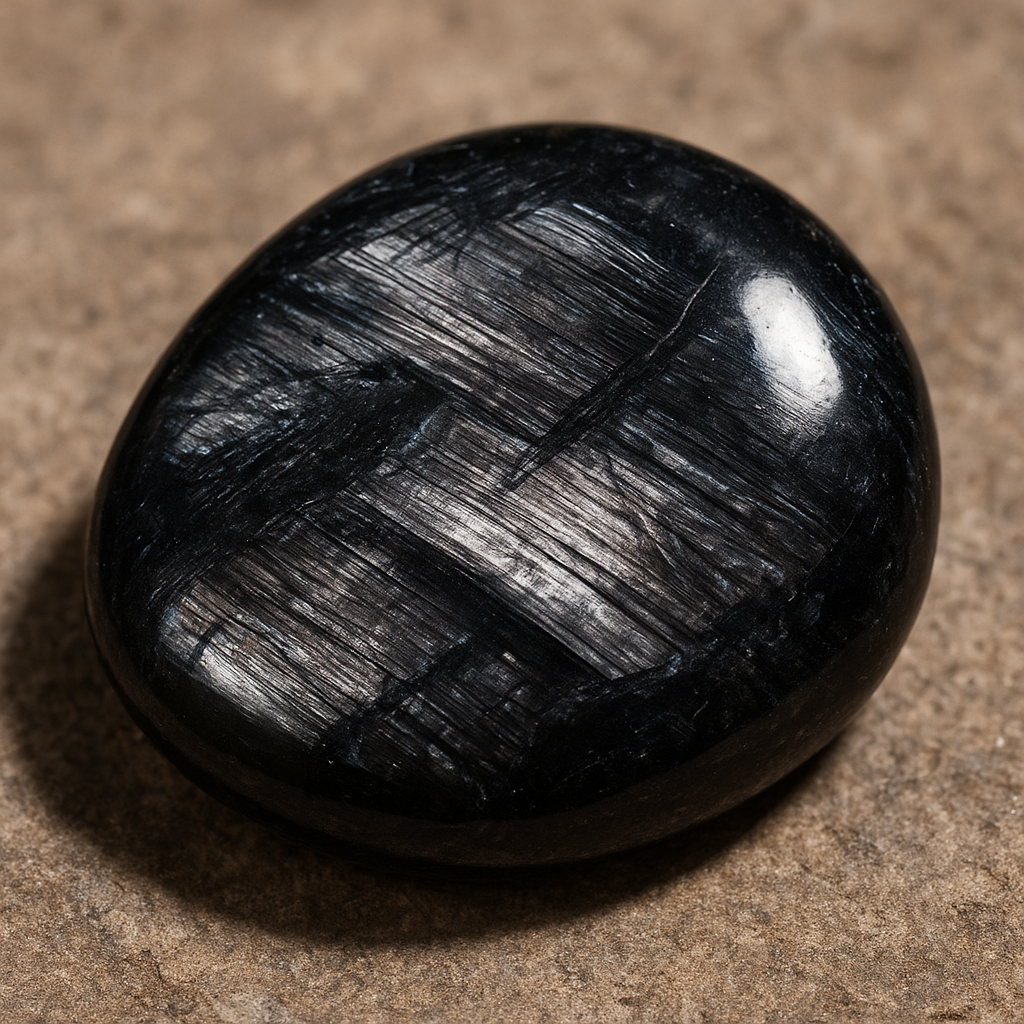
Hypersthene typically crystallizes in the orthorhombic crystal system and displays two prominent cleavage directions at nearly right angles, a trait common to pyroxenes. Hardness generally ranges around 5 to 6 on the Mohs scale; specific gravity increases with iron content. Optical characteristics are notable: many hypersthenes show pleochroism (color changes when viewed from different angles under polarized light) and can display a metallic, bronzy sheen known as the schiller effect when light reflects from fine inclusions or oriented exsolution lamellae. These visual effects are why some specimens are desirable for jewelry and ornaments.
From a crystallographic and chemical point of view, hypersthene is important because it records conditions of formation. The distribution of magnesium versus iron between hypersthene and coexisting minerals, and the trace element signature within hypersthene crystals, provide robust clues to the temperature, pressure, and redox state of the rock during crystallization.
Where Hypersthene Occurs
Hypersthene is most commonly encountered in mafic and ultramafic igneous rocks, such as norites, gabbros, peridotites, and some basalts. In these environments it forms as one of the primary ferromagnesian silicates alongside olivine and clinopyroxene. Hypersthene is also found in high-grade metamorphic rocks, particularly in granulite-facies assemblages where original pyroxenes persist or recrystallize under high temperatures.
In volcanic and plutonic contexts hypersthene often occurs as phenocrysts or as part of cumulate textures in layered intrusions. It may also survive and be transported as xenocrysts or in mantle xenoliths that are brought to the surface in basaltic eruptions. Because of this, small grains of orthopyroxene — historically called hypersthene — are sometimes recovered from volcanic ejecta and provide direct samples of upper-mantle and lower-crustal materials.
One of the most fascinating occurrences of hypersthene is extraterrestrial. Orthopyroxene with hypersthene-like compositions has been identified in many meteorites, including chondrites and achondrites, and in returned lunar samples from the Apollo missions. In planetary geology, pyroxenes are key mineralogical markers used to interpret magmatic differentiation, cooling histories, and the bulk composition of planetary bodies.
Associated Minerals and Textures
- Common associates: plagioclase, olivine, amphibole, and garnet in metamorphic rocks.
- Cumulate textures in layered intrusions where hypersthene can form thick, economically interesting layers.
- Exsolution and intergrowth textures with clinopyroxenes or iron-titanium oxides that produce optical effects and record cooling rates.
Scientific and Practical Applications
Hypersthene and related orthopyroxenes serve several important roles across scientific disciplines. In petrology, their compositions are used in geothermobarometry: paired mineral compositions (e.g., hypersthene with garnet or plagioclase) constrain pressure and temperature during rock formation. The Mg/Fe ratio in hypersthene can be read as a thermometer for crystallization temperature or as an indicator of mantle processes when the mineral originates from deep-seated rocks.
Trace-element concentrations and isotopic systems in hypersthene provide valuable information about magmatic evolution. Elements such as Ni, Cr, and the rare-earth elements partition between pyroxenes and melts in characteristic ways, so analyzing these concentrations helps reconstruct partial melting, source heterogeneity, and fractional crystallization histories.
In planetary science, hypersthene-like orthopyroxenes give insight into the thermal history of meteorite parent bodies and planetary crusts. For example, the presence and composition of orthopyroxene in lunar basalts and martian meteorites have been used to infer mantle compositions and volcanic processes on the Moon and Mars.
Although hypersthene has limited direct industrial uses, it is valuable in a number of applied contexts:
- As an ornamental stone and occasional gemstone when displays of schiller or attractive pleochroism are present.
- As a petrographic and geochemical tool for mineral exploration; pyroxenes can be indicator minerals in the search for certain magmatic ore deposits.
- As a standard or reference material in laboratory studies of silicate behavior at high temperatures and pressures.
Hypersthene in Gemology and Ornamentation
In the gemstone market, hypersthene is sometimes sold under the name “hypersthene” or grouped with bronzite and other bronzy orthopyroxenes. Attractive specimens exhibiting a coppery to golden schiller effect are fashioned into cabochons and beads. The gemstone trade values these pieces for their unique sheen rather than for brilliance or transparency. Typical gem colors range from greenish-brown to dark brown and black.
Care and cutting of hypersthene gemstones are straightforward since the mineral is moderately hard; however, cleavage must be respected during lapidary work because careless cutting can result in splitting along cleavage planes. While not a mainstream gemstone, hypersthene finds a niche among collectors and lapidaries who appreciate unusual optical phenomena and stones with a clear geological story.
Analytical Techniques and Research Frontiers
Modern studies of hypersthene rely on advanced analytical methods. Electron microprobe analysis precisely measures the Mg/Fe ratio and minor elements. X-ray diffraction (XRD) determines crystal structure and detects subtle ordering or polymorphism. Raman spectroscopy and infrared spectroscopy characterize bonding environments and can be used for rapid non-destructive identification. Transmission electron microscopy (TEM) reveals exsolution lamellae and nanoscale intergrowths that record cooling and deformation histories.
Isotopic studies, including oxygen isotopes, can trace the origin of orthopyroxene crystals, distinguishing between mantle-derived, crustal, and extraterrestrial sources. Combining textural observations (for instance, zoning patterns, exsolution textures, and inclusions) with compositional data allows geoscientists to reconstruct complex histories of crystallization, metamorphism, and subsequent alteration.
Research Examples
- Geothermobarometry: Using hypersthene compositions paired with garnet or plagioclase to constrain metamorphic conditions in high-grade terrains.
- Diffusion studies: Measuring element diffusion profiles in hypersthene to date thermal events and cooling rates in igneous rocks.
- Planetary studies: Identifying orthopyroxene compositions in meteorites to infer the thermal evolution of asteroidal parent bodies.
Historical Aspects and Nomenclature
The name hypersthene comes from Greek roots meaning “over strength” and has a long history in classical mineralogy. Over time, mineral classification evolved and the term “hypersthene” has become less formal in some scientific contexts, with modern mineralogists preferring to classify minerals by precise chemical composition and crystal symmetry under the broader category of orthopyroxenes.
Despite this shift, the name persists in field guides, collector catalogs, and the gem trade because it describes a recognizable set of appearances and compositions. Historical literature on hypersthene contributes to our understanding of how mineral names and concepts have changed as analytical techniques developed and allowed more precise definitions.
Interesting Phenomena and Lesser-Known Facts
Hypersthene exhibits several intriguing features that make it more than just another silicate mineral:
- Schiller and Chatoyancy: The metallic sheen or schiller in some specimens arises from submicroscopic inclusions or oriented lamellae. When cut properly, these stones can show a moving band of light similar to cat’s-eye effects.
- Record Keepers: Because pyroxenes preserve chemical zoning and fine intergrowths, they act as geological diaries, preserving snapshots of the conditions and events that affected the host rock.
- Planetary Indicators: Orthopyroxenes like hypersthene are key to interpreting remote sensing data. Spectral features in the visible and infrared can be matched to laboratory spectra of hypersthene to map mineralogies on planetary surfaces from orbit.
- Meteorite Signposts: The presence, texture, and composition of hypersthene in meteorites help classify meteorite types and reveal parent-body metamorphism and aqueous alteration histories.
Practical Advice for Collectors and Students
For those encountering hypersthene in the field or the lab, a few practical tips are useful:
- Identification: Look for orthorhombic crystal habit, two cleavages at near-right angles, a typical hardness of 5–6, and characteristic pleochroism under polarized light.
- Care: When cutting or polishing hypersthene specimens for display, remember the cleavage; cabochon cuts that follow the schiller direction maximize visual effect.
- Analysis: Small samples for research are best analyzed with electron microprobe to precisely determine the Mg/Fe ratio and trace element contents.
- Context: Always record the host rock and field relationships—hypersthene’s geological story is as important as the crystal itself.