Huebnerite is a distinctive member of the wolframite group of minerals that draws attention both from industrial geologists and mineral collectors. This mineral, whose chemistry centers on manganese and tungsten, forms striking prismatic crystals and aggregates in a variety of hydrothermal and metamorphic settings. In this article I examine its mineralogical characteristics, typical geological environments, economic importance as a source of tungsten, and the surprising roles it plays in modern research and collecting. Expect details on occurrences, extraction pathways, crystal properties, and some lesser-known scientific and cultural facets connected to this fascinating mineral.
Geology and Mineralogy
Chemical nature and crystal habit
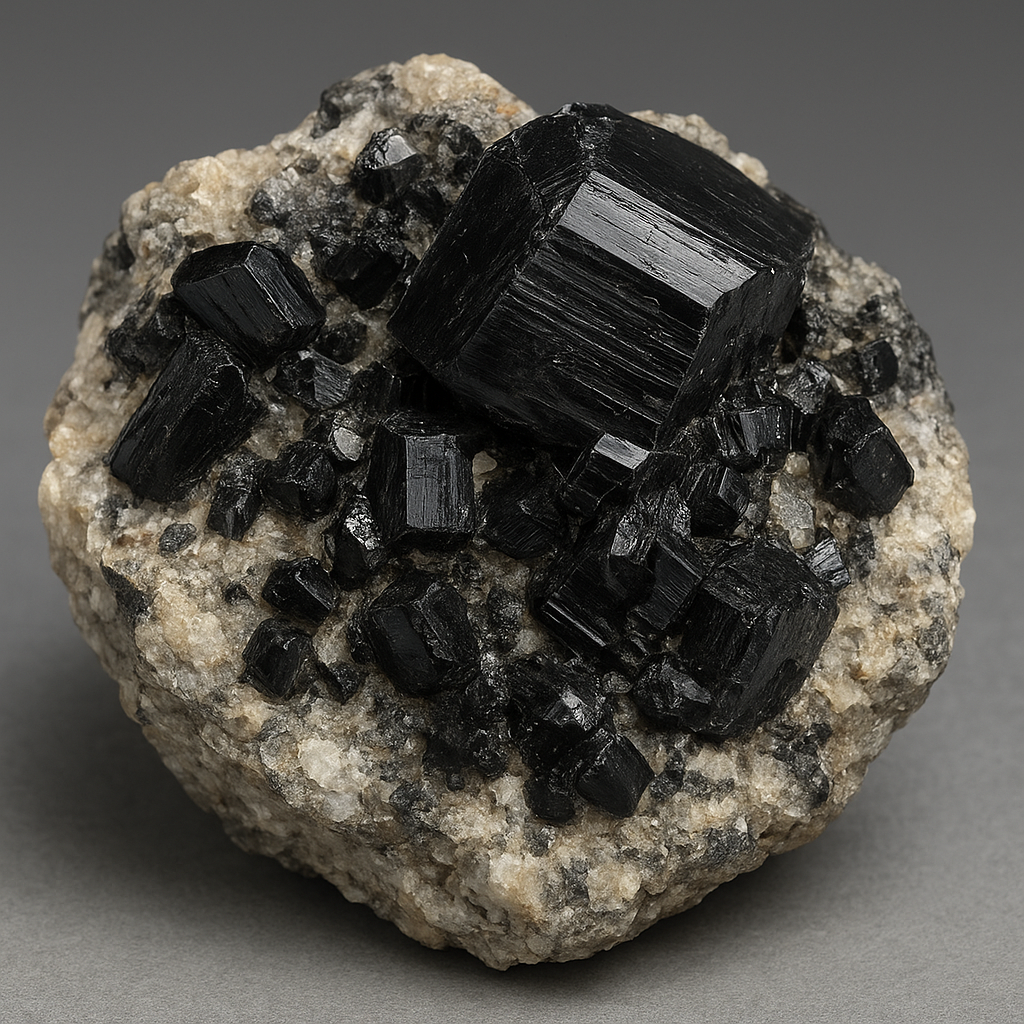
At its core Huebnerite is a manganese-rich tungstate with a simple chemical relationship to other wolframite minerals. The formula emphasizes the role of manganese: Huebnerite commonly appears as MnWO4 in natural samples. It belongs to the wolframite series, in which manganese and iron substitute for one another to produce gradational compositions between pure manganese tungstate and the iron-rich endmember ferberite. Crystals are typically crystal-line, elongated and prismatic, often displaying well-formed faces. Habit ranges from stout prisms to massive granular aggregates and compact, fibrous crusts.
Physical and optical properties
Huebnerite usually shows a dense feel because of the heavy tungsten atom in its structure. It typically has a hardness in the range of 4 to 4.5 on the Mohs scale and a relatively high specific gravity. Coloration runs from brownish-red and brown to nearly black in more iron-bearing varieties. The luster is commonly submetallic to resinous. Under transmitted light some transparent to translucent fragments can display deep brown or amber tones, and the mineral often exhibits pronounced pleochroism and distinctive optical behavior under polarized light. These features make well-crystallized specimens attractive for optical study and, on rare occasions, for cutting as collector gems.
Paragenesis and associated minerals
Huebnerite forms as a product of medium- to low-temperature hydrothermal activity and is a common constituent of tin-tungsten (W-Sn) veins, greisens and skarns. It commonly associates with quartz, muscovite, cassiterite, fluorite, and sulfide minerals such as pyrite and chalcopyrite. In metamorphic environments it can appear in contact-metamorphosed skarn zones where tungsten-bearing fluids react with carbonate rocks. Where iron replaces manganese, the mineral grades toward ferberite, and mixtures of these endmembers are frequently encountered in ore bodies.
Occurrence and notable localities
Huebnerite is found in a variety of tungsten-bearing deposits across the globe. While the mineral is not always the dominant tungsten ore in every district, it commonly appears alongside other tungsten minerals and contributes to the overall tungsten resource. Below are typical settings and several notable localities where fine huebnerite specimens have been collected.
- Panasqueira (Portugal) — a classic tin-tungsten district known for complex greisen and vein mineralization that yields attractive wolframite-group minerals.
- Bolivian vein deposits — several localities in Bolivia have produced well-formed wolframite-group crystals including manganese-dominant examples prized by collectors.
- Western United States — historic tungsten-bearing veins in states such as Colorado and California have produced huebnerite among other wolframite minerals.
- China — numerous tungsten districts supply the world market and yield diverse wolframite specimens, often from hydrothermal veins and greisen zones.
- Peru and Mexico — both countries host tin-tungsten systems and hydrothermal veins where huebnerite has been documented.
Beyond these regions, smaller occurrences are reported from parts of Europe and Asia where the right combination of tungsten-bearing fluids and host rocks exist. Collectors often prize transparent or richly colored crystals regardless of the size of the deposit, and mine exposure through historical workings sometimes yields superb specimens.
Formation processes and geological controls
Hydrothermal systems and fluid chemistry
Huebnerite commonly forms from hydrothermal fluids that are relatively enriched in tungsten and manganese. The mobility of tungsten in hydrothermal systems is strongly influenced by temperature, pH and the presence of complexing ligands such as fluoride and carbonate in solution. As tungsten-bearing fluids cool or react with host rocks, wolframite-group minerals precipitate—often in association with quartz and tin minerals when tin is present in the system. The interplay of redox state and available cations determines whether manganese or iron predominates in the resulting wolframite composition.
Skarns and contact metamorphism
When tungsten-bearing hydrothermal fluids interact with carbonate rocks during contact metamorphism, they may produce skarn assemblages rich in tungsten minerals. These skarns are the result of metasomatic exchange between the invading fluid and the carbonate host, generating calc-silicate mineralogy alongside ore minerals. In such settings, skarn textures and zonation can control the localization of huebnerite and influence grain size and crystal habit.
Metamorphic reworking and secondary redistribution
Older tungsten deposits may be remobilized during regional metamorphism, leading to secondary concentrations of wolframite-group minerals. This process can upgrade or disperse ore depending on tectonic conditions. Weathering and supergene processes at the surface may break down wolframite, liberating tungstate ions that can precipitate as other tungsten phases or be transported away from the original site of deposition.
Economic importance and applications
Wolframite minerals as tungsten ores
The primary industrial significance of huebnerite lies in its role as an ore of tungsten. Tungsten is a strategic metal used across many sectors because of its high melting point, density, and hardness. Although scheelite (CaWO4) and iron-rich wolframite varieties are often economically more significant in many districts, manganese-rich huebnerite contributes to tungsten reserves where it is locally abundant. After mining, wolframite concentrates are processed into intermediates such as ammonium paratungstate (APT), which then enter chemical and metallurgical routes to produce tungsten metal or tungsten compounds.
Industrial end uses of tungsten
Tungsten’s properties make it indispensable in several applications: heavy-metal alloys and tungsten carbide for cutting tools, wear-resistant coatings, electrical contacts and filaments in lighting, and components resistant to high temperature. Tungsten oxides also play roles in catalysts, pigments and electrochromic devices. When huebnerite is processed along with other wolframite minerals, it ultimately feeds these industrial supply chains.
Collecting, gem use and niche applications
Fine huebnerite crystals are prized by collectors for their sharp forms, color and luster. Transparent, well-formed crystals are uncommon but can be faceted or cut as collector gems; these are generally not used in mainstream jewelry because the mineral is relatively soft and dense compared to classic gem materials. In modern materials science, synthetic manganese tungstate (MnWO4) is explored for its functional properties in electronics and magnetoelectric devices—an area where natural mineral analogs inform laboratory research.
Research, materials science, and surprising properties
Magnetism and multiferroic behavior
One of the most intriguing aspects of manganese tungstate beyond its role as an ore is its behavior in condensed-matter physics. MnWO4 exhibits complex magnetic ordering and has been studied as a model system for magnetically induced ferroelectricity. In certain temperature regimes the material develops noncollinear spin structures that can break inversion symmetry and induce a spontaneous electric polarization, making MnWO4 a multiferroic compound. This coupling between magnetic and electric orders makes synthetic MnWO4 of interest for fundamental research and potential future applications in sensors, memory devices and spintronics.
Catalytic and electrochemical potential
Tungstates are also active in various catalytic and electrochemical contexts. Research has examined tungsten oxides and tungstates as catalysts for oxidation reactions, as components in battery electrodes, and in electrochromic materials for smart windows. Although most industrial catalytic systems use specially tailored synthetic materials rather than natural mineral concentrates, the chemistry of huebnerite provides an accessible starting point for exploration.
Mining, processing and environmental aspects
Methods of extraction and beneficiation
Extraction of huebnerite-bearing ores depends on the deposit type. Hard-rock vein or lode deposits are typically mined underground, while larger disseminated or skarn systems may be open-pit. Once extracted, ore is crushed and subjected to gravity concentration, froth flotation or magnetic separation to produce wolframite concentrates. These concentrates are then converted chemically to produce intermediate tungsten compounds. Throughout the chain, careful control is required to manage gangue minerals and optimize recovery of tungsten.
Environmental considerations
Like all mining, tungsten extraction and processing raise environmental concerns. Tailings management, water quality, and the handling of byproduct heavy metals and sulfide minerals must be controlled to minimize contamination. Modern operations implement environmental monitoring and remediation strategies, while historical workings sometimes leave legacy sites requiring cleanup. Because tungsten is critical for many technologies, balancing resource development with environmental stewardship is an ongoing challenge.
Collecting, identification and care
Recognizing huebnerite in the field
Field identification of huebnerite relies on a combination of physical clues: high density, dark brown-to-black color, resinous to submetallic luster, and typical prismatic habit. A streak test on unglazed porcelain yields a brownish color. Associated minerals—cassiterite, quartz and sulfides—can suggest a tungsten-tin hydrothermal system. Because huebnerite often forms fine-grained aggregates, detailed lab techniques such as X-ray diffraction, electron microprobe and optical microscopy are used to confirm identification and composition.
Handling and conservation of specimens
Collectors should handle fine huebnerite crystals with care due to their relative softness and occasional fragility along cleavage planes. Specimens should be stored in stable humidity and away from substances that could chemically react with tungsten compounds. Display and cleaning must avoid harsh chemicals; gentle brushing and mild detergent solutions are usually sufficient. For scientific or decorative cuts, experienced lapidaries evaluate the risk-benefit of working with tungstate crystals based on clarity and stability.
Interesting historical and cultural notes
Wolframite-group minerals, including huebnerite, contributed to the growth of mining towns in the 19th and 20th centuries, particularly where demand for tungsten surged due to industrial needs. Although huebnerite itself is often overshadowed by more common ore minerals, well-documented specimens have entered museum collections and private cabinets, prized both for their aesthetic qualities and the story they tell about geological processes. The study of natural MnWO4 also bridges mineralogy and cutting-edge physics, illustrating how a humble ore mineral can influence diverse scientific fields.
Collector lore and market
On the mineral market, good huebnerite crystals fetch attention for their shape and color. Specimens from classic localities command premiums when they showcase sharp terminations, transparency, and attractive matrix associations. The market also reflects the practical side of huebnerite as part of tungsten supply chains; price and demand can be influenced by broader commodity trends in tungsten, geopolitical factors, and technological developments that affect usage.
Huebnerite occupies a unique place at the intersection of economic geology, mineral collecting, and advanced materials research. Whether encountered as a dense prismatic crystal in a vein, as part of a skarn assemblage, or as a specimen in a museum drawer, the mineral invites inquiry from multiple perspectives. Its chemistry links it directly to the global tungsten industry, while its physics makes MnWO4 an object of fascination in the laboratory—an example of how minerals continue to bridge practical needs and scientific curiosity.