
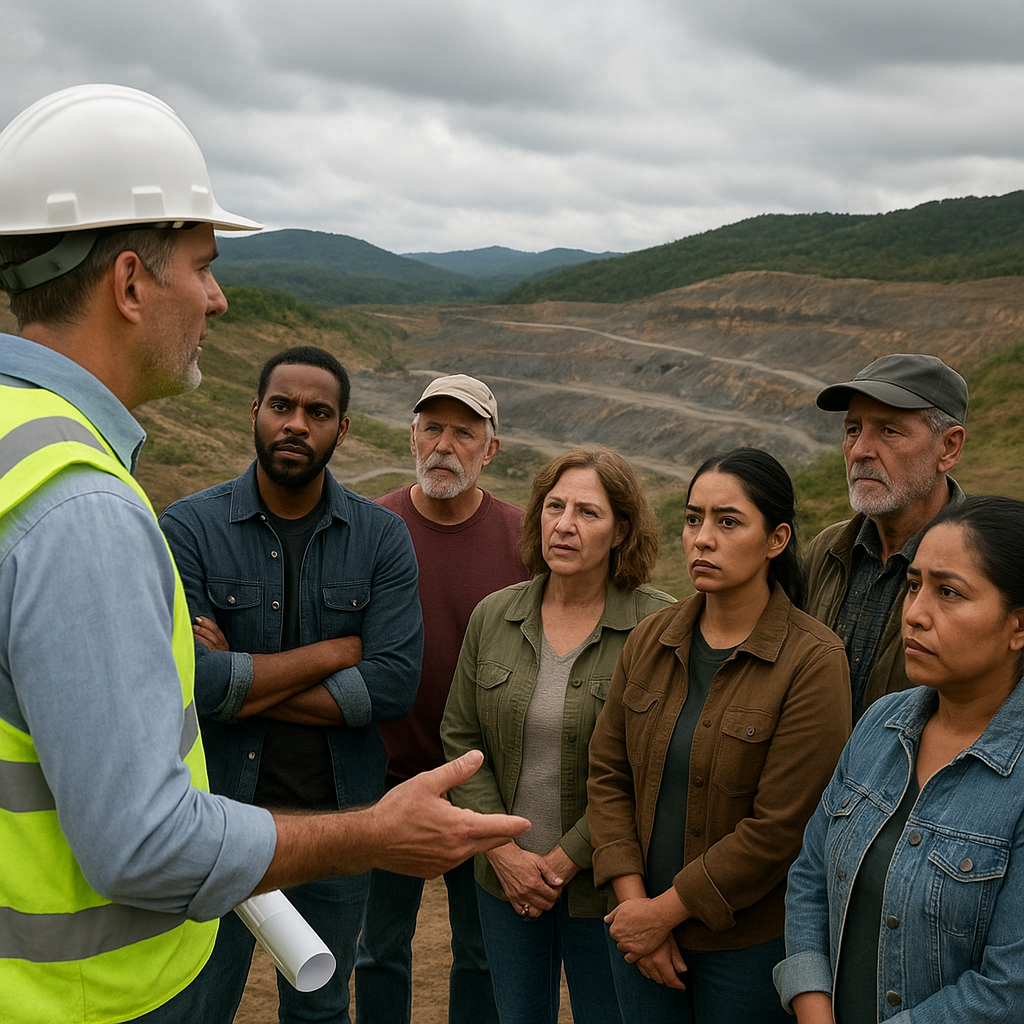
The development of mineral projects does not happen in a vacuum; it unfolds within landscapes populated by people whose lives, livelihoods and identities are intertwined with the land. The influence of local communities on exploration, permitting, construction and operation phases can be decisive — either enabling projects to proceed responsibly and profitably, or creating delays, added costs and reputational damage. This article examines the complex relationships between mineral developers and the people who live near projects, identifies mechanisms through which communities exert influence, and describes practical approaches companies, governments and civil society can take to align mining with long-term social and environmental goals.
Community roles and sources of influence
Local populations hold multiple, sometimes overlapping roles that shape the trajectory of a mineral project. They are neighbors, employees, resource users, cultural custodians and political actors. Understanding these roles is essential for anticipating how community dynamics will affect feasibility, risk and value creation. Several factors determine the scale and direction of community influence:
Economic and social dependence
In many regions, communities depend on land, water, fisheries, agriculture or artisanal mining for their livelihoods. Where a project threatens access to those resources, resistance can be swift and sustained. Conversely, if a project brings meaningful local employment, procurement and infrastructure, community attitudes can become a major asset. The extent of local economic integration therefore directly shapes the intensity of community engagement.
Legal and customary rights
Formal legal instruments (titles, permits, regulations) interact with customary systems of land tenure and decision-making. Indigenous groups and communities with recognized rights can exercise formal vetoes or demand negotiated agreements. Even where rights are ambiguous, communities may assert moral claims on the basis of history and identity. Recognition of consent — often framed as Free, Prior and Informed Consent (FPIC) for Indigenous peoples — is increasingly central to project legitimacy.
Social networks and leadership
Local leaders, traditional authorities, civil society organizations and informal networks mediate the flow of information and shape collective action. Charismatic leaders can mobilize opposition; respected intermediaries can build bridges between companies and residents. The presence of robust local governance and credible institutions often correlates with an ability to negotiate durable agreements.
External actors and alliances
Communities do not act in isolation. They may align with environmental NGOs, political movements, labor unions or international advocacy campaigns. These alliances amplify local voices and can attract media attention, regulatory scrutiny and investor pressure. The globalization of supply chains means that distant stakeholders increasingly influence local outcomes through consumer pressure and responsible investment standards.
How community influence translates into project outcomes
The community effect on mineral projects is multi-dimensional. Impacts can be direct (roadblocks, protests), institutional (permit challenges, litigation), financial (bankability, insurance), and reputational (public perception, investor confidence). Below are principal mechanisms by which communities shape development.
Delays, stoppages and operational interruptions
- Protests, strikes and physical blockades can halt access to exploration sites, camps or ports. Such stoppages increase capital and operating costs and can cause contractual penalties.
- Disputes over land or resources often spawn litigation and administrative appeals that extend timelines for permits and project milestones.
Regulatory and permitting consequences
Community mobilization can lead to stricter regulatory scrutiny, additional environmental assessment requirements or even formal revocation of permits. Governments may respond to local pressure by imposing higher standards or conditional approvals that change project economics.
Financial and market impacts
Investors, insurers and lenders increasingly incorporate Environmental, Social and Governance (ESG) criteria into risk assessments. Negative community relations can elevate perceived ESG risk, causing higher financing costs, difficulty in securing loans or divestment. Conversely, credible community agreements enhance the likelihood of project financing.
Changes to project design and operations
Community feedback often triggers changes in mine planning: relocation of facilities, modification of waste management, improved water use strategies and enhanced mitigation measures for cultural sites. While these adjustments can raise upfront costs, they frequently reduce long-term liabilities and foster better social outcomes.
Reputational and strategic effects
Media exposure of community grievances can tarnish corporate reputations and affect market access. On a strategic level, persistent conflict may push companies to alter portfolios or exit jurisdictions where social risk remains unresolved.
Best practices for constructive engagement and risk management
Proactive, continuous and respectful interaction with local communities reduces uncertainty and creates opportunities for shared value. The following approaches have proven effective in multiple contexts.
Early, transparent and iterative consultation
- Engage communities at the earliest possible stage of exploration to set expectations, share plans and identify local priorities.
- Use culturally appropriate communication, provide information in local languages and ensure that consultation is two-way and iterative.
Secure legitimate consent and build trust
Beyond formal permits, projects should strive for social legitimacy through processes that recognize community authority and decision-making norms. Building trust requires consistent behavior, delivery on commitments and mechanisms to address grievances impartially.
Equitable benefit-sharing and local content
Design benefit-sharing schemes that provide tangible, long-term advantages for host communities: employment priorities, procurement from local suppliers, revenue sharing, and investments in health, education and infrastructure. Emphasize equity by ensuring benefits reach marginalized groups, women and youth.
Environmental stewardship and cumulative impact planning
Robust environmental management is central to community acceptance. Implement adaptive plans that minimize land disturbance, protect water quality, conserve biodiversity, and restore sites after closure. Consider cumulative impacts at a landscape scale and coordinate with other regional actors to avoid overburdening ecosystems. Prioritize environment in all decision-making to reduce conflict and protect livelihoods.
Community development agreements and governance partnerships
Negotiated agreements can formalize expectations, responsibilities and benefit-sharing. Include transparent monitoring, dispute resolution mechanisms and provisions for independent oversight. Strengthening local governance capacity helps communities manage funds, monitor performance and participate in long-term planning — improving project sustainability and local resilience.
Conflict-sensitive approaches and grievance mechanisms
- Integrate conflict analysis into planning to anticipate flashpoints related to land, labor or cultural heritage.
- Establish accessible, timely and transparent grievance mechanisms that are trusted by community members and linked to remedial actions.
Tools, partnerships and institutional innovations
Closing the gap between corporate goals and community expectations often requires technical tools and multi-stakeholder partnerships. Practical innovations have emerged to operationalize engagement and reduce friction.
Participatory mapping and social baseline studies
Participatory mapping empowers communities to document land uses, sacred sites and resource dependencies. Social baseline studies that combine quantitative and qualitative methods provide a nuanced understanding of vulnerabilities and opportunities, informing project design and mitigation.
Third-party facilitation and independent monitoring
Neutral facilitators can mediate negotiations and reduce mistrust. Independent monitoring bodies, often composed of community representatives, technical experts and civil society, enhance transparency and legitimacy by verifying compliance with agreements and environmental standards.
Local hiring, training and entrepreneurship development
Investments in vocational training and small enterprise support create pathways for meaningful local participation in supply chains. Prioritizing capacity building reduces dependency on outside labor and builds durable economic linkages that persist beyond mine life.
Financial instruments for shared value
Innovative financing — such as community development funds, local equity participation, and performance-based royalties — align incentives between companies and communities. Structuring payments to support long-term development rather than short-term consumption promotes sustainable outcomes.
Regulatory reform and multi-level governance
Governments play a pivotal role in setting the conditions for constructive engagement. Clear rules on land tenure, revenue transparency, environmental standards and FPIC help reduce ambiguity. Multi-level governance arrangements that coordinate national, regional and local authorities can streamline approvals while protecting community rights.
Practical considerations when working with communities
Practical realities on the ground often determine success. The following considerations help translate principles into workable actions.
- Do not assume uniformity: communities are heterogeneous. Tailor approaches to different groups within a locality, including women, youth, pastoralists, artisanal miners and Indigenous peoples.
- Budget for engagement: meaningful processes require resources for facilitation, translation, monitoring and community development projects.
- Monitor outcomes, not just inputs: track whether promised jobs, infrastructure and environmental measures materialize and benefit intended recipients.
- Be prepared to adapt: changing social, political or environmental conditions will necessitate adjustments to plans and agreements.
- Document and communicate: transparent reporting builds credibility with communities, regulators and investors.
Conclusion: aligning mining with community aspirations
Mineral projects can bring significant benefits, but only when they are developed in a way that acknowledges and responds to local realities. Effective engagement is not a box-ticking exercise: it is an ongoing process of building relationships, recognizing rights, sharing benefits and protecting the natural and cultural foundations of community life. Thoughtful incorporation of local perspectives reduces financial and operational risk, improves project design and contributes to sustainable development. Ultimately, the projects that succeed are those that treat communities as partners rather than obstacles — integrating governance, transparent decision-making, robust environmental management and social inclusion into the heart of project planning and execution. Through genuine partnership it is possible to transform potential conflict into shared opportunity, achieving both commercial objectives and lasting social value without sacrificing sustainability.
