
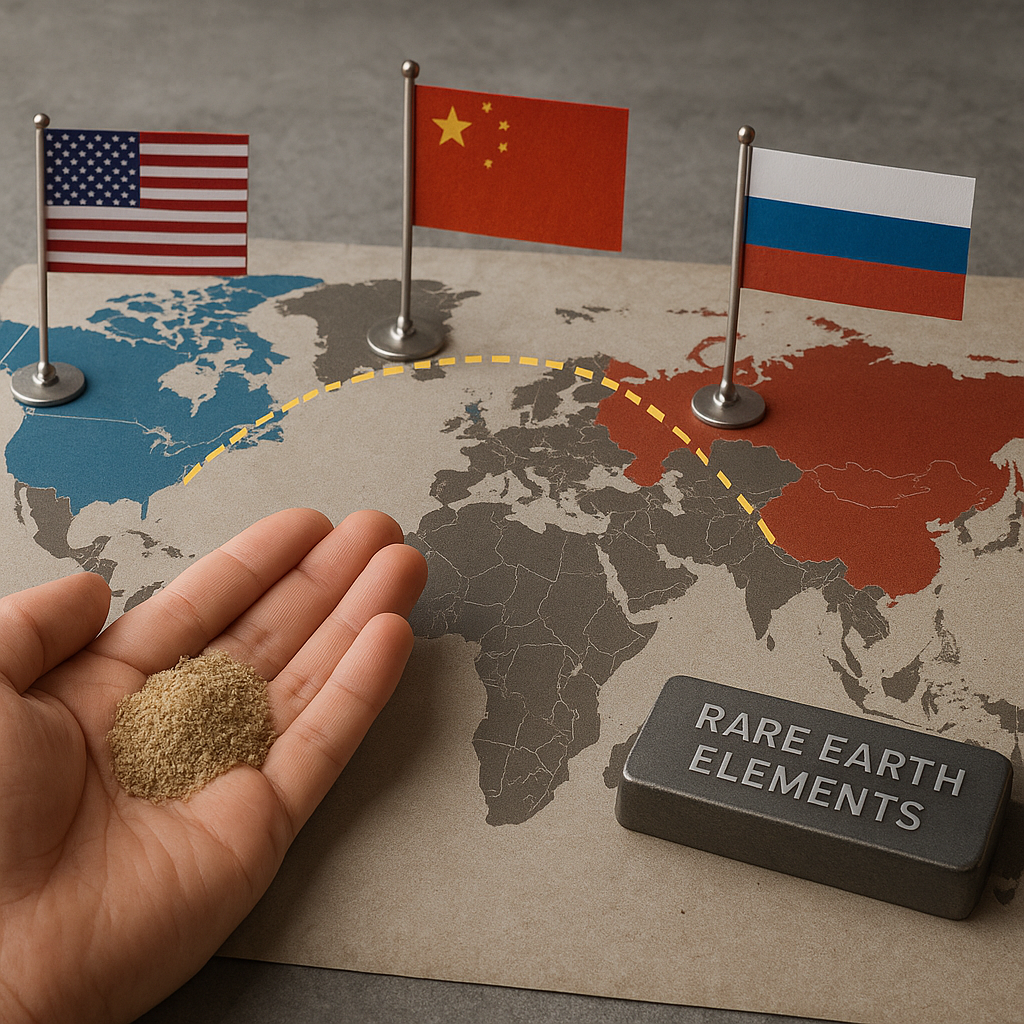
The global competition for technological leadership has placed rare earth elements at the center of strategic thinking. These 17 metal elements, essential for everything from electric vehicle motors and wind turbines to military sensors and advanced electronics, are not evenly distributed nor easily substituted. As countries form and reshape alliances, the availability of critical inputs becomes both an economic and a security concern. This article examines the mechanisms through which geopolitical alliances influence the supply chains of rare earths, explores notable case studies, and outlines the policy responses and industrial strategies that states and blocs use to manage risk and assert influence.
Strategic importance and structural features of the rare earth market
Understanding how alliances affect availability requires recognizing the unique features of the rare earth market. Unlike more common commodities, rare earth elements are aggregated in ores that vary widely in composition and require complex, capital- and technology-intensive processing. A few characteristics are especially relevant:
- Concentration: Production is geographically concentrated. Historically, a dominant supplier can gain leverage over consumers and allies.
- Processing bottlenecks: Mining is only the first step; separation and refining are often the limiting stages, where environmental regulation and technical know-how matter most.
- High strategic value: Certain elements (e.g., neodymium, dysprosium) are indispensable for high-performance magnets and defense systems, multiplying their geopolitical salience.
- Long investment cycles: Developing mines and processing plants takes years and significant capital, making the supply base relatively inflexible.
These structural features make supply sensitive to diplomatic alignments, trade measures, and cooperative industrial projects. When states align politically, they often align economically — through trade agreements, investment, technology sharing, and coordinated stockpiling — all of which shape the physical and transactional availability of rare earths.
Mechanisms: how alliances translate into availability
Alliances affect availability through a handful of intersecting mechanisms. These can be grouped under trade policy, investment and industrial cooperation, security arrangements, and standards & research collaboration.
Trade policy and export controls
Allied states frequently coordinate trade measures. Export restrictions, tariffs, or quota arrangements by a supplier can directly reduce availability for non-allies while sparing partners. Conversely, allied importers may receive preferential access. For example, a dominant supplier could impose licensing regimes or ‘trusted partner’ lists that determine which countries receive sensitive processed materials. Such controls operate as geopolitical instruments as much as economic ones.
Investment, infrastructure, and joint ventures
Allies often finance each other’s resource projects to secure access. Sovereign wealth funds, state-backed banks, and multinational alliances can underwrite new mines, processing facilities, and logistics corridors in partner countries. Joint ventures may be structured to ensure technology transfer and long-term supply contracts, thereby diversifying sources and reducing dependency on single suppliers.
Security agreements and stockpiling
Alliances can incorporate material security provisions: shared stockpiles, emergency release mechanisms, and prioritized allocations for defense production. NATO-like or regional pacts could create collective reserves of magnet-grade rare earths or coordinate releases during crises. Such mechanisms buffer allies against sudden supply shocks but may deepen scarcity for states outside the security perimeter.
Standards, research collaboration, and substitution
Academic and industrial cooperation among aligned countries accelerates innovation in recycling, substitution, and alternative technologies, thereby altering long-run availability. Shared research funding and harmonized environmental regulations can make developing new processing plants and recycling systems faster and less costly across allied networks.
Case studies: real-world dynamics
Several contemporary episodes illustrate how alliances shape the rare earth landscape.
China’s near-monopoly and diplomatic leverage
China has dominated rare earth mining and processing for decades. Its combined advantage in ore deposits, low-cost processing capacity, and an integrated domestic value chain gave it outsized market power. When Beijing has faced diplomatic tensions — whether with neighboring states or with Western capitals — concerns about supply disruption have intensified. The perception of China as a gatekeeper prompted targeted policies in other countries to build alternative supply chains, often through alliances or partnerships with like-minded states.
US-led diversification and allied cooperation
Responding to supply vulnerability, the United States and allies (including Japan, Australia, and members of the EU) have pursued cooperative strategies: supporting mine reopening, investing in processing capacity outside China, and creating joint research programs for recycling and substitution. These efforts illustrate how alliances can mobilize capital and technology to expand the supply base. Multilateral initiatives and bilateral agreements aim to create a “trusted supplier” network, giving preference to partners that meet environmental and governance standards.
Resource diplomacy in Africa and Southeast Asia
Resource-rich countries expect value from partnerships. Nations with rare earth deposits negotiate deals with multiple potential partners to secure investment and favorable terms, often using alignment with certain powers as bargaining leverage. This can lead to competition among allies to finance infrastructure, which in turn shapes which countries gain processing capacity and export orientation. The result is a geopolitical marketplace where supply patterns follow diplomacy and project finance as much as geology.
Policy responses and industrial strategies among allies
Facing both the risks and opportunities of geopolitically shaped supply, governments and firms pursue diverse strategies that reinforce alliance effects.
- Build resilient supply chains: Allies promote redundancy by developing mines and processing in multiple friendly jurisdictions, reducing single-vendor risk.
- Formalize trusted networks: Certification schemes and trade agreements create privileged access among allies while excluding rivals or coercive actors.
- Invest in domestic capacity: State-backed funds and incentives help establish local refining and magnet production capability.
- Accelerate recycling: Shared R&D programs aim to reduce dependence on virgin ore by improving magnet recycling rates and design-for-recovery practices.
- Strategic stockpiles: Allies coordinate reserves and contingency plans to ensure critical industries remain supplied during disruptions.
These strategies are not cost-free. Building parallel supply chains and processing capacity is expensive, environmentally demanding, and time-consuming. Moreover, politicizing supply chains can invite retaliatory measures, raising the stakes for both suppliers and consumers.
Future trajectories and strategic considerations
As technology diffuses and climate and defense needs increase, demand for rare earths will likely rise. That trajectory makes the alliance factor more consequential:
- Competition may prompt deeper industrial integration among allied states, leading to cluster formation where investment, standards, and logistics align to secure materials for partner economies.
- Alternatively, supply fragmentation could spur regional blocs to adopt protectionist measures, intensifying scarcity for excluded nations and raising global price volatility.
- Technological breakthroughs — for example, high-efficiency recycling or substitute materials — could reduce the strategic leverage of dominant suppliers, but these breakthroughs often require cooperative research and capital deployment among allies.
In short, the availability of rare earths will be as much a function of diplomatic choices and cooperative industrial policy as of geology. Countries that ignore the geopolitical dimension risk being exposed to supply shocks; those that cultivate trusted partnerships and invest in resilient domestic and allied capacity enhance their strategic autonomy. The interplay of investment, security, and trade policy within alliances will determine which states can reliably access the elements essential for next-generation industries.
