
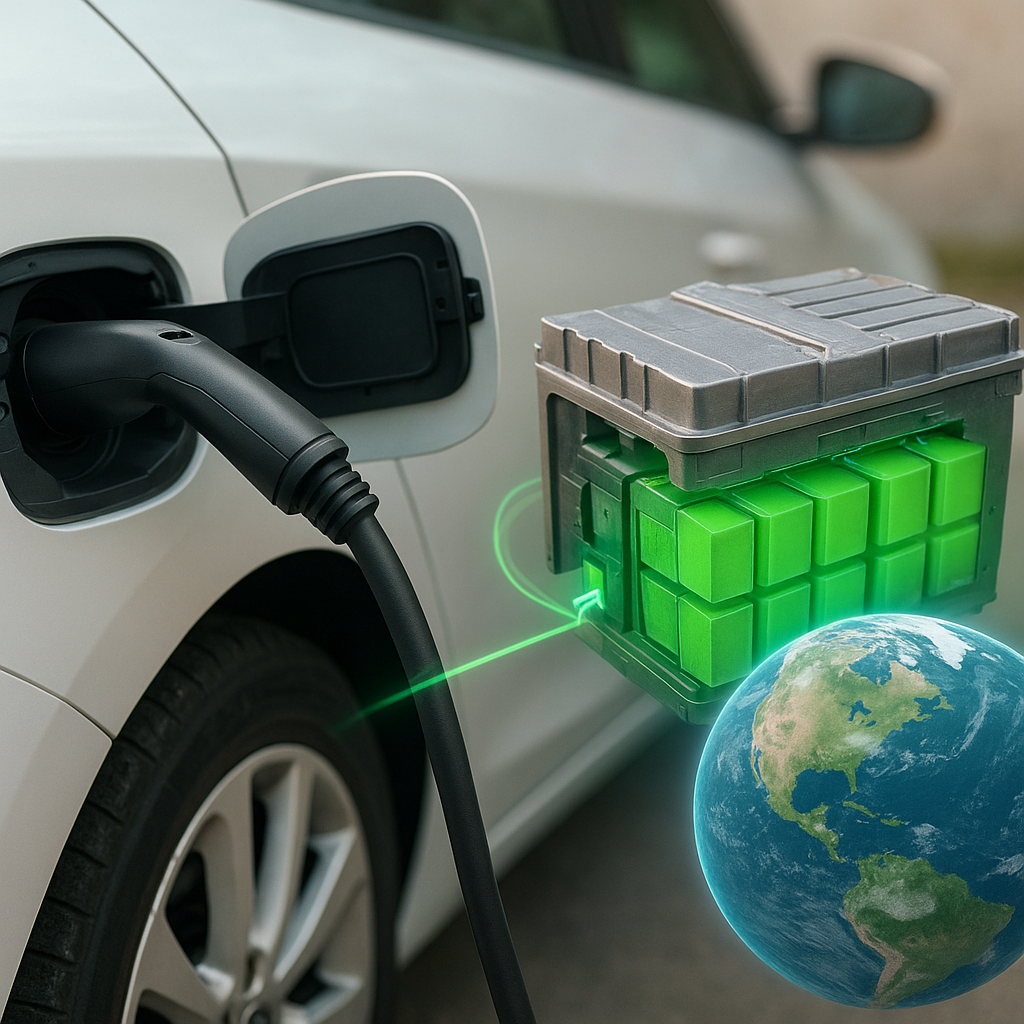
The rapid growth of electric vehicles (EVs) is reshaping transportation, energy systems, and global industry. Central to this transformation is the battery — its chemistry, design, and the raw materials that enable high performance. Among those materials, cobalt has been a focus of concern due to supply risk, ethical issues, and cost. This article explores how future EV technologies and policy choices may significantly reduce dependence on cobalt, mapping the technical, economic, and systemic pathways that can lead to a more resilient and sustainable mobility ecosystem.
Materials and Cell Chemistry Innovations
Battery chemistry is the most direct lever for reducing cobalt use. Traditional high-energy lithium-ion cells — especially NMC (nickel-manganese-cobalt) and NCA (nickel-cobalt-aluminum) cathodes — rely on cobalt to stabilize structure and improve cycle life. However, a range of alternative chemistries and modifications are already diminishing cobalt’s centrality.
High-nickel and low-cobalt cathodes
Battery manufacturers have pushed nickel content higher (e.g., NMC 811) to boost energy density while lowering cobalt fractions. These high-nickel formulations replace a large share of cobalt with nickel, but they introduce their own challenges: thermal stability, sensitivity to manufacturing defects, and increased demand for nickel. Ongoing advances in coating materials, particle engineering, and electrolyte additives help stabilize high-nickel cathodes, enabling lower cobalt usage without sacrificing performance.
Cobalt-free and low-cobalt chemistries
Several cathode classes eliminate cobalt entirely or use negligible amounts:
- LiFePO4 (LFP): A proven cobalt-free chemistry that offers excellent cycle life, safety, and lower cost. Historically lower in energy density than NMC, LFP is increasingly adopted in many EV segments and grid storage where weight and pack volume are less critical.
- High-manganese and cobalt-free layered oxides: Research into manganese-rich cathodes and novel polyanionic materials aims to combine energy density with cost advantages.
- Emerging chemistries: Lithium-sulfur and lithium-air promise very high theoretical energy density with minimal reliance on traditional transition metals. Their commercialization hinges on solving issues such as polysulfide shuttling and cycle degradation.
Transitioning to these alternatives will often require system-level changes (different battery management strategies, cooling systems, and packaging) but can materially cut cobalt demand for many vehicle classes.
Battery Architecture, Manufacturing and System Design
Reducing cobalt dependence is not solely a materials problem; it also involves smarter battery architecture and manufacturing innovation. Design and engineering choices can either amplify or mitigate the need for cobalt-containing chemistries.
Cell-to-pack and cell-to-chassis integration
More efficient use of space and mass at the pack level — such as cell-to-pack or cell-to-chassis designs — improves overall vehicle energy density without requiring higher cobalt content. By optimizing how cells are arranged and thermally managed, OEMs can achieve equivalent range with cathodes that use less cobalt.
Advanced manufacturing and quality control
Improvements in electrode uniformity, particle morphology control, and coating techniques reduce defects that previously forced higher cobalt content for robustness. High-precision manufacturing enables the reliable use of less-stable, low-cobalt chemistries by minimizing the variability that leads to premature degradation or safety incidents.
Electronics, BMS and charging strategies
High-performance battery management systems (BMS), adaptive charging algorithms, and improved thermal controls extend cell life and allow chemistries with less intrinsic stability (and thus less cobalt) to meet automotive longevity requirements. Faster, more intelligent charging can also be tuned to fewer stress cycles, reducing the need for cobalt as a stabilizer.
Alternative Battery Technologies
Beyond incremental improvements to lithium-ion, several alternative storage technologies could drastically shift raw material demand.
Solid-state batteries
Solid-state batteries replace liquid electrolytes with solid conductors. They can enable lithium metal anodes, delivering higher energy density and potentially allowing the use of cathodes with lower cobalt or different chemistries entirely. If solid electrolytes solve interface stability and manufacturing scale-up, they could enable cobalt-free cathodes while improving safety.
Sodium-ion and multivalent systems
Sodium-ion batteries use abundant sodium instead of lithium and avoid cobalt entirely. Current sodium-ion cells have lower energy density, but improvements in electrode materials and cell engineering are narrowing the gap for certain vehicle segments and heavy-duty applications. Multivalent systems (magnesium, aluminum) remain more experimental but present long-term pathways that sidestep cobalt and significantly change resource geopolitics.
Lithium-sulfur and other novel chemistries
Lithium-sulfur systems, using sulfur cathodes, are attractive because sulfur is abundant and cheap. Their commercialization depends on solving cycle life and efficiency issues. If successful, they could substantially reduce reliance on cobalt and other transition metals.
Recycling, Second Life, and Circular Economy
Material recovery and circular design are essential to lowering primary cobalt demand. Strategies that keep cobalt in the loop or avoid its initial extraction directly reduce dependence.
Mechanical, hydrometallurgical and direct recycling
Modern recycling techniques range from pyrometallurgical smelting to hydrometallurgical leaching and advanced direct recycling methods that preserve cathode active materials for reuse. Increasing collection rates and deploying efficient recycling infrastructure can reclaim a significant share of cobalt from end-of-life EV batteries.
Second-life applications
EV packs that no longer meet automotive range or power requirements can often serve in stationary storage, extending the useful life of cobalt-containing materials. A robust second-life market buys time, reducing near-term demand for newly mined cobalt while recycling systems mature.
Design for disassembly and material traceability
Designing batteries so they are easier to disassemble, and improving traceability of cell components, increases the efficiency and economics of recycling. Policies and standards that require labeling, serial tracking, and material passports will make recycling commercially viable at scale.
Supply Chain, Geopolitics and Policy Measures
The concentration of cobalt production and processing raises ethical and strategic concerns. Addressing these requires coordinated policy, industry practices, and investment.
Geopolitical risks and ethical sourcing
More than 60% of mined cobalt originates from the Democratic Republic of Congo, where artisanal mining has been linked to unsafe working conditions and child labor. Downstream refining and cathode precursor production are heavily concentrated in a few countries. Diversifying sources and developing localized processing capacity will reduce vulnerability to supply shocks.
Regulatory levers and incentives
Governments can accelerate cobalt reduction through a combination of regulations and incentives:
- Procurement standards that favor low-cobalt or cobalt-free chemistries for fleet purchases.
- R&D funding for alternative chemistries and recycling technologies.
- Extended producer responsibility and recycling mandates that make material recovery mandatory.
- Trade policies and strategic partnerships to ensure responsible sourcing and processing capacity outside concentrated regions.
Industry collaboration and transparency
OEMs, suppliers, recyclers, and investors can create standards for traceability and environmental-social governance (ESG). Collaborative initiatives, such as material passports and open data platforms, can help buyers choose responsibly sourced cathode materials and accelerate market adoption of alternatives like LFP or sodium-ion.
Economic and Market Dynamics
Cost trajectories and market forces will determine how quickly cobalt dependence declines. Several dynamics are especially important.
Cost competition and scale economies
As manufacturing scale grows for alternative chemistries (e.g., LFP or sodium-ion), their unit cost will fall, making them competitive for more vehicle segments. Simultaneously, improving yields for high-nickel manufacturing reduces the incremental cost of low-cobalt cells.
Consumer expectations and segment-specific solutions
Not all EVs require the highest possible energy density. City cars, delivery vans, and buses can adopt cobalt-free chemistries without compromising user experience. Premium long-range vehicles may retain higher-energy chemistries longer, but improved packaging and new battery types can gradually close the gap.
Investment in upstream and downstream capabilities
Private and public capital is already shifting toward battery recycling, advanced materials research, and non-coercive mining practices. Continued investment will be critical to enabling alternatives that reduce cobalt demand at scale.
Practical Steps for Stakeholders
Reducing cobalt dependence requires action across the ecosystem. Key measures include:
- OEMs: Diversify chemistries across product lines, invest in battery management and pack design, and commit to transparent sourcing policies.
- Suppliers: Scale low-cobalt and cobalt-free cathode production, improve manufacturing precision, and support direct recycling processes.
- Policymakers: Fund R&D, set recycling targets, and enforce ethical sourcing standards to reduce human-rights risks in the supply chain.
- Researchers: Accelerate development of solid-state, sodium-ion, and sulfur-based systems while focusing on manufacturability and lifecycle performance.
- Investors: Back companies enabling alternative chemistries, recycling infrastructure, and materials discovery platforms.
Technological innovation combined with bold policy and industry coordination can shift the battery landscape away from heavy reliance on cobalt. Through chemistry shifts, smarter cell and pack design, robust recycling systems, and alternatives to lithium-ion where appropriate, the EV sector can become less vulnerable to supply shocks and more aligned with long-term sustainability goals. These pathways will shape not only material demand, but also the geographic and economic contours of the global automotive and energy industries.
