
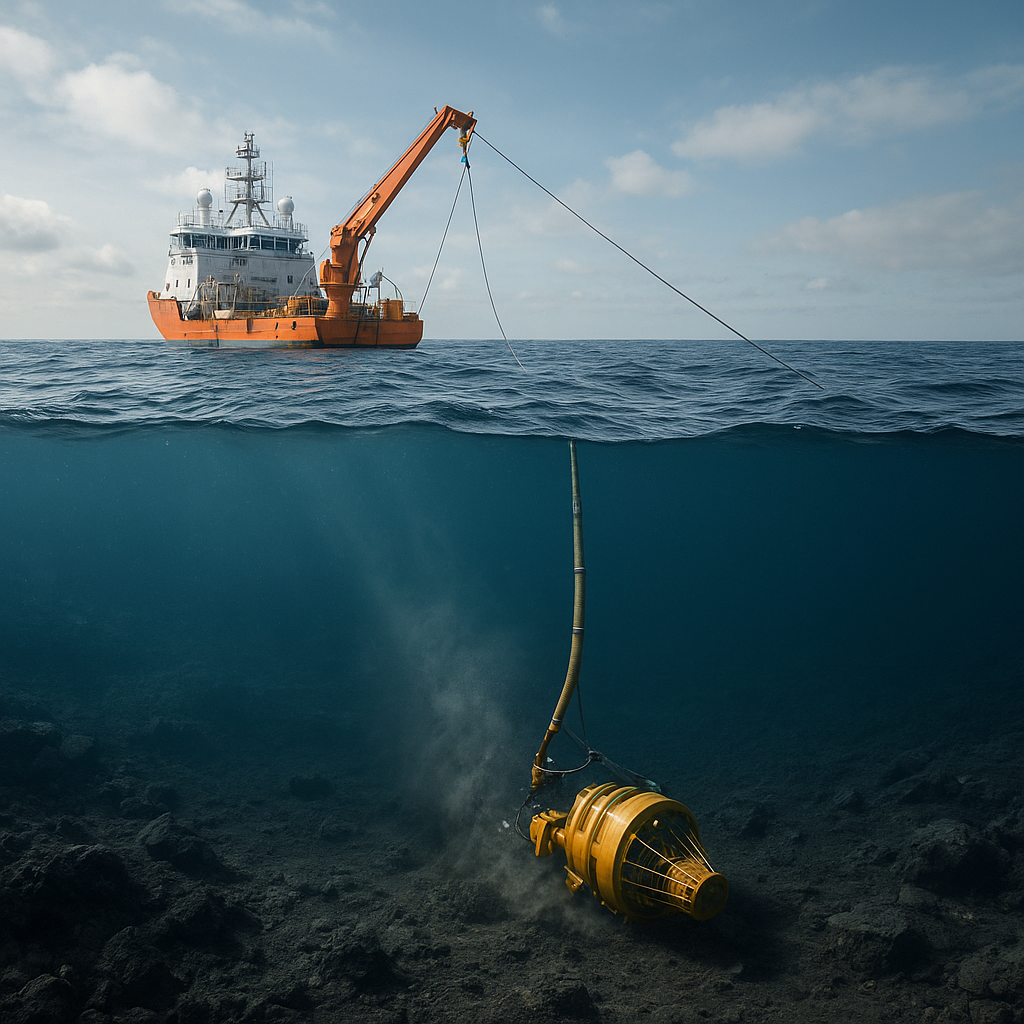
The prospect of extracting mineral wealth from the ocean floor has moved from science fiction into boardroom strategy over the last decade. As terrestrial deposits become harder to access and demand for batteries and electronics rises, the idea of harvesting resources from abyssal plains and seamounts could fundamentally reshape how the world sources critical raw materials. This article explores the scientific, technological, environmental and geopolitical dimensions of deep-sea mineral development and how those forces could alter global mineral sourcing patterns.
The resource potential under the waves
Marine environments host a range of mineral-rich formations. The most discussed are polymetallic nodules that litter some abyssal plains, massive sulfide deposits found near hydrothermal vents on mid-ocean ridges, and cobalt-rich ferromanganese crusts on seamount flanks. These deposits contain concentrations of cobalt, nickel, copper, manganese, rare earth elements and other elements that are increasingly classified as critical for modern technologies such as electric vehicle batteries, renewable energy systems and advanced electronics.
Scale and distribution
Estimates suggest that in certain regions of the Pacific, nodules could hold quantities of metals comparable to, or even exceeding, some terrestrial reserves. However, these resources are unevenly distributed and concentrated in areas governed by different legal regimes—some inside national exclusive economic zones (EEZs) and others in the international seabed area beyond national jurisdiction. The International Seabed Authority (ISA) is responsible for administering exploration and potential exploitation in the latter area, creating an institutional interface that is unique compared to terrestrial mining.
Economic attractiveness
Extraction economics will depend on deposit grade, depth, accessibility, the price of commodities, and the cost of developing specialized extraction and processing systems. For manufacturers and nations seeking to diversify supply, the existence of deep-sea resources represents a potential hedge against terrestrial supply risks, but only if the costs and risks of recovery and processing can be managed competitively.
Key minerals found in the deep sea include:
- Manganese
- Cobalt
- Nickel
- Copper
- Rare earth elements
Technologies, operations and supply-chain implications
Extracting minerals from kilometers beneath the surface requires innovations in robotics, subsea engineering, and onboard processing. Remotely operated vehicles, riser systems, seabed collectors and riser vessels are among the technologies being developed or adapted. Advances in subsea technology could lower operating costs and increase productivity, but they also raise technical, regulatory and logistical challenges.
From ocean floor to factory
Once recovered, deep-sea materials will need to be transported, processed and integrated into existing smelting and refining infrastructures. This could spur new maritime logistics chains and investments in coastal processing facilities. For countries currently dependent on a small number of terrestrial suppliers, access to marine sources could reduce strategic vulnerability, diversify trade partners, and change pricing dynamics for certain metals.
Implications for recycling and terrestrial mining
Developing marine supplies may alter incentives on land. If deep-sea extraction becomes economically viable, it could reduce pressure to expand terrestrial mines in some regions but also complement land-based supply when combined with improved recycling and circular-economy measures. Industry players might rebalance investment portfolios to include both seabed and terrestrial operations, creating hybrid supply chains that respond to market signals and regulatory frameworks.
Environmental, legal and social considerations
The deep sea is one of Earth’s least-known ecosystems. Disturbance from mining operations—physical removal of habitat, noise, light, plumes of sediment—could have long-lasting and possibly irreversible effects on fragile species adapted to stable, low-energy conditions. Concerns about loss of biodiversity and disruptions to deep-sea food webs are central to debates about whether and how exploitation should proceed.
Environmental risks and unknowns
Research has shown that some deep-sea communities recover extremely slowly following disturbance. Sediment plumes can smother organisms far from the extraction site, and harmful chemicals may be mobilized. Baseline scientific data remain sparse for many prospective mining areas, making impact prediction and monitoring difficult. These uncertainties complicate environmental impact assessments and risk management.
Regulatory landscape and governance
Governance frameworks will shape whether and how deep-sea resources are developed. Within national jurisdictions, countries can set their own permitting and environmental standards. In international waters, the ISA seeks to balance resource access with protection, but treaty-based rule-making is a slow process subject to competing interests from states, industry, scientists and civil society. Strong governance will be essential to set environmental baselines, enforce standards, and ensure equitable benefits sharing.
- Stakeholders: coastal states, flag states, private companies, environmental NGOs, indigenous and local communities, downstream manufacturers, and international bodies such as the ISA.
- Potential mitigation measures: spatial protection, adaptive management, no-mining zones, robust monitoring, and restoration research.
Geopolitical and economic consequences
Deep-sea resources could shift the geopolitical map of critical-mineral supply. Countries with proximate seabed resources or advanced maritime capabilities might gain strategic advantages. At the same time, nations that currently dominate terrestrial production and refining could face new competition or choose to invest in marine ventures to maintain influence over supply chains.
Supply security and market dynamics
Access to seabed metals could help diversify sources for battery metals and rare earths, potentially stabilizing prices and reducing single-country dependencies. However, market entry by marine sources could also create new supply gluts, affect investment in land-based mining and recycling, and influence the direction of technology choices (for instance, alternative chemistries that require different raw materials).
Ethical and social equity issues
Economic benefits from seabed mining must be weighed against the rights and livelihoods of coastal communities and the global commons. Questions of who benefits, how revenues are shared, and how environmental costs are accounted for are central. International policy decisions will need to address equitable distribution, transparent contracting, and inclusive stakeholder engagement to avoid repeating patterns of extractive inequity seen in some terrestrial contexts.
Paths forward: balancing opportunity and caution
Deep-sea mineral harvesting presents both an opportunity to expand global supply and a set of profound unknowns. Responsible approaches will likely emphasize phased development, rigorous scientific baseline studies, strong environmental safeguards, transparent regulatory regimes, and investment in recycling and substitution to reduce overall demand pressures. The pace and form of development will be driven by technological readiness, commodity markets, legal decisions, and public acceptance.
Whether deep-sea resources become a major component of global mineral sourcing will depend on how stakeholders reconcile the potential economic and strategic gains with the environmental risks and governance challenges. The choices made now by governments, industry and civil society will determine if the deep ocean becomes a reliable alternative supply or a cautionary tale about the limits of resource extraction in fragile environments.
