
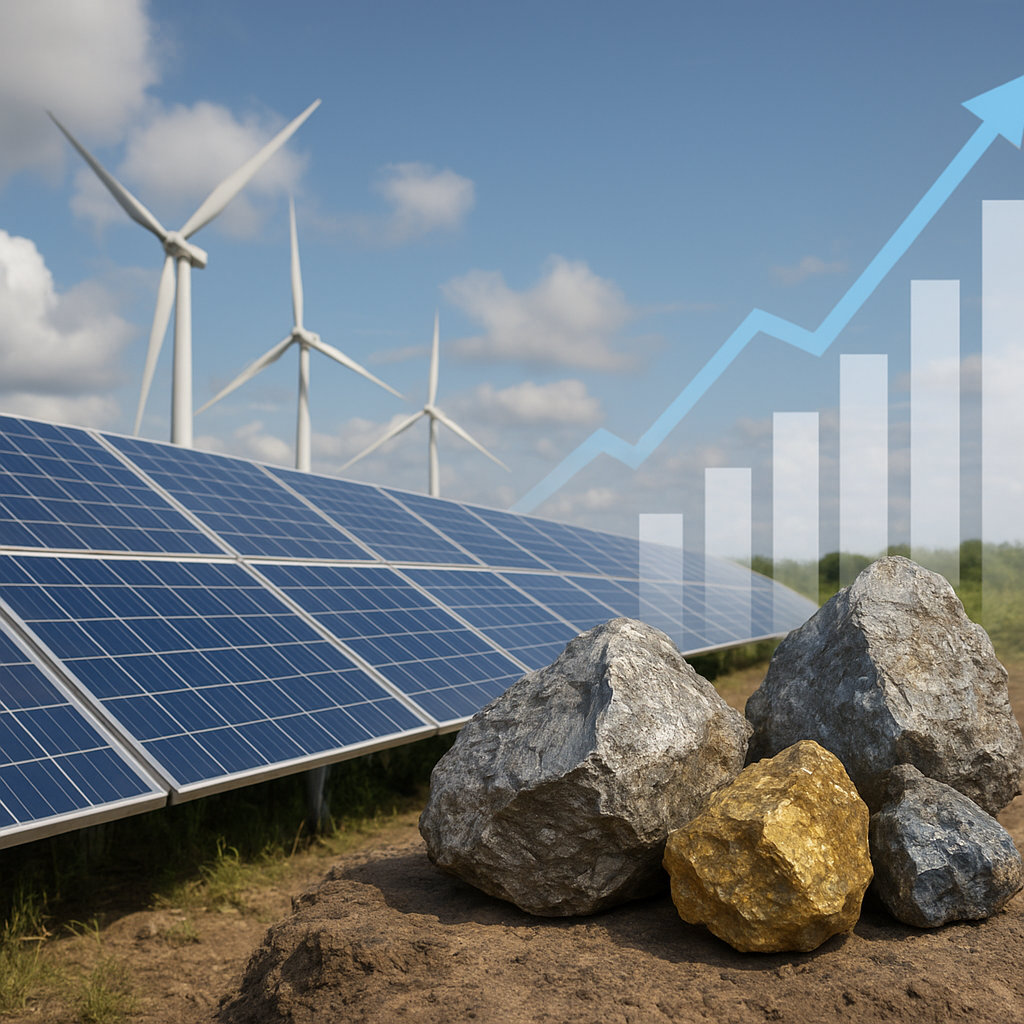
The global transition to low-carbon energy and transport systems has profound implications for the markets that supply the raw materials underpinning this transformation. As governments tighten emissions targets and roll out incentives for clean technologies, the interplay between public policy and resource economics reshapes demand patterns, investment decisions, and geopolitical alignments. This article examines how modern climate policy affects the production, trade and pricing of critical minerals, and explores the risks and opportunities that emerge for companies, communities and policymakers.
Demand drivers: policy translating ambition into mineral needs
Ambitious climate targets are perhaps the clearest mechanism through which public policy alters mineral markets. Mandates for emissions reductions, vehicle electrification timelines, renewable energy procurement and building efficiency standards create predictable forward demand for a set of commodities needed in low-carbon technologies.
Electric mobility and grid-scale storage
Rapid deployment of electric vehicles and stationary batteries is a primary channel. Policies such as zero-emission vehicle mandates, purchase subsidies, and fuel economy standards increase demand for lithium, nickel, cobalt, manganese and graphite. Requirements for grid-scale energy storage to integrate variable renewables further amplify the need for these minerals. As governments adopt tighter timelines, procurement curves steepen and create concentrated surges in raw material consumption.
Renewables, grid upgrades and rare earths
Policy-driven expansion of wind, solar and power-electronics-intensive grids also raises demand for copper, aluminum, silicon and various rare earth elements used in permanent magnets and power electronics. Clean energy targets and renewable portfolio standards accelerate deployment, while public investments in transmission and grid modernization increase the intensity of metal requirements per megawatt of capacity installed.
Quantities, quality and timing
Crucially, policy does not simply increase the volume of demand; it shapes the timing and composition. Accelerated timelines mean mining and refining capacity must be built faster than normal market cycles allow, leading to potential mismatches between demand peaks and supply responses. Quality specifications driven by technology choices (e.g., high-nickel cathodes vs. lithium iron phosphate) influence which mineral varieties experience pressure.
Supply-side responses and constraints
On the supply side, the interaction with policy is complex. Resource geology defines physical availability, but permitting regimes, environmental safeguards and community consent — often strengthened in response to broader sustainability goals — determine how quickly new capacity can be brought online.
Permitting, environmental regulation and social license
Stronger environmental safeguards and community engagement requirements, motivated by climate and broader sustainability priorities, can lengthen permitting timelines for new mines and processing facilities. While these rules aim to reduce negative impacts, they can create short-term constraints, raising prices and spurring competition for existing deposits. Projects built with higher environmental and social standards may command higher upfront costs but can reduce long-term reputational and operational risks.
Processing, refining and chokepoints
Many countries that consume critical minerals lack domestic refining capacity, creating chokepoints in the value chain. Climate policy that stimulates demand without addressing midstream processing capacity can expose economies to concentration risk. As a result, governments may introduce incentives or restrictions to encourage domestic processing, or to secure access through trade agreements and stockpiles.
Resource nationalism and strategic controls
As strategic importance rises, some producing countries may respond with export controls, taxes or domestic content rules to capture more value locally. Geopolitics then becomes intertwined with climate policy: importing countries seeking secure supplies may diversify sources, invest abroad, or form alliances, while producing countries may leverage their resource endowments for geopolitical advantage.
Policy instruments shaping market behavior
Different policy tools produce different market outcomes. Understanding these mechanisms clarifies how governments can align climate ambition with resilient mineral supply chains.
Carbon pricing and technology-neutral incentives
Carbon pricing mechanisms (carbon taxes or cap-and-trade) alter relative costs across technologies, indirectly influencing demand for minerals used by low-carbon options. When carbon is priced effectively, markets may favor solutions that reduce emissions at lowest cost, potentially encouraging deployment of mineral-intensive alternatives when they offer superior lifecycle emissions performance.
Targeted subsidies, mandates and procurement
Targeted subsidies (for EVs, battery manufacturing, renewable deployment), mandates (e.g., ZEV mandates) and government procurement programs have a direct effect on specific mineral markets by creating concentrated demand for particular chemistries and components. These instruments can be used to steer industry toward more sustainable mineral sourcing, domestic processing, or recycling through conditionality and public-private partnerships.
Trade policy and critical mineral lists
Many governments now produce strategic lists of critical minerals and design trade measures to protect supply chains. Tariffs, export restrictions, and investment screening for mining and processing projects are common. While such measures aim to increase resilience, they risk fragmenting global markets and reducing efficiency if applied excessively.
Market dynamics: price signals, investment and innovation
Policy-driven demand signals affect price formation and the allocation of investment across the value chain. Market participants respond by reallocating capital, changing technology choices and accelerating research into alternatives.
Price volatility and speculative behavior
Rapid changes in demand expectations can trigger price spikes and volatility, which in turn stimulate speculative investment and short-term supply responses. Volatile prices can deter long-term investment in responsible mining if lenders and developers cannot secure stable offtake agreements. Policy tools like long-term procurement contracts and public guarantees can reduce financing risk.
Shifts in investment flows
Public incentives and predictable demand pull private capital into exploration, mine development, and downstream processing. Nations that combine clear policy signals with investment-friendly frameworks tend to attract more capital. Conversely, uncertainty about future policy direction — e.g., changing subsidies or regulatory reversals — can create investment vacuums.
Technology choice and substitution
Where mineral supply is constrained or prices rise, innovation can change the material intensity of clean technologies. Examples include alternative battery chemistries that reduce or eliminate cobalt, or magnet designs that minimize rare earth use. Policy can accelerate such innovation through R&D funding and standards that reward material efficiency.
Circular economy, recycling and reducing raw material intensity
Reducing dependence on newly mined materials is a central policy response. A strong circular economy agenda — encompassing design for disassembly, recycling incentives, and waste reduction — alters long-term demand trajectories for primary minerals.
Recycling scale-up and second-life markets
Policies that support collection, sorting and recycling infrastructure increase the available secondary supply of metals such as lithium, cobalt, nickel and copper. Standards for battery design and extended producer responsibility (EPR) rules make recycling more economically viable. Second-life uses for EV batteries in stationary storage can also delay recycling but extend the useful material life.
Design standards and material efficiency
Government procurement and product standards can promote designs that use fewer critical materials or favor recyclable components. These measures reduce per-unit mineral intensity and can smooth demand, but require coordination across industries and international alignment to be most effective.
Policy trade-offs and governance considerations
Climate policy that does not account for mineral market realities risks unintended consequences. Policymakers must balance decarbonization speed against supply resilience, social impacts and environmental protection.
- Speed versus resilience: Aggressive targets accelerate demand growth, but without parallel investments in mining and processing capacity they can create short-term shortages and price shocks.
- Environmental and social safeguards: Strengthening protections improves sustainability but may lengthen project timelines; capacity-building and stable regulatory frameworks can reduce frictions.
- Domestic industry support versus global cooperation: Encouraging local processing boosts resilience but can provoke trade tensions; multilateral approaches to shared standards and strategic stockpiles may mitigate risks.
Practical policy options to align climate goals with mineral security
Several pragmatic measures can help reconcile rapid decarbonization with stable mineral markets:
- Coordinate demand signals with supply-side measures: Pair EV and renewable targets with incentives for mine permitting reform, responsible investment, and processing capacity.
- Support recycling and circular design: Fund recycling infrastructure, set EPR rules, and incentivize material-efficient product design to reduce future primary demand.
- Create strategic partnerships and diversified sourcing: Pursue international partnerships, investment in allied producing countries, and stockpiles for critical shortages.
- Promote R&D for material substitutes and efficiency: Invest in alternative chemistries and manufacturing processes that lower mineral intensity.
- Develop transparent sustainability standards: Harmonize reporting and standards to ensure that increased mining meets high environmental and social benchmarks, reducing reputational risks.
Climate policy is a powerful lever reshaping mineral markets by converting decarbonization goals into specific material demands. The policy choices governments make — from procurement and subsidies to trade and environmental rules — determine whether transitions proceed with resilient, sustainable supply chains or provoke disruptive price and security challenges. Aligning ambition with strategic market interventions, international cooperation, and a robust circular economy will be essential to ensuring that the low-carbon transition is both fast and durable for societies worldwide.
