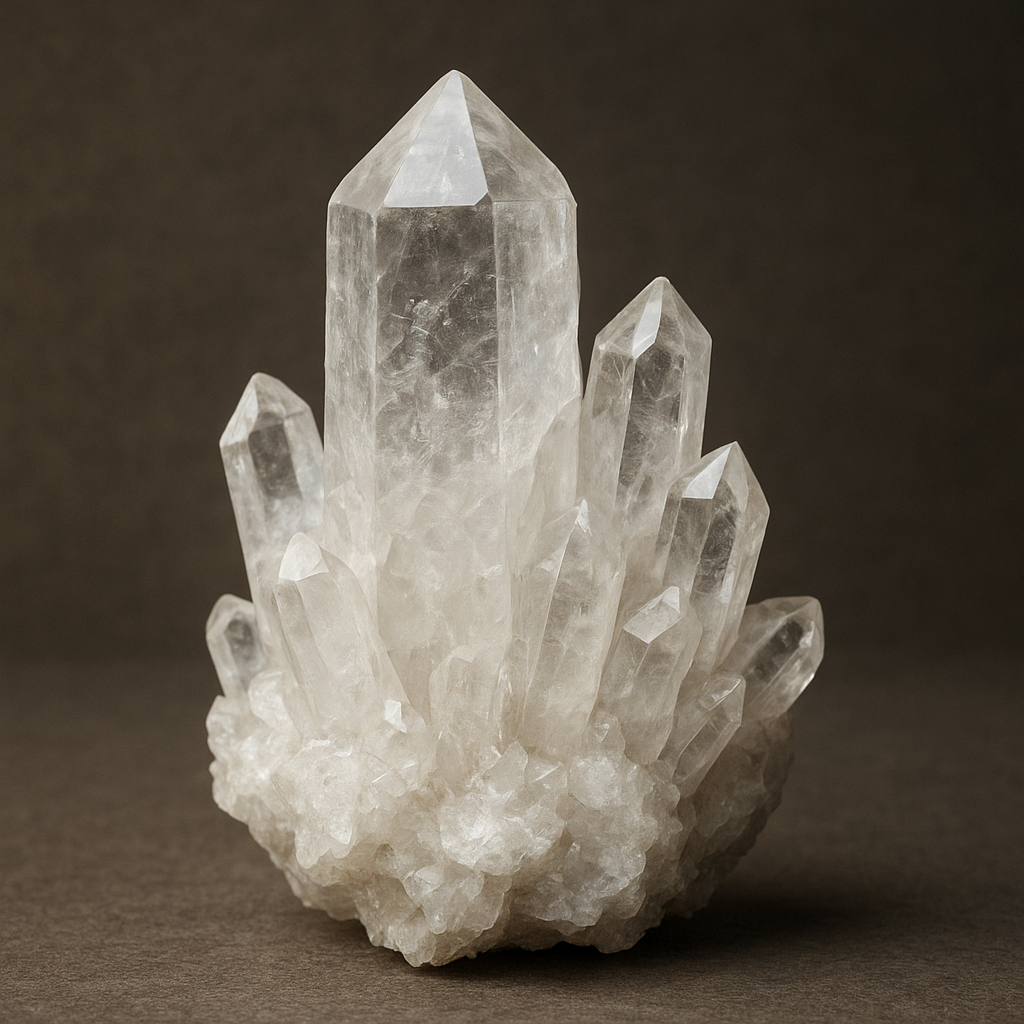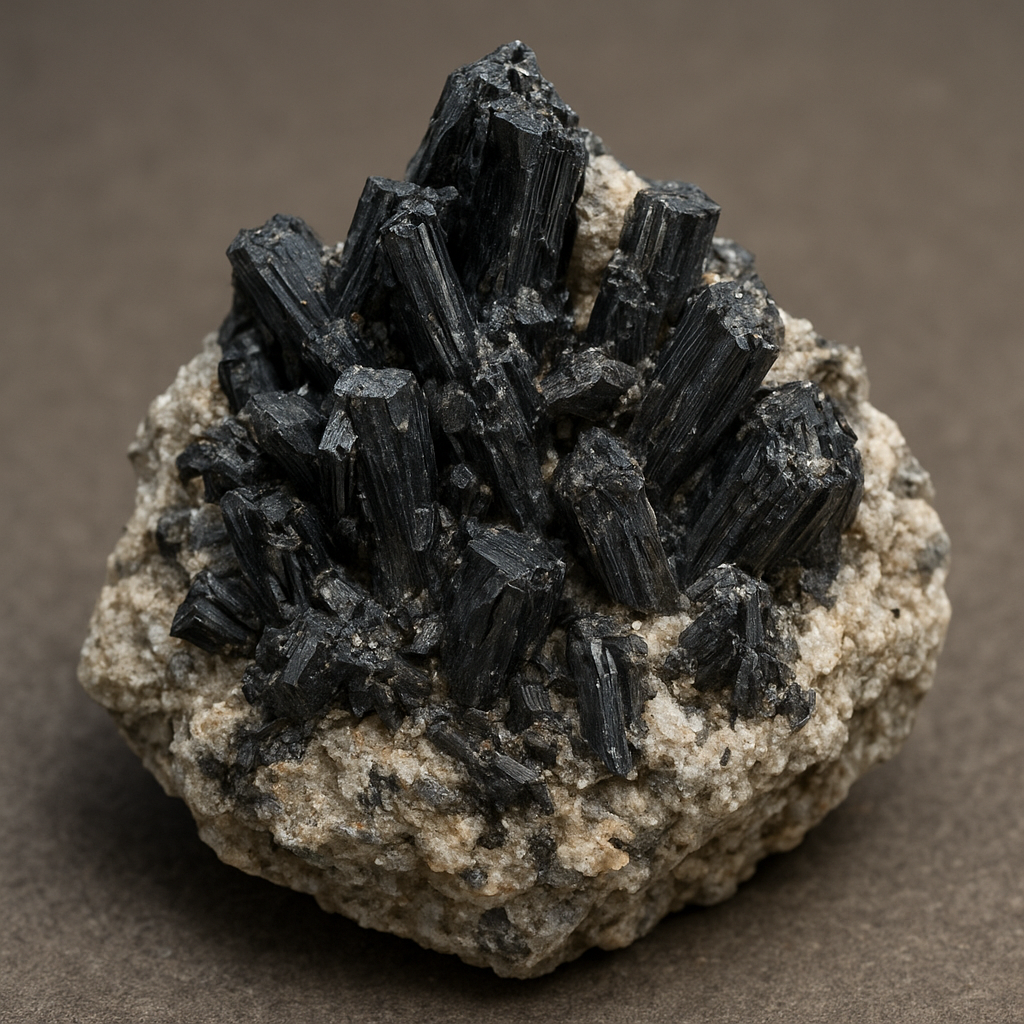
Hollandite is a distinctive member of the manganese oxide family, recognizable by its characteristic tunnel framework and complex chemistry. It is important both as a naturally occurring mineral in diverse geological settings and as a model and functional material in modern technology. This article explores where hollandite is found, how its structure and composition influence physical and chemical properties, and why its unique framework has attracted attention in fields ranging from environmental remediation to nuclear waste immobilization and electrochemical devices. Along the way, readers will find notes on synthesis, characterization techniques, and several topics of current research interest.
Occurrence and Geological Settings
Hollandite typically appears in environments that promote the formation of manganese oxides—most commonly in the oxidation zones of manganese-rich deposits, in hydrothermal veins, and in marine ferromanganese nodules and crusts. Natural hollandite is often associated with other manganese oxide minerals such as pyrolusite, cryptomelane, and pyrolusite-group phases, as well as with silicates and iron oxides in weathering profiles.
Typical geological environments
- Manganese-rich supergene zones formed by the weathering and oxidation of primary manganese ores.
- Hydrothermal veins where manganese and other transition metals precipitate from fluid phases.
- Marine nodules and crusts, where slow precipitation and diagenetic alteration produce various manganese oxide phases.
- Basaltic amygdules and volcanic settings, where alteration processes lead to infilling by manganese oxides.
Within these settings, hollandite commonly forms as a secondary mineral, replacing or intergrowing with other manganese oxides. Its presence can indicate particular redox and pH conditions during formation: environments that support partial reduction and mixed oxidation states of manganese tend to favor the mixed-valence structures that hollandite embodies.
Crystal Structure and Chemistry
The key structural feature of hollandite is a framework built from edge- and corner-sharing MnO6 octahedra that form large, channel-like cavities arranged in a 2 × 2 tunnel pattern. These channels can host large cations and water molecules, and their presence is central to many of hollandite’s properties.
Tunnel framework and composition flexibility
The hollandite-type framework can be formally described as A(Mn)8O16, where the A-site in the tunnels may be occupied by a variety of cations such as Ba, K, Pb, or even smaller alkali ions in natural and synthetic samples. The manganese sublattice commonly displays mixed-valence states (Mn3+ and Mn4+), which create electronic and structural variability. This mixed valence is often stabilized by the presence of tunnel cations and by partial substitution of Mn by other transition metals (Ti, Fe, Cr, etc.).
Because of that flexibility, hollandite accommodates many compositional variations; these substitutions and vacancies influence properties such as conductivity, magnetic behavior, and redox reactivity. The presence of tunnels is not merely a geometric curiosity: they determine the ion-exchange capacity, uptake of large guest species, and diffusion pathways for ionic transport.
Polymorphism and related structures
Hollandite is part of a broader family of manganese oxide structures often referred to as manganese oxide tunnel or layer compounds (including todorokite and cryptomelane). Differences among them lie in tunnel size and connectivity (e.g., 1×1, 2×2, 3×3 tunnel arrays) and in the degree of structural ordering. These structural relatives influence how species are incorporated or exchanged and play a role in environmental and technological performance.
Physical and Chemical Properties
Hollandite exhibits a suite of properties that arise from its mixed Mn oxidation states, tunnel-hosted cations, and adaptable framework. These properties underpin both natural geochemical roles and engineered applications.
Electrical and magnetic behavior
The mixed-valence manganese network can support electron hopping, making some hollandite-type materials electronically conductive or semiconducting. Conductivity depends on composition, temperature, and the extent of Mn3+/Mn4+ mixing. Magnetic properties derive from spin interactions between Mn ions and are sensitive to substitutional disorder and structural distortions such as Jahn–Teller effects associated with Mn3+.
Chemical reactivity and redox activity
Hollandite and related manganese oxides are strong oxidants under many conditions. They participate in redox reactions that affect trace metal mobility, organic contaminant degradation, and nutrient cycling in soils and sediments. The tunnels allow sorption and exchange of cations, a property exploited for trapping ions such as cesium in engineered systems.
Thermal and mechanical characteristics
Thermal stability varies with composition: substitution of Mn by tetravalent cations (e.g., Ti) can stabilize the structure at higher temperatures, while dehydration and reduction at elevated temperatures can collapse frameworks. Mechanically, the framework is robust enough for many ceramic processing routes but can be susceptible to microcracking upon rapid thermal changes or extensive chemical alteration.
Applications and Technological Uses
Interest in hollandite extends well beyond mineralogical curiosity because its structural and chemical traits make it useful in several applied fields.
Nuclear waste immobilization
One of the most significant applications being explored is the use of hollandite-type ceramics to immobilize radionuclides, especially alkali and alkaline-earth fission products. The tunnel sites can host large monovalent cations such as Cs+ or divalent species like Sr2+, making hollandite a candidate phase for containment of problematic isotopes as part of durable waste forms designed to resist leaching and structural degradation. The ability to incorporate a range of substitutional elements in the manganese framework also helps tailor chemical durability.
Catalysis and environmental remediation
Manganese oxides are widely studied as oxidation catalysts; hollandite and its relatives show promise for heterogeneous catalytic applications, including oxidation of volatile organic compounds, and for mediating redox-driven transformations of pollutants in soils and waters. The catalysis potential arises from surface reactivity, oxygen mobility in the lattice, and the capacity to mediate electron transfer through mixed-valence Mn centers.
Ion exchange and sequestration
The capacity of hollandite to trap guest ions in its tunnels is exploited for selective sequestration and ion exchange technologies. In addition to engineered immobilization of radionuclides, research explores removal of hazardous cations from wastewater, selective uptake of heavy metals, and controlled release systems where tunneled species can be exchanged under selected conditions. The term ion exchange in this context highlights both natural sorption processes and designed remediation strategies.
Electrochemical and energy storage roles
Some hollandite-type oxides are investigated as battery electrodes and supercapacitor materials. Their ability to reversibly host cations within tunnels lends itself to insertion-type electrochemistry. Studies consider hollandite-based electrodes for alkaline batteries, Li-ion analogues, and other systems where ionic mobility and structural stability during charge/discharge cycles are critical. Advances in tailoring stoichiometry and microstructure aim to improve cyclability and capacity for energy storage applications, linking hollandite chemistry with broader research in electrochemistry.
Synthesis, Substitution, and Tailoring Properties
For practical use, hollandite-type materials are commonly synthesized in the laboratory by several routes that allow control over composition, particle size, and degree of crystallinity.
- Hydrothermal synthesis: produces crystalline hollandite at moderate temperatures and pressures, often yielding well-formed crystals suitable for structural studies.
- Solid-state reaction: traditional high-temperature routes combining oxide and carbonate precursors to form hollandite ceramics; useful for bulk material preparation and waste-form simulations.
- Sol–gel and precipitation methods: enable finer control over particle size and homogeneity, favoring nanoscale hollandite for catalytic and electrochemical applications.
- Molten salt and ionothermal techniques: facilitate rapid crystallization and doping with specific cations by using a molten salt medium to promote ion mobility.
Substitutional chemistry—replacing some Mn with Ti, Fe, or other cations—alters oxidation state balance, stabilizes the framework, and can enhance durability or conductivity. Synthetic strategies deliberately introduce tunnel cations (Ba, K, Cs) or vacancy ordering to tune properties for specific end-uses such as immobilization of radioactive cesium or improving ionic conductivity for electrochemical devices. The solid-state processing approach remains a workhorse for scalable manufacturing of hollandite ceramics for engineering trials.
Characterization Techniques
Understanding hollandite requires a combination of structural, chemical, and spectroscopic tools. Common methods include:
- X-ray diffraction (XRD) to determine crystal symmetry, lattice parameters, and phase purity.
- Electron microscopy (SEM, TEM) to observe morphology, tunnel arrangement, and nanoscale defects.
- X-ray absorption spectroscopy (XAS) and X-ray photoelectron spectroscopy (XPS) to probe Mn oxidation states and local coordination chemistry.
- Raman and infrared spectroscopy for lattice vibrations and to detect water or hydroxyl species in tunnels.
- Thermogravimetric analysis (TGA) and differential scanning calorimetry (DSC) to study dehydration, reduction, or structural phase changes upon heating.
- Electrochemical methods (cyclic voltammetry, galvanostatic cycling) to evaluate insertion behavior, capacity, and kinetics.
Advanced microscopy combined with spectroscopic mapping can reveal how substitutions and tunnel occupancies vary at the nanoscale—information critical to optimizing performance for catalysis or waste forms.
Environmental and Geochemical Roles
In nature, hollandite-group minerals participate in redox cycling of manganese and influence the mobility of trace metals. Manganese oxides are among the most reactive minerals in near-surface environments, and their capacity to oxidize dissolved organic species, catalyze decomposition of contaminants, and scavenge heavy metals makes them central to many biogeochemical processes. Hollandite’s tunnel-hosted cations and mixed-valence Mn sites allow it to act both as a sink and a source for various elements depending on environmental conditions.
For environmental engineers and geochemists, two features are particularly important: the ability of hollandite to sorb and immobilize radionuclides and toxic metals, and its catalytic potential to transform organics. These properties are increasingly relevant to remediation of polluted sites, treatment of industrial effluents, and understanding long-term behavior of contaminants in the subsurface.
Research Directions and Challenges
Active areas of research focus on improving our understanding of ion mobility in tunnels, the long-term durability of hollandite-based waste forms, and the optimization of hollandite-type electrodes for electrochemical devices. Specific challenges include controlling defect chemistry during synthesis, predicting how hollandite responds to radiation and extreme environments, and scaling laboratory successes to industrially relevant processes.
Durability and radiation effects
When considered for immobilizing radioactive waste, hollandite must resist leaching, radiation-induced amorphization, and thermal stresses. Experimental and modeling work aims to quantify these resistances and to identify compositions that maximize performance under repository conditions.
Functional optimization
For catalysis and energy storage, work centers on enhancing specific surface area, promoting favorable redox cycles, and ensuring reversible ion insertion without structural collapse. Nanoscale engineering, composite architectures, and controlled doping are promising avenues for improving performance.
Interesting Notes and Broader Context
Hollandite’s combination of a robust oxide framework with accessible tunnels creates a bridge between mineralogy and materials science. It exemplifies how natural structures inspire engineered solutions: a mineral that forms in weathering profiles becomes a template for fixing radionuclides, catalyzing chemical reactions, and enabling ionic transport in energy devices.
- Because of its tunnel architecture, hollandite is sometimes compared to zeolites and other framework materials, though its chemistry and redox behavior are distinct due to the presence of transition-metal oxides rather than aluminosilicate networks.
- Biogeochemical interactions with bacteria and organic matter can affect the formation and transformation of hollandite in soils, influencing nutrient cycles and contaminant fate.
- Efforts to create synthetic hollandite with targeted tunnel occupants (including radioactive analogs in lab studies) illustrate how precise chemical control can translate geological forms into engineered materials for societal challenges.
As research continues, hollandite remains a rich subject where mineralogy, solid-state chemistry, environmental science, and engineering intersect. Its tunable composition and unique structure sustain both fundamental studies and pragmatic applications, making it a mineralogical template with modern technological relevance.