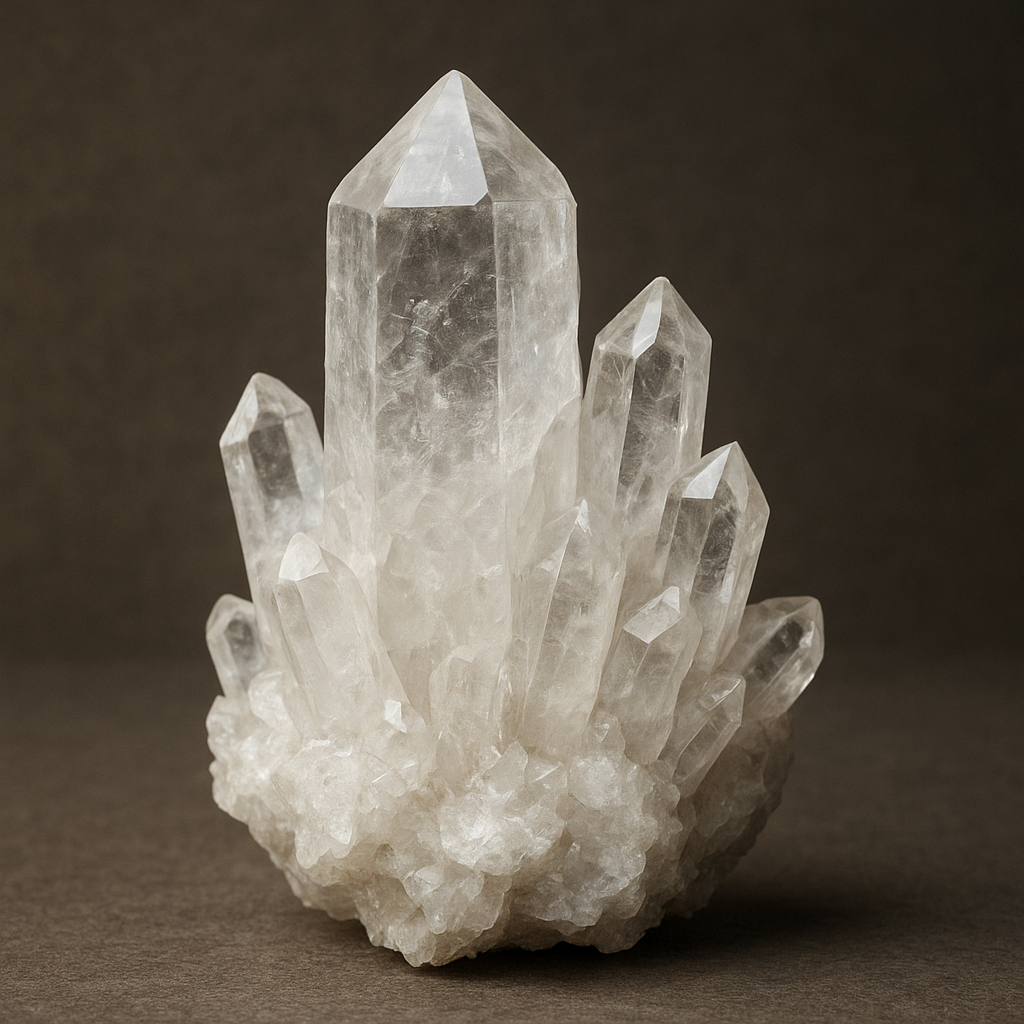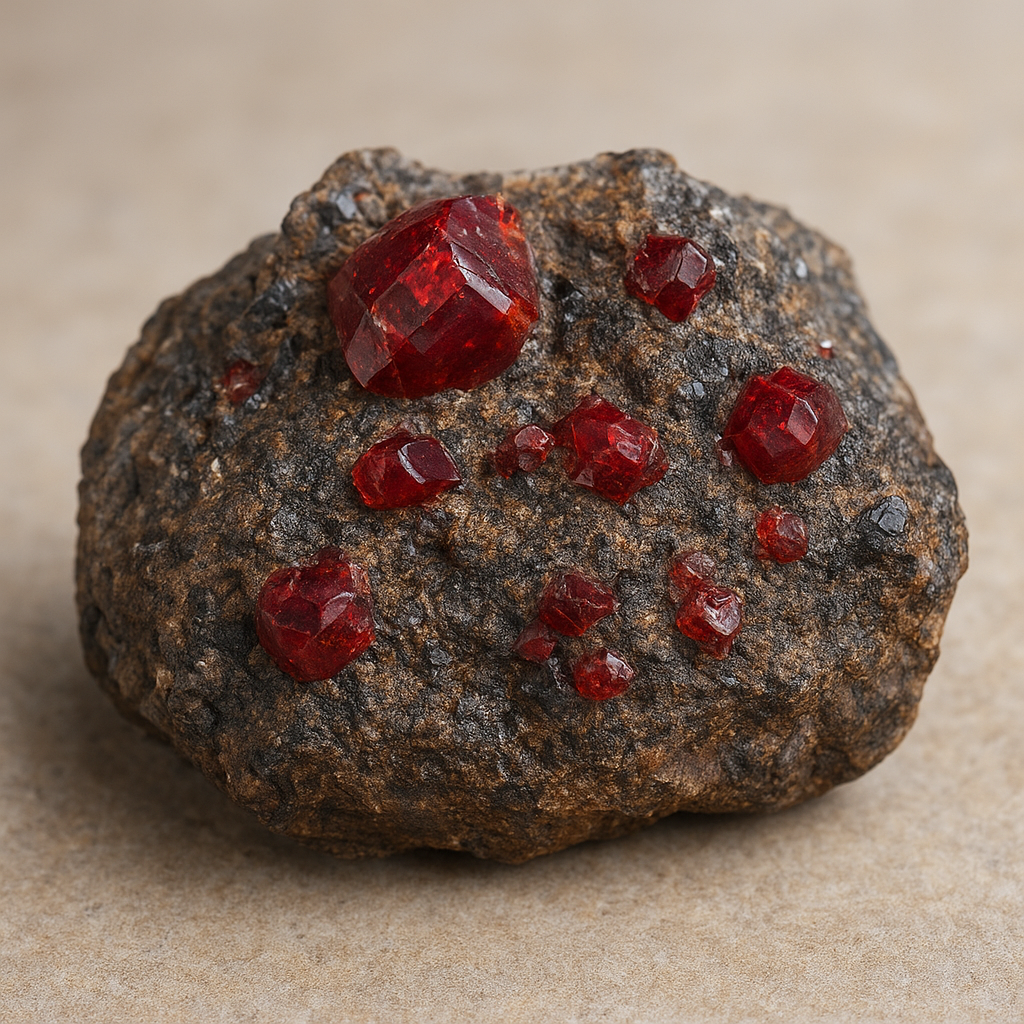
Helvite is a fascinating and visually striking mineral whose story spans geology, mineral collecting and the study of rare-element deposits. Often admired for its warm, amber to brown tones and its association with beryllium-rich environments, helvite occupies a niche interest among mineralogists and collectors. This article explores its origin, chemistry, geological settings, physical properties, practical and scientific uses, and a few intriguing facts that make helvite notable in the mineral world.
Origins, Name and Historical Context
The name helvite comes from Helvetia, the classical Latin name for Switzerland, where the mineral was first identified and described. Its discovery in alpine environments of the Swiss Alps tied it early on to classic European mineral localities, and that connection still colorates how collectors and researchers speak about the mineral today. Early descriptions emphasized its distinct color and association with other beryllium-bearing minerals, which hinted at a unique chemical signature uncommon in more ordinary rock-forming minerals.
Over the decades helvite has been recognized in a number of localities around the world, but it remains comparatively rare compared to common silicates like quartz or feldspar. Its role as a diagnostic mineral in certain specialized geological settings made it an object of interest for field geologists studying pegmatites, hydrothermal veins and metasomatic zones where beryllium and other incompatible elements concentrate.
Chemistry and Crystal Structure
At its core, helvite is a beryllium-bearing silicate with a sulfide component. The presence of both silicon and sulfur within the mineral’s framework gives it chemical and structural peculiarities that distinguish it from many other beryllium minerals. The typical description of the mineral’s composition emphasizes the coexistence of divalent cations (commonly manganese and iron), beryllium, silicate groups and sulfur, producing a distinctive assemblage that requires very specific geochemical conditions to form.
Chemical characteristics
- Silicate groups form the backbone of the structure and are linked to beryllium-bearing polyhedra.
- Sulfur appears in the structure as a distinct anionic component, which is unusual when compared to many other beryllium minerals that are purely oxide or silicate in nature.
- Substitution by iron and manganese in cation sites gives helvite a range of colors and subtle variations in physical properties between specimens.
The mineral’s internal order and bonding can be resolved with modern techniques such as X-ray diffraction and electron microprobe analyses, revealing details about site occupancy, ionic substitution and structural distortions that explain variations in color, density and luster across different samples.
Where Helvite Occurs: Geological Settings and Localities
Helvite most commonly forms in environments that are rich in beryllium and involve late-stage magmatic or hydrothermal processes. Typical geological settings include:
- Pegmatites — coarse-grained, late-stage intrusions where fluids concentrate incompatible elements like beryllium, lithium and rare metals. These settings can host helvite alongside beryl, topaz and other accessory minerals.
- Hydrothermal veins and metasomatic zones — where circulation of hot fluids alters host rocks and introduces or remobilizes beryllium and sulfur, sometimes allowing helvite to crystallize in cavities and fractures.
- Skarn and contact-metamorphic zones — where intrusion-related fluids interact with carbonate-rich country rock to produce unusual mineral assemblages that occasionally include helvite.
Notable localities include alpine occurrences in Switzerland (the type region), various European deposits, several classic North American localities in New England and the western United States, some Mexican and South American sites, and a number of localities in Asia, including China. Because of its relative scarcity and the localized chemistry required for its formation, helvite tends to be spotty in distribution—found in specific veins or pockets rather than as widespread bedrock mineralization.
Physical Properties and Identification
Helvite is recognizable to trained observers by a combination of color, luster and habit, but accurate identification typically requires instrumental analysis because the mineral’s external appearance can overlap with other yellow to brown silicates.
- Color: ranges from pale yellow to amber, orange-brown or darker brown tones; color intensity can be influenced by iron and manganese content.
- Luster: often resinous to subadamantine, giving specimens an attractive sheen that appeals to collectors.
- Crystal habit: commonly occurs as granular aggregates or as well-formed euhedral to subhedral crystals when space allowed; crystals may show complex growth patterns.
- Hardness and density: generally in the range typical for many silicate minerals; specific values depend on composition and inclusion content.
- Diagnostic methods: X-ray diffraction, electron microprobe, Raman spectroscopy and optical microscopy under polarized light are the primary tools for definitive identification.
Because helvite carries beryllium in its structure, caution is appropriate when handling specimens—especially when cutting, grinding or pulverizing them. Beryllium dust is toxic when inhaled, so studio safety and appropriate protective measures are essential during any preparation or analysis that could generate fine particulate matter.
Applications and Economic Importance
Helvite is not a major ore mineral in terms of beryllium production, simply because it is not sufficiently abundant in most deposits to serve as a primary source. Beryllium is an economically important metal used in aerospace, nuclear and electronic applications due to its stiffness, light weight and thermal stability, but industry-grade beryllium typically comes from more abundant minerals such as beryl or from specific beryllium-rich ores.
Nevertheless, helvite has a few important roles:
- Indicator mineral: Its presence points to particular geochemical conditions and can be a signpost for exploration geologists seeking beryllium-bearing pegmatites or hydrothermal systems.
- Scientific study: As a mineral with combined silicate and sulfide chemistry, helvite provides clues about fluid composition, temperature and redox conditions during the late stages of magmatic evolution.
- Collector material: High-quality crystals and attractive aggregates are valued by mineral collectors. Specimens with good color and form can command respectable prices in the mineral market.
Associated Minerals and Paragenesis
Helvite commonly appears alongside a suite of other minerals that form under similar chemical and thermal regimes. Associations often include:
- Beryl and danburite — other beryllium-bearing minerals found in pegmatitic or hydrothermal pockets.
- Topaz, fluorite and various mica species — components of late-stage pegmatitic fractions.
- Iron sulfides and other sulfide minerals — reflecting sulfur-rich fluids that coexist or follow the introduction of beryllium into the system.
The sequence of crystallization that leads to helvite formation can be complex. In many deposits helvite appears after the emplacement of major silicate phases and during the waning stages of fluid activity, when volatile-rich fluids concentrate minor elements and deposit them in open cavities or along fractures.
Collecting, Preparation and Safety
For collectors, helvite presents both opportunities and responsibilities. The mineral’s attractive colors and sometimes well-formed crystals make it a desirable specimen, but preparation and storage practices must take into account its beryllium content.
- Handling: normal handling of whole specimens is generally safe. Avoid creating dust through sawing, grinding or polishing without appropriate respiratory protection and extraction systems.
- Cleaning: gentle mechanical cleaning (soft brushes, distilled water) is preferred. Avoid aggressive chemical treatments unless conducted by experienced preparators who understand both the mineral and the risks.
- Labeling: good locality and paragenesis data greatly increases a specimen’s scientific and market value, so accurate labels are encouraged.
Research, Analytical Methods and Future Directions
The study of helvite benefits from modern analytical techniques that can resolve subtle chemical variations and the conditions of formation. Researchers commonly employ:
- X-ray diffraction (XRD) to characterize crystal structure and detect polymorphs or structural disorder.
- Electron microprobe and LA-ICP-MS for precise chemical analysis and trace-element profiling.
- Raman and infrared spectroscopy to probe bonding environments and to distinguish helvite from visually similar phases.
Current research interests often focus on the implications of helvite-bearing assemblages for understanding the mobility of beryllium and sulfur in crustal fluids, the thermodynamic conditions of late-stage magmatic systems and the role of volatiles in concentrating incompatible elements. There is also interest in how helvite and similar minerals record subtle changes in fluid composition that reflect broader processes in magmatic evolution.
Curiosities and Noteworthy Facts
Helvite’s combination of characteristics produces several interesting side notes that appeal to both hobbyists and scientists:
- Specimens with exceptionally clear, well-formed crystals are rare and highly prized by collectors for their aesthetic warmth and resinous luster.
- As a mineral that contains both silicate and a sulfur component, helvite bridges categories that are typically separated in textbook classifications, offering a window into more complex fluid-rock interactions.
- Because it is often found in association with other beryllium minerals, helvite can help reconstruct the paragenetic sequence of pegmatite and hydrothermal systems, making it valuable beyond its direct monetary worth.
Although not a mainstream industrial mineral, helvite’s scientific and collector appeal ensures that it remains a subject of interest. From its alpine origins and evocative name to its role as an indicator of unique geochemical conditions, helvite demonstrates how a single mineral species can illuminate complex processes in Earth’s crust while captivating those who appreciate the beauty and rarity of natural crystals.