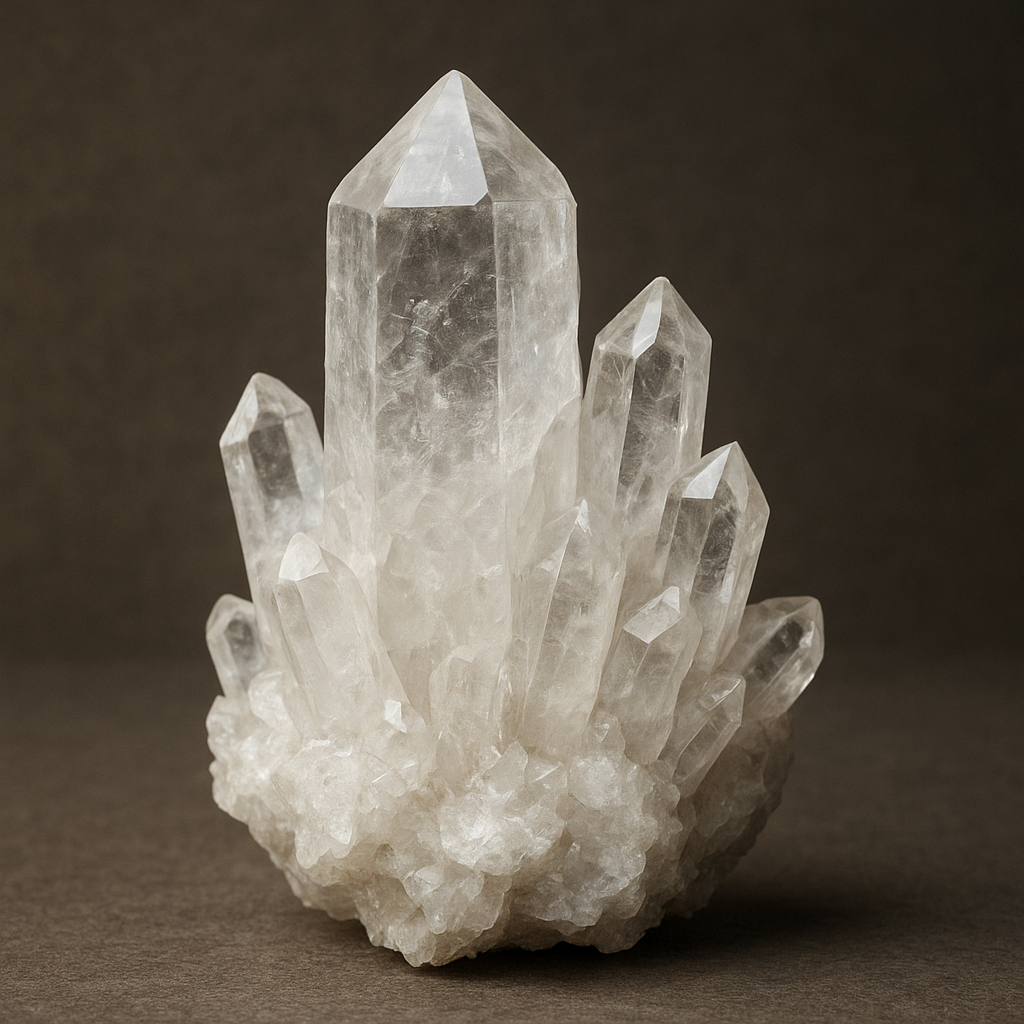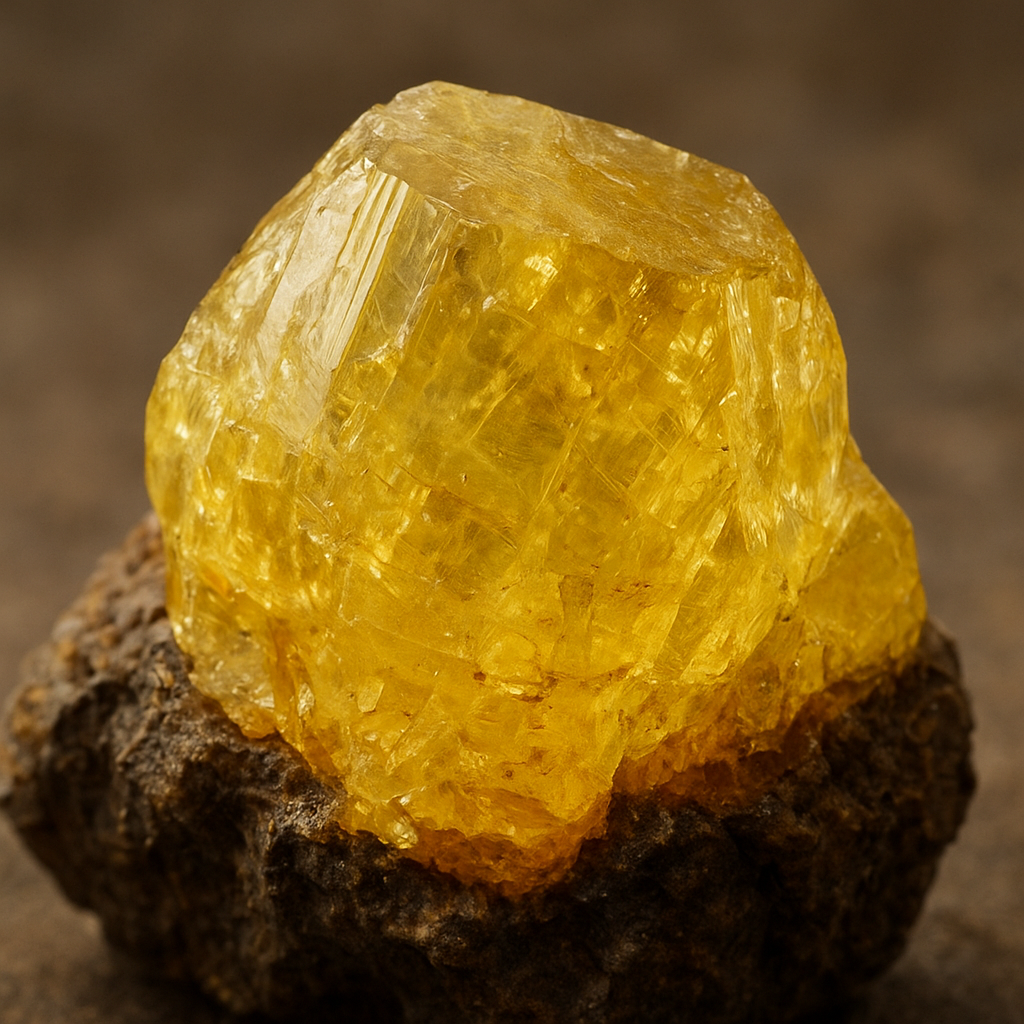
Heliodor is a captivating variety of the mineral beryl, admired for its warm, **golden** to yellow-green hues and its striking crystalline forms. This article explores the mineralogical identity of heliodor, the geological environments where it is found, its practical and aesthetic applications, and a range of cultural, historical and trade-related topics connected with this gemstone. Throughout the text, I will highlight interesting facts about formation processes, notable localities, treatment and identification challenges, and guidance for collectors and jewelers who work with this luminous gem.
What Heliodor Is: Mineralogy and Color Origins
Heliodor belongs to the beryl family, a group of cyclosilicate minerals with the chemical formula Be3Al2(Si6O18). Beryl’s most famous varieties include emerald (green), aquamarine (blue), and morganite (pink). Heliodor is the yellow to golden member of this series. The name heliodor comes from Greek roots meaning “gift of the sun,” an apt label for its cheerful tones.
Cause of the Yellow Color
The **color** of heliodor arises primarily from trace amounts of iron in the crystal lattice. Different oxidation states of iron (Fe2+ and Fe3+) and their coordination within the beryl structure create the range of yellow to golden hues. In some specimens, tiny inclusions or microscopic structures may influence tone and saturation, producing variations from pale yellow to rich, nearly amber shades. Unlike emerald, which owes its green color to chromium or vanadium, heliodor’s color mechanism is largely tied to iron chemistry and the local geochemical environment during crystal growth.
Key Physical Properties
- Crystal system: hexagonal
- Hardness: approximately 7.5–8 on the Mohs scale
- Specific gravity: around 2.63–2.80
- Refractive index: typically 1.57–1.60
- Habit: well-formed prismatic **crystals** are common, often terminated by hexagonal faces
Where Heliodor Occurs: Principal Localities and Geological Settings
Heliodor is found in pegmatites and certain metamorphic rocks where beryllium-rich fluids concentrate and crystallize. These geological settings favor the growth of large, well-formed beryl crystals. Although not as widespread as aquamarine or emerald, heliodor has been discovered in several noteworthy regions across the globe.
Primary Producing Countries
- Brazil — Particularly in Minas Gerais, Brazil produces a variety of beryl species, including fine heliodor crystals. Pegmatites here yield transparent, facetable stones and larger museum-quality specimens.
- Madagascar — Known for a wide range of gem minerals, Madagascar has produced attractive heliodors with bright color and good clarity.
- Russia — Historic localities in the Ural Mountains and other Russian pegmatites have yielded golden beryls historically referred to as heliodor.
- Ukraine and Poland — Eastern Europe has classical occurrences; the name heliodor was once commonly applied to yellow beryls from these regions.
- United States — Certain pegmatitic occurrences in the U.S. have produced yellow beryls, though larger gem-quality heliodors are less common.
Geological Environments
Heliodor forms where **beryllium-rich** magmas or fluids interact with host rocks, commonly in granitic pegmatites or high-grade metamorphic veins. The completeness of crystal growth, the balance of trace elements, and the cooling history control crystal size and color saturation. Hydrothermal fluids can later alter or enrich beryl pockets, sometimes producing zoned crystals in which color varies from core to rim.
Gemological Aspects and Market Use
As a gemstone, heliodor is prized for its sunny color and good durability. Its hardness and stability make it suitable for a variety of jewelry applications. Unlike some other beryls, heliodors often achieve pleasing color without heat treatment, though the trade occasionally applies treatments to improve or stabilize tone.
Cutting and Faceting Considerations
Heliodor is commonly faceted as oval, cushion, emerald cut, and brilliant cuts. The cutting strategy often seeks to maximize the interplay of light within the stone while preserving weight and minimizing the visibility of any internal **inclusions**. Because beryl has moderate birefringence, skilled lapidaries align the stone to enhance transparency and color. Large, well-terminated crystals allow for substantial gems with excellent clarity.
Commercial Use
- Fine-quality heliodors are used in rings, pendants, and earrings as center stones, prized for their warm hues that complement both yellow and white metals.
- In bespoke and artisan jewelry, heliodor’s sunny tones pair well with mixed-metal designs and warm accent stones such as citrine or yellow sapphire.
- Lesser-quality pieces can be used in beadwork or cabochons where color and pattern are the central appeal.
Treatments, Imitations, and Identification
Understanding treatments and imitations is essential for buyers and collectors. Heliodor is sometimes treated to alter or intensify color; heat treatment can lighten or modify yellow tones. Detection of treatment typically requires gemological testing, including spectroscopy and microscopic examination.
Common Imitations and Look-Alikes
- Citrine (quartz) — Citrine shares similar yellow tones but differs in hardness, density, and refractive index.
- Yellow sapphire (corundum) — Hardness of corundum is higher and color origin is distinct (often trace elements like iron or titanium).
- Glass and synthetic materials — Man-made glass can imitate heliodor color but will reveal telltale gas bubbles and different optical properties under magnification.
How to Distinguish Heliodor
Key diagnostic properties include its hexagonal crystal habit, refractive index, and specific gravity. Under a gem microscope, one often observes natural growth features, liquid inclusions, and distinctive birefringence patterns consistent with beryl. Advanced testing such as infrared and UV-visible spectroscopy, as well as chemical analysis for trace-element signatures (notably iron concentrations), aids in confirming identity.
Care, Durability and Practical Handling
Heliodor’s **hardness** around 7.5–8 makes it relatively durable for everyday wear, though like other beryls it is not impervious to scratching or sharp impacts. Beryl can have cleavage that may split under severe force, so protective settings are recommended for rings that will be worn daily.
Cleaning and Maintenance
- Warm, soapy water and a soft brush are safe for routine cleaning.
- Avoid harsh chemicals and ultrasonic cleaners if the stone contains fracture-filling treatments or significant internal features.
- Store heliodor separately from harder stones such as diamond and corundum to prevent abrasions.
Cultural, Historical and Aesthetic Contexts
Throughout history, yellow beryls have been associated with sunlight, vitality, and clarity of thought. Although emerald has traditionally overshadowed other beryl varieties in lore, heliodor’s name and color have inspired poetic and symbolic references in jewelry and artifacts.
Historical Notes
In the 19th and early 20th centuries, specimens from European localities were studied by mineralogists and displayed in collections. The term heliodor gained traction as gem dealers sought to market the distinctive golden beryl separately from pale yellow or greenish beryls. Today, collectors prize classic museum specimens as well as fine faceted gems from Brazil and Madagascar.
Design Trends
Modern jewelry designers use heliodor for pieces that emphasize warmth and luminosity. The gem’s color complements rose gold, yellow gold and mixed-metal combinations, and its sunlike hue is often employed to convey optimism and energy in wearable art.
Collecting, Notable Specimens and Research
For mineral collectors, heliodor crystals of exceptional size, clarity or crystal form can be highlights of a collection. High-quality helically terminated prisms and well-colored faceting material are sought after by both museums and private collectors.
Notable Finds
- Museum specimens from classic pegmatite localities that display perfect terminations and uniform golden color.
- Large facetable rough from Minas Gerais that produced gems over 10 carats with fine color and clarity.
- Crystals showing color zoning or unusual twin formations that interest mineralogists for study.
Scientific Interest
Researchers study heliodor and related beryls to understand trace-element partitioning in pegmatitic systems and to reconstruct the temperature and fluid conditions during formation. Modern analytical techniques such as LA-ICP-MS provide detailed chemical fingerprints that help distinguish geographic origin and growth history, an important factor in gem provenance studies.
Synthetic and Ethical Considerations
While synthetic beryl exists, commercial synthetic heliodor is rare. Ethical sourcing and traceability are growing concerns in the gemstone trade; buyers increasingly request information about a gem’s origin and whether mining practices respected local communities and environments.
Responsible Purchasing Tips
- Ask for origin information and certificates when purchasing high-value heliodors.
- Prefer reputable sellers who disclose treatments and provide transparent pricing.
- Consider the environmental and social impacts of mining in small-scale operations vs. formalized mines.
Related Gemstones and Comparative Notes
Heliodor is part of a broader conversation about the diversity of beryl varieties. Comparing heliodor with other beryls illuminates how slight changes in chemistry yield a spectrum of colors, each with its own market and cultural niche.
- Aquamarine — blue beryl, often pleochroic and commonly heat-treated to improve color.
- Emerald — green beryl colored by chromium or vanadium, often heavily included and commonly fracture-filled.
- Morganite — pink beryl, increasingly popular in contemporary jewelry for its delicate pastels.
Final Observations
Heliodor stands out as a sunny member of the beryl family: durable enough for beautiful jewelry, scientifically interesting to mineralogists, and aesthetically versatile for designers. Whether examined under a microscope for growth features, set into a bespoke ring, or admired as a gem-collecting highlight, heliodor exemplifies how small variations in nature’s recipe produce a radiant and engaging gemstone.