
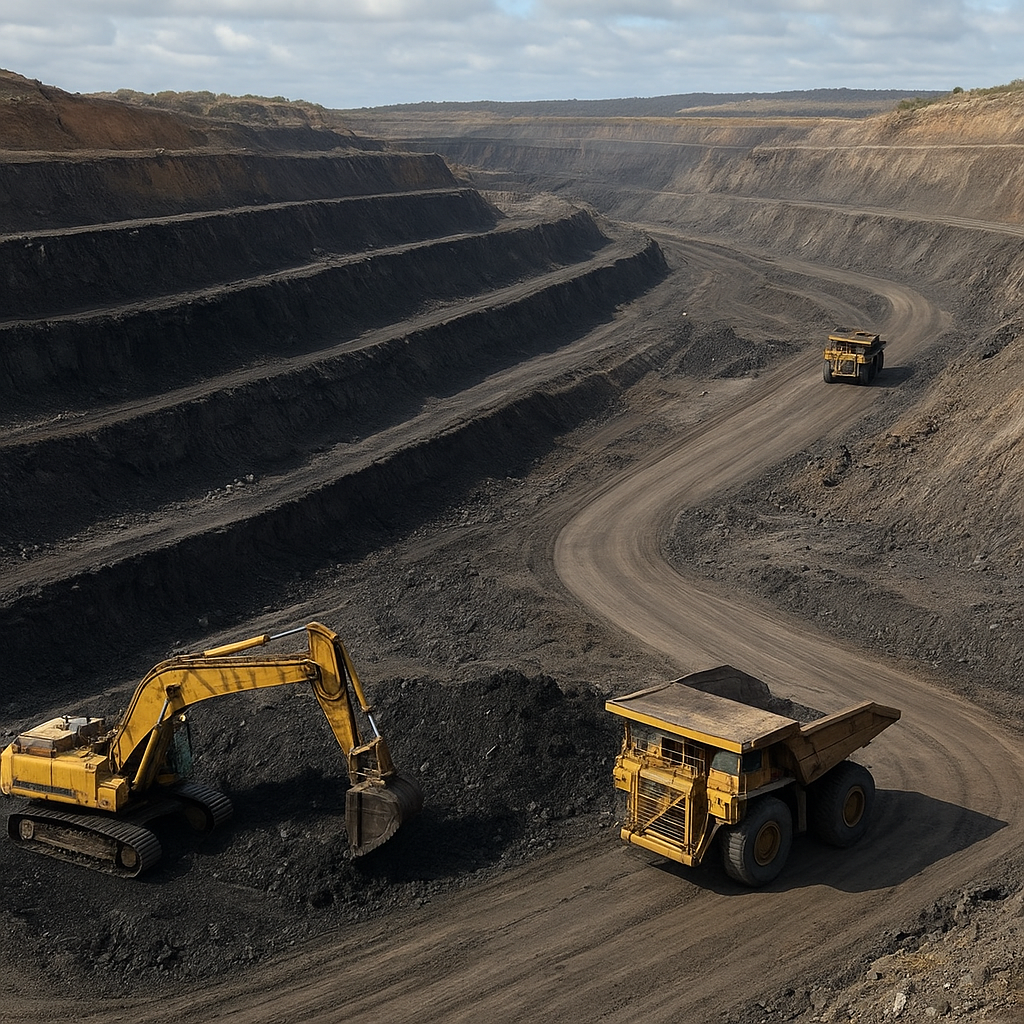
The Hazelwood mine, located in the heart of Victoria’s Latrobe Valley, is a notable example of Australia’s long history with brown coal extraction. Once the primary fuel source for the adjacent Hazelwood power station, the mine played a major role in regional employment, electricity generation and the national conversation about the environmental and social costs of fossil fuels. This article explores where the mine is located, what was extracted, its economic importance, and several aspects that make its story particularly compelling.
Where Hazelwood is located and the geological context
The Hazelwood mining area sits within the broader coal-bearing basin of the Latrobe Valley, east of Melbourne in the state of Victoria. The valley contains some of the world’s largest deposits of low-rank brown coal, commonly referred to as lignite. Geologically, these deposits formed during the Miocene and Pliocene epochs as plant material accumulated in coastal plains and was later buried and subjected to low-grade coalification.
The Hazelwood deposit is characterised by relatively shallow, extensive seams which made it suitable for open-cut mining. The coal in this region is notable for its high moisture content and low calorific value compared with harder coals; this means it is less energy-dense but easier and cheaper to mine in large volumes. That quality also influenced the way the coal was used: predominantly for nearby thermal power generation rather than long-distance export or metallurgical purposes.
What was mined and how it was extracted
Hazelwood produced brown coal, used almost exclusively for local power generation. Mining operations at Hazelwood were primarily open-cut (also called open-pit) methods. Overburden was removed with large earth-moving equipment to expose the coal seams, which were then extracted, screened and transported, usually by conveyor, directly to the adjacent power station. This close integration between mine and power plant reduced transport costs and made the combined operation commercially viable despite the coal’s lower energy density.
Mining at Hazelwood supplied fuel for baseload electricity generation for decades. The coal’s characteristics required specific handling to reduce spontaneous combustion risk and to manage moisture. Stockpiles and conveyor systems were designed with these issues in mind, and significant infrastructure developed around continuous coal handling.
Economic significance to the region and beyond
For much of the 20th and early 21st centuries, Hazelwood and its associated power station were anchors of the Latrobe Valley economy. The mine and plant provided direct employment to hundreds of workers and indirect jobs across maintenance, logistics, services and local businesses. The presence of a large, low-cost fuel source made the valley an energy hub, contributing to cheap and reliable electricity for Victoria’s grid.
The economic significance of Hazelwood can be seen in several areas:
- Employment: Jobs at the mine and power station supported families and sustained towns such as Morwell and Churchill.
- Energy supply: The facility contributed substantially to Victoria’s baseload electricity mix, helping maintain grid stability.
- Local supply chains: Maintenance contractors, equipment suppliers and service providers depended on the ongoing operation of the mine.
- Government revenue: Royalties, taxes and other fiscal flows from the coal industry fed state and local budgets.
When the Hazelwood power station closed in 2017, the associated economic shock was profound: the loss of direct jobs, reduced demand for local services and a forced pivot toward economic diversification for a region long reliant on coal. The closure sparked government transition programs, retraining initiatives and investment aimed at regenerating the local economy with new industries and infrastructure.
Environmental, health and regulatory issues
The environmental footprint of Hazelwood was a central part of its public profile. Brown coal combustion releases significant greenhouse gases compared with higher-rank coals and other generation technologies. The Hazelwood power station was often cited in national discussions on Australia’s carbon emissions, and the mine-power complex became a focal point for debates about climate policy, energy transition and the future of fossil fuel-dependent communities.
Beyond climate impacts, local air quality and health were affected by specific incidents and ongoing emissions. One of the most notable events was the 2014 Hazelwood mine fire, which smouldered for weeks and released smoke and particulates over nearby towns. The incident prompted an official inquiry and raised awareness of risks associated with open-cut brown coal mines, including fire control, worker safety and community protection.
Rehabilitation and long-term environmental management have been critical issues since mining operations ceased. Brown coal mines require careful planning to manage acid drainage risks (where applicable), stabilise landforms, and protect groundwater. The company responsible for Hazelwood’s operations had legal and regulatory obligations for site rehabilitation. Managing these obligations involved technical, financial and social dimensions, and the process remains a prominent example of post-mining land management challenges in Australia.
Social impact and community response
The Hazelwood story is as much social as it is industrial. The mine and power station shaped local identities and community life for generations. Workers developed specialised skills in brown coal mining and power generation; families and local businesses were built around the steady income these industries provided.
When the 2014 mine fire occurred, residents expressed concerns about health effects, particularly among vulnerable populations such as children and the elderly. The subsequent closure of the power station in 2017 brought uncertainty and grief for many who viewed Hazelwood as central to their livelihoods. Communities engaged with government and industry to secure transition support, and local organisations pushed for clear plans for economic diversification and environmental remediation.
Interesting and lesser-known aspects
Several features of Hazelwood and its broader context are particularly noteworthy:
- Size and scale: While Hazelwood was modest compared with some export-oriented mines, its integration with a large thermal power station made it disproportionately important for regional electricity supply.
- Fuel properties: The high moisture content of lignite meant Hazelwood’s coal was inefficient to transport long distances, shaping a tightly coupled mine-plant relationship.
- Mine fire dynamics: The 2014 fire highlighted how smouldering underground coal can be difficult to detect and extinguish, requiring specialised techniques and prolonged monitoring.
- Transition experiments: Since closure, the Latrobe Valley has become a laboratory for economic transition efforts, including renewable energy projects, workforce retraining and community-led redevelopment schemes.
- Rehabilitation complexity: Restoring an open-cut brown coal mine involves recontouring land, managing soil and water, and creating sustainable post-mining landuses that can include parks, industrial precincts or other developments.
Future prospects and legacy
Hazelwood’s legacy is multifaceted. Environmentally, its closure reduced a significant source of carbon emissions in Victoria’s grid. Economically, the mine’s shutdown forced painful but necessary conversations about how to support workers and communities through energy transition. In policy terms, Hazelwood helped crystallise discussions on how to manage the decline of coal, how to ensure fair and planned transitions for affected regions, and how to balance energy reliability with decarbonisation goals.
Looking forward, the site and its region present opportunities: repurposing mine land, attracting renewable energy investment, and fostering new industries that can harness local skills. Community-led planning and robust remediation are crucial to turning the environmental liabilities of past operations into assets for a sustainable local future.
Key takeaways about Hazelwood
- Hazelwood was an open-cut brown coal mine in the Latrobe Valley, supplying fuel to a major thermal power station.
- The mine and power station had significant economic importance, providing jobs and supporting local supply chains.
- Environmental and health concerns—most visibly the 2014 mine fire and greenhouse gas emissions—shaped public debate and policy responses.
- The 2017 closure of the power station and associated cessation of mining marked a major turning point, prompting transition and rehabilitation efforts.
- The site’s future depends on effective remediation, community engagement, and investment in post-coal economic pathways.
Hazelwood’s story is a concentrated example of the broader challenges faced by coal-dependent regions worldwide: balancing economic needs with environmental responsibilities, managing the social consequences of industrial decline, and finding pathways toward sustainable and resilient futures.

