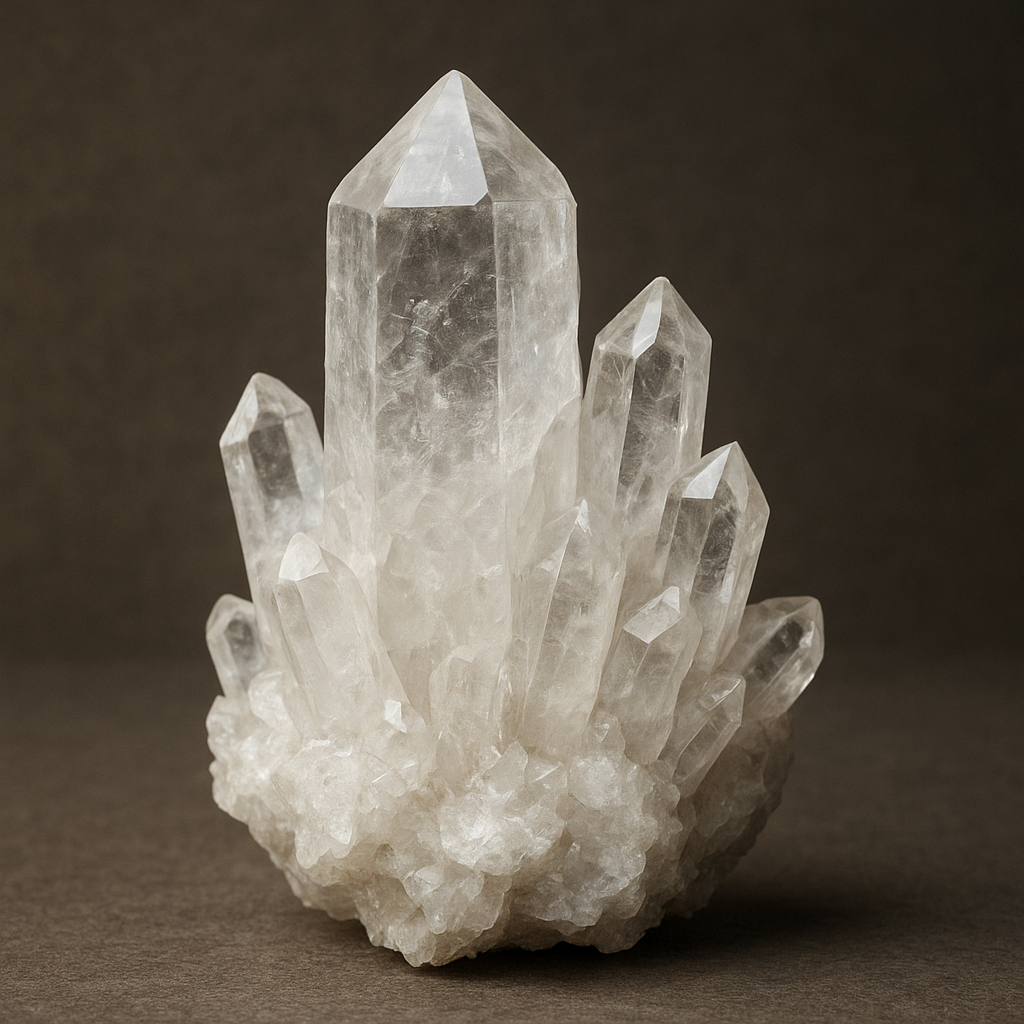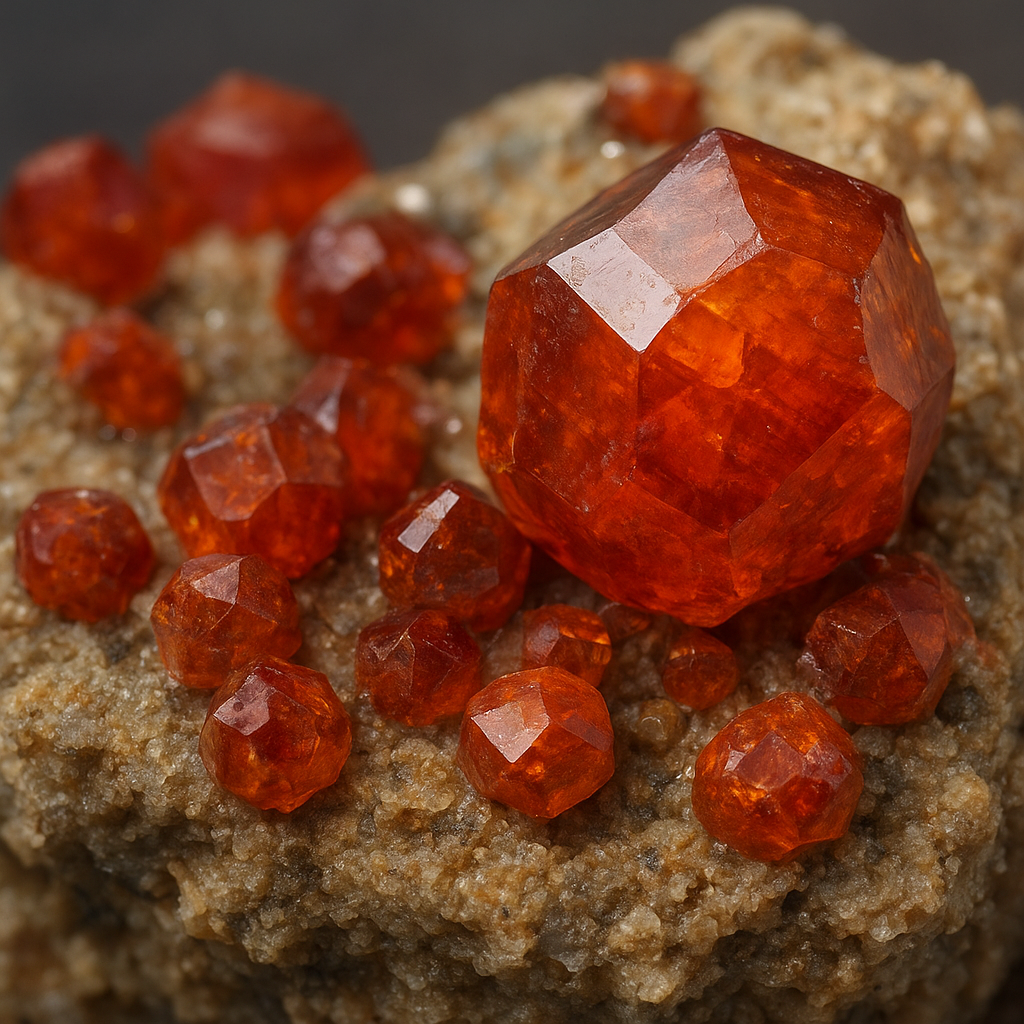
Grossular is a fascinating member of the garnet group, prized by mineralogists, gemologists and collectors alike for its striking color range, geological stories and gemological versatility. This article explores the mineral’s chemistry, where it forms, how it is used, and several intriguing aspects that connect field geology, gem markets and cultural uses. Throughout the text you will find practical identification tips, notable localities and commentary on varieties that have made grossular especially desirable in the jewelry world.
Chemistry, structure and visual characteristics
Grossular belongs to the broad family of garnet minerals and its ideal chemical formula is Ca3Al2(SiO4)3 — a calcium‑aluminum silicate. It crystallizes in the isometric system and commonly forms dodecahedral or granular masses rather than very large single crystals. The crystal habit, together with its isotropic optical behavior, helps separate grossular from many other gem minerals when examining an unknown sample.
The color range of grossular is unusually broad for a garnet species. Typical colors include colorless, white, yellow, orange, brown, pink and various shades of green. Some of these hues have been given trade names that collectors and jewelers recognize: tsavorite denotes the vivid green variety colored by traces of chromium and vanadium, while hessonite (sometimes called “cinnamon stone”) is a warm orange‑brown variety traditionally classified with grossular. Another closely related material is hydrogrossular, a hydrous form with partial substitution of hydroxide for silica, often appearing as an opaque or translucent green stone used as an ornamental gem.
Grossular garnets typically have a Mohs hardness around 6.5–7.5 (varies by exact composition) and a relatively high specific gravity compared with many non‑silicate gem materials. Under strong light many gem‑grade pieces display lively brilliance and good transparency, qualities that make them desirable in jewelry.
Geological environments and notable occurrences
Grossular most commonly forms in calcium‑rich metamorphic rocks. Typical geological settings include:
- Skarns — formed by contact metasomatism where igneous intrusions interact with carbonate rocks (limestone or dolostone). Skarn environments yield many gem‑quality grossular crystals, often associated with minerals such as diopside, vesuvianite, wollastonite and epidote.
- Marbles and contact metamorphosed carbonate rocks — regional or contact metamorphism of calcareous sediments can produce grossular as part of the metamorphic mineral assemblage.
- Hydrothermal alteration zones and rodingites — in some cases grossular forms where silica‑ and calcium‑rich fluids alter ultramafic rocks and adjacent lithologies.
Prominent localities have produced both gem and collector specimens. Among the most important are:
- East Africa (Kenya and Tanzania) — famous for tsavorite, the brilliant green grossular discovered and introduced to the gem market in the late 20th century. Tsavorite is particularly associated with metamorphosed carbonate rocks near the border region.
- Madagascar — produces a wide spectrum of grossular colors, from vivid greens to deep oranges and pinks, often in gem quality.
- Pakistan and Afghanistan — notable for larger grossular crystals and attractive colored material from metamorphic terrains of the Himalaya‑adjacent regions.
- Mexico and United States — locations with skarn deposits and contact metamorphism have yielded both gem and specimen grossular, often in association with other skarn minerals.
- South Africa — known historically for hydrogrossular called “Transvaal jade,” used as an ornamental stone.
Each locality carries its own suite of mineral associations and textural clues that help geologists and collectors reconstruct the conditions of formation. For example, grossular that occurs with andradite or garnet‑bearing skarns often points to high‑temperature metasomatic processes near intruding plutons.
Gem varieties and gemological details
Grossular’s range gives rise to a few market and gemological names worth knowing:
- Tsavorite — an intensely green grossular colored by chromium and sometimes vanadium. Notable for brilliance, durability and a color comparable to high‑quality emerald but with greater clarity and fewer inclusions. Tsavorite is highly valued in high‑end jewelry markets.
- Hessonite — a cinnamon to reddish brown variety often cut into cabochons or faceted stones. Hessonite has a warm appearance and long use in traditional jewelry.
- Hydrogrossular — a hydrous, more porous form that can be opaque to translucent with a “jade‑like” look; frequently used for beads, carvings and cabochons. Commercially termed Transvaal jade when sourced from South Africa.
- Colorless and pastel varieties — often faceted into delicate stones that show brilliant luster under faceting.
Important gemological properties that help identify grossular include:
- Isotropic optical behavior (no birefringence) typical of garnets.
- Relatively high refractive indices and dispersion that contribute to strong brilliance and fire.
- Characteristic crystal habit and cleavage absence; garnets break with conchoidal fracture rather than along cleavage planes.
Grossular is generally durable enough for most types of jewelry, including rings and pendants, but large stones with internal fractures should be set with care. Hydrogrossular’s porosity and lower toughness make it better suited for carvings and beads than for high‑wear ring settings.
Mining, market and uses in jewelry
Grossular is mined from both alluvial sources (secondary concentrates) and primary skarn or metamorphic deposits. Mining techniques vary from artisanal shaft and open‑pit operations to modern underground and quarrying methods. The economics of a deposit depend on crystal size, clarity, color saturation and ease of extraction.
In the gem market the most commercially significant variety is tsavorite, where color saturation and clarity translate directly into value. High‑quality tsavorite commands prices comparable to fine emeralds on a per‑carat basis for mid‑to‑small sizes, while large, clean stones are exceptionally rare and valuable. Hessonite and hydrogrossular, while culturally and historically important, generally occupy lower price ranges but are popular where warm hues or jade‑like appearance are desired.
Grossular is also sought by collectors for well‑formed crystal specimens. Translucent, gemmy crystals with intact dodecahedral faces can fetch high prices among mineral collectors and museums. Fine specimen examples often exhibit sharp crystal form and attractive color zoning.
Treatments, synthetics and imitations
Grossular is not widely treated compared with some other gemstones, but a few points are important for buyers and appraisers:
- Heat treatment can be used in some garnets to modify color, but it is not a widespread or standard treatment for grossular; most market material is sold untreated.
- Hydrogrossular is a naturally altered or hydrous form and is not considered an enhanced product; its look is natural and a result of silica substitution by hydroxide.
- Imitations include colored glass, green tourmaline, peridot and other green gems marketed as alternatives to tsavorite. Proper gemological testing (refractive index, specific gravity, spectroscopy and microscopic inclusion analysis) distinguishes grossular from imitations and other gem species.
- Synthetic grossular is uncommon commercially; most gem supply comes from natural sources.
Professional gemological testing remains the best safeguard for high‑value purchases. Tests such as immersion microscopy, refractometry and, where available, Raman or FTIR spectroscopy give clear identification and can detect many common imitations or treatments.
Scientific and industrial significance
Beyond its role as a gemstone, grossular has scientific importance in petrology and geothermobarometry. Garnets in general record pressure‑temperature histories of the rocks they inhabit. Grossular, because it forms in calcium‑rich assemblages, is an especially useful indicator for metamorphism of carbonate rocks and for the processes active in skarn formation. Compositional zoning within grossular crystals can record changes in fluid composition and temperature during growth, giving geologists a window into past geological events.
Although garnets are used industrially as abrasives, the main industrial garnet types for abrasive use tend to be almandine and andradite; grossular’s principal economic value lies in its gem and collector markets rather than large‑scale industrial applications.
Cultural and historical notes
The name grossular derives from the Latin grossularia, meaning “gooseberry,” because some pale green varieties resembled gooseberries to the early mineralogists who named the species. Over time, grossular and its varieties have played roles in local jewelry traditions, especially where the stone is abundant enough to be used in carvings, amulets or ornamentation.
Tsavorite’s discovery and commercialization in the 20th century transformed the perception of green garnets. Its introduction into the luxury jewelry market brought new attention to garnet diversity beyond the deep red almandine garnets familiar in older jewelry traditions.
Collecting, care and identification tips
Collecting
- When collecting rough or specimen grossular, look for well‑formed crystal faces, high transparency and saturated color. Skarn and marble exposures may yield loose crystals in rubble or in situ, and localities with ongoing mining can sometimes offer access to freshly exposed material.
- Respect local regulations, obtain necessary permits for collecting on private or protected land and work with reputable dealers when purchasing specimens or gem rough.
Care and handling
- Clean grossular gems with warm water, mild soap and a soft brush. Rinse thoroughly and dry with a soft cloth.
- Avoid harsh chemicals or prolonged exposure to acids and strong alkaline cleaners that can damage the surface or any fractures. Ultrasonic and steam cleaning are generally safe for most well‑formed grossular gems but should be avoided for heavily fractured or hydrogrossular material due to the risk of damage.
- Store grossular jewelry separately from harder stones (such as diamonds) to prevent scratching — although garnets are relatively hard, care reduces the chance of surface abrasion.
Simple identification checks
- Look for isotropic behavior under polarized light (garnets appear dark between crossed polarizers rather than showing birefringence colors).
- Check specific gravity roughly by heft — grossular is noticeably heavier than many non‑silicate gems of similar size.
- Microscopic inspection can reveal characteristic garnet inclusions and growth zoning that help distinguish grossular from glass and many imitations.
Why grossular attracts attention — interesting aspects and research directions
Grossular combines several appealing features that keep it in the spotlight for multiple audiences:
- Its color diversity means there is a grossular to suit many tastes, from the apple‑green tsavorite to warm hessonite browns and jade‑like hydrogrossular.
- Grossular crystals often record complex growth histories, making them attractive targets for microscale geochemical studies that probe fluid evolution, trace element partitioning and metamorphic P‑T paths.
- As a gem, tsavorite in particular challenges traditional preferences by offering an emerald‑like green without the typical inclusions of emeralds; this has led to renewed interest in garnet varieties as high‑end gemstones.
- Collectors value well‑formed grossular crystals for aesthetic reasons and for the way such specimens illustrate skarn and contact metamorphic processes in hand specimen form.
Ongoing research into garnet thermometry, trace element diffusion and hydrous substitution in hydrogrossular continues to refine how scientists use grossular as a recorder of geological conditions. Gemological research, meanwhile, focuses on better characterizing inclusions, color causes and durability to inform both the trade and consumers.
Practical advice for buyers and aficionados
Whether you are a collector seeking specimen quality crystals or a buyer selecting a grossular for jewelry, keep these practical points in mind:
- Buy from reputable dealers who provide clear locality and treatment information.
- Request gemological reports for high‑value purchases, especially for tsavorite and larger faceted stones; these reports verify identity and record any treatments.
- Inspect stones under magnification to assess clarity and to spot any fractures that might affect durability.
- Consider the stone’s intended use — for everyday rings choose clean, tough material; for display or occasional wear, more delicate hydrogrossular pieces are acceptable.
Grossular occupies an appealing position at the intersection of geology, gemology and art. Its combination of aesthetic charm and geological significance ensures that it will remain a subject of interest for collectors, researchers and jewelers. Whether admired as a brilliant green tsavorite set in fine jewelry or as a textured hydrogrossular carving, grossular continues to offer surprises and rewards to those who explore its many forms.