
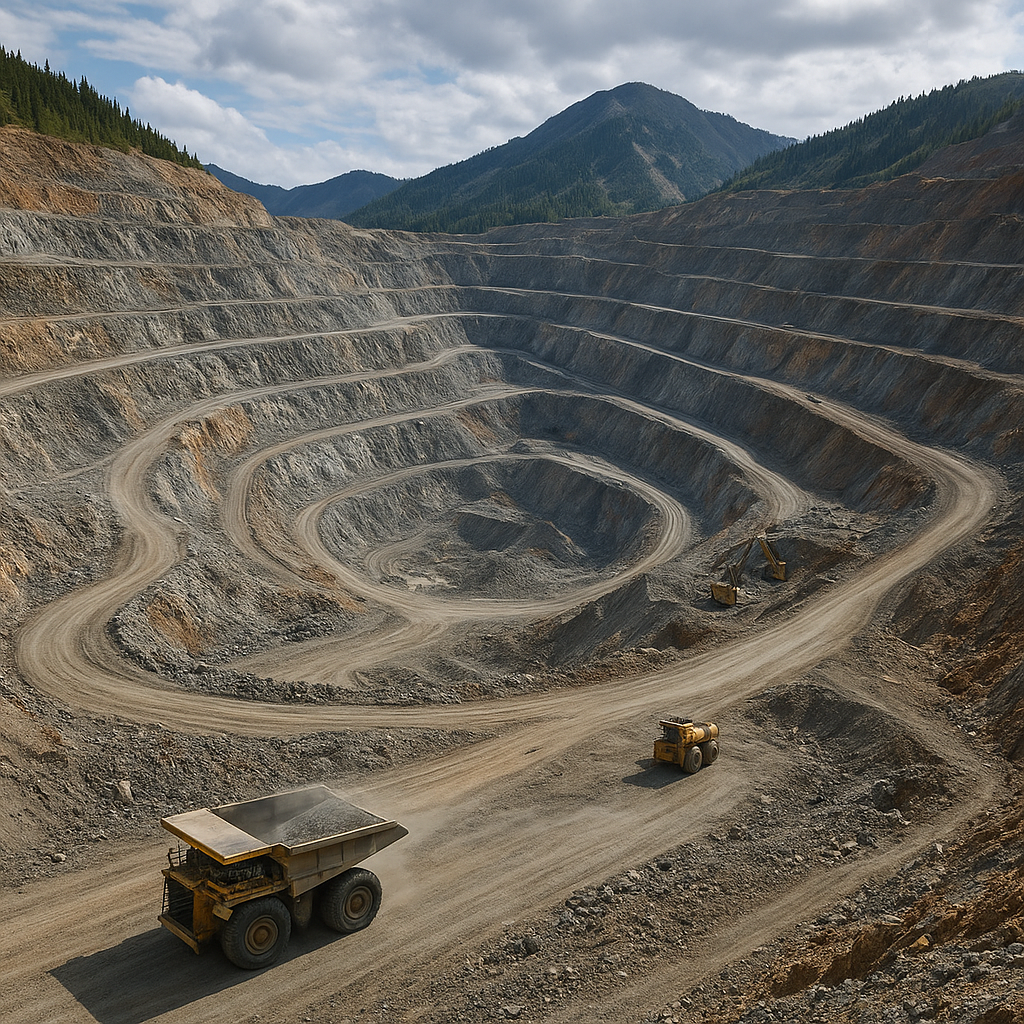
The Greens Creek operation on Alaska’s Admiralty Island is one of North America’s most notable base- and precious-metal mines. It combines a remote, rugged setting with sophisticated underground mining and processing, producing large quantities of silver alongside significant amounts of zinc and lead, with gold and copper recovered as byproducts. This article explores the mine’s location and geology, how ore is extracted and processed, its broader economic role, and several striking or lesser-known aspects of the site and its operation.
Location and geological setting
Greens Creek lies on Admiralty Island in southeastern Alaska, within the boundaries of the Tongass National Forest and in proximity to coastal communities and marine transportation routes. The mine sits in a landscape of dense temperate rainforest, steep terrain and abundant streams — a setting that shaped both the discovery and the logistics of bringing the deposit into production.
Geologically, Greens Creek is a high-grade, polymetallic sulfide deposit. The mineralization is silver-rich and occurs together with zinc, lead, and minor amounts of gold and copper. This type of deposit concentrates multiple metals in sulfide minerals (for example, sphalerite for zinc and galena for lead), enabling efficient recovery of several commodities from the same orebody. The deposit’s high silver content distinguishes Greens Creek from many other VMS- or polymetallic-style deposits and makes the mine a major silver source.
The mine’s remote location required careful permitting and planning because Admiralty Island is culturally and ecologically important — it supports abundant wildlife and is within traditional lands of local Indigenous communities. Federal and state land and environmental agencies have been involved in permitting, and mining activities operate under multiple regulatory constraints to protect water, wildlife and cultural values.
Mining methods, processing and production
Greens Creek is fundamentally an underground mining operation. Rather than large open pits, the deposit is developed with underground workings: declines, drifts and stopes engineered to extract high-grade ore while minimizing surface disturbance in an ecologically sensitive area. Underground mining helps reduce the visible footprint of the mine and limits impacts on the forested surface environment.
Ore from the underground workings is brought to a mill where it is crushed, ground and subjected to flotation to produce metal concentrates. Flotation separates sulfide minerals from gangue material and yields concentrates enriched in silver, zinc, and lead. These concentrates are then dewatered and shipped offsite — typically by barge or other marine transport — to smelters and refineries worldwide for final metal recovery. The mine’s isolation makes marine logistics a vital part of operations, including seasonal considerations and weather impacts.
- Silver is the principal metal recovered and is typically reported in millions of ounces per year at a mature operation like Greens Creek. Silver often occurs both in its own sulfide minerals and as a component of other silver-bearing phases, which flotation can concentrate.
- Zinc and lead are recovered as concentrates as well. These base metals are essential to industrial uses — zinc in galvanizing and alloys, and lead largely in batteries and specialized applications.
- Gold and copper are present in smaller amounts and are valuable byproducts that improve the overall economics of the operation.
Production rates at Greens Creek have made it one of the largest silver mines in the United States and a meaningful supplier of zinc and lead. Annual output varies with ore grade, mine sequencing and market conditions, but the mine’s long life and consistent throughput have contributed significant cumulative metal production over decades of operation.
Economic significance: local, regional and national impacts
At the local level, Greens Creek provides employment and contracts for services that support communities in southeastern Alaska. The operation employs skilled underground workers, metallurgists, engineers and administrative staff, and it contracts with local and regional suppliers for transport, accommodations, equipment and other services. Payroll and procurement circulate in the regional economy, supporting small businesses and sustaining livelihoods in coastal towns and regional hubs.
For the state of Alaska, the mine contributes through taxes, royalties and state-level revenues tied to mineral production. Mining is an important component of Alaska’s resource economy, and large polymetallic mines like Greens Creek help diversify the state’s revenue base beyond oil and fisheries.
On a national and international scale, Greens Creek contributes to metal supply chains. As a domestic source of silver, zinc and lead, it reduces reliance on imports for those metals and supports industries that depend on secure supply. Silver has both monetary and industrial uses — photovoltaics, electronics, photographic and medical applications — while zinc and lead are critical for corrosion protection, metal alloys and battery production. Having strategically located producers helps buffer supply risk and supports downstream manufacturing.
Investment in the mine — for exploration, equipment and ongoing development — also has multiplier effects: capital investments generate construction work, engineering services and long-term asset maintenance. The mine’s presence can encourage regional infrastructure improvements, including transportation and port facilities that benefit other economic activities.
Community relations, cultural context and workforce
Greens Creek sits within the traditional territory of Southeast Alaska Indigenous peoples, and engagement with local communities has been an integral part of the mine’s social license to operate. Employment, training and procurement practices often prioritize local hiring and capacity building. Programs to train Alaskan workers in trade, mining and technical skills help ensure long-term benefits for residents.
The mine also supports offsite infrastructure — for example, marine services and supply chains — that help sustain employment beyond the direct workforce. In remote locations, mines often provide stable, year-round work where seasonal industries (like tourism or fishing) may offer less consistent incomes.
At the same time, balancing industrial activity with traditional uses of the land and sea requires ongoing dialogue. Local communities typically expect transparent communication about environmental monitoring, spill prevention, water quality and fish habitat protection. Collaborative arrangements and mitigation measures are common components of modern mine-community relations.
Environmental management, monitoring and regulatory framework
Operating in a sensitive coastal and forested environment demands rigorous environmental controls. Greens Creek functions under federal and state permits that set limits on discharges, require water-quality monitoring and mandate reclamation and closure planning. Modern mining operations in the U.S. incorporate detailed monitoring networks for surface and groundwater, fish habitat, and air quality, plus contingency plans for spill response and remediation.
Key elements of environmental management at a mine like Greens Creek include:
- Comprehensive water-management systems to control runoff, treat potentially contaminated water and ensure that discharges meet stringent permit standards.
- Tailings and waste-rock management to prevent acid rock drainage and limit metal leaching. Engineering controls and ongoing geochemical testing help mitigate long-term risks.
- Progressive reclamation: stabilizing disturbed land, re-vegetation and restoring habitat as areas are closed or reprofiled.
- Wildlife and fisheries monitoring to detect and address potential impacts on salmon streams and terrestrial species important to local communities.
Because Admiralty Island has significant ecological value — including dense brown bear populations and productive salmon runs in many watersheds — regulators and the company maintain heightened oversight. Public reporting and independent audits are commonly used to ensure compliance with environmental commitments.
Interesting facts, milestones and operational challenges
Several aspects of Greens Creek make it particularly interesting beyond its production figures:
- Remote logistics: The mine’s coastal location means concentrates and supplies are mainly moved by sea. Seasonal weather, tides and marine schedules play a large role in planning shipments and deliveries.
- High silver grades: Greens Creek is notable for having among the highest silver grades of large-scale mining operations in North America, a key reason for its economic importance.
- Small surface footprint: By focusing on underground extraction, the operation maintains a relatively compact surface footprint in a forested landscape, which reduces visual and wide-area disturbance.
- Long mine life: Discoveries, exploration and reserve updates over decades have extended the projected life of the mine. Long-lived mines contribute sustained economic benefits but also require long-term environmental planning.
- Technological evolution: Advances in underground mining techniques, automation, and ore-processing efficiency have been applied to maximize recovery and safety while reducing costs.
- Collaboration with Indigenous groups: The mine’s relationship with local Native organizations and communities illustrates how modern resource projects increasingly emphasize partnerships, benefit agreements and cultural sensitivity.
Operational challenges are typical of mines in remote, rainforested coastal areas: weather and access constraints, the need for robust environmental protections, logistics planning for year-round workforce support, and maintaining social license with local communities and regulators. Nevertheless, Greens Creek has operated for decades, demonstrating adaptability and the ability to sustain production through commodity cycles.
Strategic role in metal markets and future outlook
Looking ahead, Greens Creek’s contribution to silver, zinc and lead supply positions it as an asset of continued strategic importance. Demand drivers for its metals are evolving: silver’s industrial uses (including in electronics and renewable-energy technologies) and zinc’s role in infrastructure and manufacturing keep base- and precious-metal markets closely tied to global economic trends. As market prices and technology evolve, the relative value of each recovered metal may shift, but polymetallic operations often have resilience because they can benefit from multiple revenue streams.
Exploration in and around existing mines often yields extensions to orebodies or new zones that can prolong operations. Continued investment in exploration, efficient mining methods and robust environmental management will influence the mine’s longevity and its continued contribution to local and national economies.
Final observations
Greens Creek embodies many features of modern mining: high-grade polymetallic mineralization, underground extraction to limit surface impacts, sophisticated processing to recover multiple metals, and an emphasis on environmental and community engagement in an ecologically and culturally sensitive area. Its position on Admiralty Island links the mine closely to the natural and human landscapes of southeastern Alaska, and its production of silver, zinc and lead makes it a significant contributor to metal supplies, regional employment and state revenues. For those interested in mining, resource economics, or the balance between development and conservation, Greens Creek offers a multifaceted case study spanning geology, engineering, community relations and environmental stewardship.

