
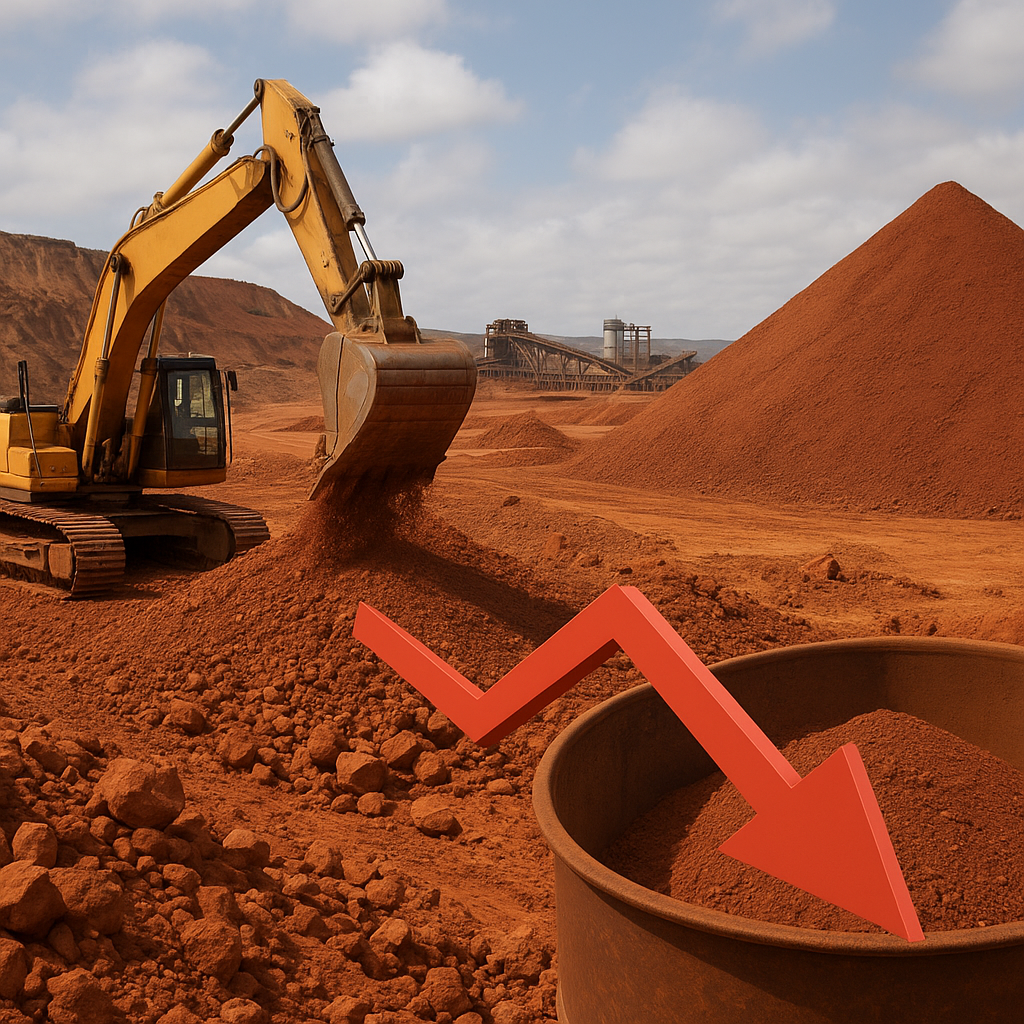
The global market for alumina and its upstream raw material, bauxite, is navigating a period of pronounced change. Shifts in demand patterns, growing environmental scrutiny, and a series of supply shocks have combined to put pressure on pricing and force stakeholders to reassess strategy. This article examines the current landscape of global bauxite supply, the mechanics that drive alumina cost formation, and the responses by industry and policymakers to manage volatility and secure long-term supply resilience.
Major sources of supply and structural vulnerabilities
The world’s bauxite resources are geographically concentrated. Australia, Guinea, Brazil, and Indonesia account for a substantial share of global mining output. This concentration creates both efficiency advantages and systemic risks: efficient, low-cost production facilities can supply large volumes, but political instability, regulatory shifts, or operational disruptions in a few key jurisdictions can ripple through global markets.
- Geographic concentration: Guinea’s high-grade deposits have attracted large-scale investment, but governance and infrastructure gaps can lead to unpredictable export flows. Australia, the largest producer by tonnage, benefits from stable mining frameworks and port infrastructure but is exposed to shipping and weather-related disruptions.
- Resource nationalism and export controls: Several producing countries periodically consider or implement restrictions on raw exports to encourage domestic value-add or capture more of the commodity rent. Such policies can curtail the availability of bauxite for international refiners, tightening global balances.
- Infrastructure constraints: Many bauxite-rich regions lack sufficient roads, rail, and port capacity. Freight bottlenecks and higher logistics costs can elevate landed raw material prices for refiners far from source.
- Operational risks: weather events, labor actions, and environmental permit challenges can cause sudden production downtimes at mines and refineries, propagating price spikes.
Quality and grade variation
Bauxite quality is not uniform. Impurities such as silica and iron content influence the economics of refining into alumina. Refineries designed around specific ore characteristics may face higher processing costs when feed composition varies, affecting marginal cost curves and, ultimately, market pricing.
Factors shaping alumina pricing dynamics
Alumina pricing is determined by a blend of commodity fundamentals, input cost pressures, and downstream demand. Understanding each element clarifies why prices can move sharply and why forward visibility can be limited.
- Feedstock cost: The price and availability of bauxite is the starting point. Changes in mine output, freight rates, or export policies feed directly into refinery margins.
- Energy intensity: Refining bauxite to alumina is energy-intensive. Electricity and fuel costs (coal, gas, oil) are major determinants of refinery operating cost. Regions with lower energy costs enjoy a structural advantage.
- Caustic soda and consumables: Chemicals like sodium hydroxide, along with alumina processing reagents and maintenance materials, create recurring cost components that can move with global chemical markets.
- Inventory and warehouse logistics: Available global alumina stocks—both merchant inventories and strategic holdings by integrated producers—moderate short-term price swings. Low inventories tend to amplify price volatility.
- Downstream demand: The aluminium smelting sector is the primary consumer of alumina. Smelter utilization rates, capacity expansions or shutdowns, and demand from end-use sectors (automotive, construction, packaging) drive alumina consumption trends.
- Currency and financing: Many contracts and capital expenditures are sensitive to FX moves and financing costs. A weaker currency in producing countries can make exports more competitive on the world market, while higher global interest rates can slow investment in refinery capacity.
- Environmental and carbon pricing: As governments and corporations price carbon, the cost of energy and potential emissions-related levies raise the effective cost of refinement.
Role of China and regional demand centers
China remains central to the alumina equation. As both a large consumer and an important producer of refined alumina, Chinese policy on stockpiling, import tariffs, and environmental inspections can materially affect global pricing. Additionally, growth in Southeast Asia, India, and parts of Africa is reshaping regional trade flows and demand patterns.
Supply-side shocks and recent market episodes
Several recent episodes illustrate the sensitivity of alumina markets to supply disruptions and cost pressures. Export curbs, refinery outages, and energy shortages have periodically tightened markets, producing sharp price responses. Such events underscore the limited elasticity of short-term supply: building new refining capacity takes years and substantial investment.
- Refinery maintenance and unplanned outages: Temporary shutdowns reduce immediate global supply and force smelters to compete for available alumina, pressuring prices.
- Energy crises: In regions where refineries rely on grid electricity or particular fuel sources, power shortages or fuel price spikes can curtail processing and increase reliance on higher-cost producers.
- Environmental enforcement actions: Stricter emissions or effluent standards can trigger temporary closures or require capital-intensive upgrades, limiting near-term output.
Industry strategies to manage risk and price exposure
Stakeholders across the value chain are adopting a range of strategies to mitigate supply disruptions and stabilize pricing. These measures vary by position—miners, refiners, smelters, and consumers—but share the common goal of improving resilience.
- Vertical integration: Integrated companies that control mines, refineries, and smelters can smooth margins and prioritize internal flows over merchant markets during tight periods.
- Long-term contracts: Forward sales and multi-year take-or-pay contracts reduce short-term price exposure for both producers and buyers, at the cost of flexibility.
- Diversification of sourcing: Buyers increasingly seek multiple suppliers across regions to lower concentration risk. This may include building relationships with new producers in Africa, South America, and Oceania.
- Strategic stockpiling: Both private and national entities maintain inventory buffers to insulate against supply interruptions and sudden price spikes.
- Hedging and financial instruments: Where liquid markets exist, participants use swaps, futures, or options to lock in prices or cap downside exposure.
- Efficiency and technology upgrades: Refiners invest in process improvements to lower energy and chemical consumption, reducing the pass-through of input price shocks to alumina prices.
- Decarbonization and renewable energy: Transitioning refineries to low-carbon power sources reduces exposure to fossil fuel volatility and potential carbon charges, though it requires capital and time.
- Recycling and circularity: Increasing aluminum recycling reduces long-term alumina demand growth, introducing a moderating force on prices as secondary supply expands.
Investment and capacity expansion challenges
While demand growth in emerging markets suggests the need for additional refining capacity, building new projects faces hurdles: permitting and environmental compliance, securing long-term bauxite feed, access to reliable energy, and financing. These constraints mean that supply additions tend to lag demand, keeping the market tight during cyclical upturns.
Regulatory, environmental, and social considerations
The bauxite-to-alumina value chain attracts growing scrutiny on environmental and social grounds. Land use, biodiversity impacts, water consumption, effluent management, and community relations are central to permitting and corporate social license to operate. These factors influence both current production profiles and future investment decisions.
- Environmental compliance: Stricter discharge standards and reclamation requirements increase operating costs and can limit expansion in sensitive areas.
- Community engagement: Projects that fail to secure strong local support face delays or disruptions, which can be a significant supply risk.
- Traceability and ESG requirements: Downstream buyers increasingly demand provenance assurances for bauxite and alumina, pressuring suppliers to implement monitoring and certification systems.
Implications of carbon pricing
As carbon pricing spreads, refiners dependent on carbon-intensive energy sources will see their cost base rise relative to cleaner competitors. This dynamic can shift comparative advantage and catalyze investment into low-carbon refining technologies and renewable energy procurement.
Outlook and actionable implications for market participants
Over the medium term, the balance between incremental demand growth—especially for lightweighting in automotive and growth in construction—and constrained near-term supply additions suggests a structurally tighter market for alumina than seen a decade ago. However, multiple moderating forces—recycling, capacity additions in lower-cost regions, and demand-side efficiency improvements—will influence the pace and magnitude of price moves.
- Producers should prioritize resilient supply chains, targeted investment in energy efficiency, and robust stakeholder engagement to reduce operational and permitting risks.
- Refiners need to hedge energy and chemical exposure, diversify ore sourcing to manage grade variability, and invest in decarbonization pathways to future-proof operations.
- Smelters and large consumers can reduce exposure through long-term contracts, increased recycling, and by working collaboratively with suppliers on ESG and supply continuity plans.
- Policymakers can support market stability through predictable regulation, investment in transport infrastructure, and transparent export policy frameworks that balance domestic development goals with global market functioning.
In an environment where logistics, energy, and regulatory factors increasingly determine competitiveness, market participants that adopt flexible sourcing strategies, invest in efficiency and low-carbon solutions, and actively manage contract and inventory exposure are better positioned to navigate pricing volatility and capture long-term value from the evolving alumina market.
