
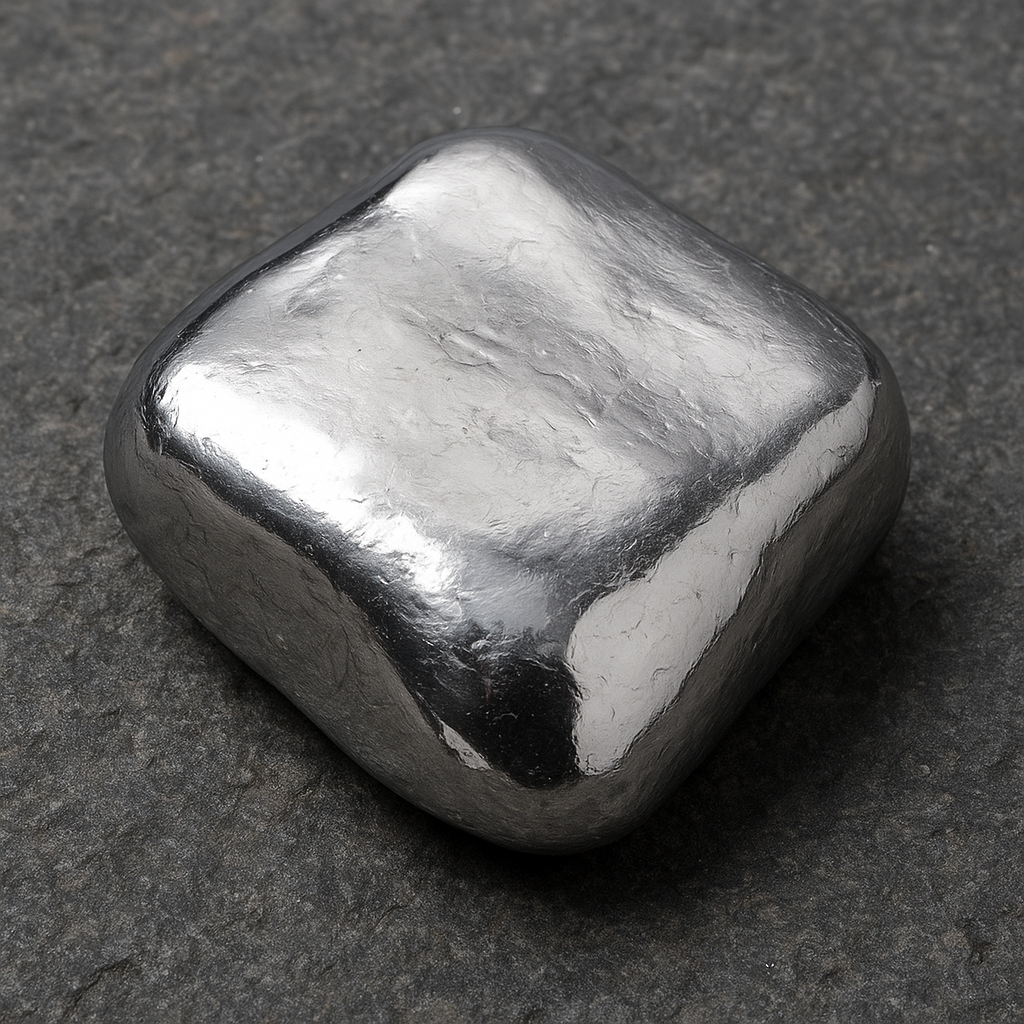
Germanium is a lustrous, grayish-white metalloid that sits directly below silicon in the periodic table. Although less familiar to the general public than silicon or copper, germanium has played an outsized role in the development of modern electronics and continues to be integral to several high-performance technologies. This article explores where germanium is found, its physical and chemical characteristics, the diverse applications that depend on its unique properties, production and refining methods, historical milestones, environmental and health considerations, and promising directions for future research.
Natural occurrence and geological sources
Germanium does not usually occur as a free element in nature. Instead, it is commonly found in trace amounts within a variety of ores and minerals, often substituting for silicon in silicate minerals. Typical geological hosts include sphalerite (zinc sulfide), coal, argillaceous (clay-rich) shales, and various sulfide and oxide ores. Economically recoverable concentrations of germanium are relatively rare, which helps explain its status as a specialty metal rather than a bulk commodity.
Major sources of germanium include:
- Coal and coal fly ash: Some coals, especially from certain regions, contain measurable concentrations of germanium. Recovery from coal combustion by-products has become an important secondary source in some countries.
- Zinc ores: Sphalerite frequently contains germanium as an impurity. Zinc refining streams can therefore be tapped to extract germanium as a by-product.
- Germanite and reniérite: These are uncommon copper-iron-germanium sulfide minerals that can be direct but typically small sources of germanium.
- Other sulfide and oxide ores: Lead, copper, and tin deposits can carry trace amounts of germanium that can be recovered as part of multi-metal processing.
Geographically, production has shifted over decades as technology, mine development, and recycling have changed. Historically, significant germanium came from European and North American sources, but in recent decades China has emerged as a leading producer due to its refining capacity and access to coal-based sources. Secondary recovery from recycled electronic materials, fiber optic preforms, and industrial wastes is also an increasingly important supply route.
Physical and chemical properties
As an element, germanium possesses a mix of metallic and nonmetallic characteristics typical of metalloids. It has a diamond-cubic crystal structure similar to silicon and diamond, which contributes to its electronic behavior. Key properties include:
- Atomic number: 32
- Appearance: lustrous gray-white solid with a brittle nature in pure form
- Electrical behavior: intrinsic semiconductor with a moderate bandgap (~0.66 eV at 300 K), which influences its electronic and optical properties
- Chemical behavior: forms a range of organometallic and inorganic compounds, including germanium dioxide (GeO2), which is an important intermediate in refining and in fiber production
Germanium’s relatively small bandgap compared with silicon (1.12 eV) makes it more sensitive to thermal excitation of charge carriers at room temperature, which historically limited its direct replacement of silicon in many semiconductor applications. However, its high charge-carrier mobility — electrons move faster in germanium than in silicon under the same electric field — gives it performance advantages in high-speed devices. Germanium is also optically transparent in parts of the infrared spectrum where silicon is opaque, which makes it invaluable for mid-infrared optics.
Electronic and photonic applications
The legacy of germanium is most visible in electronics and photonics. Early transistor technology used germanium because it was easier to produce single crystals with the necessary purity in the mid-20th century. Although silicon later dominated due to its superior thermal properties and the development of a robust silicon dioxide insulating layer enabling MOSFET scaling, germanium remains relevant in multiple high-value niches.
Transistors and high-speed electronics
Germanium was the material of choice for the first transistor devices. Modern interest has shifted toward germanium or germanium-containing alloys in particular contexts:
- Heterojunction devices: Combining germanium with silicon in heterostructures can produce faster transistors. Silicon-germanium (SiGe) alloys are widely used in high-frequency and radio-frequency integrated circuits.
- Complementary metal–oxide–semiconductor (CMOS) scaling: Strain engineering and SiGe channels have been used to enhance carrier mobility in advanced CMOS nodes, improving switching speed and power efficiency.
Photonics and infrared optics
Germanium’s transparency in the mid- to long-wave infrared region and its robust mechanical and thermal properties make it an outstanding material for optical lenses, windows, and infrared detectors. Common applications include:
- Thermal imaging lenses for cameras used in defense, aerospace, and industrial inspection
- Infrared windows and domes for sensors operating in harsh environments
- Substrates and lenses for CO2 laser optics
Additionally, germanium plays a role in fiber optics: while pure germanium is not used as fiber material, germanium-doped silica is a standard core doping for optical fibers. Doping silica with small amounts of germanium dioxide raises the refractive index of the core relative to cladding, enabling light guidance. This fiber technology underpins the global telecommunications network, where controlling refractive indices and dispersion is critical for high-bandwidth, long-distance data transmission.
Solar cells, detectors, and alloy uses
Germanium finds important roles in photovoltaics and sensing:
Space photovoltaics
High-efficiency multi-junction solar cells used on satellites and some concentrator photovoltaic systems use a germanium substrate as the bottom cell or the mechanical support. The germanium substrate provides favorable lattice matching and mechanical stability for epitaxial growth of III-V compound semiconductor layers (such as gallium arsenide and indium gallium phosphide) that form the upper junctions. These multi-junction cells achieve conversion efficiencies far above conventional silicon cells and are essential where power-to-weight ratio is critical.
Detectors and sensors
Many infrared photodetectors employ germanium or germanium alloys because of their sensitivity to wavelengths near and beyond the visible near-infrared. Germanium detectors are used in spectroscopy, night-vision equipment, and scientific instruments. In addition, semiconductor-based gamma-ray and X-ray detectors sometimes use germanium crystals (high-purity germanium detectors) for their exceptional energy resolution when cooled to cryogenic temperatures.
Alloys and specialty metallurgy
Germanium is used in small quantities as an alloying element to modify the properties of other metals. For example, adding germanium to certain low-melting alloys improves their fluidity and oxidation resistance. In polymer chemistry, organogermanium compounds are explored for specialized functions such as crosslinking agents, catalysts, or refractive index modifiers for optical materials.
Production, refining, and recycling
Commercial germanium is typically produced as a by-product of zinc smelting or recovered from coal fly ash and metallurgical wastes. The typical refining chain involves several chemical separations:
- Leaching of ore or ash with acids or alkaline solutions to dissolve germanium species
- Solvent extraction or ion exchange to concentrate and separate germanium from other elements
- Precipitation and thermal treatment to produce germanium dioxide (GeO2)
- Reduction of GeO2 with hydrogen or other reducing agents to yield elemental germanium
High-purity germanium for semiconductor or optical applications often requires further purification using zone refining or chemical vapor deposition methods to remove residual impurities. Because the global demand for germanium is relatively modest but concentrated in high-tech sectors, recycling from end-of-life electronics, optical components, and fiber preforms contributes significantly to the supply chain. Efficient recovery from such secondary streams is both economically attractive and environmentally responsible.
Historical milestones and cultural notes
Germanium was predicted by Dmitri Mendeleev in 1869 when he proposed an element he called ekasilicon based on gaps in his periodic table. It was discovered in 1886 by Clemens Winkler in Germany, who named it after his homeland. Early in the 20th century, the element attracted attention for its semiconductor properties, and in 1948 germanium transistors paved the way for the first practical solid-state amplifiers and radios. These advances were critical precursors to the silicon revolution that followed in the 1960s and beyond.
Beyond industry and academia, germanium has intersected with other fields: its organometallic chemistry has drawn curiosity for potential medicinal and biological applications (though claims of health benefits from supplements remain controversial and unsupported by robust clinical evidence). Germanium’s distinctive properties have also made it a material of choice for niche artistic and design applications where infrared transparency or metallic sheen are desired.
Health, safety, and environmental considerations
Elemental germanium and many of its compounds have relatively low acute toxicity compared with heavy metals like lead or mercury, but certain inorganic and organogermanium compounds can be harmful if misused. Notably, poorly characterized germanium supplements that appeared on the market in past decades were linked to cases of renal toxicity and other adverse effects when consumed in high doses or impure forms. For this reason, routine consumption of germanium supplements is not recommended without clear medical indication and oversight.
From an environmental standpoint, mining and smelting activities that produce germanium as a by-product can have impacts typical of base metal extraction — including the generation of tailings, potential release of heavy metals, and greenhouse gas emissions if fossil fuels are used intensively. Recovering germanium from industrial by-products like coal fly ash can mitigate some environmental burdens and improve resource efficiency.
Emerging research and future directions
Several fronts of research keep germanium relevant to future technologies:
- Silicon-germanium and germanium channel transistors for beyond-CMOS logic, where leveraging the high carrier mobility of germanium could enable faster or lower-power devices
- Photonics integration: germanium’s compatibility with silicon processing makes it attractive for on-chip photodetectors and modulators in silicon photonics, bridging electronics and optical interconnects
- Quantum technologies: isotopically enriched germanium and germanium-based quantum dots are under study for possible applications in quantum computing and sensing because of favorable coherence properties for certain qubit implementations
- Mid-infrared photonics: developing compact, integrated devices that operate in the infrared for chemical sensing, medical diagnostics, and environmental monitoring
One particularly exciting avenue is the integration of germanium photonics directly on silicon wafers. Because modern microelectronics overwhelmingly use silicon process flows, the ability to create high-performance optical components from germanium within that same manufacturing ecosystem opens the door to highly integrated optoelectronic chips for data centers, telecommunications, and advanced sensors.
Interesting facts and lesser-known uses
Some intriguing tidbits about germanium:
- High-purity germanium detectors used in nuclear and astrophysical research can distinguish between gamma-ray energies with superb resolution, enabling fine spectroscopic analysis.
- Germanium substrates are central to space-grade solar cells; their robustness under radiation and thermal cycling makes them ideal for long-duration missions.
- Because germanium dioxide has a higher refractive index than silica, small amounts of GeO2 added to glass can produce strong refractive index contrasts useful in specialty lenses and waveguides.
- Silicon-germanium (SiGe) heterostructures are the basis for many microwave and millimeter-wave amplifiers used in wireless infrastructure and satellite communication.
Germanium’s journey from a predicted element in the 19th century to a material enabling early transistors, and now to a component of cutting-edge photonics and quantum research, illustrates how elements can find recurring relevance as technology evolves. Its niche combination of optical and electronic properties ensures that germanium will remain an important specialist material for the foreseeable future.