
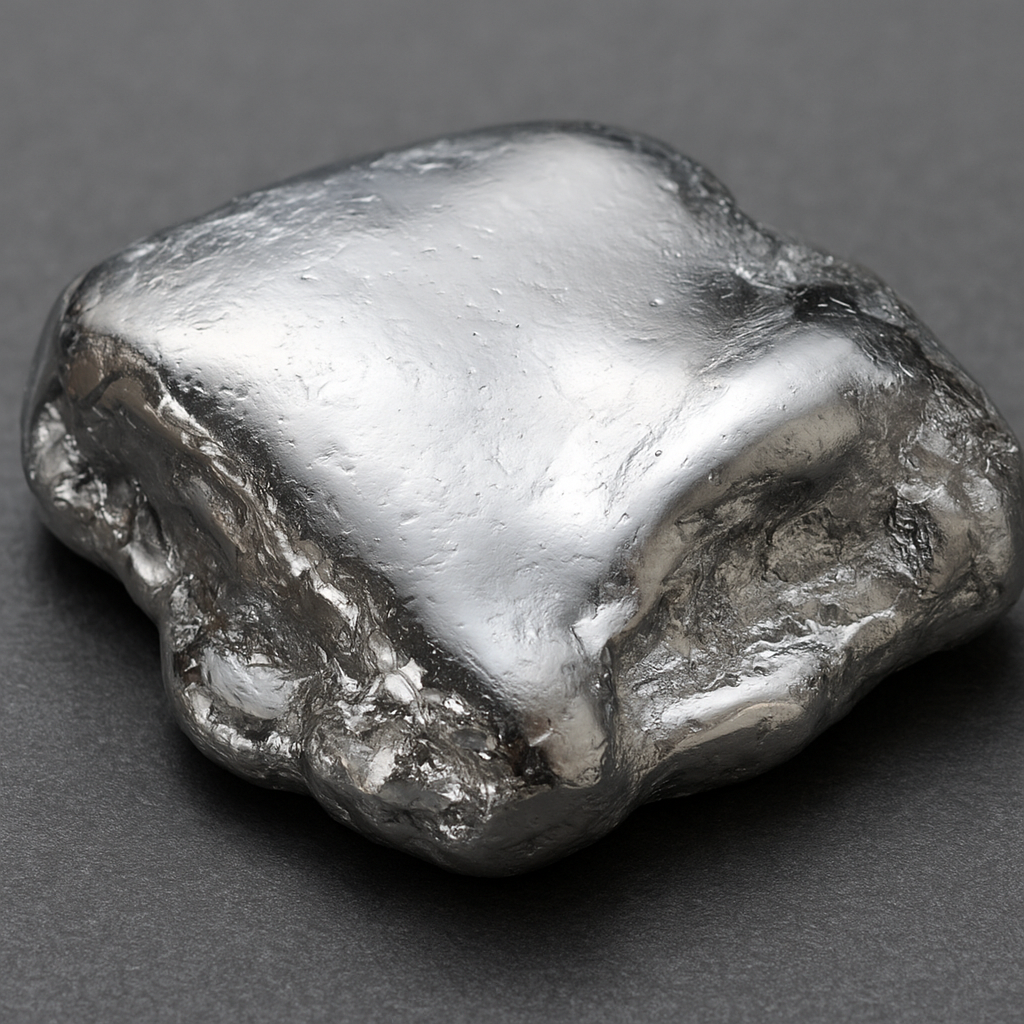
Gallium is an element that sits quietly between aluminum and indium in the periodic table, yet it exerts an outsized influence on modern technology. This soft, silvery metal has unusual physical properties, a fascinating discovery history, and a growing list of high-tech applications. The following sections explore where gallium is found, how it is produced, its distinctive properties, uses across industries from electronics to medicine, and the strategic issues that surround its supply and future development.
Where gallium comes from: occurrence and extraction
Gallium is not found free in nature as a native metal. Instead, it occurs in trace amounts within a variety of mineral ores and is most commonly recovered as a byproduct of processing other metals. The principal mineral contexts for gallium are aluminum-bearing bauxite and zinc-bearing sphalerite (zinc sulfide), from which gallium can be separated during industrial refining. Because gallium concentration in most ores is measured in parts per million, it is economically feasible to extract it only when those ores are processed at large scale.
The primary industrial route to gallium starts with the Bayer process for refining bauxite into alumina (aluminum oxide). During that process, gallium accumulates in the sodium aluminate liquor. Subsequent extraction involves precipitation, solvent extraction, or ion exchange to concentrate the gallium, followed by reduction to produce metallic gallium or conversion to gallium compounds. Zinc refining—especially from sphalerite—can also yield gallium as a byproduct, and coal fly ash and certain copper ores are minor secondary sources.
Global production of gallium is relatively small compared to base metals, measured in hundreds of tonnes per year. Major producers include countries with large aluminum or zinc industries. Market dynamics are influenced not by a specific gallium mine but by the output of alumina refineries and the demand for gallium-containing technologies. Recycling from electronic waste is an increasingly important supplementary source as gallium-bearing devices reach end of life.
Distinctive physical and chemical properties
Gallium has several properties that set it apart from many metals. It is a soft, silvery element with a low melting point—about melting point 29.76 °C (85.57 °F)—which means it can melt in warm hands or in a warm room. In its solid state it has a complex, orthorhombic crystal structure and notably expands on freezing, a rare behavior shared with water. The liquid metal forms a thin oxide skin in air, which stabilizes droplets and influences wetting behavior.
Chemically, gallium most commonly adopts the +3 oxidation state. Gallium(III) compounds are typically colorless and behave as Lewis acids; gallium salts are often soluble and are used as precursors for organometallic chemistry and thin-film deposition. Gallium is less reactive than aluminum but can form alloys with many metals, producing interesting material behaviors. One particularly important property is the ability of gallium to form low-melting-point eutectic alloys with indium and tin—materials that are liquid at or near room temperature and useful as non-toxic alternatives to mercury-based applications.
Isotopically, naturally occurring gallium consists of two stable isotopes, isotopes Ga-69 and Ga-71, with Ga-69 being the more abundant. Artificial and short-lived radioisotopes such as Ga-68 and Ga-67 have become invaluable in nuclear medicine and research because of their decay properties.
Electronics and optoelectronics: the industrial backbone
Arguably the most transformative role for gallium is in electronics. Compounds of gallium with other elements form some of the most important semiconducting materials in the modern age. Notably, gallium arsenide (GaAs) and gallium nitride (GaN) are key materials in optoelectronics, microwave devices, and high-performance power electronics.
GaAs and high-speed electronics
GaAs is a direct-bandgap semiconductor with excellent electron mobility, making it ideal for high-frequency and microwave applications. It has been widely used in satellite communications, radar systems, and older generations of mobile phone components. GaAs-based solar cells also provide higher efficiency than silicon in certain conditions and are used in many space applications where performance per unit area is critical.
GaN and the LED revolution
The development and commercialization of blue and white light-emitting diodes (LEDs) depended on GaN technology. GaN’s wide bandgap (~3.4 eV) supports the generation of blue and ultraviolet light, enabling white LEDs through phosphor conversion. The advent of GaN LEDs heralded a major shift in lighting efficiency and durability, powering illumination, displays, and backlighting. Beyond lighting, GaN transistors are now central to high-performance power electronics and radiofrequency (RF) amplifiers: GaN devices operate at higher voltages, temperatures, and frequencies than many silicon counterparts, improving energy conversion efficiency in applications from electric vehicles to 5G base stations.
Other electronic applications
- High-electron-mobility transistors (HEMTs) for RF and microwave amplification.
- Laser diodes (in GaAs and related alloy systems) for optical communications and sensing.
- Thin-film photovoltaic technologies where gallium can be alloyed into copper indium gallium selenide (CIGS) cells to tune bandgap and improve efficiency.
Alloys, liquid metals, and novel material systems
Gallium forms several important alloys, among them the eutectic alloy known commercially as Galinstan (gallium–indium–tin), which is liquid at room temperature and non-toxic compared to mercury. Liquid gallium-based alloys are used for unique applications such as thermal interface materials, soft robotics, stretchable electronics, and low-melting fusible links. They also appear in experimental liquid metal batteries and in cooling systems designed to exploit high thermal conductivity combined with low vapor pressure.
Because gallium wets and can breach oxide layers, it has a notorious ability to embrittle aluminum and other metals, a behavior that must be managed carefully in industrial contexts. When gallium is present, it diffuses into the grain boundaries of many metals, weakening their mechanical integrity. This property can be leveraged intentionally (e.g., in certain metallurgical processes) or avoided to prevent structural failures.
On the frontier of materials science, research into gallium oxide (Ga2O3) is advancing rapidly. Ga2O3 is an ultra-wide-bandgap material that promises power devices with even higher voltage capability and efficiency than GaN. Single-crystal gallium oxide substrates are easier and cheaper to grow than some alternatives, offering a pathway to next-generation high-voltage electronics.
Medical, biological and radiopharmaceutical uses
Gallium’s role in medicine spans therapeutic to diagnostic domains. Gallium salts and complexes have been evaluated as treatments for hypercalcemia of malignancy and certain cancers; gallium ions can disrupt iron metabolism in rapidly dividing cells, which has therapeutic potential. Gallium nitrate was used clinically for some time to treat cancer-related hypercalcemia.
In nuclear medicine, radioisotopes of gallium play a prominent role. Ga-67 has been used for single-photon emission computed tomography (SPECT) imaging of inflammation and certain tumors. The positron-emitting Ga-68 has become especially important for PET imaging because it can be produced from a generator and used to label peptides that target specific receptors, notably somatostatin receptor imaging of neuroendocrine tumors (e.g., Ga-68 DOTATATE). The availability of Ga-68 generators has expanded access to PET diagnostics that previously required cyclotron-produced isotopes.
Beyond radiopharmaceuticals, gallium compounds display intriguing antimicrobial activity. Gallium mimics iron ions and can be taken up by bacteria and fungi, interfering with iron-dependent metabolic pathways and inhibiting growth. This effect has driven research into gallium-based antimicrobials, particularly against drug-resistant pathogens and biofilms, with ongoing clinical and preclinical investigations.
Environmental, safety, supply and economic considerations
Gallium is not highly toxic in metallic form, but some gallium compounds can be harmful if ingested or inhaled; safe handling practices are important when working with powders, nanoparticles, or soluble salts. The environmental impact of gallium arises mainly from its use in electronics and the need to recover and recycle scarce material at end of life. Electronic waste is emerging as a potential secondary source of gallium recovery, but efficient recycling streams are still being developed.
From a supply perspective, gallium is strategically important because of its vital role in modern electronics and photonics. Production is tied to the output of other industries (especially aluminum refining), so supply can be constrained by bottlenecks in upstream mineral processing or by geopolitical factors. Concentration of refining capacity in certain regions can create vulnerability for manufacturers of gallium-dependent technologies.
Market forces are currently driven by demand for LEDs, power electronics (GaN transistors), and specialty semiconductors. Growth in electric vehicles, renewable energy systems, telecommunications infrastructure (including 5G and beyond), and high-efficiency lighting all increase demand for gallium-containing components. These trends have motivated investment in alternative extraction methods, improved recycling, and substitution efforts where appropriate.
Interesting historical, cultural and technical notes
The discovery of gallium in 1875 by French chemist Paul-Émile Lecoq de Boisbaudran came through spectroscopy—an early triumph of the new analytical method. Named after Gallia, the Latin name for France, gallium helped validate predictions about undiscovered elements; Dmitri Mendeleev had forecast the existence and properties of an element he called “eka-aluminium” before gallium was isolated, and the match between prediction and observation lent support to the periodic law.
Several curious physical phenomena make gallium a favorite of chemistry demonstrations. A small shard of solid gallium will melt at a warm room temperature; molten gallium forms beads stabilized by a thin oxide skin and exhibits high surface tension. When allowed to solidify in a mold, gallium often expands and can fracture the container, a reminder that not all solids contract on freezing. Gallium’s ability to alloy with and embrittle aluminum is a cautionary and intriguing lesson in metallurgy.
Future directions and research frontiers
Research into gallium-related materials continues at a brisk pace. Key frontiers include:
- Scaling up production and lowering costs for GaN-based power devices to displace silicon in high-efficiency converters and inverters.
- Advancing Ga2O3 technology for ultra-high-voltage switching, with improved crystal growth and device fabrication techniques.
- Developing more efficient recycling processes to recover gallium from electronic waste and reduce dependence on primary production.
- Exploring gallium-based antimicrobials and novel therapeutic agents that exploit gallium’s interference with microbial iron metabolism.
- Creating stable, safe liquid-metal applications and integrating gallium alloys into flexible and wearable electronics.
The interplay of material science, industrial demand, and geopolitical supply chains will determine how gallium shapes future technology. Given its central role in high-performance optoelectronics and power systems, continued innovation in gallium extraction, materials engineering, and device fabrication is likely to remain a strong focus for decades to come.