
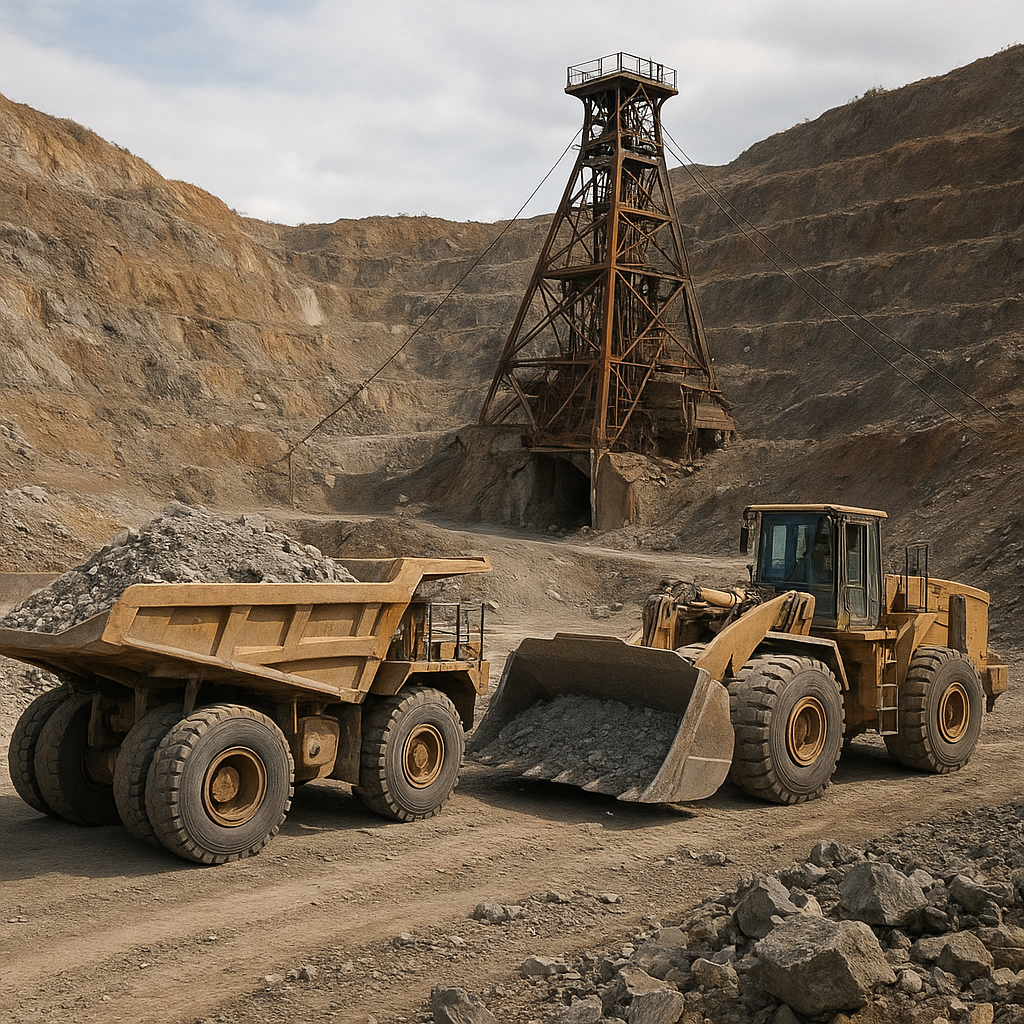
The Galena Mine has long been emblematic of the United States’ rich history in metal extraction, particularly in the production of silver and lead. This article explores the mine’s setting, the minerals extracted there, its economic role through time, and several lesser-known but intriguing aspects that make the site notable. The narrative connects geology, industrial practice, community impact, and environmental challenges to give a rounded picture of a mine that has shaped both landscapes and livelihoods.
Location and Geological Setting
Located within the historic mining regions of the United States, the Galena Mine sits in the heart of a prolific mineral-producing area. For the purposes of this discussion, the mine is considered in the context of the northern Idaho silver-lead belt, part of the broader Coeur d’Alene mining district. The region’s complex geological history produced concentrated deposits of sulfide minerals that made mining economically attractive from the late 19th century onward.
The name Galena is derived from the primary ore mineral found at the site: Galena, the natural mineral form of lead sulfide (PbS). Galena commonly occurs in hydrothermal veins and replacement deposits that formed when mineral-rich fluids migrated through fractures and permeable host rocks. Over geological time these fluids precipitated sulfide minerals, including Silver intimately associated with lead in the form of argentiferous galena, and native silver or other silver-bearing minerals. The combination of silver and Lead in the same deposits made sites like this especially valuable.
The region’s host rocks include metamorphosed sediments and volcanic units that were later intruded or pervaded by metal-bearing fluids. Structural features—faults, folds, and vein systems—provided channels for mineralizing fluids and controls on ore distribution. Mines exploited both high-grade veins and broader stratabound ore zones where concentrated mineralization occurred.
Minerals Extracted and Methods of Extraction
The Galena Mine produced primarily silver and lead, though mines in the same district also recovered by-product metals such as zinc, copper, and small amounts of other trace elements. The mineral assemblage typically included galena (PbS), sphalerite (ZnS), chalcopyrite (CuFeS2), and various silver-bearing sulfides and native silver occurrences. Ore zones varied from narrow, high-grade veins to wider, lower-grade envelopes that were amenable to bulk mining.
Primary extraction techniques
- Underground mining: The predominant method, using a network of shafts, drifts, and stopes to access ore bodies at depth. Timbering, later replaced by steel and concrete supports in parts, kept tunnels open as miners advanced.
- Cut-and-fill and room-and-pillar: Common in irregular vein systems, these stoping methods allowed selective extraction while maintaining ground stability.
- Open-pit methods: Employed in areas where near-surface mineralization was extensive enough to justify large-scale surface removal, though less common in the classic vein-dominated segments.
- Ore handling and transport: Ore was hoisted to surface, crushed, and sorted before being sent to concentrators or smelters. Trains and truck convoys linked the mine to regional processing facilities.
Once ore reached processing stages, physical and chemical methods separated valuable minerals from waste rock. Crushing, grinding, and flotation were standard to produce a concentrate rich in lead and silver. These concentrates were then shipped to smelters where smelting recovered metallic lead and silver. Over time, metallurgical improvements increased recovery rates and reduced waste volumes.
Economic Significance
The Galena Mine and its counterparts in the district were foundational to regional economies. During boom periods, mining spurred the rapid growth of nearby towns, created employment, and generated ancillary industries such as rail, smelting, equipment manufacturing, and services. Mining companies invested in local infrastructure—water systems, power generation, and transportation networks—that benefited broader communities.
At a national level, the mine contributed to metal supplies critical for industrial and monetary uses. Historically, Silver played roles in coinage, photography, and later in electronics and specialized industrial applications. Lead, meanwhile, was vital for batteries, radiation shielding, construction materials, and alloying. The combined output supported manufacturers, finance, and strategic needs, especially during times of increased national demand such as wartime mobilizations.
Fiscal contributions were not limited to direct sales. Mining generated tax revenues for local and state governments and created secondary economic multipliers: local businesses serving miners and their families, educational institutions supported by endowments or taxes, and real estate development around prospering communities. The concentration of wealth also spawned philanthropic projects—libraries, hospitals, and cultural institutions—many of which have left lasting legacies.
Employment and social influence
- Workforce: The mine employed miners, metallurgists, engineers, accountants, and a wide array of support staff. Skilled labor shortages at peak times attracted workers from other states and countries, shaping local demographics.
- Community life: Mining culture emphasized solidarity, mutual aid, and often strong labor organization. Strikes and collective bargaining shaped labor relations and improved safety and wages over time.
- Long-term effects: When mines declined or closed, communities faced economic challenges, prompting diversification efforts into tourism, light manufacturing, or services.
Environmental and Regulatory Context
Large-scale metal extraction leaves a substantial environmental footprint. Tailings, waste rock, and smelter emissions historically led to contamination of soils, waterways, and air with heavy metals. The chemistry of mine drainage—acidic waters leaching metals—posed risks to aquatic ecosystems and potable water sources. Over the 20th and 21st centuries, understanding of these impacts grew and led to comprehensive remediation and regulatory frameworks.
Federal and state agencies, alongside mining companies and communities, implemented actions such as:
- Site characterization and monitoring of groundwater and surface water.
- Containment and treatment of tailings and mine drainage to reduce metal mobility.
- Revegetation and soil amendments to immobilize contaminants and restore habitat.
- Financial assurance and closure plans to ensure long-term management of legacy wastes.
The process of reclamation has public health, ecological, and economic rationales: protecting downstream users, restoring fisheries and wildlife habitat, and enabling former mine lands to find new uses such as recreation, conservation, or redevelopment.
Technological Evolution and Innovations
Mining at Galena and similar operations advanced with technology. Early hand-drilling and black powder gave way to compressed-air drills, dynamite, and mechanized loaders. Hoisting systems evolved for deeper shafts and heavier loads. Metallurgy improved with better flotation reagents and furnace designs, increasing recovery of ore and reducing emissions.
Modern computing and geological modeling allow far more precise targeting of mineralized zones, minimizing waste extraction. Environmental monitoring systems and water treatment technologies have also matured, enabling operations to meet stricter standards while reducing operational risks.
Interesting Facts and Lesser-Known Details
The story of the Galena Mine includes a number of compelling and sometimes surprising facets:
- Mineralogy and specimens: Beautiful crystals of galena often form cubic or octahedral shapes. Collectors prize well-formed specimens, some of which fetched high values at mineral shows for their aesthetic and scientific interest.
- Silver content variability: Not all galena is equally argentiferous. In some lenses, silver occurs as microscopic inclusions or as distinct silver minerals, requiring careful metallurgical treatment to achieve good recoveries.
- Historic engineering feats: Deep shafts, complex underground rail networks, and ventilation systems represent engineering responses to working at depth and managing heat, gases, and rock pressure.
- Mine safety evolution: Early mining had high accident rates. Advances in ventilation, ground control, and mine rescue dramatically improved safety. Closure of some older workings was driven by both economic unviability and safety concerns.
- Tourism and heritage: Some former mining towns have preserved mine buildings, created museums, or opened safe mine tours. These reinterpretations of mining heritage attract visitors and provide economic alternatives as extraction declines.
- Role in wartime production: During major conflicts, demand for lead and silver surged. Mines ramped up production, and output contributed to munitions, batteries, and other wartime needs.
- Art and culture: Mining imagery—tools, shift whistles, and miner portraits—entered local art and public memory, creating a distinct cultural landscape tied to extraction labor.
Community Legacies and Modern Uses
After active mining winds down, communities around the Galena Mine often face crossroads. Some towns experienced sharp declines, while others reinvented themselves. Adaptive reuse examples include:
- Industrial parks on remediated mine lands to host new businesses.
- Outdoor recreation areas—hiking, mountain biking, and heritage trails—leveraging dramatic mine-scape topography.
- Museums documenting mining history and preserving artifacts that educate new generations about geology and industrial heritage.
- Scientific research: former mines serve as natural laboratories for studying ore formation, mineralogy, and remediation techniques.
These pathways balance remembrance of mining’s contributions with efforts to secure long-term environmental and economic resilience.
Concluding Observations
The Galena Mine stands as a multifaceted example of how geology, technology, and human enterprise intersect. Its deposits of Silver and Lead fueled local prosperity, supported national industries, and generated complex environmental and social legacies. From the crystalline beauty of Galena specimens to the engineering prowess of deep subterranean workings, the mine embodies both the promise and the challenges of mineral extraction. Modern approaches to mining and reclamation aim to extract value while minimizing harm—an evolution that reflects lessons learned from historic operations in the Coeur d’Alene region and beyond.
Whether studied for economic history, geological insight, or community transformation, the Galena Mine continues to interest researchers, former miners, and visitors drawn to the rugged landscapes shaped by its centuries-long influence. The site’s story is not only about metal recovered from the earth but also about social adaptation, technological progress, and the ongoing negotiation between resource use and environmental stewardship.

