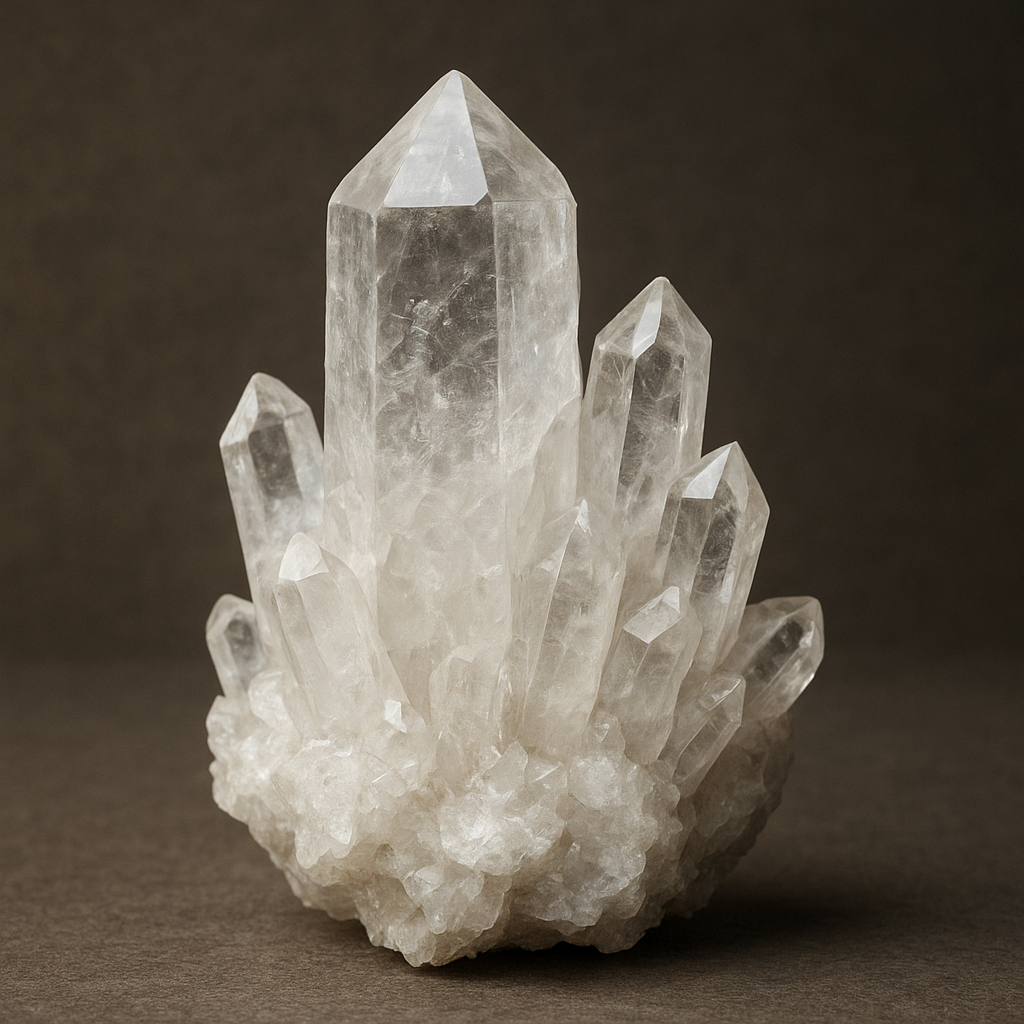
Galaxite is a relatively rare and intriguing member of the spinel family of minerals, often overlooked outside specialist mineralogical circles but prized by collectors and geologists for what it reveals about manganese-rich geological environments. This article explores its mineralogical character, typical geological settings, known occurrences, uses and applications, and some of the scientific and cultural aspects that make galaxite interesting beyond its modest commercial value.
Mineralogy and Crystal Chemistry
Belonging to the spinel group, galaxite is essentially a manganese aluminous oxide whose idealized composition is commonly written as MnAl2O4. Like other spinels, it crystallizes in the cubic system and shares the dense, closely packed oxygen framework that characterizes this family. Its appearance is often dark — black to very dark brown — and it typically occurs as granular masses, compact aggregates or occasional well-formed crystals that are small and lustrous.
Physically, galaxite presents the typical traits of spinel minerals: limited cleavage, brittle tenacity, and a tendency toward conchoidal or uneven fracture. Optical properties in thin section show isotropic behavior under cross-polarized light, consistent with its cubic symmetry. Definitive identification of galaxite in the laboratory usually relies on modern techniques such as X-ray diffraction (XRD) and electron microprobe analysis because compositional variation and intergrowth with related manganese oxides can complicate field identification.
Compositional variations are common: natural samples often contain iron, calcium or other transition elements substituting into the crystal lattice. These substitutions can modify color and density and influence magnetic behavior. In many cases, galaxite forms part of a mineral assemblage that includes rhodonite, spessartine, tephroite, hausmannite and various manganese oxides and silicates, reflecting the manganese-rich chemistry of its host rocks.
Geological Settings and Formation Processes
Galaxite typically forms in environments where manganese concentrations are elevated and where metamorphic or metasomatic processes allow spinel-group minerals to crystallize. Two common geological contexts are:
- Contact or regional metamorphism of manganese-bearing carbonate sediments — where heat and fluid interaction produce new mineral assemblages and stabilize spinel-group phases.
- Skarn and metasomatic zones adjacent to igneous intrusions — where infiltration of silica- and metal-bearing fluids alters carbonate host rocks and produces complex, manganese-rich mineralization.
Metamorphism of manganese-rich sediments can concentrate manganese and aluminum locally, providing the essential chemical ingredients for galaxite crystallization. In skarn settings, the influx of magmatic fluids introduces heat and additional chemical components that drive the formation of new minerals, often including spinels, garnets and silicates in close association.
Because galaxite reflects specific chemical conditions — notably elevated manganese and a source of aluminum — its presence is a marker of particular rock histories and fluid-rock interactions. Petrologists use galaxite and its associated mineralogy to infer metamorphic temperatures, oxygen fugacity, and the character of metasomatic fluids during rock evolution.
Where Galaxite Is Found
Although not abundant, galaxite has been reported from a variety of localities worldwide. Its name derives from the town of Galax, Virginia, where notable early specimens were identified, and many significant occurrences are in eastern North America. Typical localities include manganese-rich metamorphic terrains and skarn deposits.
Representative occurrence types and regions:
- Eastern United States — occurrences in Virginia and neighboring states are historically important; many classic museum specimens originate from these areas.
- Metamorphosed manganese deposits in Europe — galaxite has been described from several localities in Scandinavia and central Europe, often associated with complex skarn or metamorphic sequences.
- Other global reports — isolated finds from Asia, Africa and the Americas have been documented in the literature, always tied to manganese-enriched host rocks.
Because galaxite does not form big, gem-quality crystals in most places, it is more often encountered as part of hand-specimen collections or in polished sections and is primarily of interest to mineralogists studying manganese deposits rather than to industrial miners seeking ore bodies.
Uses and Practical Applications
On its own, galaxite has limited direct commercial value. The mineral is too uncommon and typically too fine-grained to serve as a primary source of manganese for industrial processes. However, it intersects with several areas of practical and scientific interest:
- Ore indicator — the presence of galaxite can signal manganese enrichment in a rock, which may warrant further exploration for more extensive manganese mineralization nearby.
- Collector and display specimens — well-formed samples, especially those associated with attractive mineral suites, are of interest to museums and private collectors who value their rarity and the geological stories they embody.
- Scientific research — galaxite, as a natural example of a manganese-bearing spinel, is useful to researchers studying spinel-group chemistry, metamorphic petrology, and the behavior of manganese during metamorphism and metasomatism.
In a broader context, manganese-bearing spinels are related to materials studied for technological uses. While galaxite itself is not a common industrial feedstock, synthetic manganese aluminates and related spinel-phase materials are investigated for:
- magnetic and electronic applications (ferro- and ferrimagnetic properties in spinel ferrites),
- catalysis and oxidation reactions, and
- battery materials and electrodes in electrochemical technologies, where manganese compounds often play important roles.
Such research highlights why natural minerals like galaxite are scientifically valuable: they serve as templates and compositional end-members for synthetic analogs that may have useful properties.
Collecting, Gem Use and Aesthetic Qualities
Galaxite is rarely seen as a conventional gemstone; its dark color and typically small crystal size limit faceting potential. Nevertheless, polished cabochons and small ornamental pieces appear occasionally, especially when galaxite forms dense, translucent-brown material that can take a good polish. Collectors prize specimens that show sharp crystal faces, interesting associations with other manganese minerals, or provenance from classic localities.
Identification by hobbyists and collectors commonly relies on macroscopic features: dark color, high specific gravity relative to common rock-forming minerals, and a characteristic spinel-like lustre. Confirmatory approaches include hardness tests (galaxite is relatively hard compared with many rock-forming minerals), streak tests and, for serious collectors, sending specimens for professional analysis (XRD or microprobe).
Museums and academic collections value galaxite for interpretive purposes, using it to illustrate metamorphic processes in manganese-rich environments and to demonstrate the diversity of the spinel group. Its presence in association with striking minerals such as rhodonite or spessartine garnet can make specimens visually compelling despite the subdued color of galaxite itself.
Scientific Interest: Magnetism, Chemistry and Materials
Researchers are attracted to galaxite for several reasons. As a manganese-bearing spinel, it helps scientists understand substitution mechanisms within the spinel structure and how such substitutions affect physical properties like magnetism and conductivity. Natural galaxite specimens provide real-world examples of compositionally complex spinels that can be compared with synthetic materials.
Some topical areas where galaxite-relevant research is active include:
- Magnetic studies — spinel ferrites with manganese can exhibit diverse magnetic behaviors depending on cation distribution and oxidation states; natural galaxite can therefore serve as a comparative material for experimental ferrites.
- High-temperature petrology — galaxite records information about temperature, pressure and fluid composition in metamorphosed manganese deposits, making it a useful thermobarometer component when combined with other minerals.
- Materials science — insights from natural galaxite contribute to the design of manganese-aluminate ceramics and catalysts, particularly where spinel stability and cation ordering influence performance.
Laboratory studies occasionally synthesize Mn-Al spinel phases to probe catalytic behavior or electrochemical potential. Although most applied work focuses on engineered materials rather than natural mineral specimens, the geologic occurrences of galaxite help guide compositional choices and provide validation for synthetic phases.
Identification Challenges and Analytical Methods
Field identification of galaxite can be challenging because it closely resembles other dark oxides and spinels. Key steps used by professionals include:
- macroscopic and physical tests (color, streak, hardness, luster);
- polarized light microscopy to check isotropy and textural relationships;
- X-ray diffraction for crystal structure confirmation;
- electron microprobe or scanning electron microscopy (SEM) for precise chemical analyses and imaging.
Because natural specimens often contain substitutions (e.g., Fe-for-Mn), compositional analysis is important to distinguish galaxite from related minerals like jacobsite (MnFe2O4) or magnesiochromite and to understand the range of solid solution present. Such analyses not only confirm identity but also provide data useful for reconstructing the paragenesis of the host rock and the physicochemical conditions during formation.
Associated Minerals and Paragenesis
Typical mineral associations help place galaxite within a broader paragenetic framework. In manganese-rich metamorphosed carbonate environments, galaxite commonly coexists with:
- silicates such as rhodonite and tephroite;
- manganese oxides like hausmannite and various pyrolusites;
- garnet-group minerals (spessartine) and other spinels.
These associations indicate a history of manganese concentration, metamorphic recrystallization, and metasomatic fluid activity. In skarns, galaxite may be intergrown with silicate and oxide phases that formed during prograde metamorphism or retrograde alteration as magmatic fluids mixed with carbonate host rocks.
Field Tips for Enthusiasts and Students
If you encounter suspected galaxite in the field, consider the following pragmatic tips:
- note the rock type and geological context — is the host a metamorphosed carbonate, skarn, or manganese-rich sediment? Context is often the best first clue;
- look for associated manganese minerals such as rhodonite or spessartine, which often indicate the right chemistry;
- document the find with photographs and precise locality data — provenance greatly increases scientific and collector value;
- if possible, obtain a small sample for laboratory analysis rather than relying solely on visual identification; proper analysis can reveal compositional subtleties and clarify whether the specimen is true galaxite or a related spinel.
Enthusiasts should be mindful of local collection regulations and land access restrictions; many classic galaxite localities are on private land, protected areas or within sensitive geological sites.
Historical and Cultural Notes
The name galaxite reflects its historical association with Galax, a town whose nearby outcrops yielded some of the earliest described specimens. Over time, galaxite has been a minor but enduring curiosity in mineralogical handbooks and regional geological surveys. While it never rose to the level of commercially mined manganese minerals such as pyrolusite or braunite, its niche role in understanding manganese geochemistry and its occasional use in collections ensure that galaxite remains part of the mineralogical lexicon.
Why Galaxite Matters
Even though galaxite is not a major industrial commodity, it occupies a useful role at the intersection of geology, materials science and collecting. As a natural representative of manganese-aluminate spinels, it connects field observations to laboratory experiments and helps researchers frame questions about elemental mobility, mineral stability and the behavior of transition metals in Earth systems. For collectors, galaxite specimens are tangible reminders of the diversity of mineral-forming processes and of the specific chemical conditions that give rise to distinct mineral species.