
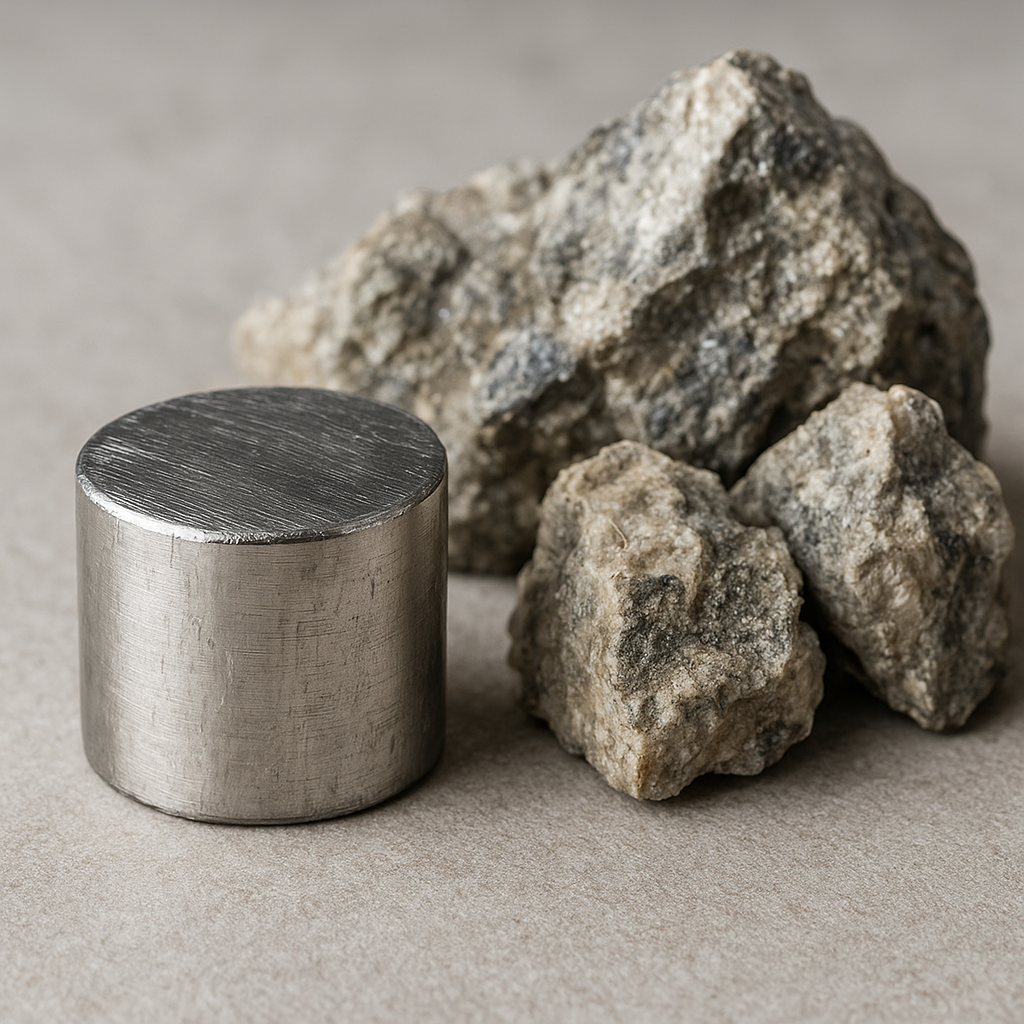
Gadolinium is an element that sits near the middle of the lanthanide series and has captured attention across disciplines from medicine to nuclear engineering. This article explores where gadolinium is found in nature, how it is extracted and processed, its diverse applications, and a range of related topics that highlight why this metal is both technologically valuable and scientifically intriguing. Expect discussions of physical and chemical properties, industrial uses, environmental and health considerations, and some of the cutting-edge research that keeps gadolinium in the spotlight.
Occurrence and Extraction
Gadolinium, atomic number 64, belongs to the group commonly called the rare-earth elements. Despite the name, rare-earth elements are relatively abundant in the Earth’s crust, although they rarely occur in concentrated, easily mined deposits. Gadolinium typically appears in nature mixed with other lanthanides and is recovered as a component of various mineral ores.
Major natural hosts for gadolinium include minerals such as monazite and bastnäsite, which are complex mixtures of light and heavy lanthanides. It is also found in minor amounts in xenotime and other phosphate or carbonate minerals. Commercially, gadolinium is seldom mined alone; instead, it is separated from mixed rare-earth concentrates through a series of chemical processing steps.
The extraction process begins with mining of rare-earth-bearing ores, followed by physical and chemical separation steps. Typical stages include crushing, flotation, and leaching to produce a concentrate. Then, solvent extraction or ion-exchange methods isolate individual lanthanides. Once separated, gadolinium is converted to a salt (often the oxide or carbonate) and subsequently reduced to metallic gadolinium using methods such as metallothermic reduction with calcium.
- Monazite and bastnäsite are the most important commercial sources.
- Separation of gadolinium from neighboring lanthanides (like terbium, europium, and dysprosium) can be challenging due to similar chemical behavior.
- Refining and purification require multiple solvent extraction stages to reach high-purity gadolinium metal suitable for specialty applications.
Physical and Chemical Properties
Gadolinium is a lustrous, silvery-white metal with characteristics typical of the lanthanide series. One of its defining attributes is its magnetic behavior: certain gadolinium compounds and the metal itself exhibit strong magnetic properties at low temperatures. Pure gadolinium is ferromagnetic at temperatures below about 20 °C (293 K) and becomes paramagnetic above that threshold, which makes its temperature-dependent magnetism especially useful in several applications.
Chemically, gadolinium most commonly exhibits a +3 oxidation state in compounds, forming stable compounds such as gadolinium oxide (Gd2O3) and gadolinium chloride (GdCl3). It forms coordination complexes with organic ligands and can be incorporated into crystalline hosts to modify optical or magnetic properties. The presence of unpaired f-electrons is responsible both for its magnetic moments and many of its spectroscopic behaviors.
- Paramagnetic character above ~20 °C is exploited in medical imaging.
- High neutron-capture cross-section of certain isotopes makes it useful in nuclear technology (neutron capture).
- Good thermal stability in oxide form facilitates use in high-temperature materials and ceramics.
Major Applications
Gadolinium’s properties create a wide array of applications in medicine, electronics, energy production, and materials science. Below are the principal sectors where gadolinium has proven indispensable.
Medical Imaging and Contrast Agents
One of the most prominent uses of gadolinium is in magnetic resonance imaging (MRI). Gadolinium-based contrast agents (GBCAs) are widely used to enhance the quality of MR images. In these agents, gadolinium is chelated by organic ligands to reduce toxicity and to facilitate rapid excretion. The paramagnetic nature of gadolinium ions shortens relaxation times of nearby water protons, increasing contrast and enabling clearer delineation of tissues, blood vessels, and pathological lesions.
GBCAs fall into two general categories: linear and macrocyclic chelates. Macrocyclic ligands usually form more stable complexes, which has implications for safety. Usage of MRI contrast agents has transformed diagnostics by improving detection and characterization of tumors, vascular anomalies, inflammatory processes, and central nervous system disorders.
Nuclear Technology
Gadolinium’s capacity to absorb neutrons efficiently makes it valuable in nuclear reactor technology. It is used in control rods, burnable poison rods, and as an additive in reactor fuels to help manage reactivity. In particular, isotopes like Gd-157 have an exceptionally high thermal neutron absorption cross-section, allowing precise control of neutron flux within reactor cores.
- Reactor control materials and burnable poisons stabilize reactor operation and extend fuel life.
- Gadolinium-doped fuels and materials are engineered for specific neutron economy and safety margins.
Electronics, Magnets and Materials
In materials science, gadolinium is valued for its magnetic and magnetocaloric properties. Gadolinium-based alloys and compounds are used in specialized permanent magnets and magnetic refrigeration technologies. The magnetocaloric effect — heating and cooling induced by changing magnetic field — is particularly pronounced near gadolinium’s Curie temperature and is being investigated for environmentally friendly refrigeration technologies.
Additionally, gadolinium compounds are applied as phosphors and in lighting applications. When doped into glass or ceramic matrices, gadolinium can alter luminescent properties and energy transfer dynamics, making it useful in display technologies and scintillators for radiation detection.
Industrial and Research Uses
Other specialized applications include:
- Scintillation detectors and neutron detectors where gadolinium’s neutron capture leads to detectable secondary radiation.
- Alloys that exploit gadolinium’s thermal and magnetic attributes for sensors and actuators.
- Catalysis in certain chemical transformations, although less common than other rare-earth catalysts.
- Use as a dopant in optical materials for fiber lasers and luminescent devices (phosphors and scintillators).
Health, Safety and Environmental Issues
While valuable, gadolinium presents complexities concerning health and environment that have spurred regulatory scrutiny and research. Concerns primarily revolve around gadolinium-based contrast agents in medical use and the environmental impact of mining and processing.
Biomedical Safety and Retention
Chelated gadolinium used in GBCAs is designed to minimize free ion toxicity. Nevertheless, reports since the early 2000s have connected gadolinium deposits in tissues with rare conditions, most notably nephrogenic systemic fibrosis (NSF) in patients with severe renal impairment. More recently, trace amounts of gadolinium have been detected in brain tissue after repeated GBCA exposure, even in patients with normal kidney function. The clinical significance of such retention is still under investigation, but regulatory agencies have recommended cautious use of certain linear agents and encouraged choice of more stable macrocyclic chelates when possible.
Research continues into improved chelation chemistry to balance imaging efficacy with safety. Novel agents with higher stability and faster elimination are under development, and non-gadolinium contrast strategies (such as hyperpolarized agents or nanoparticle approaches) are being explored.
Environmental Impact and Mining Concerns
The mining and processing of rare-earth elements, including gadolinium, can generate significant environmental burdens if not managed responsibly. Tailings and waste streams may contain radioactive elements (e.g., thorium) or chemical reagents used in separation processes. Effective waste management, recycling, and development of greener extraction methods are active areas of industry and policy focus.
Increasing use of GBCAs has led to detectable gadolinium residues in wastewater and surface waters. Conventional water treatment processes do not fully remove chelated gadolinium, prompting research into advanced removal or recovery methods. Some wastewater treatment plants and treatment technologies aim to capture gadolinium for recycling back into industrial supply chains, reducing environmental release and resource waste.
Interesting Facts and Ongoing Research
Gadolinium intersects with many active research frontiers and has several surprising attributes that make it a subject of ongoing curiosity.
- Magnetocaloric effect: Gadolinium exhibits a strong magnetocaloric response near room temperature, which motivates research into solid-state refrigeration that could be more energy-efficient than vapor-compression systems.
- Biomedical innovations: Researchers are investigating targeted gadolinium nanoparticles and chelates that could allow combined imaging and therapy (theranostics) — for instance, delivering heat locally via magnetic fields while simultaneously providing enhanced imaging contrast.
- Neutron capture therapy: Gadolinium has been explored for boron neutron capture therapy alternatives, exploiting its neutron absorption to produce localized radiation effects for cancer treatment. Practical challenges remain, such as selective delivery to tumor tissue and managing collateral damage.
- Recycling and recovery: With growing demand and concerns about supply chains, new chemical and electrochemical methods aim to recover gadolinium from electronic waste, spent catalysts, and even medical waste streams.
- Optical and quantum materials: Doping crystals with gadolinium or integrating gadolinium compounds into quantum materials can tune magnetic resonance and optical transitions, of interest for quantum sensing and information technologies.
Practical Considerations for Use and Procurement
Industries and researchers working with gadolinium must consider supply chain, purity, regulatory compliance, and end-of-life strategies. Because gadolinium is typically sourced from mixed rare-earth deposits, geopolitical factors and market dynamics can influence availability and price. Purity requirements vary by application: medical GBCAs demand exceptionally high chemical purity and rigorous regulatory oversight, while metallurgical or ceramic uses may tolerate lower levels of impurities.
Procurement often involves specifying the chemical form (metal, oxide, salts) and the degree of purity. For research, small quantities of high-purity gadolinium salts or metals are obtainable from specialty suppliers; for industrial applications, bulk purchases are arranged through larger distributors or via recycling schemes. Safety data sheets (SDS) should be consulted for handling instructions, and laboratories must follow appropriate waste disposal practices for gadolinium-containing materials.
Future Outlook
The demand for gadolinium is expected to continue across multiple sectors, but its role may evolve as technology and regulation change. Innovations in imaging chemistry, materials science, and recycling could alter how gadolinium is used and conserved. Meanwhile, alternative materials or techniques might reduce reliance on gadolinium in some applications; nonetheless, its unique combination of magnetic, neutron-absorbing, and optical properties will likely keep gadolinium relevant for the foreseeable future.
Emerging priorities include improving the environmental footprint of rare-earth extraction, developing safer and more effective biomedical agents, and harnessing gadolinium’s properties for next-generation energy and quantum technologies. Collaboration between academia, industry, and regulators will be central to managing the benefits and risks associated with this versatile element.