Gabbro is a coarse-grained, dark-colored igneous rock that plays a central role in understanding Earth’s interior and provides a variety of practical uses in construction and industry. Formed deep beneath the surface from slowly cooled mafic magma, gabbro contrasts with its fine-grained volcanic counterpart, basalt, and appears in settings from oceanic crust to continental layered intrusions. This article explores the mineralogy, formation, distribution, economic importance and some surprising facts related to gabbro, combining geological background with applications and examples that illustrate why this rock is both scientifically valuable and practically useful.
What Is Gabbro?
Definition and Basic Characteristics
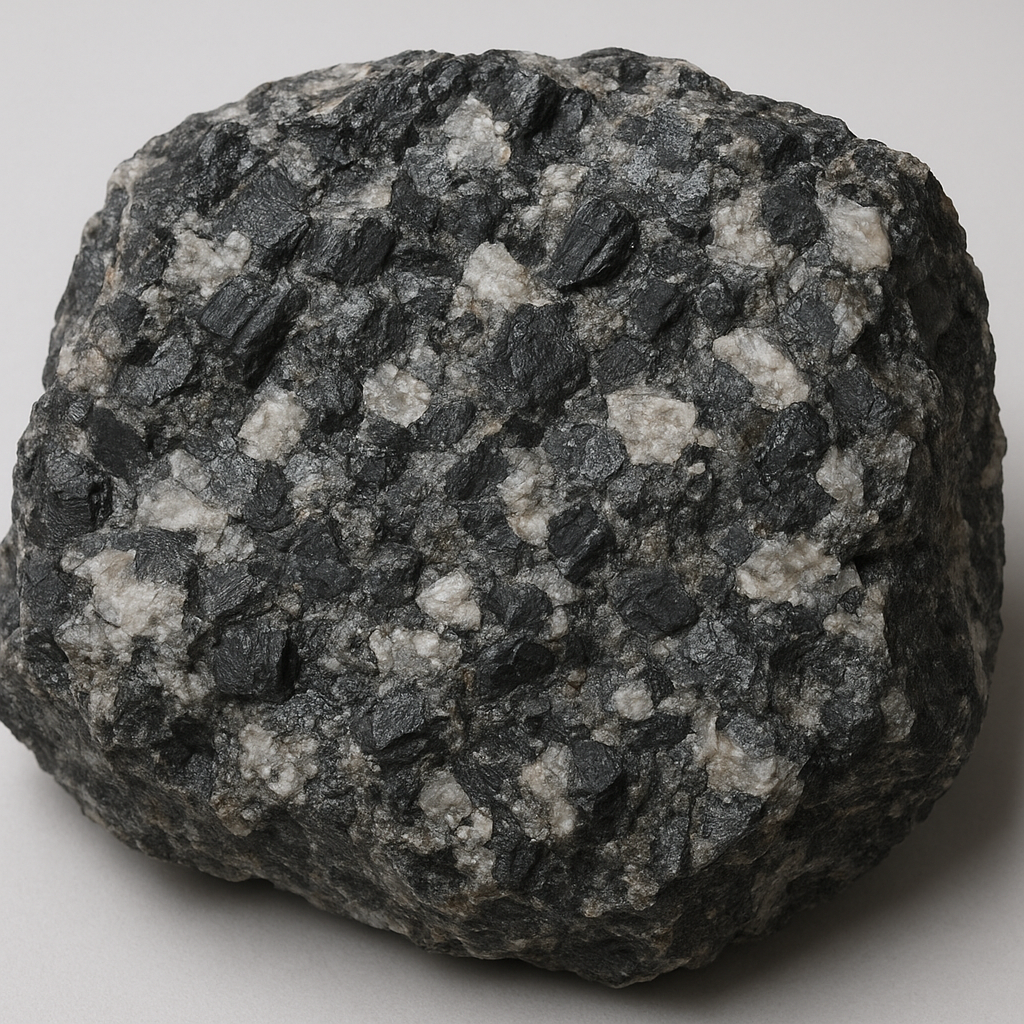
Gabbro is a coarse-grained intrusive igneous rock composed predominantly of plagioclase feldspar and mafic minerals such as pyroxene and, frequently, olivine. Its texture is crystalline and phaneritic, meaning individual mineral grains are large enough to see with the naked eye because the magma cooled slowly within the crust. Gabbro is chemically and mineralogically the plutonic equivalent of basalt, sharing a similar iron- and magnesium-rich composition but differing in cooling history and texture.
Key Mineral Constituents
The modal mineralogy of gabbro commonly includes:
- Plagioclase (usually calcium-rich labradorite to bytownite)
- Pyroxene (clinopyroxene – augite is common)
- Olivine (in more mafic varieties)
- Accessory minerals: magnetite, ilmenite, and sometimes amphibole or biotite
These minerals give gabbro its typical dark gray to black color and moderate to high density compared with felsic intrusive rocks like granite.
Where Gabbro Occurs
Oceanic Crust and Ophiolites
One of the most significant occurrences of gabbro is within the oceanic crust, where it forms the lower, intrusive section beneath seafloor basalt flows. In ophiolite complexes—slices of oceanic crust thrust onto continental margins during tectonic collisions—gabbro is exposed on land. Classic examples include the Semail Ophiolite in Oman and the Troodos Ophiolite in Cyprus, both of which provide accessible windows into oceanic lithosphere.
Large Layered Intrusions
Gabbro also forms in large, differentiated intrusions within continental crust. Layered mafic intrusions such as the Bushveld Complex (South Africa), Stillwater Complex (Montana, USA) and the Skaergaard Intrusion (Greenland) contain extensive gabbroic sequences. These bodies can be many kilometers thick and display rhythmic layering and mineral segregation due to crystal settling and other magmatic processes.
Other Settings
- Subvolcanic plutons and feeder systems feeding volcanic basaltic fields
- Rift zones where mantle-derived magmas intrude continental crust
- Small dikes and sills in various tectonic environments
How Gabbro Forms: Magma, Cooling and Textures
Origin of the Magma
Gabbroic magmas originate from partial melting of the mantle or from differentiation of more primitive mafic magmas. These melts are relatively low in silica and high in iron and magnesium, classifying them as mafic. The composition affects melting temperature, viscosity and the sequence in which minerals crystallize as the magma cools.
Crystallization and Textural Development
Because gabbro forms at depth, cooling is slow, allowing crystals to grow large. The order of crystallization typically follows Bowen’s reaction series: olivine and pyroxene crystallize early at high temperatures, followed by plagioclase. In large intrusions, processes such as crystal settling, magma replenishment and convective currents create layering and cumulate textures—dense crystals accumulate on chamber floors to form mineral-rich layers.
Variations in Texture
Gabbro can display different textures depending on cooling rate and magmatic history: coarse equigranular gabbro, porphyritic gabbro with large phenocrysts in a finer matrix, or cumulate textures where crystals are aligned or accumulated. Weathering and hydrothermal alteration can modify primary textures, producing amphibolite or serpentinized rocks where olivine and pyroxene are altered.
Mineralogical Varieties and Related Rock Types
Common Varieties
- Normative gabbro: typical plagioclase + clinopyroxene dominated
- Olivine gabbro: significant olivine content, transitional toward troctolite or peridotite
- Norite: orthopyroxene-rich equivalent (sometimes classified separately)
- Troctolite: dominated by olivine and plagioclase, with little pyroxene
Distinguishing from Similar Rocks
Geologists distinguish gabbro from diabase (also called dolerite) and basalt by grain size and cooling environment. Diabase is the medium-grained hypabyssal equivalent, while basalt is fine-grained and extrusive. Norite differs from gabbro primarily by having orthopyroxene instead of clinopyroxene as the dominant pyroxene.
Uses and Applications of Gabbro
Dimension Stone and Architectural Uses
Gabbro is often marketed as a black or dark-colored decorative stone and in some markets is sold under the general trade term “black granite” despite being geologically distinct. Its dense, attractive appearance and polishability make it suitable for:
- Countertops and floor tiles
- Monuments and gravestones
- Building facades and cladding
- Interior decorative elements
When polished, the plagioclase crystals in some gabbros (notably those containing labradorite) can display a mild iridescence that is prized in ornamental stone.
Construction Aggregate and Road Material
Crushed gabbro serves as a durable aggregate for road base, railway ballast, and concrete. Its hardness and angularity give good mechanical interlock and strength. It is frequently used in heavy construction where wear resistance is valuable.
Industrial and Mineral Resources
Layered gabbroic intrusions are important hosts for several types of ore deposits. Examples include:
- Chromite layers associated with ultramafic cumulates
- Platinum-group element (PGE) and nickel-copper sulfide mineralization in differentiated mafic-ultramafic intrusions
- Iron-titanium-vanadium oxide deposits associated with oxide-rich gabbroic layers
These economic associations make gabbro-bearing complexes targets for mining and exploration.
Engineering and Environmental Considerations
Mechanical Properties
Gabbro typically exhibits high unconfined compressive strength, low porosity and high density compared with many sedimentary rocks. These factors make it favourable for heavy-duty structural and engineering uses. However, mechanical properties vary with mineral composition and degree of fracturing; some gabbros can be more brittle and prone to blocky failure along joints.
Weathering and Durability
Although gabbro is generally durable, its mafic minerals (especially olivine and pyroxene) can chemically weather faster than quartz or potassium feldspar in abrasive environments. In humid climates, chemical alteration can produce clay minerals and iron-rich soils. Where gabbro is used as aggregate in concrete, alkali–silica reaction (ASR) is usually less of a concern than with some siliceous aggregates, but proper testing is important.
Environmental Footprint
Extraction and processing of gabbro have the usual environmental impacts of quarrying: landscape change, dust, noise and habitat disruption. In addition, transporting heavy stone over long distances increases carbon footprint. On the positive side, local use of gabbro can reduce import needs and support durable infrastructure with long service lives.
Notable Localities and Case Studies
Oman (Semail Ophiolite)
The Semail Ophiolite exposes a complete oceanic crustal sequence, including sheeted dikes, pillow basalts and extensive gabbroic sections. It is widely studied for insights into oceanic crust formation, hydrothermal alteration and the petrology of mantle-derived magmas.
Greenland (Skaergaard)
The Skaergaard Intrusion is famous for its remarkably preserved layering and textural features that provide a textbook example of fractional crystallization and magmatic differentiation in a closed system. The gabbroic rocks here have been instrumental in refining models of crystal settling and cumulate formation.
South Africa (Bushveld Complex)
Although the Bushveld Complex is best known for its platinum-group element riches, it also contains huge gabbroic and noritic sequences. The scale of the intrusion and the clear layering make it one of the most important examples of continental mafic magmatism.
Scientific Importance and Related Topics
Plate Tectonics and Oceanic Lithosphere
Gabbro is integral to our understanding of the oceanic crust and mid-ocean ridge processes. Studies of gabbroic rocks from ophiolites and ocean drilling projects reveal information on melt extraction, magma chamber processes, and the cooling history of newly formed oceanic lithosphere.
Planetary Geology
Gabbro-like rocks are relevant beyond Earth. Comparative studies of coarse-grained mafic rocks inform interpretations of planetary crusts and mantle processes on bodies such as the Moon and Mars. The composition and texture of gabbro offer clues to the thermal and magmatic histories of planetary interiors.
Petrogenesis and Geochemical Signatures
Geochemists analyze gabbroic rocks to trace source regions, degrees of partial melting and contamination by crustal materials. Isotopic systems (Sr, Nd, Pb) and trace element patterns help reconstruct the magmatic evolution that produced a given gabbroic body.
Practical Tips for Identification and Use
How to Identify Gabbro in the Field
- Look for a coarse-grained, dark rock with visible crystals of plagioclase and pyroxene.
- Test hardness: gabbro is generally hard and resists scratching by a steel knife.
- Check for layering or cumulate textures in large outcrops or quarries.
- Be cautious: many dark igneous rocks are marketed under trade names—verify with petrographic or hand-sample analysis if necessary.
Selecting Gabbro for Construction
When choosing gabbro for aggregate or dimension stone, check for:
- Extent of fracturing and jointing in the quarry—less fractured rock yields mechanically stronger material
- Weathering rind thickness; fresh rock is preferred for long-term durability
- Compatibility with construction uses (e.g., skid resistance for ballast, polish resistance for flooring)
Interesting Facts and Cultural Notes
- Because of its dark, attractive polish, some gabbros are marketed under trade names that include the word “granite” even though they are not true granites; consumers should be aware of geological distinctions.
- Gabbro can sometimes contain labradorite, a plagioclase feldspar that exhibits striking iridescence (labradorescence) and is used as a gemstone or decorative material.
- Layered gabbroic intrusions have provided key ore deposits that have supported major mining industries, linking the petrology of gabbro to global economics.
- Because it forms deep within the crust, gabbro can preserve records of slow magmatic processes that are erased in rapidly cooled volcanic rocks—making it a valuable archive for geologists.
Gabbro sits at the intersection of fundamental Earth science and practical engineering. From the seafloor to urban architecture, its presence influences tectonic models, mineral exploration and the built environment. Whether studied in the field, quarried for durable materials, or examined under a microscope to unlock Earth’s magmatic history, gabbro remains a rock of broad significance and enduring interest.