
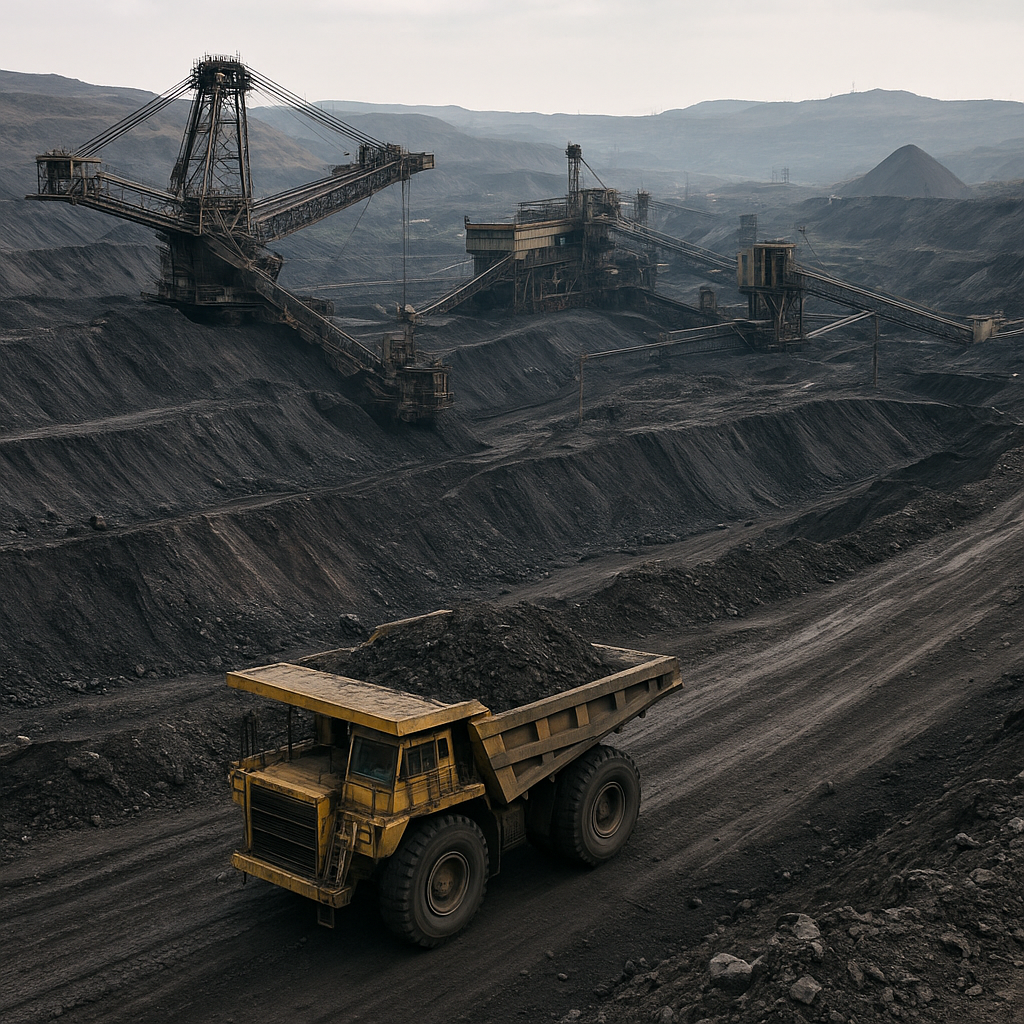
The Fushun mining complex in northeastern China represents one of the most historically important and industrially significant energy and raw-material centers in the country. Located in the heart of Liaoning province, the area has been a persistent source of **coal** and **oil shale** for well over a century, shaping local urban development, heavy industry and the energy supply of the whole region. This article explores where Fushun is, what is extracted there, why it matters economically and socially, and highlights a number of technical, historical and environmental aspects that make the site particularly noteworthy.
Location and geological setting
Fushun lies in the northeastern province of Liaoning, within the historical industrial region commonly referred to as China’s Dongbei (Northeast). The city of Fushun itself is situated east of the provincial capital Shenyang and close to the Liaodong Bay plain. The mining complex occupies both urban and surrounding rural landscapes, with visible scars of large open pits and associated industrial plants still present on the map and on the ground.
Geologically, the Fushun area is distinct because of two overlapping and valuable stratigraphic features: thick, exploitable seams of **coal** and extraordinarily large deposits of **oil shale**. The region’s sedimentary basins were formed in the Mesozoic and Cenozoic, where organic-rich layers were preserved and later subjected to tectonic and geothermal processes that made them economically recoverable. The combined presence of both conventional coal and unconventional oil shale in a single mining district is a major reason why Fushun developed into a multi-faceted mining and processing hub.
Regional context and transport links
Fushun’s mineral deposits are conveniently placed relative to rail and industrial centers. Railways and roads built during the early 20th century to serve mining and heavy industry still form the backbone of logistics for transporting **coking coal**, washed coal and processed products to steelworks, power plants and refineries across the northeast and beyond. Historically, the proximity to heavy consumers such as Anshan and Shenyang made the deposits exceptionally valuable for integrated industrial development.
What is extracted: coal, oil shale and derived products
The mineral output of Fushun can be broken down into three main categories: raw **coal** for power generation and industry, **coking coal** for steelmaking, and **oil shale** which has been processed into **shale oil** and various byproducts through retorting. Each of these has played a different role in regional and national economies over time.
Coal and coking coal
Coal mined in Fushun includes thermal grades used for electricity and heating, and higher-grade **coking coal** used in coke ovens for blast-furnace steel production. Coke produced from Fushun coal historically supplied major steelworks in the Liaoning corridor, underpinning the heavy industrial cluster that grew in the 20th century. Mining occurred through both underground methods and large open-pit operations, reflecting the variable geology and the scale of reserves.
Oil shale and retorting
One of the most distinctive features of Fushun is its rich **oil shale** deposit. Oil shale is an organic-rich rock that yields liquid hydrocarbons when heated (a process called retorting). Fushun became world-famous for its oil shale retorting industry: large retorting plants once produced **shale oil**, a locally derived liquid fuel, along with chemicals and other derivatives. In historical terms, the Fushun retorting facilities were among the most important of their kind, providing an alternative hydrocarbon source when crude oil supplies were limited.
- Direct outputs: raw coal, washed coal, coke, shale oil, ammonium sulfate (a fertilizer byproduct), and various industrial chemicals.
- Intermediate products: gas, tar, and processing residues used in local chemical synthesis and power generation.
- Byproducts: spent shale and other solid wastes that require management and remediation.
Historical development and institutional actors
The exploitation of Fushun’s resources accelerated with industrialization in northeastern China. Over the 20th century, the complex underwent periods of foreign influence, wartime control and state-led industrial expansion. The area’s mines and processing plants were developed, enlarged and modernized in line with national plans that emphasized heavy industry and energy self-sufficiency.
The contemporary corporate and management structure has been dominated by the Fushun Mining conglomerates and state-owned enterprises. The most prominent corporate actor in the modern era has been the Fushun Mining Group, which managed coal extraction, processing, coking and retorting facilities. The group coordinated logistics, energy supply and labour organization, serving both domestic industry and, at times, export markets.
Key historical phases
- Initial discovery and artisanal mining phases, when local coal was first exploited for small-scale heating and local industry.
- Rapid industrial expansion in the early 20th century, with railways and heavy investment turning Fushun into a regional mining center.
- Mid-century nationalization and integration into planned industrial networks, making Fushun a strategic source for steel and energy.
- Late 20th and early 21st century modernization, partial closure of inefficient operations, environmental safeguards and attempts at industrial diversification.
Economic significance for region and nation
Fushun’s contribution to the regional economy has been multifaceted. At the simplest level, the mines and processing plants supplied raw materials necessary for steelmaking, power generation and chemical industries across Liaoning and neighboring provinces. The availability of local **coking coal** helped anchor blast-furnace metallurgy operations, while **shale oil** provided an alternative liquid hydrocarbon source in periods of crude shortages or price volatility.
Beyond raw production, the mining complex drove secondary economic effects: employment, urbanization, transport infrastructure, and an industrial supply chain spanning equipment manufacturing, chemical processing and energy services. The city of Fushun and surrounding counties grew into an industrial labor market with specialized skills in mining, metallurgy and chemical engineering—skills that supported modernization and economic resilience in the region.
Employment and social impact
For generations, mining operations were a principal employer. Entire neighbourhoods, social institutions and municipal budgets were tied to mine performance. This dependence meant that fluctuations in global coal prices, shifts in national energy policy, or depletion of high-quality reserves could have profound social and fiscal consequences. In recent decades, as the industry contracted or consolidated, investments were made to retrain workers and redevelop former mining lands, though the transition has been socially and economically challenging.
Technological aspects and innovations
Mining at Fushun involved a range of technologies adapted to local geology and the combination of coal and oil shale deposits. Key innovations centered on retorting technology for oil shale processing, mechanized coal extraction, and approaches to coke-making. Over time, industrial processes were progressively improved to enhance recovery rates, increase energy efficiency and reduce certain emissions.
Retorting and chemical engineering
Retorting oil shale is technically more complex than conventional refining. The Fushun plants used both above-ground retorts and integrated heat recovery systems to extract liquid hydrocarbons from solid shale. Optimization efforts targeted yield improvement, cleaner combustion of process gases and recovery of secondary chemicals that could be used or sold. Although many of the older retorts were energy-intensive and polluting by modern standards, the technical experience gained at Fushun contributed to research on alternative hydrocarbon recovery methods and resource utilization.
Mining methods and mechanization
Coal extraction embraced both underground longwall-style mining and surface opencast techniques. Mechanization—drilling, continuous miners, conveyor belts and heavy earthmoving equipment—transformed productivity and safety, though not without occupational hazards. In recent decades there has been an emphasis on mechanized, closed-system extraction to reduce episodic coal dust release and accidents, alongside monitoring systems for subsidence and gas emissions.
Environmental and health considerations
Mining and processing at the scale seen in Fushun inevitably generated environmental pressures. The intensive exploitation of both coal and oil shale resulted in a series of challenges including air pollution, water contamination, soil degradation, and the accumulation of solid waste such as spent shale and tailings. These impacts affected urban air quality, surface and groundwater chemistry, agricultural land and public health.
The most persistent environmental issues in the area have included particulate and gaseous emissions from coking and retorting, acid mine drainage in certain locations, and large disturbed landforms from open-pit mining. In many cases, the legacy of historical operations required costly remediation programs, some of which are ongoing. The transition to stricter national environmental standards has accelerated closure of the most polluting units and promoted investments in pollution control technology.
Remediation and rehabilitation efforts
- Closure and sealing of unstable underground workings, along with monitoring of subsidence.
- Reclamation of open pits through reshaping, capping with inert material and re-vegetation where feasible.
- Treatment of process wastewater and measures to prevent leachate from spent shale piles entering watercourses.
- Air emission controls: electrostatic precipitators, scrubbers and improved combustion control in coking and retorting plants.
These measures reflect a longer-term shift from purely extractive priorities toward balancing economic benefits with environmental sustainability and public health protections.
Interesting and lesser-known aspects
The Fushun complex offers a number of notable and sometimes surprising stories that illuminate both local ingenuity and broader industrial dynamics.
- Historical continuity: Some form of coal extraction has been active in the Fushun area for more than a century, making the site a living archive of mining technology from early manual methods to modern mechanized operations.
- Oil shale prominence: While many regions focus on coal or petroleum, Fushun’s oil shale made it a world-referenced example of how unconventional hydrocarbons can be industrially processed. The city’s name is often cited in literature on oil shale technology.
- Local industrial ecosystems: The interdependence of mines, coking works, chemical plants and steel mills created a tightly coupled industrial ecosystem. Disruptions in one sector reverberated across the network, highlighting the complexity of industrial planning.
- Urban morphology: Mining shapes cities. In Fushun, urban growth, worker housing, hospitals and cultural institutions were tied to mining rhythms—shift patterns, seasonal demand and boom-bust cycles—creating a distinctive social geography.
- Adaptive reuse: As some facilities were decommissioned, there have been experimental efforts to repurpose industrial buildings and landscapes for tourism, education and cultural heritage projects that document the mining past.
Challenges and future perspectives
Going forward, Fushun faces a blend of challenges typical for legacy mining regions: declining reserves of high-quality coal, pressures to reduce pollution and greenhouse-gas emissions, the need for economic diversification and social support for displaced workers. At the same time, opportunities exist in rehabilitation, renewable-energy integration, and high-value chemical processing of remaining resources in ways that meet stricter environmental criteria.
Strategic pathways include converting former industrial land to new industries, investing in modern, low-emission processing for residual mineral resources, and leveraging technical expertise accumulated in the region for broader energy-sector projects. Efforts to document and preserve industrial heritage can also provide cultural and economic value through education and tourism initiatives.
Policy and market factors
National energy policies, global coal demand trends, and climate commitments will determine the pace and scale of Fushun’s transformation. If demand for metallurgical coal persists, certain mining operations may remain viable. Conversely, a rapid shift away from fossil fuels would accelerate mine closures and heighten the urgency of economic transition, rehabilitation and worker retraining programs.
The future of the Fushun complex is therefore a touchstone for how resource-rich regions can balance historical industrial identity with contemporary imperatives for environmental stewardship and economic modernization.
Final remarks on significance
Fushun’s mining district is more than a collection of pits and plants: it is a locus where geology, technology, economics and society intersect. The site’s history of extracting both **coal** and **oil shale** has made it a noteworthy case study in resource utilization, industrial growth and environmental consequence. While facing the universal challenges of post-industrial transition, Fushun retains a reservoir of technical knowledge, industrial infrastructure and cultural memory that can be mobilized as the region redefines its role in a changing energy landscape.

