
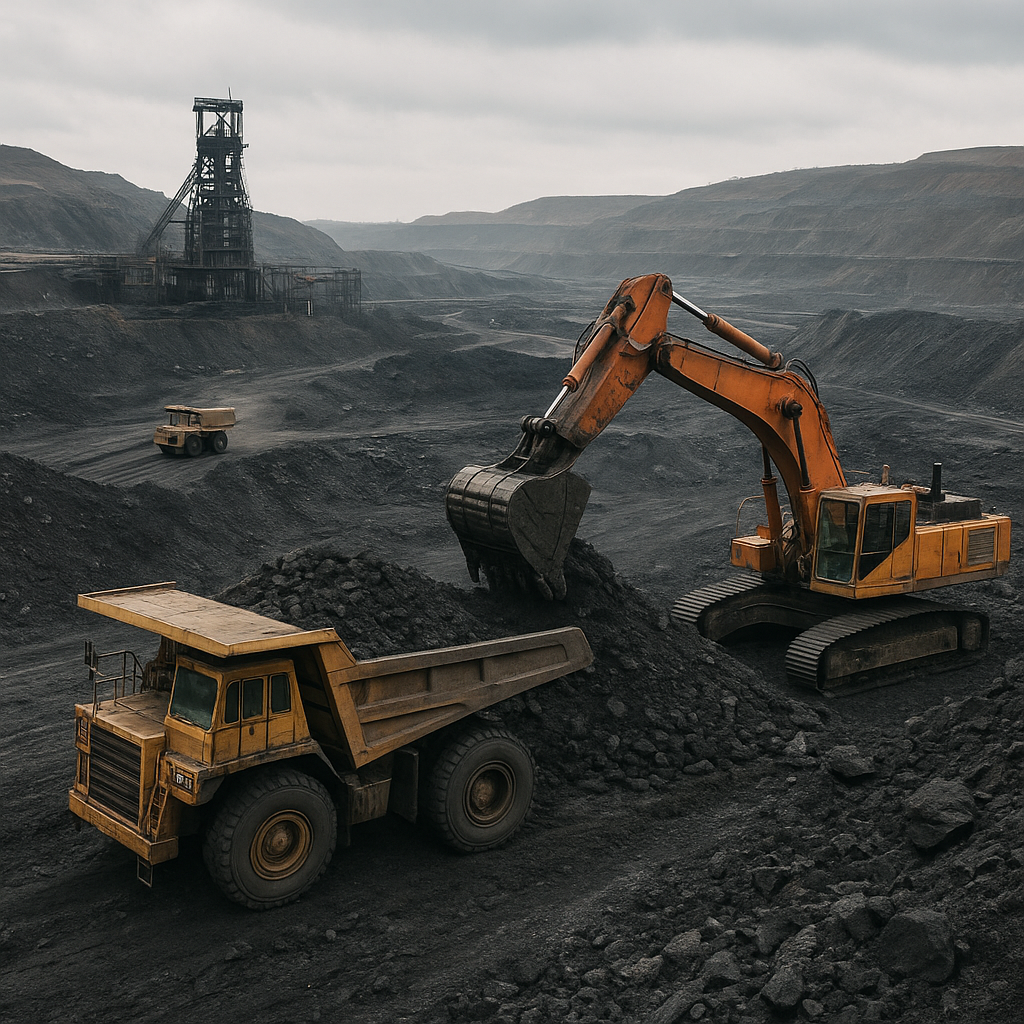
The Fushun mine complex in northeastern China represents one of the most historically significant and technically distinctive coal-producing regions in the world. Located in Liaoning province, the site has yielded vast quantities of both conventional coal and oil-bearing shale, shaping regional industry, energy policy, and urban development for more than a century. This article explores the mine’s location, geology, production methods, economic role, environmental legacy, and several lesser-known but compelling aspects of its past and present.
Location and Geological Setting
The Fushun mining area lies near the city of Fushun in Liaoning Province, in the northeastern part of the People’s Republic of China. Geographically, it is positioned on the eastern edge of the Northeast China Plain, close to the Hun River and roughly 40–50 kilometers east of Shenyang, the provincial capital. Its proximity to major transport routes and urban markets has been an important factor in its development.
Geologically, the basin that hosts the Fushun resources is characterized by thick sequences of sedimentary rocks from the Carboniferous to the Tertiary periods. The mine is particularly famous for two key resources: high-volatile bituminous coal and oil-bearing shale. The presence of abundant oil shale layers — interbedded with coal seams and other sediments — made Fushun unique among Chinese coalfields because it has been a major site for shale oil extraction as well as conventional coal mining.
The coal seams vary in depth and thickness, enabling both surface and underground exploitation. Many of the best-known deposits are relatively shallow, which allowed the development of large-scale open-pit operations in addition to extensive underground workings. The distribution and composition of the deposits have dictated the mining methods used over time and influenced the environmental footprint of the operations.
History of Fushun Mining
Early Development and Imperial Era
The mining history in the Fushun area stretches back several centuries, but industrial-scale extraction accelerated in the late 19th and early 20th centuries. With the opening of northeastern China to foreign investment and the expansion of railways, Fushun’s resources became strategically valuable. During this period, the mine’s output supplied growing domestic demand for fuel and raw materials for emerging industries.
20th Century Expansion
The 20th century saw rapid expansion under various political and economic regimes. Under Japanese occupation in the 1930s and 1940s, large-scale exploitation intensified to support wartime industry. After 1949, the new Chinese state prioritized coal and energy development; Fushun became a centerpiece of planned industrial growth in the northeast. Massive investments were made in infrastructure, mechanization, and the establishment of processing plants for both coal and shale oil.
Throughout the socialist era, the mine was integrated into state industrial plans. Labor from across the region was mobilized, and whole neighborhoods, schools, and social services were built around the mining complex. Generations of families became employed by the mine or in related industries, reinforcing Fushun’s identity as an industrial city.
Reform Era to Present
From the late 20th century onward, market reforms and environmental concerns reshaped the mine’s operations. Production practices were modernized, older pit and shaft workings were closed or reconfigured, and attempts were made to recover value from oil shale through more efficient retorting and refining techniques. The role of Fushun shifted from pure mass extraction to a more complex mix of energy production, chemical feedstock supply, and technological adaptation.
Extraction Methods and Production
Fushun’s resource mix requires a range of extraction and processing techniques. Conventional coal is mined by both underground longwall and room-and-pillar methods for deeper seams, while open-pit mining has been used extensively where seams are near the surface. For oil shale, specialized retorting facilities and chemical-processing plants convert kerogen-rich rock into shale oil and other hydrocarbons.
The oil-shale retorting process that gained prominence in Fushun involves heating mined shale in the absence of oxygen to release liquid hydrocarbons. While this technology has enabled domestic production of shale-derived fuels, its yield and economics have varied with global oil prices and technological improvements. Over the decades, experimentation with different retorting configurations and post-processing of by-products has been ongoing.
- Coal quality: Fushun coal ranges from lignite to bituminous categories; much of it is high-volatile bituminous, suitable for power generation and coking in certain blends.
- Shale oil: The oil shale yields have been a valuable supplement to liquid fuels, although extraction is more energy- and water-intensive than conventional crude oil production.
- By-products: Gas, tar, and chemical feedstocks produced from coal and shale processing have supported local chemical industries.
Production volumes have fluctuated with national demand, regulatory pressures, and market economics. Historically, Fushun was among China’s largest coal producers; however, as China diversified its energy mix and environmental regulations tightened, output patterns shifted to favor cleaner and more efficient operations.
Economic Importance
Fushun’s mining complex has been a major regional economic driver. For decades it supplied the raw energy necessary for heavy industries in northeast China — steel, chemicals, and power generation among them. The mine’s role can be viewed on several levels:
- Local employment: The mine and its ancillary industries have provided tens of thousands of jobs directly and indirectly, supporting whole communities and local service sectors.
- Industrial supply chains: Coal and shale-derived products from Fushun fed local and national steelworks, power plants, and chemical factories, reducing reliance on imports and stabilizing supply for key sectors.
- Fiscal contributions: Taxes, royalties, and state-owned enterprise revenues associated with mining operations contributed substantially to local and provincial budgets, financing public works and social services.
The economic significance is not purely historical. Even as China moves to reduce the share of coal in its national energy mix, the infrastructure and human capital tied to Fushun remain economically relevant. Rehabilitation projects, value-added processing of mining by-products, and recycled-material industries have emerged as pathways to sustain local economies while transitioning away from heavy reliance on raw coal extraction.
Environmental and Social Impacts
Large-scale mining and shale processing at Fushun have left a pronounced environmental and social legacy. Surface open-pit workings and spoil heaps altered local topography, while underground subsidence affected land stability and infrastructure. Emissions from coal combustion and shale retorting contributed to air quality issues, and wastewater from processing posed risks to rivers and groundwater.
Soil contamination from heavy metals and residual hydrocarbons required long-term remediation efforts. The combination of large tailings ponds and waste rock dumps raised concerns about slope stability and potential contaminant release during heavy rains. Authorities and mining operators have undertaken a range of mitigation measures, including reforestation of reclaimed land, treatment wetlands for effluent, and containment of hazardous waste.
On the social side, miners and their families experienced both the benefits of employment and the health risks associated with dust, occupational injuries, and exposure to chemical by-products. Over time, improved safety standards, mechanization, and medical services reduced some of these risks, but legacy health issues and socio-economic transition challenges persist as the industry contracts or modernizes.
Policy Responses and Rehabilitation
Chinese central and provincial authorities have implemented policies aimed at reducing pollution and improving mine safety. These have included emission controls, closure of small and unsafe operations, and stricter permitting for energy-intensive processes. In Fushun specifically, rehabilitation projects have sought to convert former mining areas into parks, industrial parks with cleaner industries, or reclaimed agricultural land where feasible.
Investment in wastewater treatment, dust suppression, and tailings stabilization has helped mitigate some environmental damage. Nevertheless, long-term monitoring and sustained funding are required to address deep-seated contamination and to ensure that reclaimed lands are safe for public use.
Interesting Facts and Technical Innovations
Fushun is notable for a number of distinctive historical and technical attributes that make it an object of study for historians, engineers, and environmental scientists alike.
- Historical firsts: Fushun was among the earliest Chinese sites to develop industrial-scale oil-shale retorting technologies, giving China domestic experience in converting kerogen to liquid fuels.
- Scale of operations: At various points in the 20th century, the mine produced tens of millions of tonnes of coal and millions of tonnes of oil-shale-derived products, reflecting its strategic scale.
- Technological experimentation: Engineers in Fushun tested a variety of retorting designs and recovery techniques, contributing to the broader body of knowledge on shale oil extraction.
- Urban integration: Unlike some remote mining districts, Fushun’s operations lie close to urban areas, creating a distinctive interface between heavy industry and municipal life that influenced housing, transport, and social services planning.
- Cultural legacy: Mining culture in Fushun is embedded in local identity — museums, memorials, and industrial heritage sites document the community’s connection to mining labor and innovation.
One intriguing technical challenge solved in Fushun involved managing the water balance for shale retorting. Retorting processes require precise heat and often significant water for cooling and processing; Fushun engineers developed methods for recycling and reusing process water that allowed operations to continue in a region with variable water availability. Such innovations later informed other industrial processes in China.
Contemporary Challenges and Future Directions
Today, the future of the Fushun mining complex is shaped by several converging forces: national commitments to reduce carbon intensity, local economic needs, environmental remediation obligations, and evolving energy markets. Some possible directions include:
- Modernizing existing facilities to meet stringent emission standards while improving efficiency and safety.
- Shifting from raw extraction toward value-added processing such as chemical feedstocks, specialty carbons, or materials recovered from coal and shale by-products.
- Rehabilitating and repurposing former mining lands for ecosystem restoration, green spaces, or new industry zones less dependent on fossil fuels.
- Leveraging mining expertise to support renewable energy installations or provide land for solar and wind projects where appropriate.
These transitions are complex and require careful planning to balance employment, environmental recovery, and economic resilience. The experience of Fushun illustrates how a resource-rich region can adapt to changing national priorities and technological contexts while grappling with the legacies of intensive industrial activity.
Fushun remains an emblematic site where geology, technology, and society intersect: a place where mining shaped towns and lives, where energy production underpinned industry, and where environment and economy continue to negotiate a viable future.

