
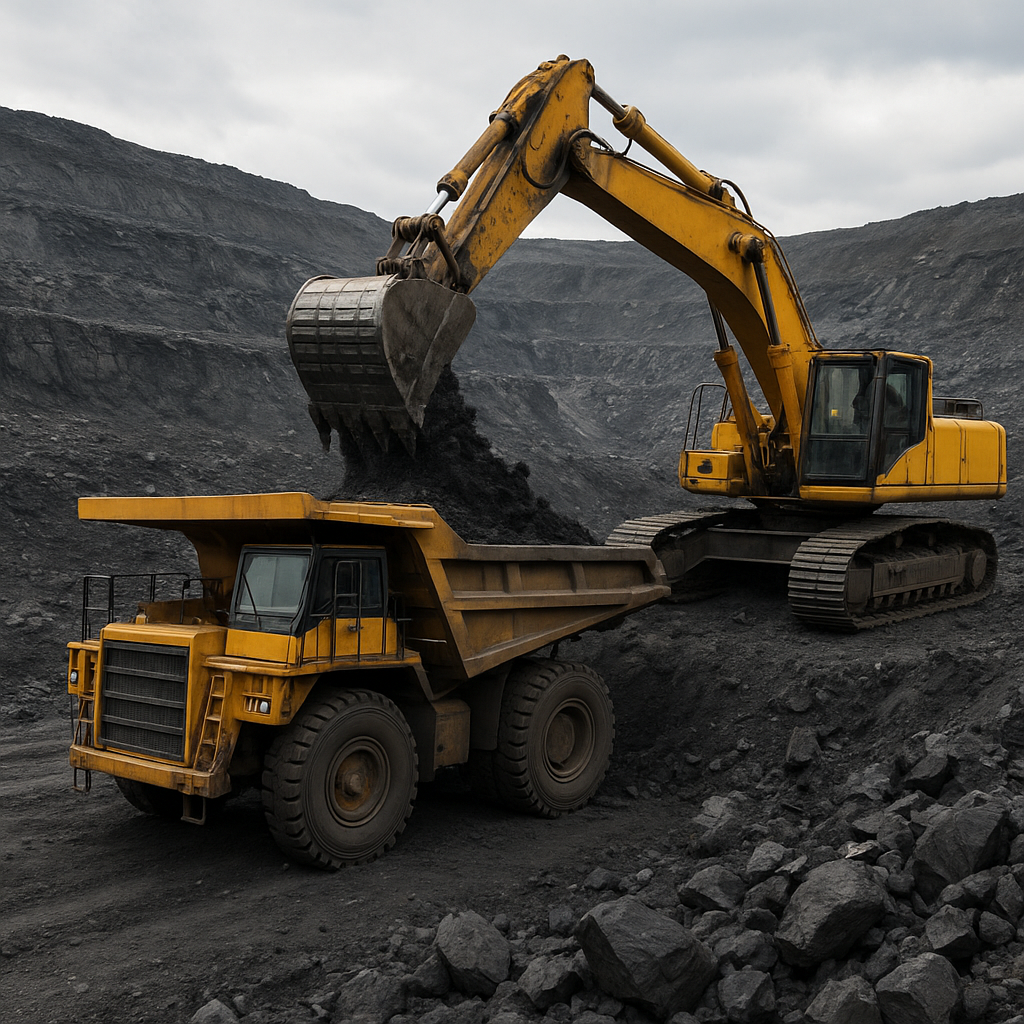
The Enugu coalfield in southeastern Nigeria is a landmark of West African industrial history, a region whose fortunes were reshaped by the discovery and extraction of coal. Located on a plateau that gives the city its very name, Enugu became synonymous with mining and industrial development from the early twentieth century onward. The story of this mineral deposit touches geology, colonial economics, local society, transportation networks and modern debates about energy and heritage preservation. Below are several detailed sections that explore where the Enugu coal mine is found, what types of coal and minerals were produced there, its broader economic role, and a number of interesting and lesser-known facets of its legacy.
Location, geology and the physical setting
The Enugu coalfield lies in the southeastern part of Nigeria, within the modern state also called Enugu. The city of Enugu sits on a series of ridges and hills that separate the river basins of the region; the Igbo name Enugu literally translates as hill top or top of the hill. The coal deposits are concentrated in a belt that extends across parts of Enugu and neighbouring areas such as Udi and Nsukka. Major historical collieries and mining localities include Iva Valley, Ogbete, Onyeama and Okpara, with shafts and adits dug into the seams that outcrop along these elevated landforms.
Geologically, the Enugu coalfield is part of a West African Carboniferous to Permian basin sequence where plant material, buried and transformed under heat and pressure, created coal seams between layerings of sandstone, shale and occasional limestone. The coal in Enugu is generally regarded as sub-bituminous to bituminous in rank — sufficient in calorific value to be useful for steam generation and industrial heating. Its characteristics made it attractive in the age of steam: it produced reliable combustion for locomotives, boilers and early power stations, and it could be transported economically for regional markets.
Seam distribution and mining conditions
Coal seams in the Enugu field vary in thickness and depth. In some places seams approach the surface and were worked by open pits or shallow adits, while deeper seams required shaft sinking and more modern underground workings. Mining conditions in the early decades were influenced by rainfall patterns, the tropical climate, and later by the technology that mining companies introduced: ventilation systems, drainage pumps and rail links to ports. The structural geology — dips, faults and the overlaying strata — shaped both the cost and safety of extraction.
History of discovery and development
Modern awareness of Enugu coal dates to the first decades of the twentieth century when British colonial interests were extending railways and seeking local fuels. Prospecting identified significant seams, and commercial mining began soon after discovery. The arrival of the railway to connect the coalfields with coastal ports significantly accelerated extraction and made the coal commercially viable for export and for feeding the colonial administration’s energy needs.
Extraction and commercial operations expanded rapidly. By the 1920s and 1930s, Enugu was established as a major African coal production centre, supplying fuel for locomotives, public utilities and industrial works across southern Nigeria and beyond. The presence of coal transformed the local economy: the city developed administrative offices, workers’ housing, service towns often described as coal camps, and transport infrastructure centered on rail links to Port Harcourt and other ports.
- Early 20th century: discovery and initial development linked to colony-wide railway projects.
- Interwar period: expansion of output and establishment of larger collieries (Iva Valley, Onyeama, Ogbete).
- Post-World War II: coal remains crucial but faces competition from oil; labour unrest and social tensions become more apparent.
- Mid-century: establishment of national institutions such as the Nigerian Coal Corporation to manage production and distribution.
The mid-20th century also saw industrial and political tensions around mining. Prominent events, including strikes and clashes between miners and colonial or state forces, marked the coalfields as sites of organizing and protest — important threads in Nigeria’s modern political history.
What was mined and how it was used
Primarily the Enugu operations extracted coal, but mining infrastructure supported related activities such as handling associated rock, seam drainage and the occasional recovery of minor minerals. The coal from Enugu was largely used in three categories:
- Railway and transport fuel: powering the steam locomotives of the colonial and early post-colonial railways;
- Industrial boilers and local manufacturing: supplying heat and steam for factories, brickworks and processing plants;
- Domestic and municipal use: fueling local steam-driven electricity plants and, in some communities, pressing into bricks or used in communal furnaces.
The coal’s suitability for steam made it a strategic resource in a time when diesel or hydroelectric alternatives were still limited. In the years when coal dominated, Enugu’s output fed both local consumption and exports, contributing to the colonial revenue streams and later to the domestic industrialization aspirations of independent Nigeria.
Mining technology and labour
Mining techniques evolved from simple surface and shallow pit methods to more mechanized underground extraction. Early operations relied heavily on manual labour with basic tools, and workforce organization reflected the era’s industrial relations: African miners were often employed under harsh conditions with limited safety measures, while technical and management posts were initially held by expatriates. Over time local expertise grew, union activity strengthened, and more modern machinery—conveyors, pumps and ventilation fans—were introduced.
Economic and strategic significance
At its peak, the Enugu coalfield played an outsized role in the regional economy. The availability of a local fossil fuel resource reduced dependency on imported coal and fueled the transport networks that were themselves engines of commerce. Several aspects underscore the mine’s significance:
- Infrastructure catalyst: Coal justified and sustained railway lines that opened markets for agricultural and manufactured goods, linking the interior to ports.
- Employment and urbanization: Mining and associated services created jobs, drew labour from surrounding rural areas, and helped build the urban character of Enugu, which became known as Coal City.
- Revenue for governance: Taxes, royalties and export earnings from coal contributed to colonial administrations and later to national government budgets.
- Energy security: For decades, the coalfield provided Nigeria with a domestic fuel alternative that supported early industrial and municipal power needs.
However, the economic centrality of coal declined in the mid-20th century following the discovery and commercial development of crude oil in the Niger Delta. As oil exports grew and became the mainstay of Nigerian foreign exchange earnings, coal’s relative importance waned. Institutional weaknesses, managerial problems within state-owned enterprises such as the Nigerian Coal Corporation, and global shifts away from coal in some markets compounded the decline.
Environmental, social and health impacts
Mining, especially before stringent environmental regulation, leaves lasting marks on landscapes and societies. The Enugu coal operations produced a range of impacts that require attention both historically and in contemporary redevelopment discussions.
- Land disturbance and subsidence: underground voids can lead to surface subsidence, affecting buildings, roads and farmland.
- Water impacts: drainage and mine runoff can alter local hydrology and introduce sedimentation to rivers and streams.
- Air quality and health: dust from blasting and transport, along with emissions from coal burning, contributed to respiratory problems among workers and nearby residents.
- Socioeconomic displacement: the creation of camps and rapid urbanization changed traditional settlement patterns and sometimes strained local services.
Many of these challenges are typical of historic mining districts worldwide. Contemporary policy debates in Nigeria continue to balance the desire to exploit local resources for development with the need to remediate environmental damage and improve occupational health standards in any modern revival of coal activity.
Community responses and union activity
Enugu’s miners were among the region’s most organized labour groups. Trade unions emerged to advocate for better wages, safer working conditions and benefits. At times this activism intersected with broader political movements, and mining towns became nodes of nationalist sentiment and labour solidarity. These social dynamics are a critical part of the site’s legacy and influence how heritage and commemoration are approached today.
Interesting facts, cultural legacy and heritage value
The Enugu coalfield has a collection of features that make it not just an industrial site but a cultural and historical landmark.
- Coal City identity: Enugu is often nicknamed Coal City, reflecting how mineral wealth shaped civic pride, architecture and local identity.
- Iva Valley and labour history: incidents of labour unrest, most notably the shootings and clashes that involved striking miners, remain powerful memory markers in Nigerian social history and helped galvanize political change.
- Railway corridors: the lines built to move coal created long-lasting transport corridors; many towns and stations persist as focal points for regional commerce.
- Mining archaeology: disused collieries, abandoned tip heaps and old engine houses form an industrial archaeology that attracts historians and heritage professionals interested in early African industrialization.
- Urban architecture: housing blocks, administrative buildings and worker clubs from the mining era contribute to Enugu’s architectural tapestry.
There have been periodic calls to preserve mining heritage through museums, interpretive trails and conservation of key structures. Such initiatives aim to link local history with education and tourism opportunities while acknowledging the more difficult aspects of the mining era.
Modern prospects and lessons
While Enugu’s coal no longer dominates Nigeria’s energy matrix, the coalfield still matters for several reasons. Economically, there have been discussions about modern, cleaner coal technologies, coal-to-power projects and ways to revitalize small-scale industrial uses. Environmentally, lessons from the Enugu experience inform current mining governance: the importance of environmental impact assessment, community consultation and mine closure planning is now widely recognized.
Moreover, the Enugu story is a reminder of how resource extraction shapes institutions and societies. It highlights the need for transparent management of natural resources, fair distribution of benefits, and planning for post-extraction economies so communities are not left with just degraded land and broken infrastructure.
Key locations and institutions associated with the mine
- Onyeama Colliery — one of the better-known operations with deeper shafts and significant infrastructure.
- Iva Valley — historic site of large labour concentrations and important social events that entered national memory.
- Ogbete and Okpara — additional collieries and adit-based workings connected to the Enugu belt.
- Nigerian Coal Corporation — the federal entity that, from the mid-20th century, oversaw much of coal commercialisation and management.
The fate of these sites has varied: some have been partially rehabilitated or repurposed, others remain derelict while yet others have become part of urban neighborhoods where mining relics are folded into ordinary city life.
Why the Enugu coal mine still matters
Beyond the physical deposits, Enugu’s coalfield matters because of what it reveals about technological diffusion, colonial economies, labour histories and the transition of national resource priorities. The mine catalyzed urban growth and regional transport networks, played a role in labour and political movements, and left a mixed environmental and infrastructural inheritance. Contemporary planners, historians and community leaders continue to engage with that inheritance — seeking ways to turn industrial memory into opportunities for education, tourism and sustainable redevelopment, while acknowledging complicated social histories.
Whether considered as a geological asset, a driver of early industrialization in southern Nigeria, or a case study in the social consequences of extractive industries, the Enugu coalfield remains a site of significance. Its story offers lessons on resource governance, the environmental costs of industrialization, and the resilience of communities that have navigated the boom-and-bust cycles typical of mining regions around the world.

