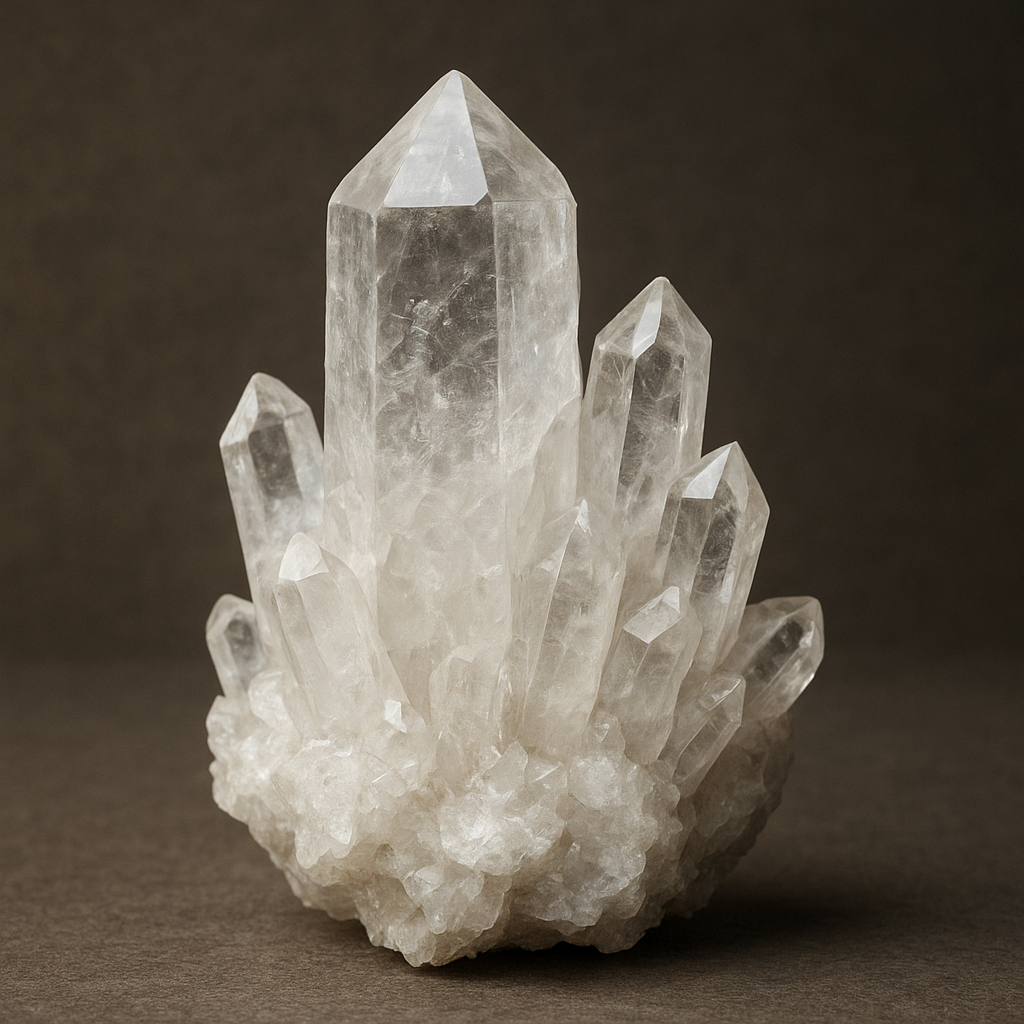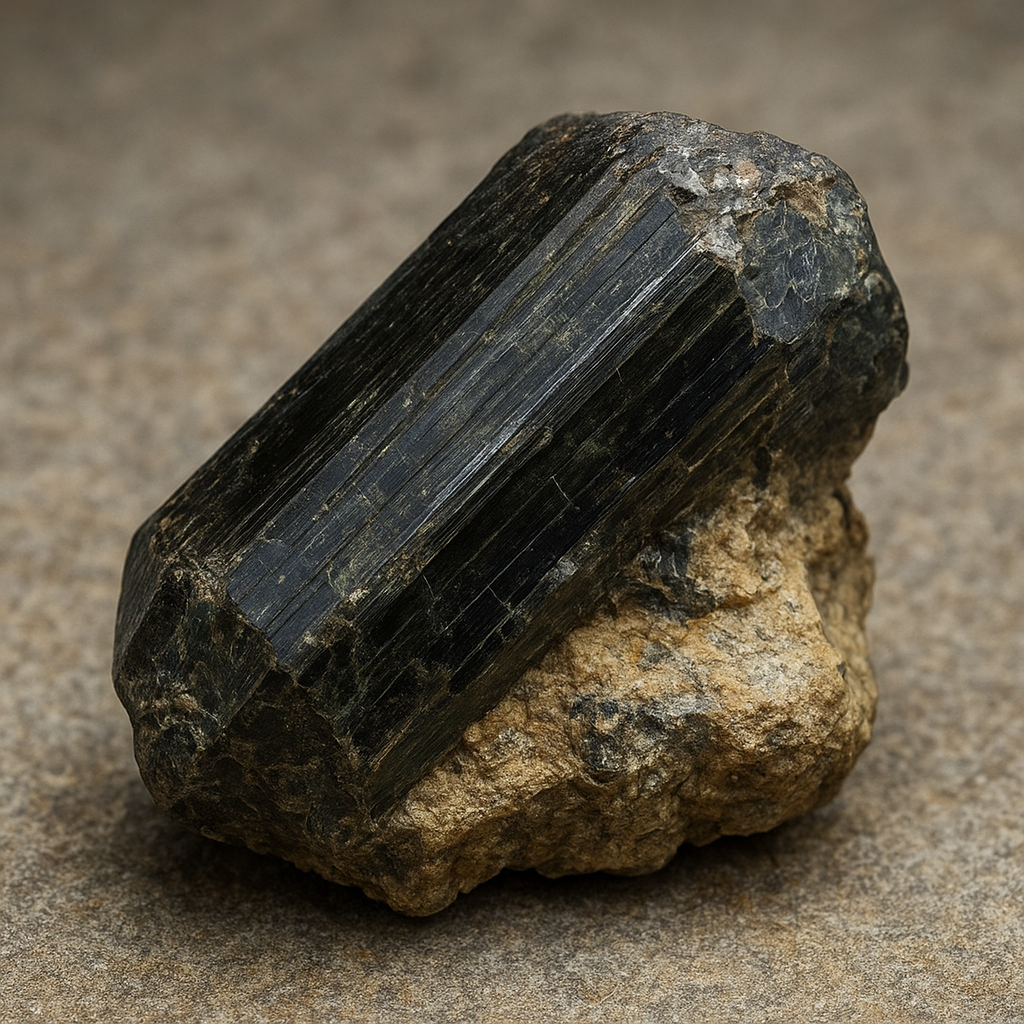
Enstatite is a magnesium-rich member of the pyroxene group whose subtle presence and clear signatures reveal much about planetary interiors, high-temperature processes, and the early Solar System. This article explores the mineral’s chemistry and structure, outlines where it is commonly found on Earth and in space, examines its usefulness in science and industry, and highlights several intriguing research directions and practical applications linked to its properties. Throughout the text I emphasize key concepts and terms to help guide readers through the most important ideas.
Chemistry, Structure and Physical Properties
The mineral commonly known as enstatite has the ideal chemical formula MgSiO3, although natural specimens typically contain some iron and other minor elements. Enstatite belongs to the broad family of pyroxene minerals, which are single-chain silicates characterized by chains of SiO4 tetrahedra linked together by shared oxygens. In natural rocks the composition is better described as (Mg,Fe)SiO3, with the magnesium-rich endmember called enstatite and the iron-rich endmember called ferrosilite.
Crystallographically, enstatite commonly forms in the orthorhombic system as an orthopyroxene. It displays two prominent cleavages at near-right angles, moderate to good hardness (typically between 5 and 6 on the Mohs scale), and a density around 3.2–3.3 g/cm3 depending on iron content. Optical properties under the microscope are diagnostic: enstatite shows distinctive extinction angles, pleochroism in some cases, and refractive indices that make it identifiable in thin section. These properties make it an essential mineral for petrographic studies where its presence, composition and texture inform interpretations of rock history.
Where Enstatite Occurs: Terrestrial and Extraterrestrial Settings
Enstatite appears in a variety of geological contexts, from deep mantle rocks to volcanic and metamorphic terrains, and it is an especially important component of certain meteorites. The following list outlines the principal environments where enstatite is encountered:
- Mantle-derived rocks: In ultramafic rocks such as peridotites, harzburgites and pyroxenites, enstatite is a major phase. Its presence and composition offer constraints on mantle melting, depletion, and metasomatic events.
- Igneous and cumulate rocks: Enstatite may crystallize early from mafic to ultramafic magmas and forms cumulate layers in layered intrusions. It often coexists with olivine and other pyroxenes, reflecting crystallization sequences and magma chemistry.
- High-grade metamorphic rocks: In certain granulite-facies rocks and contact-metamorphosed lithologies, enstatite forms during high-temperature recrystallization and reaction sequences involving silica activity and mineral breakdown.
- Ophiolites and mantle xenoliths: Pieces of the mantle brought to the surface by tectonic processes or by volcanic eruptions frequently contain enstatite. These xenoliths are invaluable direct samples from depths otherwise inaccessible.
- Meteorites and planetary materials: Enstatite is abundant in enstatite chondrites and is common in certain classes of achondrites and lunar samples. Its occurrence in asteroids and cometary dust has been inferred from spectral observations.
One especially noteworthy occurrence is in the so-called enstatite chondrites, a rare and chemically distinct class of meteorites that formed under highly reducing conditions in the inner Solar System. These meteorites are dominated by nearly pure enstatite crystals and are central to debates about the formation region of Earth and the distribution of volatile elements in the early disk.
Formation Processes and Stability
Understanding how enstatite forms and transforms under different conditions is fundamental to interpreting the geological record. Enstatite crystallizes from melts under conditions that favor low calcium and relatively high magnesium activity. It also forms by the reaction of olivine with silica-rich fluids or melts, and by decomposition reactions during metamorphism.
Temperature and pressure exert strong controls on enstatite’s stability and structure. At high temperatures, certain structural adjustments occur, and at high pressures enstatite can react to form denser phases that are important in the deep mantle. Experimental petrology has used enstatite to calibrate phase equilibria that constrain the depth and thermal state of mantle processes. Researchers also use enstatite compositions to model oxygen fugacity, which influences which minerals crystallize and which elements become incorporated in metal phases.
Enstatite in the Solar System: Clues from Meteorites and Dust
Remote sensing and direct sample studies reveal that enstatite has a prominent role outside Earth. Infrared spectroscopy of protoplanetary disks and cometary comae often shows features attributable to crystalline enstatite, in contrast to amorphous silicates typical of the interstellar medium. This crystallinity indicates thermal processing—annealing or high-temperature condensation—early in the life of a star system.
Laboratory studies of enstatite grains collected from meteorites or interplanetary dust show textures and trace element distributions that record high-temperature condensation, aggregation in the solar nebula, and subsequent parent-body processing. Because some enstatite chondrites experienced extremely reducing conditions, they contain unique phases (e.g., native silicon and sulfide assemblages) that help scientists reconstruct the chemical gradients of the early Solar System.
Analytical and Scientific Applications
Enstatite serves as an important tool in many branches of Earth and planetary sciences. Its composition and textural relationships allow researchers to:
- Perform crystallography-based identification and study phase transitions that reveal P–T (pressure–temperature) histories of rocks.
- Use geothermobarometry to estimate formation temperatures and pressures when paired with coexisting minerals.
- Trace element partitioning studies: enstatite incorporates certain trace elements in predictable ways, enabling reconstructions of melt evolution and mantle source characteristics.
- Interpret remote spectra of asteroids, comets and circumstellar dust: diagnostic spectral bands of crystalline enstatite provide clues about thermal histories and dust processing.
In petrography, the presence of enstatite with specific compositional zoning may point to fractional crystallization, reaction rim development, or diffusion-limited processes. In planetary science, the isotopic and elemental makeup of enstatite in meteorites helps constrain models for planet formation and volatile delivery.
Analytical Techniques
Common analytical methods used to study enstatite include electron microprobe analyses for major elements, LA-ICP-MS for trace elements, transmission electron microscopy for nanoscale textures, and various forms of spectroscopy (IR, Raman, Mössbauer) to discern structural and oxidation-state information. These techniques, combined with experimental petrology and thermodynamic modeling, provide a rigorous framework for interpreting enstatite-bearing systems.
Industrial and Practical Uses
Although enstatite is not a major commodity mineral like quartz or feldspar, it has a number of niche refractory and ceramic applications owing to its high-temperature stability and chemical resistance. Industrial uses include:
- Refractory components and specialized ceramics where a high melting point and low reactivity with slags are advantageous.
- Fillers and functional additives in advanced ceramic composites designed for high-temperature structural components.
- Aggregates or components in foundry operations where low thermal expansion and chemical durability are required.
On a different front, enstatite-bearing materials recovered from extraterrestrial sources have inspired laboratory synthesis of novel silicate materials with tailored optical properties for use in infrared optics and sensor technologies. While these applications remain mostly experimental, they point to a broader trend: minerals once studied only by geologists are feeding materials science innovations.
Interesting Research Directions and Recent Discoveries
Several contemporary topics make enstatite a lively subject of research:
- Protoplanetary-disk processing: High-resolution infrared observations of young stellar objects reveal spatial variations in crystalline enstatite abundance. Interpreting these gradients informs models of radial mixing and thermal annealing in disks.
- Planetary differentiation: Isotopic studies of enstatite in meteorites contribute to debates about the building blocks of Earth and the inner planets. Some models propose that enstatite-rich materials supplied a significant portion of Earth’s volatile and siderophile element budgets.
- High-pressure mineral physics: Experiments on enstatite under extreme conditions illuminate how its breakdown products or high-pressure polymorphs may affect seismic wave velocities and phase transitions in planetary interiors.
- Nanostructures and surface chemistry: Investigations into the surfaces and nanopores of enstatite crystals probe how gases and volatiles interact with silicate frameworks—important for understanding catalytic or adsorption behavior in both natural and engineered contexts.
Researchers also use enstatite as a marker of low-oxygen environments in both ancient geological settings and extraterrestrial contexts. This makes it valuable for reconstructing redox evolution through time and across planetary bodies.
Identification and Collecting Notes
For collectors and field geologists, enstatite can be identified by its characteristic two-direction cleavage, somewhat muted luster ranging from vitreous to pearly on cleavage surfaces, and typical colors of greenish-gray, brown or black depending on composition. In thin section under cross-polarized light, orthopyroxene textures and extinction angles are diagnostic. Because enstatite can appear in small, idiomorphic crystals and as fine-grained aggregates, collecting well-preserved samples often requires careful extraction from host lithologies.
In meteorite classification, the abundant presence of nearly pure enstatite with particular oxygen isotope signatures is a key criterion for recognizing enstatite chondrites. In planetary remote sensing, enstatite’s spectral fingerprints near 10 and 20 microns are used to infer crystalline silicate content on asteroid and comet surfaces.
Implications for Broader Scientific Questions
Studying enstatite touches on large-scale themes in Earth and planetary science: how planets form and differentiate, how the mantle cycles material over geological time, and how primordial dust evolves into the solids that build planets. Because enstatite preserves records of high-temperature processes and can endure dramatic pressure–temperature changes, it is a resilient archive of both local and system-wide histories.
Linking observations at microscopic scales—grain boundaries, defect structures, trace element zoning—to macroscopic systems such as planetary interiors and protoplanetary disks exemplifies modern interdisciplinary science. Enstatite is one of those minerals that occupies an important place at this interface, useful to petrologists, mineralogists, meteoriticists, astronomers and materials scientists alike.