
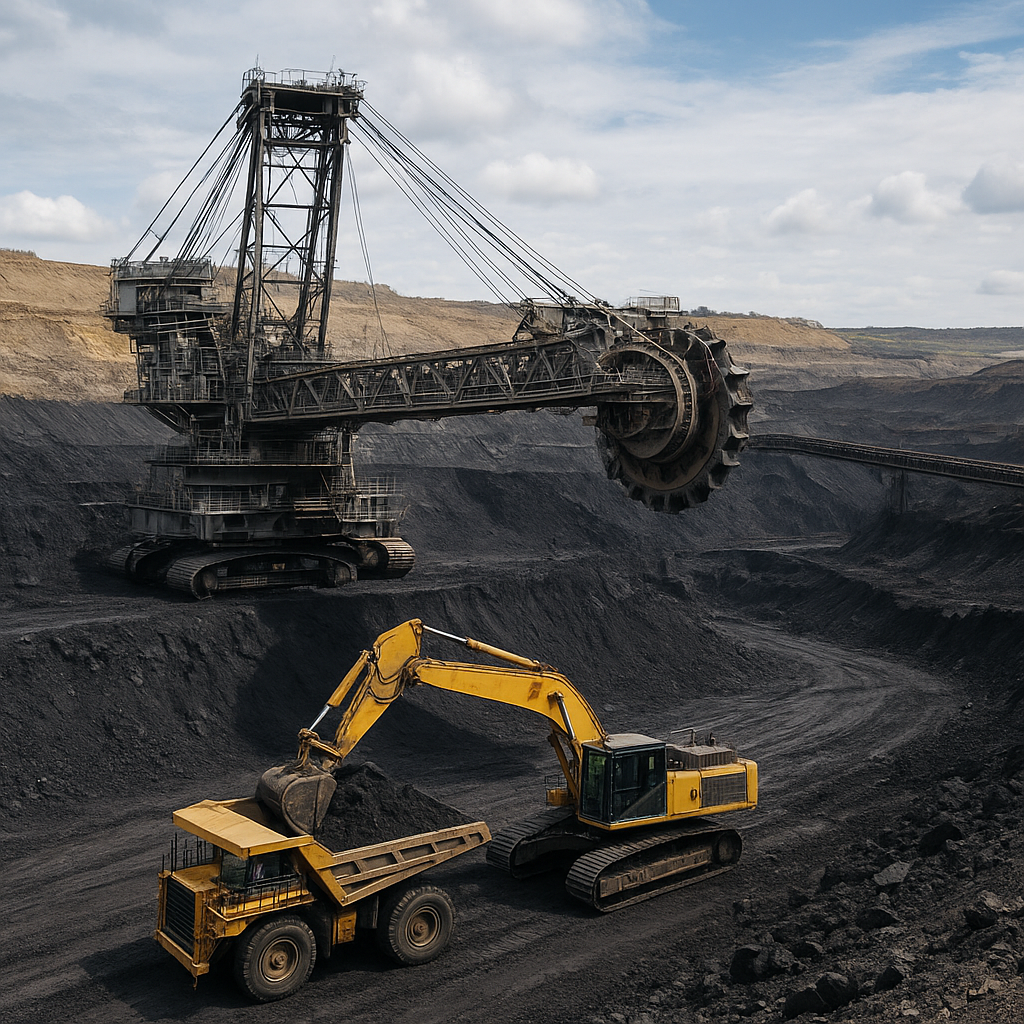
The Ensham operation sits among the many coal-producing sites that have shaped Central Queensland’s industrial landscape. Located in the extensive mining province of the Bowen Basin, Ensham is best known for producing high-quality thermal coal used primarily for power generation. This article examines where the mine is, what it produces, the role it plays in the wider economy, and several aspects that make it notable, from operational techniques to environmental and community considerations.
Location and geological setting
Ensham Mine is situated in central-eastern Australia within the state of Queensland, inside one of the country’s most productive coal provinces, the Bowen Basin. The Bowen Basin contains multiple coal seams formed over millions of years, and Ensham extracts product from these sedimentary layers using methods suitable for relatively shallow, laterally extensive seams. The mine’s position places it within a well-established logistics and service network that supports coal handling, rail transport and port export pathways stretching to international markets.
Geologically, coal in the Bowen Basin occurs in thick contiguous seams that are relatively accessible for large-scale surface mining. At Ensham, these seams produce primarily thermal coal—coal intended for combustion in power stations—characterized by properties that make it attractive for both domestic power producers and export customers. The local geology influences mining design: seam thicknesses, overburden characteristics and groundwater conditions determine whether open-cut or underground methods are used. Ensham is predominantly an open-cut operation, with large benches, progressive stripping and an emphasis on efficient overburden removal.
Operations, processing and logistics
The operational footprint of Ensham reflects modern industrial coal mining: large excavators and truck fleets, material handling systems, stockpiles and facilities to prepare coal for domestic use or for shipping. Surface mining enables the extraction of extensive coal benches using truck-and-shovel or dragline systems. Extracted coal is often processed in a coal handling and preparation plant where material is screened and sometimes washed to improve consistency, reduce impurities and meet buyer specifications.
Logistics play a central role in the mine’s viability. Once coal is mined and processed, it is typically moved by rail to coastal ports for export or to inland customers. Rail corridors in Queensland connect Bowen Basin operations to ports such as Gladstone and Hay Point, enabling shipments to key global buyers. For domestic supply, trucking and short rail deliveries service power stations and industrial users. The integration of mining, processing and logistics is critical to maintaining steady production and meeting contract obligations.
Production characteristics and product quality
Ensham’s product profile centers on thermal coal grades suited to power generation. Thermal coal quality is assessed by calorific value, ash content, moisture, sulfur and volatile matter—parameters that influence combustion efficiency and emissions at power plants. Mines like Ensham target consistent quality and contractual grades, and may use washing and blending to achieve specified product standards. Meeting market specifications enhances the mine’s competitiveness and helps maintain long-term customer relationships.
Equipment, workforce and safety
Large-scale open-cut mining relies on heavy mobile equipment—excavators, haul trucks, dozers and ancillary machinery—supported by maintenance workshops and fueling facilities. A skilled workforce is essential: operators, maintenance technicians, engineers, geologists and environmental specialists work together to maintain production and safety standards. Modern mines adhere to rigorous safety protocols, continuous training and monitoring systems to reduce incidents and ensure regulatory compliance.
Economic importance and market links
The Ensham operation contributes to both regional livelihoods and the national resource economy. Coal remains a notable export commodity for Australia; mines in the Bowen Basin collectively supply energy to domestic grids and export thermal coal to energy-hungry markets across the Asia-Pacific region. Ensham’s production supports direct employment on site and creates demand for contractors, local suppliers and service industries—catering, accommodation, transport and equipment maintenance among them.
Beyond employment, the mine contributes through royalties and taxes that flow to state and federal governments, funding public services and infrastructure in Queensland and beyond. The presence of a mine also stimulates secondary economic activity: investment in roads, rail upgrades, and communications infrastructure improves connectivity for the wider community. In many regional towns, mining income underpins local retail, health and education services.
At the international level, Australian thermal coal has historically been sold to customers in East and South Asia, where coal-fired power remains a substantial part of electricity generation. While global energy trends are shifting, existing long-term contracts and the continuing need for reliable baseload power mean that thermal coal remains a traded commodity. Mines such as Ensham therefore have economic links that reach far beyond their immediate geography, connecting small-town wages to international energy markets and price cycles.
Environmental management and community engagement
Mining activities present environmental challenges that operators must manage: land disturbance, water use, dust and greenhouse gas emissions are among the most significant. Ensham, as with other modern operations, is expected to implement comprehensive environmental management systems. These typically include erosion and sediment controls, progressive rehabilitation of disturbed areas, dust suppression measures, controlled blasting protocols and water treatment systems to protect local waterways and aquifers.
Water management is a persistent focus in open-cut operations where dewatering and runoff control are necessary to keep pits dry and processing plants functioning. Recycling of process water, use of sediment basins and offsets for native vegetation are common practices. Rehabilitation—returning quarried land to a stable and productive post-mining state—is a legal and social obligation. Progressive rehabilitation reduces the cumulative footprint of the operation over time and can return land to grazing, native habitat or other approved uses once mining concludes.
Community engagement is another essential facet. Mines work with local stakeholders, including councils, businesses and Indigenous groups, to address concerns and develop social investment programs. This can include supporting local education and health services, funding infrastructure upgrades, and creating opportunities for Indigenous employment and cultural heritage protection. Transparent consultation and benefit-sharing mechanisms help maintain the social license to operate.
Economic cycles, resilience and adaptation
The coal industry is subject to global commodity cycles, driven by demand fluctuations, energy policy shifts and competition from other fuels. Mines such as Ensham have navigated periods of high demand and high prices as well as downturns that led to reduced production or temporary care-and-maintenance statuses. Resilience in such an environment depends on operational flexibility, cost control, and the ability to adapt to changing markets—either by optimizing production when prices are high or by scaling back safely when market conditions deteriorate.
Adaptation also includes technological improvements and efficiency gains. Investments in fuel-efficient fleets, automated systems, and improved mine planning can lower unit costs and reduce environmental impacts. Some operations explore methane mitigation—capturing coal seam gas released during mining—to reduce greenhouse emissions and potentially generate additional revenue streams. While projects vary by site, this kind of innovation illustrates how resource operations can evolve in response to economic and environmental pressures.
Interesting aspects and lesser-known details
Several features of Ensham and similar operations make them noteworthy beyond raw production figures. First, the scale of earthworks and the engineering required to run an open-cut mine are striking: terraced benches, pit drains, haul road geometry and stockpile management form a complex, constantly changing landscape. This dynamic environment demands continuous planning and monitoring to maintain safety and productivity.
Second, the intersection of local communities and global markets is always compelling. A shipment of coal leaving a Queensland port can power cities thousands of kilometers away, linking regional miners to distant consumers. This global-to-local linkage shapes lives in small towns—wages, schools and health services can rise and fall with commodity prices, demonstrating how international demand translates into tangible regional outcomes.
Third, the post-mining legacy work reveals another dimension: rehabilitation ecology, where disturbed land is reshaped and replanted, sometimes aiming to return habitat for wildlife or to create new agricultural opportunities. Successful rehabilitation projects can be scientifically innovative, requiring collaboration between ecologists, engineers and local stakeholders to select plant species, manage soil profiles and ensure long-term land stability.
Lastly, the workforce culture at mines like Ensham—where shift work, fly-in-fly-out arrangements and multi-skilled teams are common—creates social dynamics distinct from metropolitan employment. These arrangements influence local housing markets, transport services and community institutions, producing a distinctive social fabric in mining regions.
Final observations on significance
Ensham Mine embodies many of the characteristics that define modern coal operations in Australia: located in a productive basin, centred on thermal coal production, integrated with rail and port logistics, and embedded within regional economies. Its operation necessitates careful environmental stewardship and community partnerships, while its economic effects ripple through local and national economies. As energy systems evolve globally, sites like Ensham reflect both the continuing demand for reliable energy sources and the ongoing need for innovation in mining practice, environmental management and community engagement.

