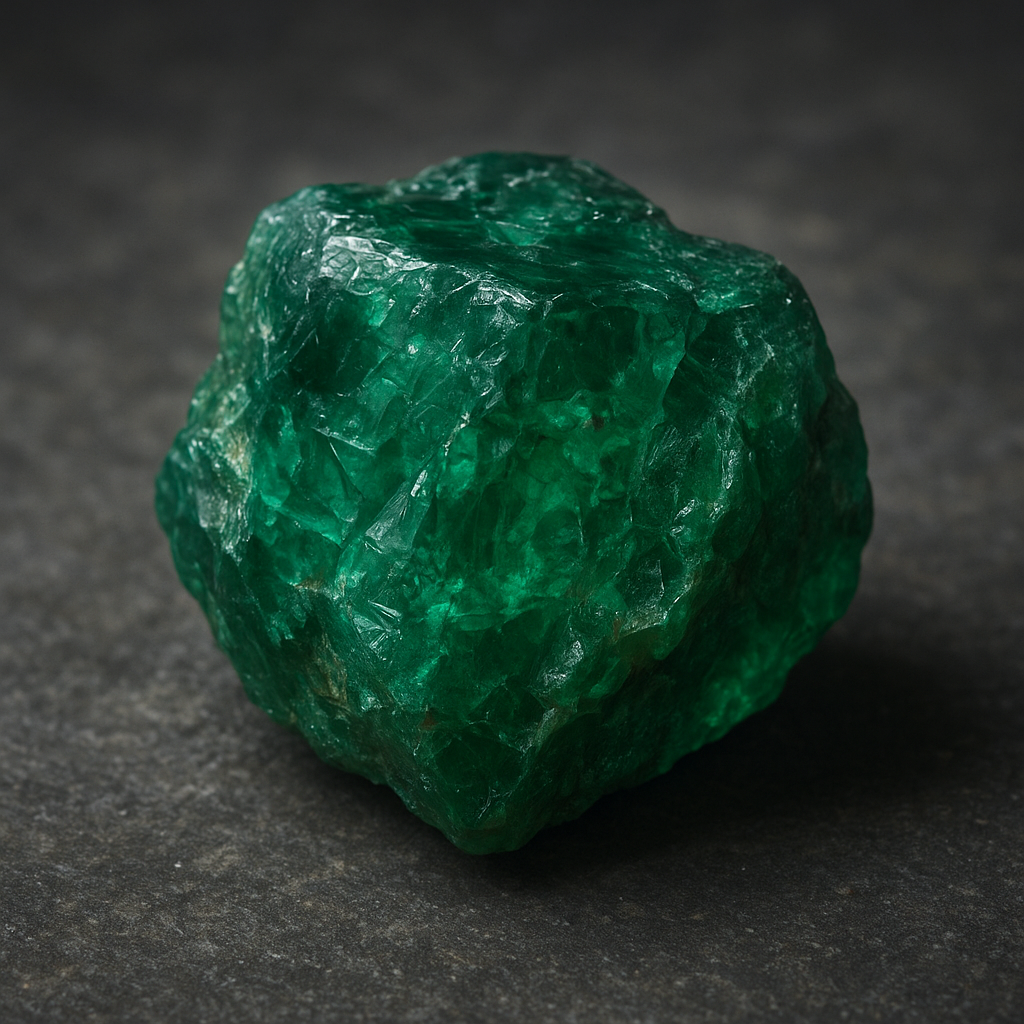
Emeralds have captivated human imagination for millennia with their deep green hues and enigmatic inclusions. A member of the beryl mineral family, the emerald is prized both as a gemstone and as a cultural icon. This article explores the geological origins of emeralds, their physical and gemological properties, historical and modern uses, ethical and market issues, and practical advice for collectors and owners. Expect detailed descriptions of where emeralds are found, how they are treated and identified, and why particular stones command exceptional value.
Geology and Global Occurrence
Emerald is the green variety of the mineral beryl, whose chemical formula can be written as Be3Al2(Si6O18). The distinctive green color is caused primarily by trace amounts of chromium and vanadium substituting into the crystal lattice. Emeralds form under a narrow set of geological conditions in which beryllium-rich fluids interact with chromium- or vanadium-bearing host rocks. These interactions commonly occur in two geological settings: hydrothermal veins and metamorphic schists adjacent to ultramafic or mafic intrusions.
Major emerald-producing regions include:
- Colombia — historically the most famous source, producing some of the finest, richly colored emeralds from sedimentary host rocks and hydrothermal systems.
- Zambia — a significant modern source, known for deeper, bluish-green stones with high transparency.
- Brazil — diverse deposits yielding a wide range of colors and sizes, often from pegmatites and hydrothermal veins.
- Zimbabwe, Afghanistan, Pakistan, Russia, Ethiopia, Madagascar — each contributes notable deposits with differing inclusion patterns and hues.
- United States — small occurrences in North Carolina and Montana, historically of gem importance but limited in scale.
In Colombia the most celebrated districts are Muzo, Chivor and Coscuez. Colombian emeralds are renowned for their pure, vivid green tones and characteristic internal features. In contrast, Zambian emeralds often display a slightly bluish cast and impressive clarity, making them popular in modern jewelry markets. Brazilian stones can range from pale to intensely colored and frequently supply large-sized crystals for cutting.
Physical Properties and Gemological Identification
Emeralds share basic physical properties with other beryls: a hardness of about 7.5–8 on the Mohs scale, hexagonal crystal system, and specific gravity roughly between 2.67 and 2.78. Despite respectable hardness, emeralds are prone to fractures and inclusions, characteristics that influence cutting, setting, and value.
Color and Causes
The perception of an emerald’s color depends on hue, tone and saturation. The presence of chromium usually yields a pure green, while vanadium can impart slightly bluish nuances. The most coveted colors are intense, vivid green with a balanced medium-dark tone. Color zoning — variation of color within a single crystal — is common and can assist gemologists in determining origin.
Inclusions, Clarity and “Jardin”
Unlike diamonds where clarity is a premium, emeralds are commonly expected to contain inclusions and fissures. The network of inclusions inside emeralds often resembles garden foliage, leading to the French term jardin. These inclusions can include mineral crystals, liquid-filled cavities, or two-phase inclusions. In many cases, these inclusions are diagnostic of natural formation and can provide clues to the stone’s geographic origin through detailed spectroscopy and inclusion mapping.
Synthetics, Treatments and Imitations
Because of their popularity and price, emeralds are frequently subject to treatments and synthetic production. The most common enhancement is the filling of surface-reaching fractures with oils, resins, or polymers to improve apparent clarity and stability. While oiling has historical precedence and is widely accepted within the trade when disclosed, modern polymers and green-tinted resins can be more permanent and affect conservation choices.
Synthetic emeralds are produced by hydrothermal and flux-growth methods and can be of very high quality. Advanced gemological testing — including infrared spectroscopy, inclusion analysis under magnification, and trace element chemistry — is often required to distinguish natural from synthetic material and to identify treatment types. Imitations such as green glass, dyed stones, and other green minerals can mimic emerald color but differ in refractive index, specific gravity, and inclusions.
Applications: Jewelry, Artifacts and Scientific Interest
The primary use of emeralds is in jewelry. They are set in rings, necklaces, earrings, bracelets and high jewelry pieces where the stone’s color is the central attraction. Because emeralds are often included and brittle, gem cutters favor shapes that preserve weight and minimize stress, such as the emerald cut — a rectangular step-cut that enhances color while protecting the stone’s integrity.
Historically, emeralds have been precious in many civilizations. Ancient Egyptians treasured emeralds, and mines at Cleopatra’s era were famous. The Mughal emperors of India incorporated emeralds into imperial jewelry and inscribed artifacts. Spanish conquistadors sourced large emeralds from South America, integrating them into European collections and royal regalia. In modern times, prominent pieces such as the Hooker Emerald or the Duke of Devonshire Emerald appear in museum collections, commanding attention both for their size and provenance.
Beyond ornamental use, emeralds are of interest to scientists and gemologists. Trace element analysis, stable isotope studies and inclusion research help reconstruct the conditions of emerald formation and support efforts in origin determination — a growing field as consumers demand provenance transparency.
Market Dynamics, Collecting and Investment
The emerald market is shaped by supply limitations, origin desirability, and consumer taste. Colombian emeralds traditionally command the highest prices per carat for fine stones due to their saturated color and market perception. Zambian and Brazilian stones often represent greater value relative to size and clarity, offering collectors alternatives that balance color with clarity and price.
- Fine quality, untreated Colombian emeralds with excellent color and good clarity can fetch the highest per-carat prices at auction.
- Large stones with historical provenance or association with notable collections increase in demand among collectors and institutions.
- Market trends are sensitive to the availability of synthetics, disclosure practices, and shifts in consumer preference toward ethical sourcing.
For collectors and investors, important considerations include verified origin documentation, treatment disclosure, and independent grading reports. Investment-grade emeralds are typically high-color, eye-clean (rare), sizeable, and accompanied by a transparent chain of custody. The presence of undisclosed treatments or uncertain provenance can materially affect value and liquidity.
Mining, Ethics and Sustainability
Emerald mining ranges from industrial operations to small-scale artisanal efforts. Large open-pit and underground mines operate in countries like Colombia and Zambia, often employing complex processing to recover gem-quality material. Artisanal and small-scale mining (ASM) occurs widely and can have significant socio-economic importance for local communities but also raises concerns about labor conditions, child labor, environmental degradation, and illegal trade.
Labels such as fair-trade, ethical sourcing initiatives, and origin certification aim to provide consumers with better information. Advanced traceability methods — including isotopic fingerprinting, inclusion databases, and blockchain-based provenance records — are increasingly applied to combat the sale of illicit or misrepresented stones. Buyers who care about sustainable supply chains should seek stones with documented origins and reputable dealer relationships.
Care, Handling and Jewelry Settings
Proper care extends the life and appearance of emerald jewelry. Because many emeralds are fracture-filled or naturally included, avoid exposing them to high heat, harsh chemicals, or ultrasonic cleaners which can exacerbate existing fractures or remove beneficial filling materials. Professional cleaning with mild soap and a soft brush is recommended, and sensitive pieces should be inspected periodically by a qualified jeweler.
Setting choices help protect emeralds. Bezel settings and protective prongs minimize the risk of edge chipping. For rings, avoid wearing emerald pieces during heavy manual work. When traveling or storing, keep emerald jewelry padded and separated from harder stones like diamonds that might scratch adjacent metal or settings.
Cultural Significance and Interesting Facts
Throughout history emeralds have carried symbolic meanings tied to regeneration, fertility, and wisdom. In various cultures, they were believed to protect against evil spirits and to enhance prophetic dreams. The green color associated with growth and renewal contributed to legends connecting emeralds with springtime and agricultural fertility.
Some notable historical and contemporary facts:
- The famous Mogul Emerald, engraved with Islamic text and dating back to the 17th century, demonstrates the jewel’s long-standing cultural role.
- “Emerald cut” refers to a specific step-cut style developed to reduce stress on included stones while emphasizing color.
- Labor-intensive cutting and polishing techniques are required to maximize color and minimize visible inclusions, making expert lapidary work a key factor in final value.
- Technological advances in spectroscopy and trace element analysis have made origin determination more reliable, aiding both science and commerce.
Practical Advice for Buyers and Enthusiasts
Whether purchasing an emerald for daily wear, special occasions, or as an investment, these practical tips can help:
- Always request clear documentation of treatment and origin. Certified reports from reputable gemological laboratories reduce risk.
- Prefer settings that protect the stone’s edges and minimize exposure to hard knocks.
- If buying an important piece, obtain independent verification and consider insurance that covers both loss and trade disputes.
- For collectors, compare stones from different origins — Colombian, Zambian and Brazilian emeralds each offer distinct visual and market characteristics.
- Keep in mind that the presence of inclusions is natural and often a hallmark of authenticity; however, undisclosed heavy filling is a legitimate concern.
Final Notes on Appreciation and Study
Emeralds continue to fascinate both gem lovers and scientists. Their beauty lies not only in color but in the complex stories encoded by inclusions, trace elements and formation environments. As technologies for analysis and provenance tracking improve, the ability to understand and ethically source these gemstones grows, offering buyers greater confidence and enriching the cultural legacy of one of the world’s most treasured stones. Collectors and scholars alike find that each emerald is a small geological archive, a piece of Earth’s deep history rendered in green.