
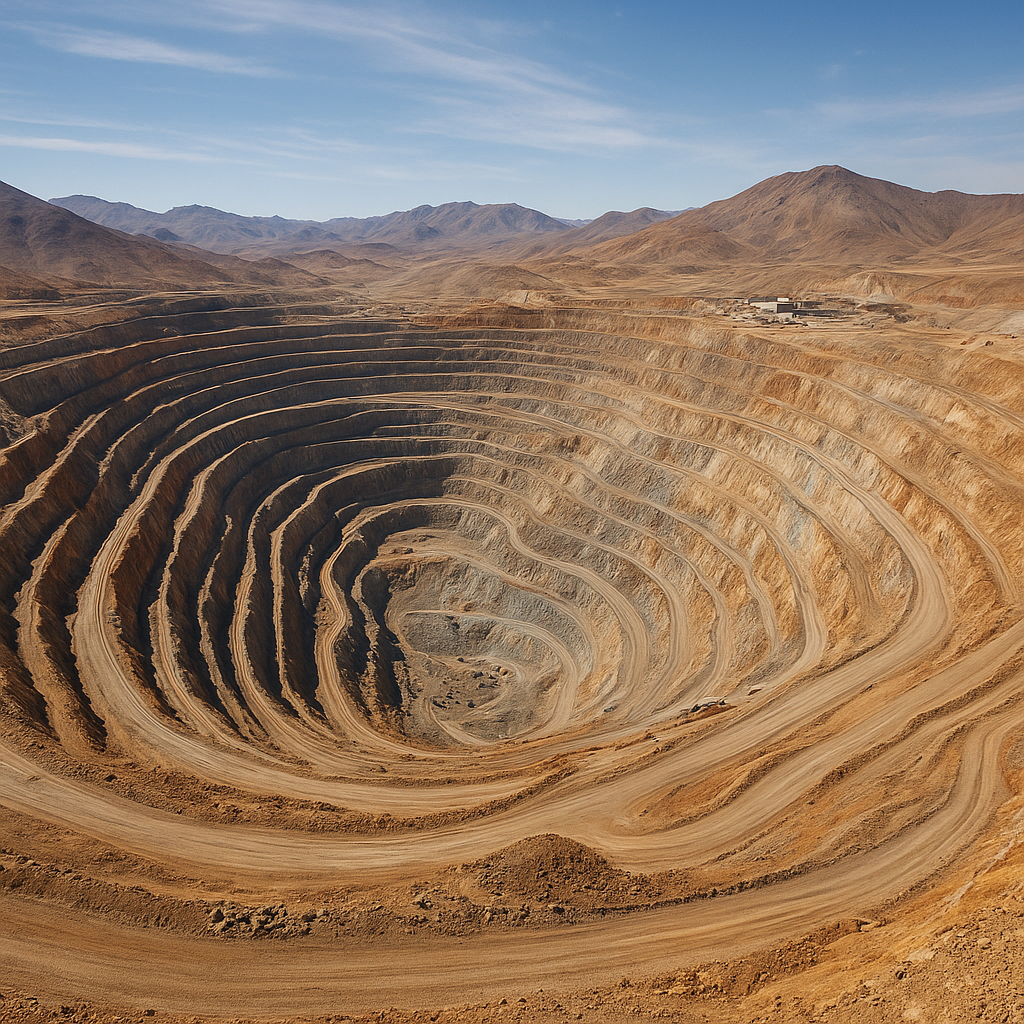
The El Soldado site, tucked along the coastal ranges of central Chile, is an important node in the country’s vast copper industry. Though not the largest of Chile’s mines, El Soldado has played a meaningful role in regional development, resource processing and the global supply of copper over decades. This article explores where El Soldado is located, what is extracted and processed there, its economic importance, and a number of technical and cultural aspects that many find interesting.
Location and geological setting
El Soldado lies within the central Chilean metallogenic belt, a region famed for hosting numerous world-class porphyry copper deposits. The mine’s position near the Pacific coast gives it access to maritime shipping routes and situates it within the Mediterranean-like climate that characterizes central Chile. The broader region combines coastal ranges and valleys where volcanic and intrusive rocks of Tertiary age host copper mineralization.
Geology and deposit type
The copper mineralization at El Soldado is typical of many Chilean deposits: it is largely associated with porphyry-style systems and related hydrothermal alteration zones. These deposits typically contain disseminated chalcopyrite, bornite and other copper sulfides distributed through fractured host rock and porphyritic intrusions. The ore body is commonly hosted in andesitic to dioritic intrusive rocks and is overlain by younger volcanic sequences. Because of this geologic setting, mining and processing methods focus on the recovery of copper from sulfide ores.
Strategic coastal position
Being relatively close to the coast is a strategic advantage for the site. Proximity to ports reduces logistics costs for shipping concentrate and importing fuel, spare parts and reagents. Coastal access has also historically facilitated the location of associated processing and concentration facilities, enabling a more integrated approach to production and export.
Mining, processing and what is produced
The operations at El Soldado focus primarily on extracting and concentrating copper from the host ore. The mine traditionally employed open-pit methods, taking advantage of near-surface mineralization and allowing cost-effective extraction on a large scale. Following extraction, ore typically undergoes crushing, grinding and flotation to produce a copper concentrate suitable for smelting or sale on the concentrate market.
Extraction methods and processing chain
- Drilling and blasting of benches in the open pit to break ore and waste rock.
- Primary and secondary crushing to reduce rock size prior to milling.
- Grinding in SAG and ball mills to produce fine material for separation.
- Flotation circuits which concentrate copper sulfides into a dense, exportable concentrate.
- Thickening and filtering of concentrate to prepare for transport and shipment.
The site’s processing facilities have been periodically upgraded to improve recovery rates and to meet evolving environmental and market requirements. Modernization efforts at coastal Chilean operations often include better tailings management, more efficient flotation technology and water-recycling systems.
Products and downstream uses
The principal product is a copper-rich concentrate, typically containing significant percentages of copper along with silver and trace amounts of other metals. This concentrate is shipped to smelters, where it is processed into blister copper and ultimately refined to cathode copper. The metal recovered from El Soldado’s concentrate feeds into global markets and industries such as electrical wiring, electronics, construction, and increasingly, technologies related to renewable energy and electrification.
Economic significance and contribution
On both regional and national scales, even modest copper operations can have outsized economic impacts. El Soldado contributes through direct employment, procurement from local suppliers and through tax and royalty payments. In Chile—a country where copper is a pillar of the economy—mines like El Soldado help diversify regional employment beyond agriculture and tourism.
Local economic impacts
- Employment: The mine supports a range of jobs, from heavy-equipment operators and metallurgists to maintenance crews and administrative staff.
- Supply chain development: Local businesses benefit from contracts for transport, catering, construction and other services.
- Community investment: Mining operations typically fund infrastructure projects, schools and health services through corporate social responsibility programs.
Because the mine is relatively near populated areas and agricultural zones, the economic linkages extend into small-town commerce, housing markets and regional service sectors. The presence of long-term mining operations can also stimulate skills training and vocational education, increasing the overall human capital in the region.
National and international relevance
Chile is the world’s leading copper producer, and every contributing operation strengthens the country’s position in global markets. The concentrate produced at El Soldado is part of Chile’s export basket, generating foreign exchange and supporting national economic indicators. On the international side, copper from Chile plays a critical role in supply chains for electrical equipment, renewable-energy installations and industrial manufacturing.
Infrastructure, logistics and trade
Efficient logistics are central to the mine’s viability. Infrastructure surrounding El Soldado includes roads for heavy haulage, processing plants and access to ports for export. These logistics enable the movement of concentrate to smelters both within Chile and abroad. The mine’s coastal location facilitates lower-cost shipping compared with inland deposits that require longer truck or rail routes.
Transportation and export routes
- Local road networks designed to handle concentrate trucks and supply convoys.
- Port facilities where concentrate is loaded into bulk carriers bound for smelters in Asia, Europe or North America.
- Potential use of barges and conveyors in short coastal transits where terrain allows.
Investment in transport and port infrastructure has ripple effects, enabling nearby industries and promoting improved connectivity for communities. The mine’s logistics strategy often emphasizes minimizing time and cost between mine, mill and ship to preserve margins in a cyclical commodity market.
Environmental and social aspects
Mining in Chile has evolved considerably in response to environmental expectations and community demands. El Soldado, like other modern operations, must balance resource extraction with water management, biodiversity protection and the wellbeing of local communities. Water use is particularly sensitive in central Chile where competing demands from agriculture and towns create pressure on freshwater resources.
Water, tailings and mitigation
Modern mines increasingly adopt water-saving measures, such as recycled process water systems and, where feasible, desalination for seawater use. Tailings management has also become a focal point: operators aim to reduce risk by improving tailings thickening, using filtered tailings, and applying robust monitoring and emergency response plans. These steps help reduce risks of dam failure and downstream contamination.
Community relations
Community engagement is central to long-term social license. Companies operating in the area typically maintain dialogue with local municipalities and stakeholders, providing information about operations and consulting on land use and employment. Benefits such as local hiring, infrastructure improvements and social programs can strengthen acceptance of mining activities.
Interesting details and lesser-known aspects
Several facets of El Soldado make it noteworthy beyond its basic production role. Some of these elements underscore the intersection of technology, tradition and strategy in Chilean mining.
Integration of technology
Even medium-sized coastal mines have adopted advanced metallurgical and operational technologies to boost recovery and reduce costs. These include improved flotation reagents, automation of crushing and grinding circuits, and real-time process monitoring. The application of such technologies transforms older operations and extends mine life.
Historical continuity and evolution
Many mines in central Chile, including El Soldado, reflect decades of extraction and reinvention. While the early 20th century saw simpler operations, the late 20th and early 21st centuries introduced large-scale milling, mechanization and international trade. This trajectory illustrates how local assets adapt to global demand for copper.
Role in the green transition
The global shift toward electrification and renewable energy increases demand for copper due to its essential role in electrical conductors, motors and renewable-energy systems. Mines like El Soldado, producing copper concentrate that is eventually refined into pure metal, become part of the supply chain enabling cleaner technologies worldwide. This linkage gives the mine strategic relevance beyond immediate regional economics.
Challenges and prospects
El Soldado, like many mining operations, faces a range of challenges and opportunities. Commodity price volatility, evolving environmental regulation and community expectations require continuous adaptation. Exploration around existing mines can sometimes reveal extensions to known ore bodies, potentially justifying investment in expanded facilities or deeper mining. Investments in process efficiency, water management and tailings safety can lengthen operational life and improve sustainability credentials.
- Challenges: fluctuating copper prices, water scarcity pressures, need for continuous capital investment, and environmental permitting hurdles.
- Opportunities: process upgrades to increase production and recovery rates, exploration for additional reserves, and the growing global demand driven by green technologies.
Strategic investments in infrastructure and responsible environmental management can help secure the mine’s role in local development while aligning its operations with broader sustainability goals.
Technical and cultural miscellany
There are small but compelling aspects of mining life and technology at sites like El Soldado that often escape headlines but shape daily operations and local culture. For example, local workforce training programs often blend traditional skills with new technical competencies required by modern processing plants. Safety campaigns and innovation contests sometimes spur employees to propose process improvements. Cultural ties to mining—songs, stories and local festivals—remain woven into community identity in regions where mining has been present for generations.
Operationally, the optimization of a flotation circuit or the successful commissioning of a new thickener can be as celebrated within the workforce as larger corporate milestones. Such improvements can yield immediate gains in concentrate quality, reduce transport costs and improve environmental performance.
Final reflections
El Soldado represents a microcosm of Chile’s copper industry: geologically fortunate, technically evolving and economically significant. Its coastal location, processing facilities and connections to global markets underscore the multifaceted role that mines play in national prosperity. As global demand for copper continues to grow—especially in technologies linked to decarbonization—the role of mines such as El Soldado will remain relevant, provided they continue to adapt to environmental expectations and community needs. The story of El Soldado is therefore both a local narrative of employment and infrastructure and a piece in the larger tapestry of global resource supply.

