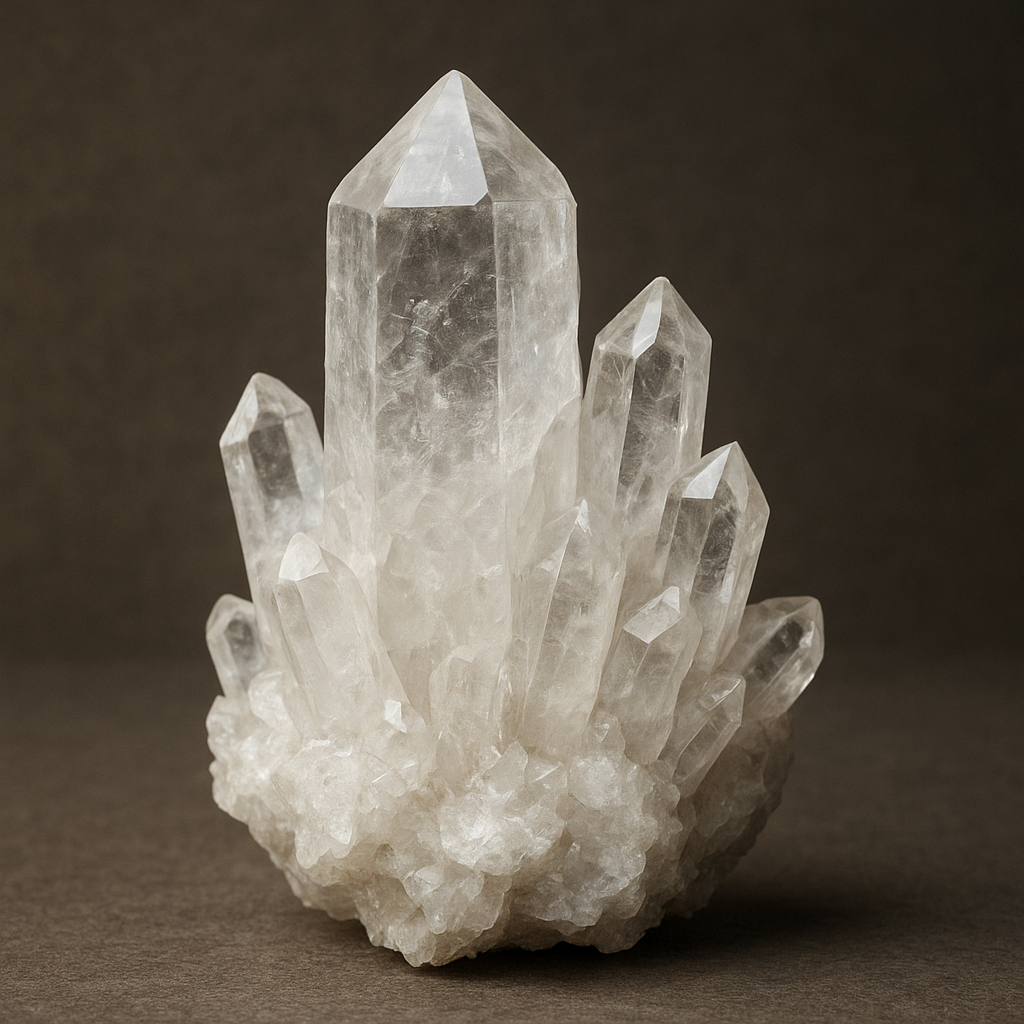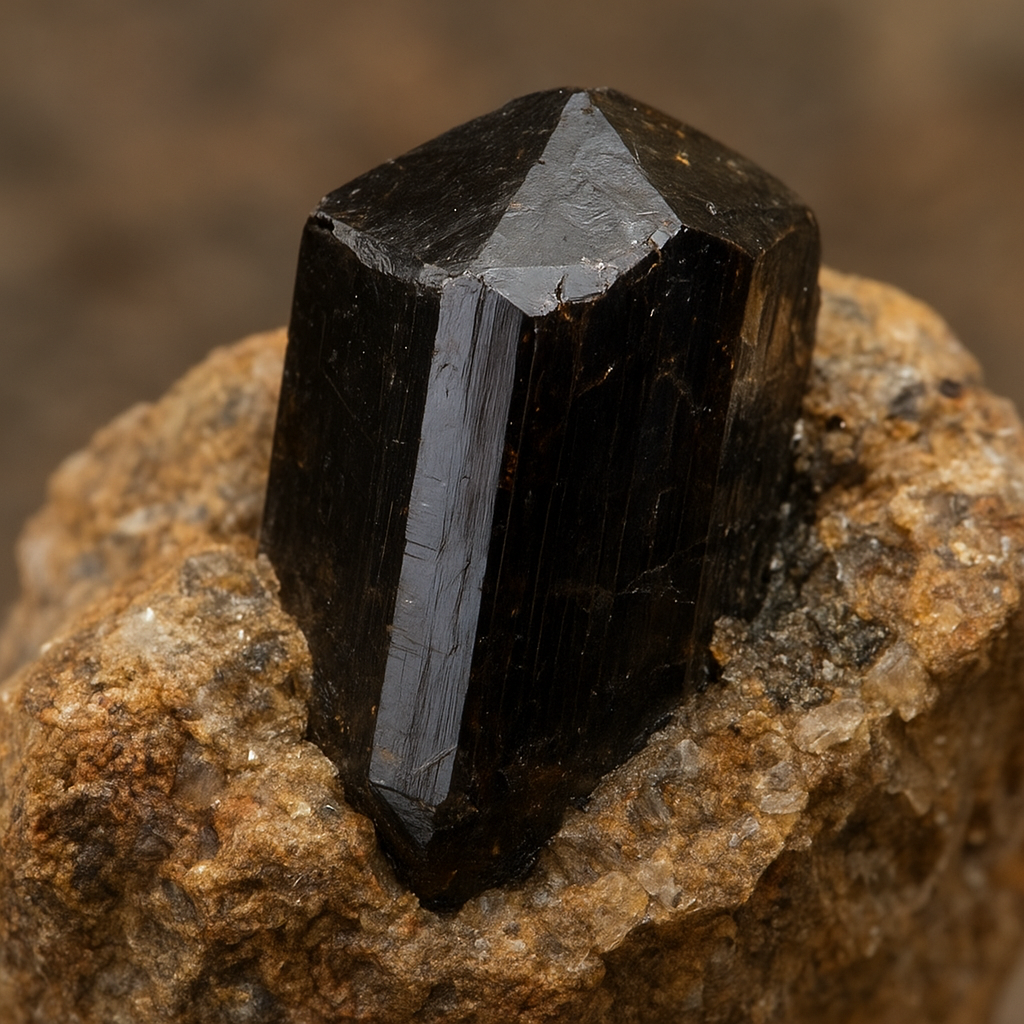
Dravite is a member of the complex and widely varied group of minerals known as tourmalines. It is most commonly recognized by its deep brown to brownish-black colors but shows a fascinating range of chemical variability and geological settings. This article explores the mineral’s chemistry, typical environments of occurrence, practical and scientific applications, notable localities, and a selection of intriguing facts that link dravite to broader themes in mineralogy, gemology, and Earth sciences.
Chemistry and Crystal Characteristics
The mineral formula of dravite is often written as NaMg3Al6(BO3)3Si6O18(OH)4, which highlights the presence of boron and magnesium in its structure. Dravite is a sodium-rich, magnesium-dominant member of the tourmaline group, and its composition can show substitutions by iron, lithium, or manganese in natural samples. The tourmaline crystal structure is built from linked rings of silica tetrahedra interleaved with borate groups and complex channels that accommodate alkali and other cations.
Key physical properties include:
- Crystal habit: prismatic, elongated crystals often with vertical striations
- Hardness: about 7–7.5 on the Mohs scale
- Specific gravity: typically 3.0–3.3 depending on Fe/Mg content
- Optical properties: singly refractive to doubly refractive with strong dichroism or pleochroism in colored varieties
- Color range: commonly brown (dravite), but colors can vary from yellow-brown to greenish-brown and even black due to iron content
Geological Environments and Where It Occurs
Dravite commonly forms in environments that supply boron and silica, along with Na and Mg. Two broad geological settings are most important:
Pegmatites and Related Magmatic Systems
In pegmatitic environments, particularly in granite pegmatites, tourmalines including dravite form late in the crystallization sequence. The residual magmatic fluids are enriched in volatile elements and boron; they migrate into cavities and fractures where tourmaline can crystallize as prismatic crystals or in aggregates. Pegmatitic dravites are frequently associated with quartz, feldspar, muscovite and other late-stage minerals.
Metamorphic and Hydrothermal Settings
Dravite is also typical of boron-rich metamorphic rocks such as schists, marbles, and contact-metamorphosed limestones. It forms through metasomatic processes where boron-bearing fluids interact with aluminous and magnesian protoliths. In some cases, high-temperature hydrothermal fluids precipitate dravite along veins and fractures, often associated with chlorite, garnet, and other metamorphic index minerals.
Major types of host rocks and occurrences:
- Alpine-type metamorphic belts and contact aureoles
- Granite pegmatites and greisens
- Hydrothermal quartz veins and boron-rich skarns
- Alluvial deposits where durable tourmaline crystals are concentrated by weathering
Notable Localities
The name dravite derives from the Drava (Drave) River region of the Eastern Alps, reflecting the early classic occurrences in Austria. However, dravite has a worldwide distribution.
- Austria (Carinthia and Tyrol): Classic Alpine dravites, often dark brown and prismatic, historically important and highly collectible.
- Italy (Alpine localities): Alpine veins and metamorphic zones yield attractive crystals; some Italian specimens show well-formed prisms with complex terminations.
- Brazil: Pegmatite districts produce dravite and other tourmaline species in a variety of colors; Brazil is a major source of gem-quality tourmalines.
- Madagascar: Known for gemmy tourmalines including magnesium-rich varieties; Madagascar specimens can be attractive to collectors and lapidaries.
- United States (California, Maine, Colorado): Pegmatites and metamorphic deposits yield dravite; classic localities in the U.S. have produced museum-quality crystals.
- Pakistan and Afghanistan: High-grade pegmatites and alpine-type veins with complex tourmalines, sometimes with interesting color zoning and inclusions.
- Sri Lanka and Myanmar: Known for gem material of various tourmalines, including colors influenced by trace elements.
Uses and Applications
Dravite is primarily valued for its role within the tourmaline group rather than for large-scale industrial use. Its main applications fall into three categories: gemological, scientific, and niche industrial or technological uses connected to properties common to tourmalines.
Gemology and Jewelry
Although many dravites are dark and somewhat opaque, attractive translucent specimens are cut into cabochons and faceted stones. Cut dravite may be used in jewelry where deep brown or olive tones are appreciated for their warm, earthy appearance. Due to its relative hardness, dravite is suitable for everyday jewelry when properly set.
Scientific and Geological Uses
Tourmaline group minerals, including dravite, are powerful recorders of the chemical environment in which they formed. Because they incorporate boron and other trace elements, their chemistry can be analyzed to infer fluid compositions, temperatures, and pressures during crystallization. Specific applications include:
- Geothermobarometry and reconstruction of metamorphic P-T conditions
- Tracing boron isotopes as proxies for fluid sources and crustal processes
- Use in provenance studies because tourmaline resists chemical weathering and can survive sedimentary transport as a fingerprint of source rocks
Physical Properties with Technological Potential
Members of the tourmaline group exhibit pyroelectric and piezoelectric behavior due to their anisotropic crystal structures. Historically, these properties led to exploratory uses in early pressure and temperature sensing devices. In contemporary contexts, engineered materials inspired by tourmaline properties are investigated for advanced ceramics and electronic applications, though dravite itself is not commonly a primary industrial mineral.
Gem Cutting, Care, and Market Considerations
Cutting dravite requires consideration of color, transparency, and strong pleochroism. Lapidarists often orient stones to maximize the most pleasing color and to mitigate darker tones. Typical practices include:
- Cutting cabochons for heavily included or opaque material
- Faceting translucent crystals in standard gem cuts to enhance depth
- Polishing with care because tourmaline cleavage is not pronounced but fractures can be present
Care instructions:
- Avoid prolonged exposure to harsh chemicals and acids which can affect surface luster
- Clean gently with warm soapy water and a soft brush; avoid ultrasonic cleaners if inclusions might cause breakage
- Store separately from harder gems to prevent abrasion
Market aspects: dravite occupies a niche among collectors and gem enthusiasts. Fine, translucent specimens command higher prices, whereas common opaque brown dravite is less expensive but still prized by those who favor earthy tones.
Variability, Substitutions, and Related Tourmalines
The tourmaline group is chemically diverse, often expressed by substituting cations in its channels and octahedral sites. Dravite is defined by Na in the X site and Mg dominating the Y (octahedral) sites, but substitutions yield intermediate compositions with other tourmaline species. Examples include:
- Schorl: Fe-dominant black tourmaline often confused with dravite in hand samples
- Elbaite: Li-bearing tourmaline responsible for many of the most colorful gem varieties (rubellite, indicolite)
- Uvite: Ca-dominant variety typically found in different parageneses
These chemical relationships mean dravite can appear in transitional compositions, resulting in color and physical property variations that matter to mineralogists and gemologists alike.
Dravite in Scientific Research
Modern analytical methods—LA-ICP-MS, SIMS, electron microprobe, and X-ray diffraction—allow precise characterization of dravite’s trace elements and isotopic composition. Research topics involving dravite include:
- Boron isotope studies to distinguish magmatic vs. crustal fluid sources
- High-resolution mapping of elemental zoning to reconstruct growth histories
- Experimental petrology examining stability fields of tourmaline in metamorphic reactions
Because tourmaline incorporates elements immobile during many geological processes, dravite and its relatives are invaluable in unraveling episodes of fluid infiltration, metasomatism, and the evolution of complex pegmatitic systems.
Historical and Cultural Connections
Dravite’s name recalls the Drava (Drave) River valley near the Austrian–Slovenian border, where early recognized occurrences inspired the species name. Alpine miners and naturalists of the 18th and 19th centuries collected and described many tourmalines, and Alpine specimens remain historically significant in museum collections. Culturally, tourmalines have been attributed various metaphysical properties over time; while such uses are beyond scientific endorsement, they influence markets and collecting habits, especially for stones with evocative hues.
Environmental and Ethical Considerations
Mining of tourmaline-bearing deposits ranges from small-scale artisan operations to larger-scale pegmatite mining. Environmental impacts depend on mining methods, but key concerns include:
- Habitat disruption from open excavation
- Waste rock and water management in pegmatite operations
- Socioeconomic impacts on local communities, including both benefits and challenges
Collectors and buyers increasingly seek ethically sourced specimens and transparency about provenance. Geological surveys and responsible mining certification programs help document origins and ensure more sustainable practices.
Collecting Tips and Notable Specimens
For collectors interested in dravite, good practices include focusing on well-documented provenance, seeking samples with sharp crystal form and minimal damage, and prioritizing specimens that show interesting crystal habit or mineral associations. Museums and private collections often highlight dravite crystals with exceptional luster or rare color varieties, such as translucent olive-brown crystals from classic alpine localities.
How to evaluate a dravite specimen
- Assess crystal form: sharp prism faces and complete terminations increase value
- Check color and transparency: clear, uniformly colored pieces are preferred for gemstones; complex zonation can be attractive to collectors
- Look for context: association with classic alpine minerals or pegmatitic parageneses enhances scientific and aesthetic value
Interesting Facts and Lesser-Known Aspects
Some fascinating points about dravite and tourmalines in general:
- Tourmaline was historically used as a gem that could attract and discharge static electricity when heated, earning names in some languages that reference its electrical behavior.
- Because tourmalines are chemically robust, they survive long-distance transport in sediments and can be used to fingerprint rock sources in sedimentary basins.
- Dravite contributes to complex color zoning and sectoral growth patterns that are subjects of microscopic beauty and scientific study.
- Modern materials science occasionally looks to tourmaline structures for inspiration in designing materials with controlled ion channels and polarization properties.
Further Reading and Resources
To deepen understanding of dravite, consult specialized mineralogical texts on the tourmaline group, peer-reviewed papers on boron isotopes and tourmaline geochemistry, and field guides covering classic alpine localities and pegmatite districts. Museums with strong mineral collections—particularly those with Alpine or pegmatite sections—offer examples of historic and scientifically important dravite specimens.
End of article