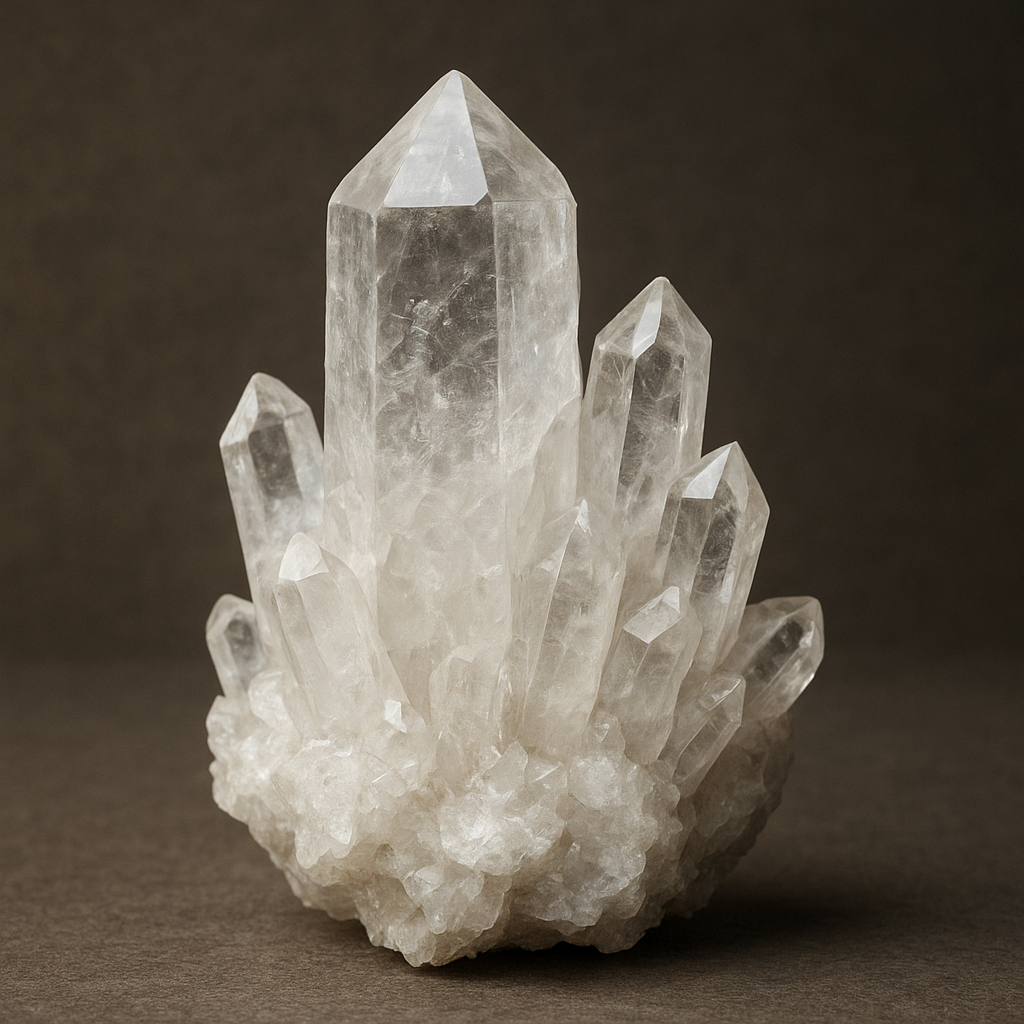
Doloschist is a lesser-known but intriguing member of the metamorphic rock family, representing the transformation of dolomite-rich protoliths into foliated, often shiny rocks with distinct mineral assemblages and textures. This article explores what doloschist is, where it forms and is found, how it is studied and used, and some surprising scientific and practical angles that make it a compelling subject for geologists, engineers, and collectors alike. Throughout the text, key terms are emphasized to guide readers through the most important concepts.
What is doloschist?
Doloschist can be understood as a metamorphic rock produced from dolomite-bearing sedimentary precursors that have undergone deformation and recrystallization under directed pressure and elevated temperature. Unlike massive dolostone or dolomitic marble, doloschist commonly displays a pronounced schistosity — a planar fabric produced by the alignment of platy or elongate minerals — together with a mineralogy dominated by dolomite plus accessory silicates such as tremolite, chlorite, actinolite, and mica in many occurrences.
The formation of doloschist typically involves both metamorphism and fluid-rock interaction. During metamorphism, the carbonate matrix of the protolith reacts with silica-bearing fluids to form calc-silicate minerals and fibrous amphiboles in reaction zones. If directed stress is significant, the newly formed minerals align, producing the characteristic foliation. The final appearance of doloschist ranges from coarse, flaky aggregates to dense, sheared bands with eye-catching mineral lineation.
Where does doloschist occur?
Doloschist is most commonly found in orogenic belts where dolomitic carbonates experienced regional metamorphism or intense tectonic deformation. Common geological settings include the following:
- Folded and thrusted sequences in mountain belts where sedimentary dolomites were buried to moderate-to-high metamorphic depths during orogeny.
- Contact aureoles adjacent to intrusions, where heat and metasomatizing fluids partially recrystallized dolomitic layers into schistose textures.
- Shear zones and nappes where mechanical deformation enhanced foliation and recrystallization of carbonate-dominated strata.
Noteworthy regions where dolomitic rocks have undergone metamorphism and produced schistose carbonates include parts of the European Alps (including localities near the Dolomites), the Carpathians, the Appalachian orogenic belt of eastern North America, and selected segments of the Himalayan orogen. In each case, local geological history — depth of burial, temperature gradient, composition of invading fluids, and deformation intensity — controls whether a dolomite-rich rock becomes a marble, a doloschist, or remains relatively unaltered dolostone.
Applications and uses of doloschist
While doloschist is not as commonly exploited as some other rocks, it has both practical and niche applications that derive from its chemical composition, physical properties, and aesthetic potential.
Construction and dimension stone
In regions where doloschist forms attractive foliated slabs with appealing textures and colors, it can be used as a dimension stone for cladding, flooring, and decorative elements. The combination of carbonate content and aligned silicate minerals often produces a surface with interesting sheen and banding. However, because carbonates react to acids and can be mechanically weaker than crystalline igneous rocks, doloschist must be chosen with caution for load-bearing or highly weather-exposed uses.
Industrial and chemical uses
Because doloschist originates from dolomite, it retains high concentrations of magnesium carbonate (MgCO3) and calcium carbonate (CaCO3). In some cases it can serve as a local source of magnesium or as feedstock for lime and refractory materials after appropriate processing. Metasomatic processes can concentrate economically useful minerals (for example, magnesite or skarn-associated ores) in dolomitic horizons adjacent to intrusions, making doloschist-bearing sequences interesting for exploration.
Soil amendment and environmental applications
Crushed dolomitic rocks (including schistose varieties) have been used to neutralize acidic soils and to supply magnesium in agricultural settings. Additionally, dolomitic formations have been investigated for carbon cycle dynamics — their reaction pathways during metamorphism influence how carbon is stored, released, or sequestered in Earth’s crust, which bears relevance to studies of long-term climate regulation.
Scientific interest and related topics
Doloschist sits at the intersection of several active fields in Earth sciences. Its study sheds light on metamorphic reactions, fluid-rock interaction, regional tectonics, and carbonate geochemistry. A few areas of particular interest include:
- Metamorphic petrology: Doloschist provides insight into the stability of carbonates under directed pressure and elevated temperature, showing how dolomite breaks down or reacts to form calc-silicate minerals. These reaction textures can record the P–T path (pressure-temperature history) of metamorphism.
- Isotope geochemistry: Carbon and oxygen isotope compositions in doloschist can preserve signatures of ancient seawater, diagenetic fluids, or metamorphic fluids. Isotope shifts can be used to trace fluid sources and temperatures during recrystallization.
- Structural geology: Because foliation and lineation in doloschists often record deformation histories, they are valuable for reconstructing tectonic transport directions and strain partitioning in fold-thrust belts.
- Economic geology: Places where dolomitic protoliths intersect intrusive bodies can develop skarns and ore deposits. Metasomatic enrichment of magnesium-rich minerals and accessory elements attracts exploration interest.
Identification and study methods
Identifying doloschist in the field involves combined observation of texture, mineralogy, and context. Key field indicators include a pronounced foliation, the presence of carbonate reaction products, and association with deformed carbonate layers. For laboratory and detailed study, geologists typically use:
- Thin-section petrography under polarizing microscope to identify minerals such as dolomite, diopside-group pyroxenes, amphiboles, and micas, and to observe microstructures like porphyroblasts and pressure shadows.
- X-ray diffraction (XRD) to quantify mineral phases and determine degree of recrystallization.
- Electron microscopy (SEM) and electron microprobe analysis for chemical zoning and reaction rim studies.
- Stable isotope analysis (δ13C, δ18O) to trace fluid histories and diagenetic-to-metamorphic transitions.
- Geothermobarometry using calc-silicate mineral equilibria to estimate metamorphic conditions.
Interesting phenomena and paradoxes related to doloschist
Doloschist presents several fascinating puzzles that keep researchers curious. One is the process of dolomitization itself: many dolomite-rich layers originate from complex diagenetic processes in the sedimentary basin long before metamorphism. When those dolomites are later metamorphosed, some features (microfabrics, geochemical fingerprints) can survive and be overprinted only subtly, offering a layered record of environmental change.
Another intriguing aspect is the way fluids drive metamorphic reactions. Silica-bearing fluids can infiltrate dolomitic layers and produce fibrous amphiboles and calc-silicates, yet the spatial patterns of alteration can be highly irregular, controlled by fractures, permeability contrasts, and the presence of anisotropies in the protolith. These heterogeneous reactions can lead to banded rocks where carbonate-rich and silicate-rich layers alternate at millimeter to meter scales.
Lastly, doloschists can preserve biological traces in exceptional cases. Fossil fragments within dolomite precursors may be transformed yet remain detectable in microscopic or geochemical signatures after metamorphism, permitting rare windows into ancient ecosystems that underwent later tectono-metamorphic burial.
Practical considerations and challenges
Working with doloschist raises several practical issues. Its carbonate content means it is chemically reactive with acids and can be susceptible to weathering in acid rain or industrial environments. The foliation that gives it attractive textures can also be a plane of weakness; blocks must be oriented carefully in construction uses to avoid splitting or slippage under load. For quarrying and processing, the heterogeneity of doloschist requires careful selection and testing to ensure consistent mechanical properties.
From a research perspective, interpreting metamorphic histories recorded by doloschist demands an integrated approach combining field mapping, petrography, geochemistry, and structural analysis. Disentangling original diagenetic features from later metamorphic overprints is nontrivial and is often the focus of detailed case studies.
Connections to broader geological topics
Studying doloschist contributes to our understanding of major Earth processes. Because carbonates play a central role in the global carbon cycle, the metamorphism of carbonate-bearing rocks affects carbon storage and release on geological timescales. Moreover, doloschist occurrences provide clues about past tectonic regimes: the pressures and temperatures recorded in carbonate schists, combined with structural fabrics, help reconstruct mountain-building sequences and collisional histories.
Finally, the interplay between sedimentary processes (dolomitization), metamorphism, and metasomatism in doloschist-bearing terrains exemplifies the complexity of lithospheric evolution. It serves as a natural laboratory for studying how surface-derived materials become integrated into deeper crustal processes and then re-exposed at Earth’s surface after uplift and erosion.
Key terms and quick references
- Metamorphism: The process by which rocks change mineralogically and texturally under heat and pressure.
- Dolomite: A carbonate mineral (CaMg(CO3)2) and the primary component of dolomitic rocks.
- Schistosity: A foliation caused by the alignment of platy minerals, characteristic of schists.
- P–T path: The pressure-temperature history a rock experienced.
- Dolostone: A sedimentary rock composed mainly of dolomite.
- Skarn: A metamorphic-hydrothermal rock commonly formed at the contact between intrusions and carbonate rocks, sometimes associated with ore deposits.
- Isotope geochemistry: The study of isotopic ratios to infer geologic processes and conditions.
Exploring doloschist brings together mineralogy, structural geology, geochemistry, and economic geology in a way that highlights the dynamic and transformative nature of Earth’s crust. Whether encountered in a mountain roadcut, examined in thin section, or evaluated for its material uses, doloschist rewards careful observation and multidisciplinary study.