Diorite is an often-overlooked but fascinating igneous rock that records important processes of the Earth’s interior and has played a surprising role in human history. With a characteristic medium- to coarse-grained texture and an intermediate chemical composition between mafic and felsic rocks, diorite appears in diverse geological settings and has practical uses ranging from ancient sculpture to modern construction aggregate. This article explores where diorite forms, its mineralogy and textures, its industrial and cultural applications, and a selection of intriguing scientific and historical facts linked to this resilient rock.
Composition, Texture and Classification
Diorite is an intrusive igneous rock of intermediate composition that crystallizes from magma at moderate depths in the crust. The most diagnostic mineral in diorite is plagioclase, typically of the andesine composition (intermediate-calcium feldspar). The remaining mineral assemblage commonly includes dark mafic phases such as hornblende (an amphibole) and biotite; pyroxene may be present in some varieties. Free silica in the form of quartz is generally scarce in true diorite (less than about 5% by volume); if quartz is more abundant the rock is classified as quartz diorite.
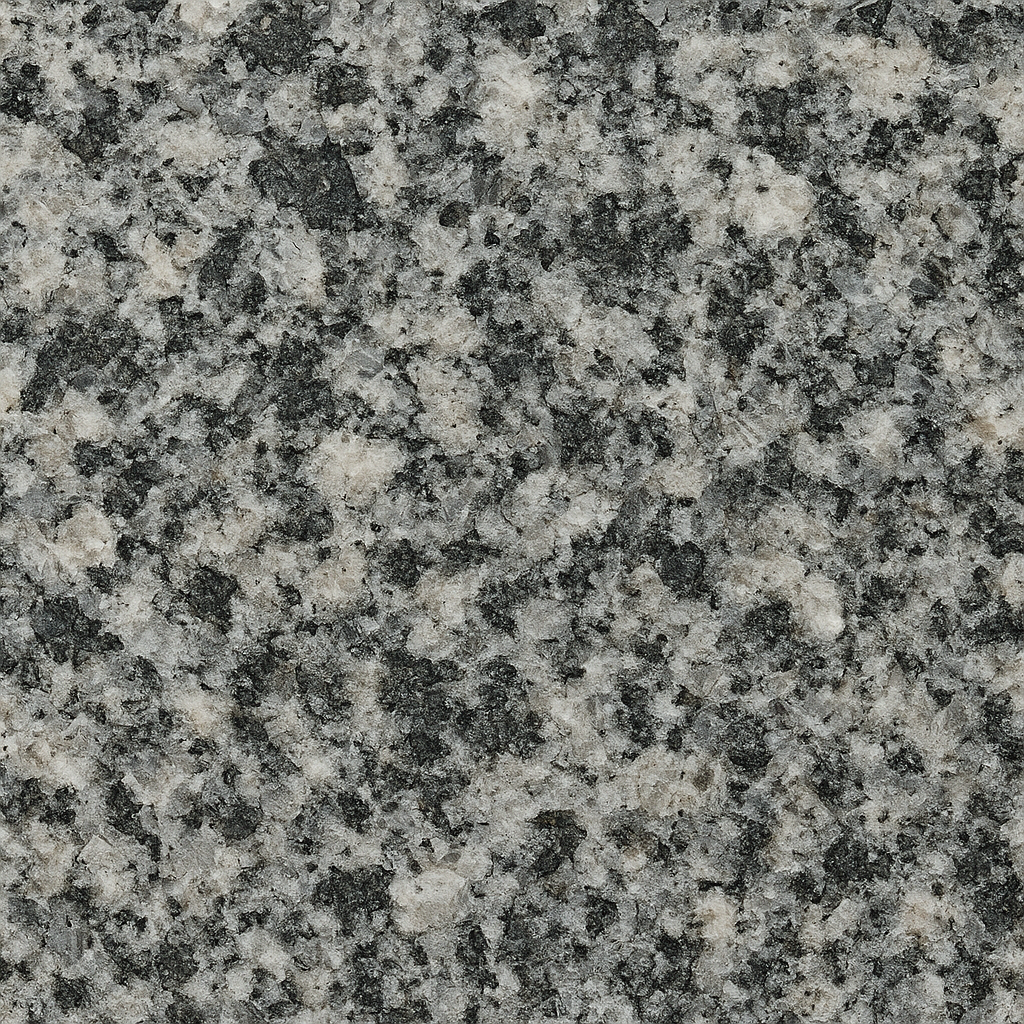
In hand specimen diorite is coarse-grained or phaneritic, with visible white to gray feldspar crystals intergrown with darker mafic grains, producing a salt-and-pepper appearance. Texturally it may show crystal zoning in plagioclase, subophitic or ophitic intergrowths where mafic minerals envelop feldspar laths, and occasional xenoliths or enclaves of more mafic or felsic composition. In the QAPF classification diagram used by petrologists, diorite plots in the field where plagioclase dominates the feldspar content and quartz is minimal.
How and Where Diorite Forms
The genesis of diorite commonly involves magmatic processes in convergent-margin settings. Intermediate magmas that crystallize into diorite are frequently associated with volcanic arcs above subduction zones, where the partial melting of subducted oceanic lithosphere and overlying mantle wedge produces andesitic to dioritic magmas. These intrude as plutons, stocks and batholiths, and form the plutonic equivalents of extrusive andesite.
Key formative processes include:
- Fractional crystallization of mafic magma, which removes early-forming olivine and pyroxene and enriches the residual melt in silica and alkalis, driving composition toward intermediate.
- Magma mixing, where injections of mafic melts mingle with more evolved felsic magmas, producing intermediate compositions and disequilibrium textures.
- Partial melting of mafic lower crust or mantle-modified crustal sources, especially in arc settings, yielding dioritic compositions with distinctive trace-element and isotopic signatures.
Prominent geological provinces with abundant dioritic bodies include the Andes of South America, the North American Cordillera (e.g., Alaska and parts of British Columbia), the Indonesian island arcs, the Philippines, and parts of the Mediterranean and Himalayan orogenic belts. In each of these regions dioritic intrusions form part of large composite plutonic complexes that document prolonged magmatic activity.
Petrographic and Geochemical Signatures
Microscopically, the plagioclase in many diorites shows zoning from calcium-rich cores to more sodic rims, reflecting evolving magma chemistry during crystal growth. Accessory phases such as magnetite, ilmenite, apatite and sphene are common, and zircon crystals, though typically small, can be abundant enough to enable precise U–Pb geochronology. Geochemically, diorites often follow a calc-alkaline trend with moderate aluminum and sodium/calcium ratios, and they can display enrichment in large-ion lithophile elements (LILE) and depletion in high-field-strength elements (HFSE) typical of subduction-related magmas.
Economic and Practical Uses
Although diorite is not as widely used as granite or basalt, it has several important uses derived from its physical properties: hardness, durability and attractive appearance when polished.
- Dimension stone and monuments: Diorite’s density and resistance to weathering made it a choice material for ancient stonemasons. Classic Mesopotamian and Near Eastern sculptures, including several statues of rulers from the third and second millennia BCE, were carved from diorite because it could take a high polish and last millennia. Diorite’s toughness also made it suitable for sarcophagi and ritual objects in ancient Egypt and neighboring cultures.
- Construction aggregate: Crushed diorite is used as roadstone, railway ballast and general aggregate for concrete and asphalt where available locally. Its strength and angularity contribute to durable pavement mixes.
- Historic tools and implements: In prehistoric contexts, knapped or ground diorite was used for robust tools and polished axes; the rock’s hardness allowed for effective cutting and grinding.
- Decorative stone and countertops: On occasion diorite is marketed as a specialty countertop or decorative facing stone, prized for its dark, speckled aesthetic. It is less common and typically more expensive than granite.
- Geothermal and mineral exploration guides: Dioritic intrusions sometimes host or accompany hydrothermal systems. Porphyry-style copper, molybdenum and gold deposits are commonly associated with intermediate to felsic intrusions; while diorite itself is not always the ore host, its presence signals magmatic-hydrothermal potential in a district.
Cultural and Historical Significance
One of the most surprising aspects of diorite is its role in ancient art and statecraft. Producing statues from diorite was labor-intensive because the rock’s hardness resisted easy carving; the effort required made diorite sculptures symbols of power and permanence. The famous Sumerian and Akkadian rulers commissioned impressive stone portraits in the third millennium BCE, and pharaonic workshops in Egypt also used dense igneous rocks for royal imagery.
In later periods, polished diorite and related rocks were valued for architectural ornamentation. Because diorite withstands weathering, many ancient diorite artifacts survive with remarkable detail, making them invaluable to archaeologists studying technique, trade and ideology in early complex societies.
Scientific Applications and Research Topics
Diorite is not only culturally relevant but also scientifically useful. Its crystallized minerals and accessory zircons provide windows into magmatic history, crustal evolution and tectonic processes. Some active areas of research that involve dioritic rocks include:
- Geochronology and tectonics: U–Pb dating of zircons from dioritic plutons constrains the timing of arc magmatism and mountain-building episodes. These dates help reconstruct the assembly of continental margins and the timescales of magmatic flare-ups.
- Magma plumbing systems: Detailed petrographic work on diorites reveals evidence of magma mixing, repeated injections, and crystal recycling. These observations inform models of how plutons grow incrementally over long periods.
- Isotopic tracing: Sr–Nd–Pb–Hf isotopes in diorites trace source contributions from subducted components, mantle metasomatism, and crustal assimilation. This chemistry distinguishes between models of arc magma generation.
- Ore deposit studies: Understanding the thermal and chemical evolution of dioritic intrusions helps exploration geologists predict where hydrothermal fluids might concentrate metals.
Environmental and Engineering Considerations
From an engineering standpoint, diorite is comparable to other hard igneous rocks. It offers high compressive strength, low porosity and good resistance to abrasion, making it suitable for load-bearing and wear-resistant applications. Weathering behavior depends on the proportions of feldspar and mafic minerals; feldspathic components can hydrolyze to clays over long exposure, but the overall rock commonly remains competent in temperate climates. Petrographic analysis and mechanical testing are prudent prior to large-scale use.
Notable Localities and Examples
Many regions world-wide expose large dioritic bodies. Examples of notable occurrences and illustrative cases include:
- The Andean arc: Extensive dioritic and tonalitic intrusions accompany the Andean orogen and host many porphyry deposits.
- Coast Plutonic Complex, British Columbia: A mix of dioritic to granitic plutons emplaced during subduction-related magmatism.
- Philippine and Indonesian arcs: Diorite is a component of island-arc plutonism, reflecting active subduction and arc volcanism.
- Ancient Mesopotamia and Elam: Archaeological sites with diorite statuary and ritual objects, showing long-distance trade in durable stone.
- Scotland and parts of Western Europe: Outcrops of intermediate intrusives record Caledonian and Variscan magmatism.
Related Rocks and the Broader Petrologic Context
Diorite’s volcanic counterpart is andesite, which has a similar composition but extrusive texture. On the intrusive side, diorite grades toward gabbro at more mafic compositions and toward granodiorite or granite at more felsic compositions. Other related intrusive rocks include tonalite and monzonite, each defined by specific feldspar and quartz proportions. Understanding these relationships helps geologists interpret the evolutionary history of magmatic suites and the physical conditions of emplacement.
Educational and Recreational Interest
Diorite is often featured in geology field courses because its mineralogy and textures are easily observed in hand specimen and thin section. For amateur collectors, polished diorite slabs can be attractive and educational specimens. Popular culture occasionally references diorite: for example, its blocky, speckled appearance was adopted into the visual vocabulary of several video games as a decorative stone, sparking curiosity among younger audiences about real-world geology.
Interesting Facts and Lesser-Known Uses
A few intriguing points often overlooked in short treatments:
- Because of its durability, diorite has survived for millennia in archaeological contexts, providing direct links between geology and human history.
- Polished diorite can approach the aesthetic of darker granites or gabbros, but its rarity and the difficulty of quarrying have limited widespread decorative use.
- Dioritic magmas play an important role in the growth of continental crust: intermediate intrusions add buoyant material and influence the chemical evolution of the crustal column.
- Advanced geochemical fingerprinting of diorites can detect contributions from sediments carried into subduction zones hundreds of kilometers away, allowing reconstructions of long-distance material transfer in convergent margins.
Practical Advice for Students and Professionals
If you are studying diorite in the lab or the field, useful practical steps include:
- Perform careful hand-sample description noting grain size, color contrast, abundance of plagioclase and mafic minerals, and any vesicles or alteration. These basic observations narrow classification quickly.
- Thin-section petrography is essential for identifying zoning, accessory minerals and product textures of mixing or disequilibrium.
- Geochemical analyses (major, trace and isotopic) are invaluable for constraining magma sources and tectonic setting; zircon U–Pb dating is especially powerful for timing magmatic events.
- For engineering uses, carry out mechanical tests (unconfined compressive strength, tensile strength, Abrasion tests) and petrographic evaluation of weathering susceptibility before large-scale specification.
Concluding Observations
Diorite occupies an important middle ground in igneous petrology: neither as common in the public imagination as granite nor as ubiquitous in infrastructure as basalt, yet rich in scientific information and cultural meaning. Its minerals and textures record magmatic evolution, and its physical qualities have made it a durable material through human history. Whether encountered in a field notebook, a museum gallery, or a crushed-stone pile, diorite continues to offer insights into geological processes and human ingenuity.