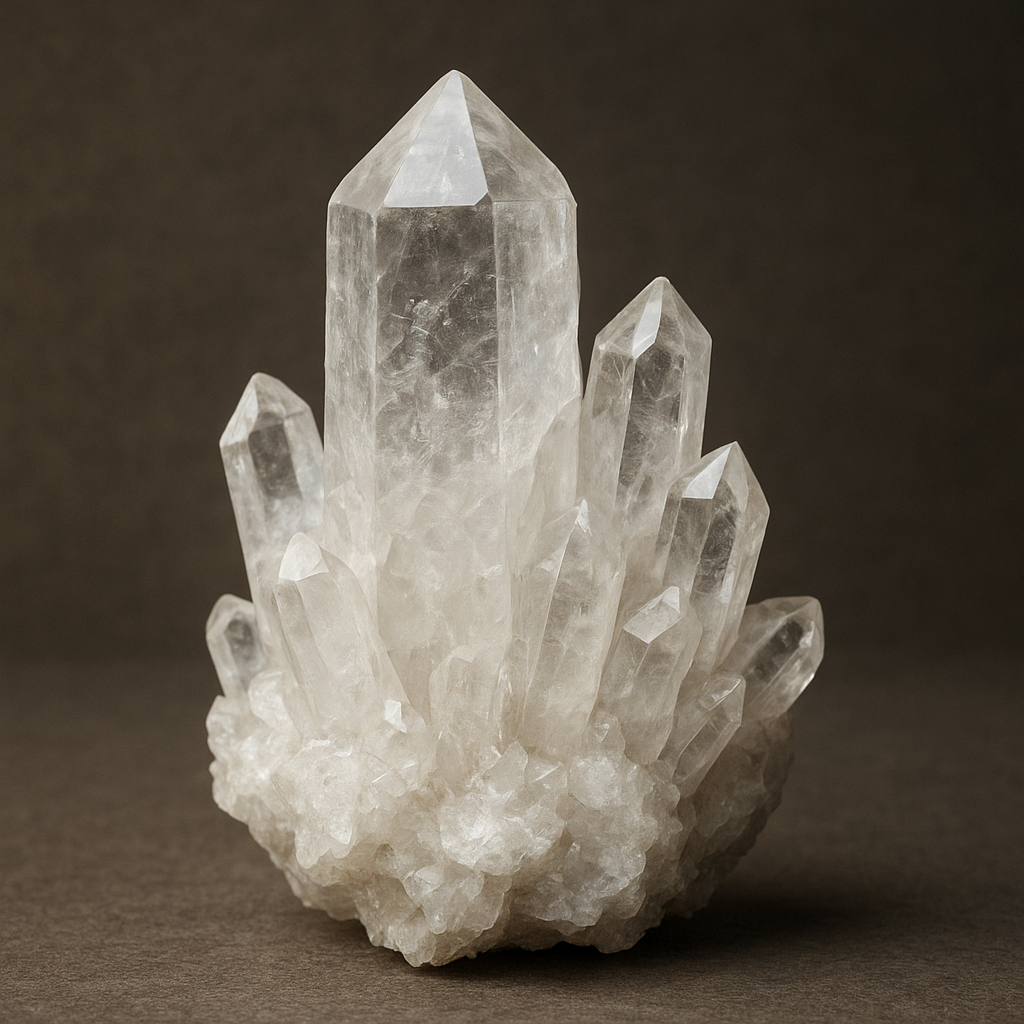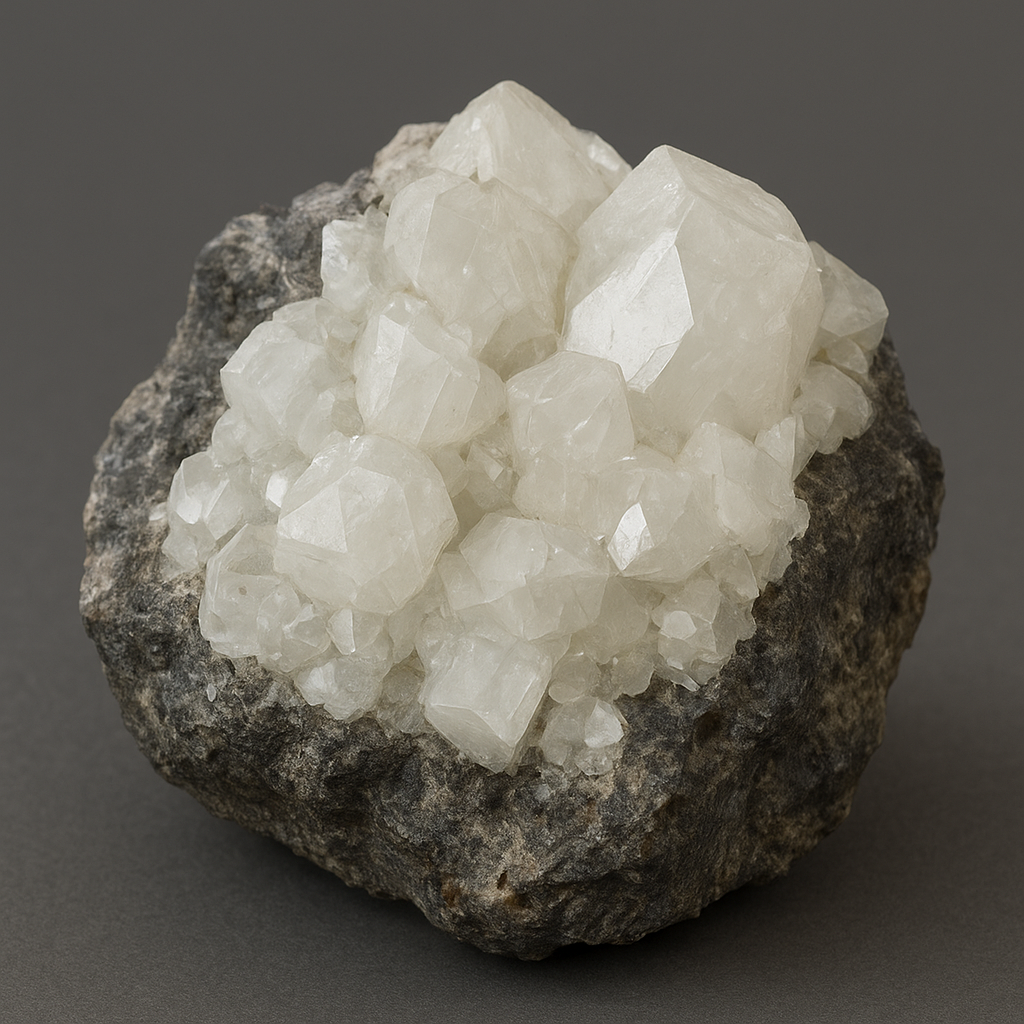
Datolite is a modest but fascinating mineral that rewards close attention from collectors, gem cutters, and geoscientists alike. Often overlooked beside flashier minerals, datolite occupies an intriguing niche at the intersection of volcanic processes, hydrothermal activity, and low-temperature mineralization. This article explores its identity, where it appears in nature, practical and scientific applications, and a few unexpected aspects that make datolite compelling to study and to admire.
What Datolite Is: Composition and Physical Characteristics
At its core, datolite is a calcium borosilicate hydroxide mineral. Its basic chemistry links it to the broader family of borosilicate minerals, combining silicon, boron and calcium in a compact crystalline structure. Datolite typically forms as well-developed individual specimens or as compact, botryoidal masses, and it is prized when it produces transparent to translucent, lustrous pieces suitable for cutting.
Important physical properties include:
- Crystal system: typically monoclinic, although habit and twinning can complicate appearances.
- Mohs hardness: around 5–5.5, making it hard enough to retain a polish for lapidary work but soft enough to require careful cutting.
- Specific gravity: generally near 3.0, reflecting its moderate density.
- Luster and fracture: vitreous to subadamantine luster with a conchoidal to uneven fracture; cleavage is usually poor or indistinct.
- Color: ranges from colorless and white to green, yellow, brown or black, often influenced by trace impurities or included minerals.
- Optical properties: relatively low birefringence and refractive indices that make it identifiable under petrographic microscopes.
Certain specimens show attractive glassy crystals or botryoidal forms; others are sought after because they fluoresce under ultraviolet light. The combination of modest hardness, good luster, and occasional transparent crystals gives datolite value as a collectible and as a lapidary material in niche markets.
Geological Settings and Global Occurrence
Datolite most commonly forms in association with volcanic rocks and in hydrothermal settings. Its occurrence is tightly connected to environments where boron-bearing fluids interact with silicate and calcium-bearing host rocks. Typical settings include:
- Basaltic vesicles and cavities – where late-stage hydrothermal fluids deposit minerals into open spaces created by volcanic gas bubbles.
- Hydrothermal veins – especially in low-temperature veins where boron-rich solutions circulate.
- Metasomatic and contact zones – where boron-bearing fluids alter wall rock chemistry and precipitate borosilicate minerals.
- Skarn-like or carbonate-altered environments – occasionally forming where calcium-rich carbonates meet boron-bearing solutions.
Notable localities that have produced classic specimens include basaltic provinces and copper districts. The copper-bearing basaltic flows of the Great Lakes region produced fine datolite associated with native copper, while parts of Europe, Asia and Russia are renowned for exceptionally aesthetic crystals. Collectors and museums prize specimens from certain mines for their unusual color or crystal clarity.
Associations with Other Minerals and What They Reveal
Datolite rarely occurs in isolation. It is commonly found alongside prehnite, zeolites (like stilbite and heulandite), calcite, and native copper. These associations are more than aesthetic; they help reconstruct the sequence of fluid events and the physicochemical conditions of mineral formation.
- With zeolites: datolite often forms in the later stages of alteration in vesicular basalts, coexisting with zeolites that precipitate from cool, silica-saturated, alkaline fluids.
- With calcite: simultaneous precipitation or later-stage calcite can create attractive datolite-on-calcite specimens popular with collectors.
- With native copper: datolite associated with copper can mark reduced, metal-bearing hydrothermal systems—useful for economic geology exploration models.
These paragenetic relationships inform geologists about temperature, pH, and fluid composition during mineralization. Datolite’s presence is often a fingerprint of boron-bearing, silica-rich fluids at relatively low temperatures compared with high-temperature hydrothermal minerals.
Notable Localities and Famous Specimens
Certain regions are widely recognized among collectors and mineralogists for producing distinctive datolite specimens. These localities combine the right host-rock environment with unique fluid chemistry to grow aesthetically pleasing crystals:
- Basaltic provinces associated with copper mineralization in North America, where datolite can occur in vugs alongside native copper and zeolites.
- Russian pegmatitic and metamorphic provinces, where datolite sometimes forms well-shaped, highly lustrous crystals prized by museums.
- European and Asian basaltic terrains that produce nodules and botryoidal masses, sometimes exhibiting unusual colors and fluorescence.
- Certain classic mineral localities in Canada and the United States where collector-grade crystals and attractive lapidary pieces are recovered.
Collectors often seek specimens with glass-clear crystals or dramatic crystal groups; museum-quality pieces can be both scientifically informative and visually striking. Some of the most photographed datolite specimens show delicate, nearly gemmy crystals perched on contrasting host rock—an appealing display of mineral paragenesis.
Applications: From Gem Cutting to Geological Research
Datolite has practical and scientific uses that extend beyond mere collecting. While it is not a mainstream industrial mineral, datolite’s properties lend themselves to a few specialized applications:
Lapidary and Decorative Uses
Transparent or translucent datolite crystals can be faceted or cabochon-cut for jewelry and decorative objects. Because its hardness is moderate, lapidary work requires skill, but well-cut datolite pieces show an appealing vitreous sheen and unique internal character. Such items are usually marketed to niche collectors rather than mass jewelry markets.
Scientific and Research Applications
Geoscientists value datolite in several technical contexts:
- As a tracer of hydrothermal fluid composition: boron content and trace elements in datolite provide clues about fluid sources and evolution.
- For fluid inclusion studies: tiny inclusions trapped within datolite crystals preserve information about the temperature, pressure, and chemistry of the mineralizing fluids.
- In isotope geochemistry: boron isotopic ratios in datolite help constrain global boron cycles and the origins of boron-bearing fluids.
- As an indicator mineral in exploration: datolite associated with copper or other metals can point toward broader mineralized systems.
Crystallography and Microstructural Features
From a crystallographic perspective, datolite offers interesting features that invite more detailed study. Its internal structure accommodates boron and silicon in a framework that produces characteristic crystal habits and growth patterns. Under thin section or scanning electron microscopy, datolite can reveal zoning, growth textures, and minute inclusions that record episodic growth histories.
- Zoning patterns can indicate changing fluid chemistry during growth—important for reconstructing the temporal evolution of mineralizing fluids.
- Microscopic inclusions may preserve daughter minerals or tiny gas and liquid pockets that are windows into the fluids from which datolite grew.
- Crystal twinning and rare habits provide clues about conditions of nucleation and space available during growth.
Collecting, Care, and Identification Tips
For collectors and amateur mineralogists, datolite is accessible in many ways but requires care in handling and identification.
- Identification tips: observe crystal habit (prismatic or botryoidal), luster (vitreous), hardness (scratch tests), and associations (zeolites, calcite, copper). Optical properties under polarized light can confirm identity for prepared thin sections.
- Care and storage: avoid harsh chemicals and ultrasonic cleaners, which can damage delicate crystals. Store datolite separately to protect it from harder minerals that could scratch the surface.
- Display suggestions: well-lit cabinets with UV options enhance the appreciation of specimens that show fluorescence, while stable mounts prevent damage to fragile habits.
Intriguing Scientific Questions and Ongoing Research
Although datolite is not the subject of the largest mineralogical studies, it remains relevant to ongoing geoscience questions. Researchers continue to use datolite to probe fluid histories in basaltic terrains, to refine models of low-temperature mineral deposition, and to improve understanding of boron mobility in crustal fluids. Some lines of inquiry include:
- Fine-scale geochemical analysis to track fluid evolution during basalt alteration.
- High-resolution isotopic studies to distinguish magmatic versus meteoric boron sources.
- Experimental work to define stability fields and synthetic pathways under controlled temperature and pressure.
These studies help integrate datolite into larger narratives about crustal fluid processes, element cycling, and the formation of economically interesting mineral deposits.
Interesting Cultural and Aesthetic Aspects
Beyond science and commerce, datolite carries an aesthetic appeal that influences collectors and artists. Its often-crystalline, glassy appearance and range of subtle colors make it well suited for mineral displays and unique jewelry pieces. A few specimens even become centerpieces in private collections because they combine rare color, transparency, and association with contrasting minerals.
In some communities, datolite-bearing rocks are also used to interpret the geological history of an area, serving as tangible evidence of volcanic activity and later fluid alteration. This local significance can make datolite an ambassador mineral for public education and outreach.
Concluding Thoughts on Datolite’s Place in Mineralogy
Datolite occupies a distinctive position: not the most famous mineral, yet scientifically informative and visually appealing enough to attract enthusiasts. It serves as a practical tool for researchers tracing boron-rich fluids, a modest material for lapidary artists, and a beloved specimen type among collectors. The mineral illustrates how seemingly humble minerals can yield rich stories about Earth processes when examined closely and with appropriate techniques.