
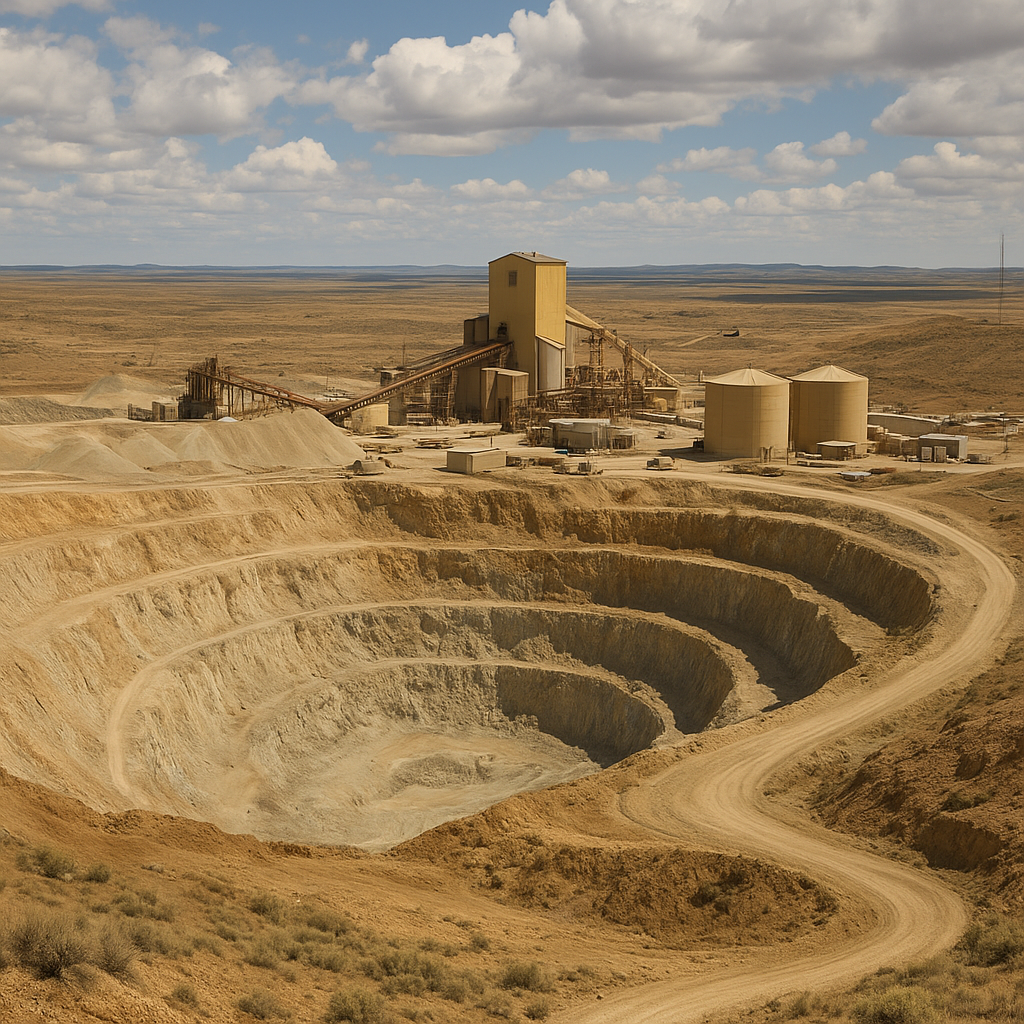
The Crow Butte Mine is a notable example of modern uranium extraction in the United States. Located in the northwestern part of the state, the site has played a role in supplying raw material for the nuclear fuel cycle while illustrating both the economic promise and environmental complexities of contemporary mining. This article examines where Crow Butte is situated, what is produced there, its economic significance, and several aspects that make it particularly interesting from technical, regulatory and social perspectives.
Location and geological setting
Crow Butte sits in the Nebraska Panhandle, near the town of Crawford in Dawes County, not far from the border with South Dakota. The mine occupies a landscape of rolling plains and characteristic buttes that give the project its name. The geology that hosts the deposit is typical for many North American uranium occurrences: the uranium occurs in sandstone-hosted, roll-front style deposits, where uranium minerals precipitated at chemical interfaces within ancient groundwater-bearing formations.
The site benefits from relatively shallow uranium-bearing formations, which makes the deposit amenable to methods that avoid extensive open pits or underground tunnels. Proximity to local communities and the agricultural economy of the region has shaped both the permitting process and ongoing monitoring programs. Access to infrastructure such as local roads and rail connections in the broader region has also helped integrate the mine into domestic supply chains for nuclear fuel.
What is mined and how it is extracted
The principal commodity produced at Crow Butte is uranium, primarily recovered as uranium oxide concentrate (commonly known as “yellowcake”, U3O8). The technology used at Crow Butte is in-situ recovery (ISR), sometimes called in-situ leaching (ISL), which is a branch of hydro-mining. ISR is especially suited to deposits that are hosted in permeable sandstones where oxidizing solutions can be circulated to mobilize uranium without large-scale surface excavation.
Basic ISR process steps
- Injection: A carefully formulated aqueous solution, often containing oxygen and a bicarbonate complexing agent, is injected into the ore zone through a pattern of injection wells.
- Leaching: The solution oxidizes uranium-bearing minerals and converts the uranium to a soluble form that the groundwater can carry.
- Recovery: The uranium-laden solution is pumped to the surface via production wells and passed through ion-exchange resin columns that selectively adsorb uranium.
- Processing: Loaded resin is stripped (eluted) and the eluate is chemically treated to precipitate uranium oxide concentrate, which is then dried and packaged.
- Restoration: After mining in a given area is finished, the ore zone is flushed and treated to return groundwater chemistry to baseline or to levels acceptable under regulatory standards.
This method greatly reduces surface disturbance compared with open-pit or underground mining and eliminates the production of large waste rock piles in many cases. However, the technique places heavy emphasis on hydrogeological control, careful chemical management and long-term monitoring of aquifers to ensure that groundwater quality is protected or restored.
Operations, ownership and production history
The project has been operated by subsidiaries of major uranium companies, with Cameco Resources historically responsible for operations and permitting in recent decades. Mining at Crow Butte began commercially in the early 1990s and continued intermittently through cycles of uranium prices and regulatory activity. Like many uranium operations worldwide, Crow Butte’s activity levels have varied with the global market: periods of active production alternate with times of care-and-maintenance when market conditions are unfavorable.
Production volumes at Crow Butte have been modest in comparison to the largest global uranium mines, but the output has strategic significance because it is part of a domestic supply chain for nuclear fuel in the United States. The use of ion-exchange and on-site processing means that work at the mine provides jobs that range from drilling and field operations to laboratory and environmental compliance roles.
Economic importance and market context
At a regional level, Crow Butte contributes to the local economy by providing employment opportunities, paying taxes and supporting services in nearby communities. At a national level, the mine represents a piece of the United States’ domestic uranium capacity, which matters for energy security and efforts to maintain a diversified supply chain for nuclear fuel. Nuclear power remains a significant source of low-carbon electricity, and access to domestically produced uranium can reduce exposure to international market disruptions.
Uranium markets are cyclical and influenced by reactor demand, secondary supplies (such as government inventories), geopolitical considerations and commodity speculation. Crow Butte and operations like it are more viable when prices are high enough to cover operational and compliance costs; during low-price periods many producers scale back. This sensitivity to price has driven investment decisions, periods of suspension and recommencement of operations at Crow Butte over the years.
Besides direct economic inputs, the mine has generated tax revenue and royalties that contribute to county and state budgets. It also prompts investments in local infrastructure and contractor services during active phases. Community outreach and hiring preferences for the region help anchor some of the socioeconomic benefits.
Environmental management, monitoring and regulation
Environmental stewardship at Crow Butte is central to both public perception and regulatory compliance. The mine is subject to oversight by federal authorities such as the U.S. Nuclear Regulatory Commission (NRC), as well as state agencies in Nebraska. The ISR method concentrates environmental risk management on subsurface waters: operators must demonstrate that mining fluids remain within permitted zones and that any mobilized contaminants are treated or contained.
Groundwater protection and subsequent groundwater restoration are major components of the permitting and reclamation process. Restoration strategies can include flushing with clean water, pH adjustment, bioremediation and chemical treatment. The objective is to return aquifer chemistry to acceptable conditions or to reduce concentrations of regulated constituents to levels that meet state and federal standards. Because aquifer restoration can take many years, monitoring programs are long-term, often lasting decades after active uranium recovery ceases.
Community and tribal groups have often been active participants in monitoring discussions and public hearings. Concerns about potential impacts to water supplies, agriculture and cultural resources are addressed through environmental impact assessments, public consultations and monitoring results that are typically published by the operator and regulators. The mine’s regulatory framework requires rigorous reporting, routine inspections, and contingency planning for any excursions outside permitted parameters.
Social and cultural considerations
Crow Butte’s location in the Great Plains places it within regions of historical and contemporary significance for Indigenous peoples and rural communities. Engagement with stakeholders—often including landowners, local businesses, county officials and tribal representatives—has been an important part of the mine’s licensing and operational approach. Public meetings, environmental disclosures and mitigation strategies are all mechanisms used to address social license to operate.
Even where agreements are reached, the presence of a uranium mine can intensify scrutiny by environmental groups and the public. Issues such as long-term stewardship of restored aquifers, the fate of tailings in other types of operations, and the broader debate over nuclear energy versus renewables make Crow Butte a focal point for broader discussions about resource extraction in rural America.
Interesting technical and historical aspects
Several aspects of Crow Butte and similar ISR projects are noteworthy:
- Technology adaptation: ISR exemplifies how mining technology can optimize resource recovery while minimizing surface footprint. Wellfield design, closed-loop recovery systems and advances in resin technology have improved recovery efficiency and reduced operational costs.
- Long-term monitoring: The commitment to sustained hydrogeological monitoring makes Crow Butte a case study in managing subsurface environmental risks over multidecadal timescales.
- Regulatory evolution: The project highlights how rules and standards evolve as regulators and operators learn from operational experience; this interplay shapes best practices across the industry.
- Local geography: The mine’s name reflects the local landscape—isolated buttes that punctuate the prairie and serve as natural landmarks for the region.
- Market sensitivity: The ebb and flow of activity at Crow Butte underscore the extent to which uranium projects are influenced by global reactor demand, stockpiles and political decisions affecting nuclear power.
Future prospects and challenges
Looking ahead, the prospects for Crow Butte depend on a mixture of market dynamics, technological improvements, regulatory decisions and community relations. A sustained increase in demand for nuclear-generated electricity — driven by climate goals or shifts in energy policy — could strengthen the economic case for ramping up domestic uranium production. Conversely, continued low prices or persistent regulatory hurdles could keep the site in care-and-maintenance phases.
Technical innovations in ISR, improvements in groundwater treatment and more refined monitoring techniques could reduce remediation timelines and costs, making future operations more attractive. Meanwhile, evolving federal initiatives on critical minerals and supply chain resilience may increase the strategic value of domestic uranium projects.
At the same time, operators and regulators will need to maintain transparent engagement with local communities, Native nations and environmental stakeholders to address legitimate concerns, share monitoring data and demonstrate that long-term stewardship is feasible. The integrated approach—combining technical rigor with social responsibility—will shape whether Crow Butte remains a model for responsible uranium recovery or a cautionary example about the limits of mining in sensitive hydrogeologic settings.
Key takeaways about Crow Butte
- Crow Butte is an ISR uranium project in the Nebraska panhandle that employs modern hydro-mining techniques to extract uranium with reduced surface disturbance.
- The operation has economic importance at local and national scales, contributing jobs and domestic raw material for the nuclear fuel cycle while remaining sensitive to global market swings.
- Environmental management—especially groundwater protection and restoration—is central to operations, requiring long-term monitoring and compliance with federal and state regulation.
- Ownership and operational history, including periods of active extraction and care-and-maintenance, reflect broader industry cycles; the site has been associated with major industry players such as Cameco.
- Technically and socially, Crow Butte illustrates both the capabilities and the challenges of 21st-century mineral production in regions where water resources, cultural values and economic needs intersect.
Crow Butte remains a relevant example for policymakers, industry professionals and community stakeholders who seek to understand the balance between resource development and environmental protection in the United States. Its story continues to evolve with market conditions, regulatory developments and technological progress, and it will likely remain a focal point for discussions about the role of nuclear materials in a low-carbon energy future.

