
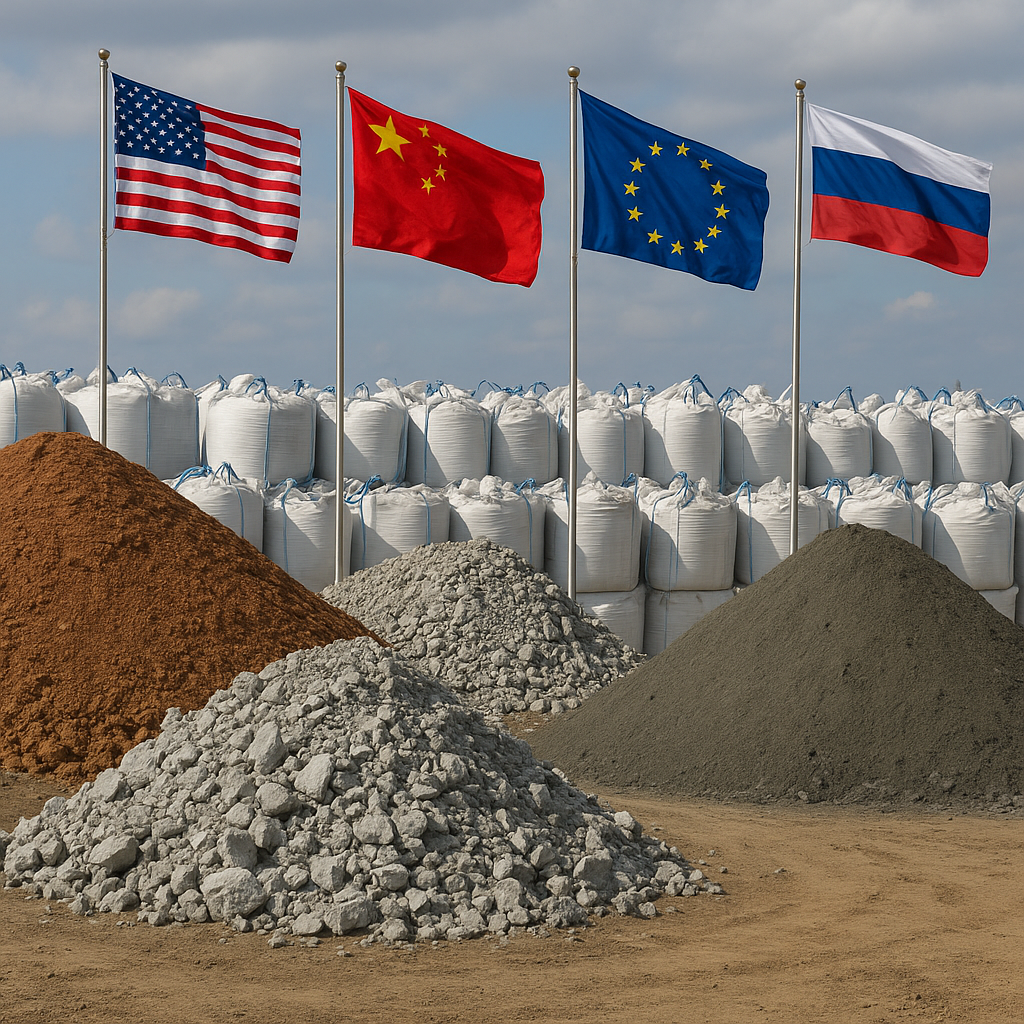
The global scramble for energy transition and high-tech manufacturing has turned once-obscure elements into strategic assets. Governments now view minerals not just as inputs for industry but as instruments of national security and geopolitical influence. This article examines why major states are building reservoirs of rare inputs, how they do it, and what the long-term consequences may be for economies, environments, and international relations. It outlines contemporary approaches to mineral accumulation and offers a structured look at the competing objectives that shape state behavior.
Drivers and historical context
Interest in mineral accumulation has surged because of converging technological and political trends. The rapid adoption of renewable energy, electric vehicles, and advanced electronics has amplified demand for a narrow set of raw materials. Nations with limited domestic deposits are particularly vulnerable to supply shocks, creating incentives to secure resources through multiple means. Historically, powers have pursued colonies, concessions, and trade agreements for resources; today’s methods include strategic buying, stockpiling, and long-term offtake contracts.
Three broad forces explain the contemporary emphasis on critical minerals: technological dependency, concentrated production, and geopolitical rivalry. Modern devices and clean-energy technologies are highly dependent on a handful of elements. Production and processing capacity are often geographically concentrated, exposing consumers to political risk, export controls, and price volatility. Finally, the intersection of economic interdependence and strategic competition has transformed market decisions into security decisions. Nations no longer treat mineral access purely as a commercial matter but as a factor in national preparedness.
Stockpiling strategies used by world powers
Stockpiling is one of several instruments states use to reduce exposure to supply disruptions. Approaches vary in scale, scope, and the legal or economic mechanisms used to accumulate and manage reserves. Below are the main strategies currently in use or being explored.
National strategic reserves
Some governments create government-managed reserves similar to petroleum strategic reserves. These reserves buy and hold specific quantities of minerals to be released during crises. The logic is straightforward: hold spare supply to smooth disruption-driven price spikes and protect critical sectors such as defense and energy. Strategic reserves may be physical (warehousing concentrates or refined materials) or financial (hedging positions, purchase options, or sovereign equity stakes in mines).
Long-term contracts and equity stakes
States and state-owned enterprises (SOEs) secure future flows through offtake agreements and direct investment. Long-term contracts guarantee a buyer for producers and a guaranteed supply for the buyer, creating mutual incentives for capital-intensive mine development. In parallel, sovereign or state-aligned funds acquire equity in foreign mines, processing plants, or logistics companies to lock in control over critical links.
- Signing multi-year offtake agreements with producers to stabilize supply and price.
- Purchasing minority or controlling stakes in mining operations to influence output and prioritization.
- Investing downstream in processing and refining to capture value and reduce dependence on third-party converters.
Trade policy, tariffs, and export controls
Governments can alter trade rules to manage domestic availability. Export controls or temporary export bans can conserve local supplies or penalize geopolitical rivals. Conversely, tariffs and preferential import agreements can redirect trade flows to strategic partners. While these tools can be powerful, they carry retaliation risks and may accelerate supplier diversification among buyers.
Stockpiles through corporate and market mechanisms
Not all stockpiling is state-controlled. Large corporations, particularly in electronics and automotive industries, maintain private reserves and vertical integration strategies. Companies often secure resources via joint ventures, long-term supply chains, and internal inventories. Financial instruments like forward contracts, futures markets, and commodity-backed funds also function as virtual stockpiles, translating physical scarcity into tradable exposure.
Recycling, substitution, and demand-side measures
Stockpiling can be complemented by reducing dependency. Governments are investing in recycling infrastructure to recover key elements from end-of-life products and supporting research into material substitution. Policies that incentivize circular economy practices — extended producer responsibility, deposit-return schemes, and design-for-recycling standards — effectively increase available supply without extracting new ore.
Economic, environmental, and geopolitical implications
Securing minerals through stockpiles and related measures has broad implications. Economically, reserves can stabilize domestic industries against price shocks and dampen market volatility. However, heavy-handed state accumulation can distort global prices, induce speculative hoarding, and crowd out private investment. Stockpiling financed by subsidies or sovereign funds may alter risk assessments and lead to overcapacity or misallocation.
Environmentally, increased mining and stockpiling raise concerns. Extraction and processing of many target elements are resource-intensive and may degrade water, soil, and biodiversity. Governments and firms that expand stockpiles without strong environmental safeguards risk exporting ecological harm to poorer jurisdictions through outsourced extraction. At the same time, investments in recycling reduce lifecycle impacts and can be framed as environmentally responsible forms of accumulation.
From a geopolitical standpoint, access to minerals is now a lever of influence. Control over polishing, refining, and rare intermediates can be as consequential as control over ore. States that control critical processing capacity can apply economic pressure through selective supply curtailments. In response, rival powers pursue diversification and strengthened alliances, transforming mineral supply into an axis of international competition.
Risks of resource nationalism and market fragmentation
Resource nationalism poses a dual risk: governments may nationalize assets or impose export limits during crises, while importing states may respond by stockpiling defensively, creating a feedback loop. The result can be fragmentation of global supply chains into competing spheres of influence — a phenomenon sometimes called “decoupling.” Such fragmentation raises costs, reduces economies of scale, and slows innovation diffusion.
Legal and ethical considerations
Large-scale state purchases and investments raise legal questions about transparency, corruption risk, and fair competition. Ethical concerns arise where mineral extraction is associated with human rights abuses or armed conflict. Effective stockpiling strategies require compliance frameworks, due diligence protocols, and international cooperation to avoid incentivizing extraction practices that undermine ethical and sustainability norms.
Policy options and future directions
Policymakers face a choice between competitive accumulation and cooperative frameworks. A balanced approach typically combines targeted reserves with investments in supply diversification, recycling, and international agreements to reduce the incentives for zero-sum behavior.
- Developing interoperable emergency release mechanisms that operate under agreed international triggers to reduce panic-driven hoarding.
- Investing in domestic processing and recycling to capture more value within national economies and reduce reliance on external refiners.
- Fostering multilateral stockpiles for materials with global public-good characteristics, coordinated through trusted institutions.
- Supporting research into material substitution and efficiency to lower long-term demand for scarce inputs.
Technological innovation will also shape future strategies. Improved recycling processes and new battery chemistries could reduce demand for specific elements. Meanwhile, advanced geological survey techniques and deeper-sea or asteroid prospecting (still nascent) may expand the supply frontier. Policy must be adaptive, balancing near-term security needs with mid- and long-term sustainability goals.
International cooperation versus strategic competition
There is room for both cooperation and competition. Multilateral norms can limit harmful practices like abrupt export bans, while shared stockpiles or coordinated reserve releases can mitigate shocks. Yet strategic competition will persist as states perceive mineral control as a component of deterrence, industrial policy, and technological leadership. Success will depend on designing institutions that provide mutual assurance without undermining legitimate national-security concerns.
Practical recommendations for policymakers
- Prioritize transparent criteria for reserve creation, specifying triggers for accumulation and release to avoid market distortions.
- Invest in recycling and secondary supply chains to reduce future extraction pressures.
- Negotiate regional supply agreements and invest in processing capacity in friendly jurisdictions to reduce dependence on single suppliers.
- Support R&D into alternative chemistries that reduce reliance on scarce elements such as lithium and cobalt.
- Use sovereign investment vehicles prudently to secure upstream assets while maintaining compliance with international law and anti-corruption standards.
Whether through government stockpiles, corporate hedging, or international cooperation, the management of scarce elements will remain a strategic priority for the foreseeable future. States that combine prudent accumulation with policies that foster resilience, transparency, and sustainable sourcing will be better positioned to navigate the twin challenges of technological transition and geopolitical rivalry. The era in which minerals quietly supported industrial activity is over; instead, they are central to national strategy, industrial competitiveness, and global diplomacy. Strategic decisions made today about how to stockpile and secure supplies will shape economic and political landscapes for decades to come.
