
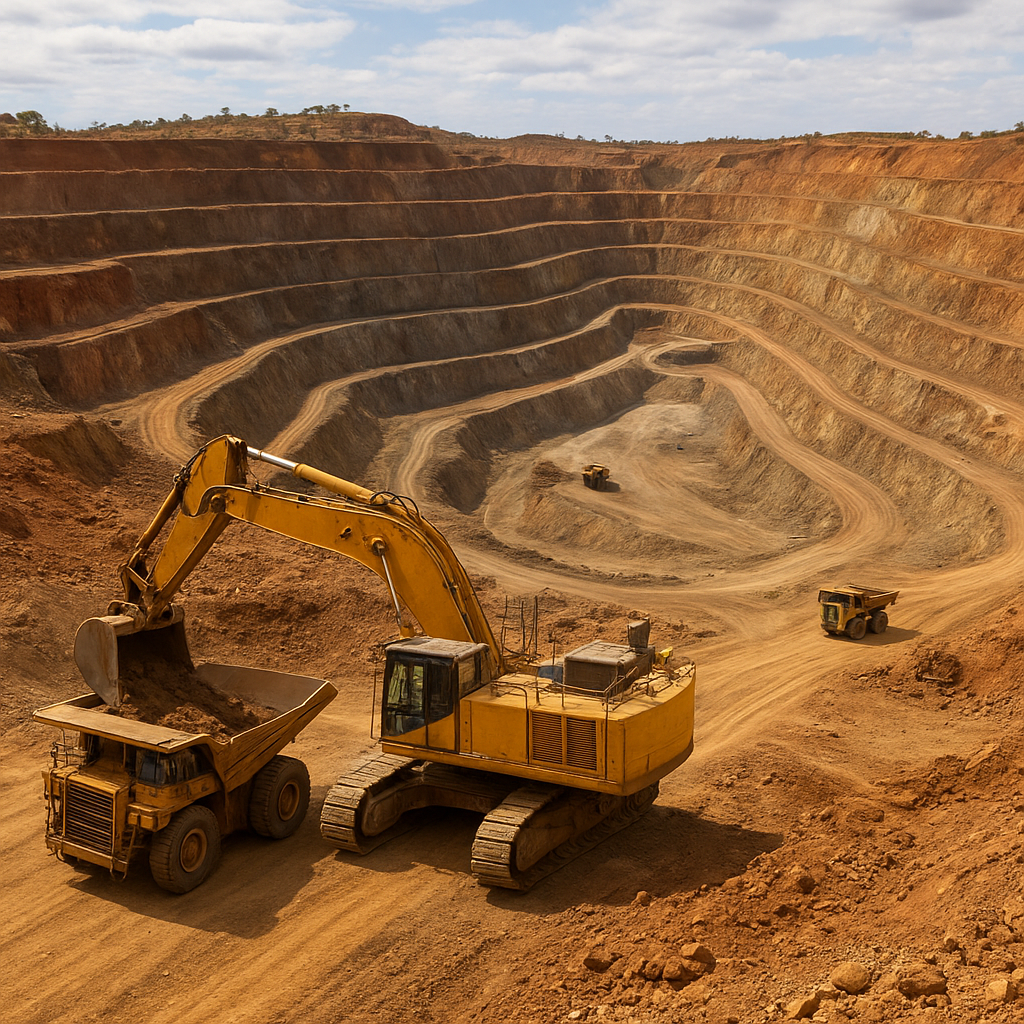
The Cowal Mine is one of the most significant gold operations in central New South Wales, Australia. Located in a landscape where agriculture, wetlands and mining converge, Cowal has become a focal point for discussions about resource development, environmental stewardship and regional economic growth. This article examines where the mine is located, what is extracted there, its economic importance and several aspects that many readers may find particularly interesting.
Location and geological setting
The Cowal Mine sits in central-western New South Wales, near the township of West Wyalong and adjacent to the Lake Cowal wetland system. It is positioned within the broader Lachlan Fold Belt, a geological province that hosts numerous mineral deposits across southeastern Australia. The region’s complex tectonic history and varied rock types provide favourable conditions for gold mineralisation.
Local geography and access
Cowal’s location is rural and accessible via sealed and unsealed roads that connect to regional service centres. The mine’s proximity to local towns means it relies on a regional workforce and existing transport infrastructure to move ore, supplies and personnel. Water supply, haul roads and power lines are all critical elements of the site’s infrastructure and have been developed in coordination with local authorities and stakeholders.
Geology and mineralisation
Gold at Cowal is hosted in a series of mineralised systems that are typically associated with intrusive and altered host rocks within the Lachlan Fold Belt. The deposit style combines features common to large open-pit gold operations, with disseminated and vein-hosted gold that can be efficiently mined through surface methods. Exploration in the district has identified numerous satellite targets and extensions that have helped sustain the mine’s life-of-operation.
What is mined and how it is processed
The primary commodity extracted at Cowal is gold. Mining at the site is carried out predominantly as an open-pit operation, using conventional truck-and-shovel techniques. Waste rock and ore are separated and transported to the processing facilities for treatment. Over the life of the operation, mining has progressed through a series of benches and stages designed to optimize ore recovery while managing waste placement and pit stability.
Processing flow and technologies
Once ore reaches the processing precinct, it is crushed and milled to liberate gold particles. The ground ore typically goes through conventional gold processing circuits such as gravity concentration combined with carbon-in-leach (CIL) or carbon-in-pulp (CIP) systems. These methods are industry-standard for moderate- to large-scale operations and allow for effective recovery of gold from low- to medium-grade ore. Tailings generated by processing are managed in engineered storage facilities with containment systems and monitoring.
Metallurgical performance and improvements
Metallurgical recovery and processing throughput are central to the mine’s economics. Over time, operators have implemented improvements to grinding efficiency, reagent use and recovery techniques to increase gold yields and reduce costs. Ongoing process optimisation, maintenance of the processing plant and capital investment in new technologies are typical features of operations seeking to extend mine life and improve margins.
Economic significance
Cowal contributes to the regional and national economy in several ways. At a direct level, the mine provides employment for local and fly-in fly-out workers, creating hundreds of jobs across mining, processing, maintenance and administration roles. Indirectly, the mine supports a wide range of suppliers—from contractors and equipment vendors to catering and accommodation providers—stimulating the broader service sector in central New South Wales.
Local and regional impacts
- Job creation and skills development for local communities, including training and apprenticeship pathways.
- Contracting opportunities for regional businesses in haulage, civil works and environmental monitoring.
- Royalties and taxes paid to state and federal governments that fund public services and infrastructure.
- Community investment initiatives such as local sponsorships, education programs and support for indigenous enterprises.
Revenue from gold sales contributes to export earnings and increases the tax base, which is particularly meaningful during periods of strong gold prices. The scale of production at Cowal has positioned it as an important asset in the portfolios of its owners and a notable contributor to Australia’s standing as a major gold-producing nation.
Investment, ownership and mine life
Cowal has attracted investment for exploration, stage expansions and processing upgrades over its operating history. Ownership changes and corporate strategies influence capital allocation, exploration focus and production targets. While mine life is finite, ongoing exploration of nearby deposits and improvements in processing economics have historically extended operations beyond initial forecasts. Decisions about further investment balance regulatory approvals, economic returns and social licence considerations.
Environmental management and community engagement
Mining near sensitive environments such as wetlands raises important environmental and cultural considerations. The Cowal operation has been the subject of public attention partly because of the adjacent Lake Cowal, which supports native birdlife and wetland habitats. Effective environmental management at the site addresses water use, biodiversity, dust, noise and rehabilitation commitments.
Water and biodiversity
Water management is a critical element of operations in this region. The mine implements storage, treatment and monitoring systems to minimise impacts on surface and groundwater. Additionally, biodiversity offset programs have been established to protect and enhance habitat values both on and off site. These programs may include revegetation, fauna management and long-term monitoring to ensure commitments are met.
Cultural heritage and indigenous engagement
The lands around Cowal are part of the traditional country of local indigenous communities. Engagement with traditional owners and other local stakeholders forms a key part of the project’s social licence to operate. This engagement typically includes cultural heritage surveys, collaborative land management approaches, employment and procurement targets designed to benefit indigenous businesses, and support for cultural preservation initiatives.
Rehabilitation and closure planning
From the outset, modern mines are required to plan for closure and rehabilitation. At Cowal, closure plans outline how disturbed areas will be reshaped, capped and revegetated to support post-mining land uses such as grazing or conservation. Progressive rehabilitation during the life of the mine reduces the overall footprint and demonstrates a commitment to returning land to sustainable uses after extraction ceases.
Social and regulatory context
Operating a major mine in Australia involves navigating a detailed regulatory environment. Permits and approvals address land use, water rights, environmental protection, cultural heritage and worker safety. Community consultation is often a legal and practical requirement; ongoing dialogue helps operators identify concerns, implement mitigation measures and foster local partnerships.
Community programs and benefits
- Educational partnerships and scholarships to support local students and build future workforce capacity.
- Health and safety initiatives for employees and contractors that extend into community health programs.
- Local procurement policies designed to maximise regional economic benefits.
- Support for local infrastructure projects and community events that strengthen social ties.
These types of programs aim to ensure that benefits are distributed locally and that the community retains a voice in how operations proceed and conclude.
Interesting aspects and lesser-known features
Several features of Cowal make it notable beyond its production statistics. The interface between mining and the Lake Cowal wetland has made the site a case study in balancing resource development with environmental protection. The mine’s biodiversity offset and habitat protection efforts have drawn attention as examples of how industry and conservation objectives can be negotiated.
Technological and operational innovations
To remain competitive, Cowal has pursued process improvements and efficiency gains. These can include optimised truck cycles, fuel-saving initiatives, improved grinding circuits and better reagent management in the processing plant. Adopting best-practice tailings management and progressive rehabilitation methods also reduces long-term environmental risk and can lower closure liabilities.
Research, exploration and future potential
Exploration continues to be an important part of the mine’s outlook. Discovery of satellite deposits and extensions to known ore bodies can materially extend mine life and change development plans. Research into metallurgical recovery, ore characterisation and geotechnical stability supports safer and more profitable extraction.
Community stories and cultural intersections
Local stories about the mine often focus on the balance between jobs and environment, the pride of working in a complex industrial operation, and the partnerships that form between the company, landholders and indigenous groups. The mine’s presence has reshaped local economies, provided career pathways and stimulated new business opportunities in central-western New South Wales.
Conclusion
The Cowal Mine is a major Australian gold operation that illustrates many dimensions of modern mining: technical complexity, significant economic contribution, extensive environmental oversight and active community engagement. Its location near Lake Cowal and West Wyalong places it at the intersection of agriculture, conservation and industry. Through ongoing exploration, process optimisation and careful management of social and environmental responsibilities, Cowal will likely continue to be an important asset within Australia’s mining landscape while serving as an example of the trade-offs and responsibilities associated with extracting valuable mineral resources.

