Coral as an organic gemstone occupies a special place at the intersection of natural history, art and culture. Formed by living organisms, some species of coral create durable, vividly colored material that has been prized for millennia as beads, amulets and ornamental objects. This article explores the biology, geography, uses and issues surrounding coral as a gem: where it occurs, how it is used in human culture and commerce, and why modern concerns about sustainability and conservation shape its future.
Biology and Formation: What Makes Coral an Organic Gemstone
Unlike minerals that crystallize from molten rock or fluids, coral is the product of living colonies of tiny animals called polyps. These invertebrates build hard skeletons by secreting calcium carbonate, and when colonies die the skeletons remain, gradually forming solid masses suitable for carving and polishing. When the skeletons are compact, dense and colored, they may be cut or shaped as a gemstone. This is why coral is classified as an organic gem, alongside pearls, amber and ivory.
How coral grows
- Coral polyps live in colonies, connected by living tissue that circulates nutrients and symbiotic algae called zooxanthellae in many shallow-water species.
- Skeletons are built from layers of calcium carbonate, primarily in the form of aragonite or calcite depending on species and conditions.
- Over years or centuries, robust growth can yield dense branches, boulders or massive formations from which gem-quality material can be obtained.
Not all coral species yield material suitable for jewelry. Some are too brittle, porous or pale. The most sought-after corals, like the classic Mediterranean varieties, form relatively dense, uniform skeletons with intense color that take a high polish and hold detail when carved.
Where Coral Occurs: Global Distribution and Important Sources
Coral habitat spans tropical, subtropical and temperate seas. However, the varieties used as gemstones are concentrated in certain regions that historically supplied the global market.
Mediterranean and Atlantic
The Mediterranean Sea has been the classic source of gem coral for Europe for thousands of years. Species such as Corallium rubrum (commonly called Mediterranean red coral) produce dense, deeply colored branches used for beads and carved objects. Major historic centers for coral harvesting and craftsmanship include Italy (especially around Torre del Greco), Sardinia and parts of North Africa.
Pacific and Indo-Pacific
The Indo-Pacific is a rich source of a variety of corals used in jewelry. Red and pink corals are found around Japan, the Philippines, Taiwan and parts of China. Deep-sea corals from slope and seamount habitats produce different textures and hues; some species live at depths of hundreds to thousands of meters and grow more slowly, yielding material with distinctive structure and color.
Other regions
Temperate waters can produce coral suitable for decorative use as well — for example, certain cold-water corals used historically in northern Europe. However, the biggest commercial supplies remain the Mediterranean and Indo-Pacific regions.
Varieties, Colors and Gemological Properties
Coral used as a gemstone is valued for color, uniformity, density and ability to take a good polish. Key varieties reflect species and geographic origin.
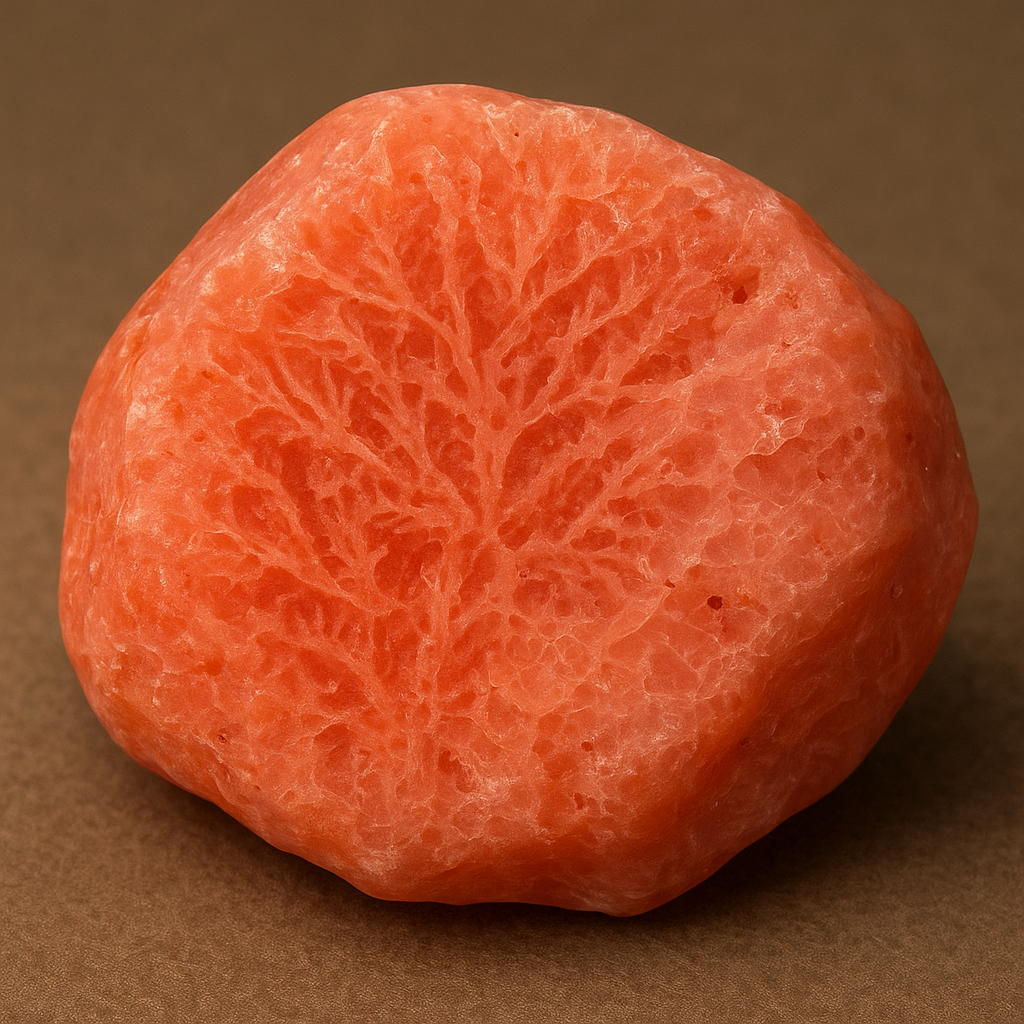
- Red coral — intense red to crimson, historically the most prized and often associated with Mediterranean sources.
- Pink coral — softer shades that are popular in modern jewelry, frequently from Indo-Pacific waters.
- White and black corals — pale or dark varieties used for contrast or carved applications; black coral is also an organic gem but comes from different taxa (Antipatharians) and is typically deep-water.
- Branching versus massive — branching corals provide luminous beads; massive corals offer larger blocks for carving.
Hardness typically ranges around 3 to 4 on the Mohs scale, making coral relatively soft compared with mineral gemstones. That softness allows for detailed carving but requires care when set in jewelry. Porosity and dyeing are considerations; some lower-grade coral is dyed or treated to enhance color, while high-grade natural pieces command premium prices.
Historical and Cultural Uses
Coral has played symbolic and practical roles across cultures. From ancient Mediterranean amulets to Asian talismans and European rosaries, coral has been imbued with meaning beyond mere decoration.
- Ancient civilizations: In ancient Rome and Greece, red coral was associated with protection, vitality and status. Amulets carved from coral were believed to ward off evil and illness.
- Religious objects: In Christian Europe, coral beads and rosaries were popular. In parts of Asia, coral features in Buddhist and Hindu ornamentation and ritual objects.
- Adornment and identity: In Mediterranean coastal societies, coral necklaces signified wealth and were included in bridal dowries. In some Himalayan and Tibetan cultures, coral is one of the “precious” stones used in traditional jewelry alongside turquoise and lapis.
Craftsmanship developed around coral, with centers such as Italy producing finely carved pieces — cameos, religious figures and delicate rosary beads — that became internationally prized. Coral’s warm, lively hues made it a favorite material for both folk jewelry and high-fashion pieces in various historical periods.
Modern Uses: Jewelry, Carving and Design
Today coral continues to be used in many forms:
- Jewelry — strands of beads, cabochons, inlays and carved pendants remain popular. Designers value coral for its color and organic origin.
- Carved objects — small sculptures, icons and decorative elements in luxury goods.
- Inlay work — used in combination with metals and other gems to create vivid contrasts, especially in Mediterranean and Asian craft traditions.
Contemporary jewelry designers also explore coral’s texture and natural forms, incorporating branch fragments and polished slices into avant-garde pieces. However, because coral is relatively soft, settings and designs often protect the stone from abrasion and chemicals.
Conservation, Regulation and Sustainability
Awareness of coral ecology and the environmental impacts of harvesting has increased dramatically. Coral reefs are ecosystems of exceptional biodiversity; removing living coral or indiscriminately harvesting skeletons can harm reef function and connected fisheries.
Threats to coral ecosystems
- Habitat degradation: pollution, sedimentation and destructive fishing methods degrade reef habitats.
- Climate change: warming seas, acidification and coral bleaching events threaten reef-building species worldwide.
- Overharvest: historical and modern harvesting for the gem market can reduce populations of commercially valuable species.
As a result, many countries implement regulations controlling coral harvest and trade. Internationally, some species used in the coral trade are listed under the Convention on International Trade in Endangered Species (CITES), which subjects them to export permits and monitoring. Responsible sourcing — including certification schemes, traceability and the use of farmed or salvaged material — is increasingly important for retailers and consumers.
Sustainable alternatives and practices
- Farmed coral: aquaculture techniques can produce coral for jewelry without damaging wild reefs, although not all gem species are easily farmed.
- Reclaimed material: using antique or recycled coral reduces pressure on contemporary populations.
- Substitutes: dyed shells, resins, and other organic materials may replace coral in some applications, though they lack the cultural authenticity of genuine coral.
Buyers and jewelers who prioritize sustainability also support community-based management where local fishers and artisans participate in regulated, low-impact harvesting and benefit economically from conservation-minded practices.
Care, Identification and the Marketplace
Understanding coral’s properties helps both consumers and professionals make informed decisions.
Care and maintenance
- Avoid exposure to acids, perfumes and household chemicals; these can damage the porous surface and alter color.
- Store coral jewelry separately in soft cloth to prevent abrasion from harder gems or metals.
- Professional cleaning: gentle soap, water and soft cloth are usually sufficient; avoid ultrasonic cleaners and steam treatments.
Identification and treatments
Because coral can be dyed or reconstructed, gemological testing may be required for high-value pieces. Characteristics such as growth patterns visible under magnification, reaction to hot needles (not recommended for consumers) and spectral analysis assist professionals in identification. Certification from reputable labs and clear provenance documentation increase buyer confidence.
Market trends
Trends fluctuate with fashion and ethical awareness. While demand for dramatic red pieces persists in some markets, there’s growing appreciation for softer pinks and unique deep-sea varieties. At the same time, informed consumers increasingly seek items with clear provenance and evidence of sustainable harvest, and antique coral often commands high prices because it avoids sourcing concerns.
Health, Symbolism and Myths
Throughout history coral has been associated with healing, protection and vitality. Many cultural traditions ascribe medicinal or protective qualities to coral jewelry and amulets. In modern alternative and metaphysical communities, coral is sometimes linked to emotional balance, courage and connection to the ocean.
While such symbolic uses are culturally meaningful, they are not a substitute for medical treatment. Scientific claims about therapeutic benefits lack rigorous evidence. Still, the persistence of coral imagery in ritual and ornamentation speaks to its deep symbolic resonance across time and cultures.
Interesting Facts and Lesser-Known Aspects
- Not all “red coral” is the same: taxonomy and regional differences produce a variety of hues and textures prized by collectors and carvers.
- Deep-sea corals can be extremely long-lived; some specimens are believed to be several centuries old, which is why deep-water harvesting is particularly sensitive.
- Cultural exchange routes helped spread coral artifacts: Mediterranean coral reached northern Europe and beyond via trade, while Asian coral traditions influenced jewelry styles across the Silk Road and maritime routes.
- Scientific research on coral skeletons provides valuable paleoenvironmental records: growth rings and chemistry can reveal past ocean conditions, temperature changes and ecological shifts.
The story of coral as a gemstone is not just about beauty; it is entwined with ecology, cultural history and emerging ideas about ethical consumption. Whether admired as a finely carved Mediterranean bead, a vintage heirloom or a responsibly sourced contemporary design, coral invites reflection on the connections between human creativity and marine life.