
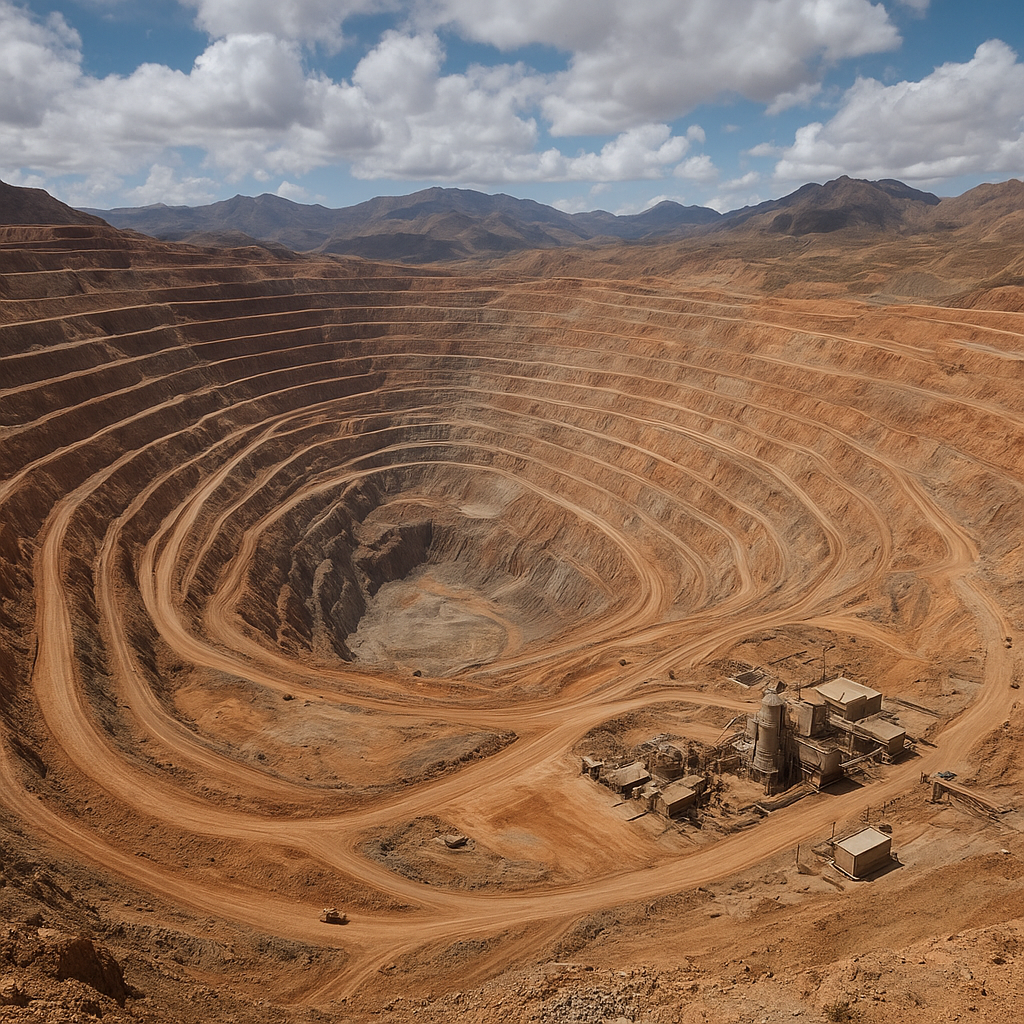
The Constancia Mine is a modern example of large-scale Andean mining development. Situated in the highlands of southern Peru, this open-pit operation has become an important producer of copper and associated metals while also illustrating the complex interplay between geology, industry, local communities and national economics. The following article examines where the mine is located, what is extracted there, its broader economic role and a number of noteworthy technical, environmental and social aspects that make Constancia a topic of continuing interest.
Location, Setting and Geological Background
Constancia lies in the mountainous region of the southern Peruvian Andes, within the administrative boundaries of the Cusco region. The deposit occupies territory in the province of Chumbivilcas, characterized by rugged topography, puna grasslands and communities living at relatively high elevations. The site’s remoteness required the developer to invest in access roads, power connections and logistics to move concentrate to national transportation networks.
Geologically, the deposit is a typical Andean porphyry-style copper system. Porphyry deposits are large, low- to medium-grade mineralized bodies associated with intrusive igneous activity; they are responsible for much of the world’s bulk copper production. At Constancia, mineralization occurs as disseminated and stockwork sulfide minerals within altered host rocks. In addition to base copper minerals, the deposit hosts by-product elements commonly associated with porphyries, including molybdenum, silver and traces of gold, which are recovered in the processing circuit and add value to the operation.
Key geological and geographic points:
- The orebody is a porphyry copper system typical of Andean mineral belts.
- It sits at high elevation, requiring adaptation for cold climate, remoteness and altitude.
- The surrounding terrain and hydrology shaped the mine design and infrastructure routes.
Mining Method, Processing and Products
Constancia is developed as an open-pit mine, which is generally the preferred method for large porphyry deposits because it allows the economical extraction of large, relatively low-grade mineralized volumes. Open-pit mining at Constancia involves staged pit benches, haul roads and a fleet of heavy equipment designed for high-capacity ore extraction and waste rock management.
Once mined, the ore is crushed and milled to liberate the sulfide minerals, then processed by flotation to produce a copper concentrate. Flotation concentrates the valuable sulfide minerals into a product suitable for smelting or further refining. In addition to the copper content, the concentrate typically contains recoverable amounts of molybdenum and precious metals such as silver and gold, either as separate concentrates or as credits to the sale of copper concentrate, depending on the operation’s flowsheet.
The processing plant and associated infrastructure are significant components of the site. They include:
- Crushing and grinding circuits sized for the ore’s mineralogy.
- Flotation cells and reagent systems to produce marketable concentrate.
- Thickening and filtration or tailings management systems for solids handling.
- Water management and recycle systems adapted to a highland environment.
By-products and material streams
While copper is the primary product, the economic profile of Constancia is enhanced by by-products. Recovery of molybdenum and precious metals raises the operation’s revenue per tonne of ore processed. The concentrate is then transported to smelters and refineries, entering global metals markets and contributing to export earnings for Peru.
Economic Importance and Regional Impact
The Constancia Mine is a significant economic actor at several scales: local, regional and national. For the Cusco region and surrounding communities, the mine has created direct and indirect employment opportunities, stimulated local procurement, and prompted investments in roads, communications and support services. For the national economy, the operation contributes to export volumes and foreign exchange earnings, reinforcing Peru’s position among the world’s leading copper producers.
Economic impacts can be grouped into direct, indirect and fiscal benefits:
- Direct: Employment of local and national workers, payroll taxes and benefits, and procurement contracts for services and supplies.
- Indirect: Growth of local businesses, improved logistics corridors and increased demand for accommodation, food and transport services.
- Fiscal: Royalties, corporate taxes, and negotiated contributions to regional development funds that support roads, schools and health services.
Project proponents often enter formal agreements with regional authorities and communities to ensure a flow of benefits. These agreements can include infrastructure investments, community development programs, and employment targets intended to leave a positive legacy beyond the mine’s operating life. The ability to translate mining revenues into lasting development is a frequent topic of public debate and policy attention.
Social and Environmental Considerations
Large-scale mining in the Andes inevitably raises complex social and environmental questions. Constancia’s location in a fragile highland ecosystem requires careful management of water, tailings and biodiversity risks. The operation must design tailings storage facilities to withstand seismic activity and heavy seasonal precipitation, and manage water withdrawals to avoid harming downstream users and ecosystems.
Socially, the mine’s interaction with local communities has been a key element of its operating environment. Constructive engagement, transparent benefit-sharing mechanisms and meaningful consultation processes are essential components of the social license to operate. At Constancia, as with many Andean projects, there have been moments of tension and negotiation around land use, perceived distribution of benefits and environmental safeguards. These dynamics illustrate the broader challenge faced by modern mining projects: reconciling large capital-intensive operations with the livelihoods and expectations of nearby populations.
Noteworthy environmental and social strategies:
- Water stewardship programs that prioritize sustainable use and monitoring of surface and groundwater.
- Programs to support local agriculture, education and small business development as alternatives and complements to mining employment.
- Investment in transport and power infrastructure that can serve both the mine and local communities.
- Monitoring and mitigation plans for biodiversity, erosion and slope stability at high elevations.
Interesting Technical and Operational Aspects
Several features make Constancia technically interesting to mining engineers, geologists and industry observers. First, the operation demonstrates how a modern porphyry deposit can be developed in a remote, high-altitude setting through a mix of engineering, logistics and community engagement. The design of the processing plant and tailings systems reflects adaptations to climate and seismicity typical of the Andean environment.
Second, Constancia’s product mix—dominated by copper but with meaningful molybdenum and precious metal credits—showcases how by-products can improve project economics and resilience to copper price cycles. Recovering multiple metals from the same orebody is a widespread approach in porphyry mining that smooths revenue volatility and enhances long-term viability.
Third, the mine highlights the growing importance of integrated supply chains for mineral exports. Concentrate produced at Constancia requires transportation, sometimes across challenging terrain, to reach ports and smelters. The logistics experience at the site provides case studies in transport optimization, community road-sharing agreements and the role of infrastructure in unlocking mineral resources.
Technological trends and innovation
- Use of advanced flotation reagents and process control to maximize recovery and concentrate grade.
- Fleet management and digital monitoring systems to improve productivity and reduce operating costs.
- Progressive rehabilitation of disturbed areas and use of native vegetation in reclamation design.
Governance, Royalties and Local Agreements
Mining governance is a critical factor determining how benefits from mineral extraction are shared. At Constancia, as with many modern projects, contracts and agreements govern fiscal terms, royalty payments and specific social investments. These mechanisms are intended to ensure that a portion of the mine’s wealth supports regional development in the long term.
Royalty regimes and taxation in Peru aim to capture a share of mining profits for public benefit, but distribution and effective use of these funds depend on local institutions and governance capacity. Successful local agreements often combine infrastructure commitments (roads, clinics, schools), technical training and employment pathways for local residents, and mechanisms to resolve conflicts amicably. The mine’s developers have publicized investments in community projects and school and health facilities as part of their operating commitments.
Future Outlook and Broader Significance
Looking forward, Constancia remains an example of mid-21st-century mining in South America. Its continued operation depends on commodity prices, orebody performance, successful environmental management and stable community relations. Potential future directions include optimization projects to extend mine life, exploration for satellite deposits to augment reserves, or processing improvements to increase metal recoveries.
At a broader scale, the mine is a reminder of copper’s central role in the global energy transition. As demand for electrification, renewable energy technologies and electric vehicles grows, copper’s importance—and therefore the strategic significance of operations such as Constancia—may increase. This could translate into renewed investment interest in the region, while also intensifying national debates about how to maximize social and economic benefits from mineral wealth.
Constancia captures the multi-faceted nature of modern mining: a geological resource transformed through engineering into a major economic input, and entwined with social, environmental and governance challenges that define resource development in the Andes and beyond.

