
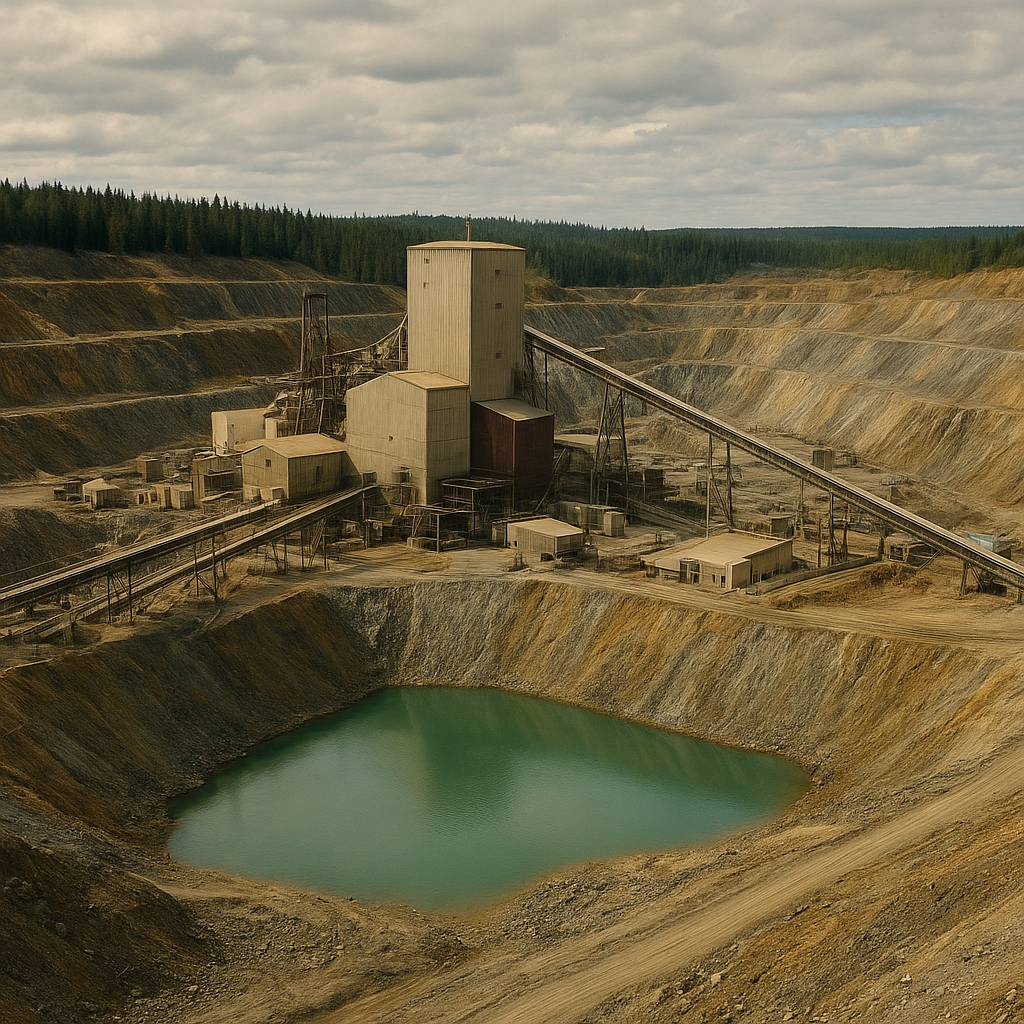
The Con Mine, nestled on the outskirts of what became the city of Yellowknife, is one of Canada’s most emblematic gold operations. For much of the 20th century it shaped the local landscape, economy and identity of the region that is now the Northwest Territories. Although the mine is no longer producing, its story — from exploration and extraction to closure and environmental challenges — remains a vivid chapter in northern mining history. This article explores Con Mine’s location and geology, its operational history and production, its economic and social impact, the environmental legacy left behind, and a collection of lesser-known but compelling facts.
Location and Geological Setting
Con Mine sits on the north shore of the eastern arm of Great Slave Lake, a short distance from downtown Yellowknife. The mine occupies ground within the Yellowknife greenstone belt, a geological package of ancient volcanic and sedimentary rocks that host several gold deposits across the region. These greenstone belts, formed in the Archean eon, are known globally for their ability to concentrate gold in quartz veins and associated sulfide minerals.
The deposit exploited by Con Mine was primarily an underground vein-hosted system. Ore occurred as gold-bearing quartz veins and stockworks within altered volcanic and sedimentary sequences. Mining required the development of deep shafts and lateral workings to access economic concentrations of ore. Over decades of operation, a complex network of tunnels, stopes and service drifts extended beneath the surface, reflecting both the vertical extent of mineralization and the evolution of underground mining technology.
Geological controls on mineralization
Gold mineralization in the Yellowknife area, including Con Mine, tends to be structurally controlled. Faults, shear zones and fold hinges provided conduits for hydrothermal fluids that deposited gold, quartz and sulfide minerals. The interplay between host rock competence, structural architecture and fluid chemistry created pockets of higher-grade ore that miners targeted. The mining strategy was therefore a combination of selective high-grade stoping and bulk methods where lower-grade zones warranted a different approach.
History and Production
The Con Mine began operations in the late 1930s and continued to produce gold intermittently through much of the next six decades. It was one of the earliest and most important mines to establish Yellowknife as a permanent community rather than a seasonal outpost. The early years were characterized by labor-intensive underground development, with miners relying on drilling, blasting and hand-tramming before mechanization took hold.
As operations matured, the mine modernized: rock handling, hoisting and processing facilities were upgraded, and new shafts and levels extended the mine deeper. The installation of crushing and milling facilities on site enabled the processing of ore to recover gold, while evolving metallurgical techniques improved recoveries and operational efficiency. Over its operational life, Con Mine produced significant quantities of gold and contributed to the national supply during times when northern production was proportionally more important to Canada’s overall output.
The mine’s lifecycle included periods of ramped-up activity during times of strong metal prices, interspersed with slowdowns and eventual closure in the early 21st century. The closure marked the end of active mining at Con, but the site’s physical infrastructure and cultural influence remained. Many of the mine’s underground workings were left in situ, and surface infrastructure such as mill buildings, tailings beaches and service roads continued to define the landscape.
Key phases of development
- Early exploration and discovery, leading to rapid underground development.
- Expansion and mechanization as the mine matured, including deeper shaft sinking and installation of modern crushers and mills.
- Periods of high production that helped sustain the local economy and support community services.
- Late-life operations focused on remnant ore, reclamation planning and eventual shutdown.
Economic and Social Impact
Con Mine’s contribution to the regional economy extended far beyond the ounces of gold it produced. It provided stable employment for generations of miners, mill workers, maintenance crews and administrative staff. The regular payroll generated economic activity that supported retail, construction, transportation and service sectors in Yellowknife and surrounding communities.
The presence of an industrial employer of Con Mine’s magnitude helped justify investments in public infrastructure: better roads, expanded air services, health and educational facilities, and municipal utilities. In many northern communities, the costs of providing year-round services are high; a large employer can alter the economics of public investment, making it feasible for territorial and federal governments to commit to improved services.
Beyond direct employment and infrastructure, Con Mine supported secondary industries. Local contractors benefited from ongoing mine maintenance and development contracts, suppliers provided materials and equipment, and local entrepreneurs supplied goods and services to a steadily employed workforce. The mine also fostered a skilled labor force in the region, producing generations of tradespeople whose expertise was transferable to other mining projects across Canada and internationally.
Community dynamics and culture
One of the defining social aspects of Con Mine’s presence was the emergence of a mining culture in Yellowknife. Company families, shift schedules and a shared occupational identity influenced social life. Recreational clubs, sports teams and local events frequently had strong ties to the mining community. While mining provided opportunity, it also shaped social rhythms—shift work, rotational employment or seasonal variations affected family life and community participation.
Environmental Legacy and Remediation
Like many historic mines, Con Mine left an environmental legacy that required attention after closure. Tailings, waste rock piles, and abandoned underground workings can present long-term environmental risks if not managed properly. Potential concerns include the leaching of metals into surface water and groundwater, physical hazards of open workings, and the long-term stability of tailings beaches and engineered structures.
Remediation efforts typically aim to reduce environmental risk, stabilize the site and make the land safe for future uses. At Con Mine, actions taken have included capping and regrading of waste rock piles, monitoring and management of surface water pathways, and securing or flooding underground openings where appropriate. Ongoing environmental monitoring programs are usually established to track water quality, sediment transport and ecological recovery in the surrounding landscape.
Remediation in northern climates faces unique challenges: permafrost (where present), extreme seasonal variations, remote logistics and short construction seasons all influence planning and costs. Reclamation strategies must account for revegetation under harsh climatic conditions and ensure that remedial measures remain effective as climate patterns change. In many northern mine sites, engagement with Indigenous communities, territorial agencies and federal regulators is an essential part of designing and implementing long-term closure plans.
Long-term stewardship and monitoring
- Establishment of monitoring stations for water and sediment quality.
- Periodic inspections of capped waste and tailings containment to assess erosion and integrity.
- Adaptive management frameworks that allow remedial strategies to evolve as new information arises.
Interesting Aspects and Lesser-Known Details
Several facets of Con Mine’s story make it particularly interesting beyond the straightforward narrative of extraction and closure. These features highlight technological adaptation, local heritage and the interplay between resource development and northern identity.
- Iconic infrastructure: Over the decades the mine’s headframes and mill structures became landmarks visible from parts of Yellowknife. These industrial silhouettes helped define the town’s skyline and serve as visual reminders of its mining roots. Some elements of mining infrastructure have been preserved or documented for heritage purposes.
- Adaptation to northern conditions: Operating in a subarctic environment required innovations in logistics, equipment maintenance and worker safety. Cold-weather procedures, winter haul road planning and careful scheduling of major surface works to coincide with favorable seasons were all part of successful operations.
- Underground complexity: The subterranean footprint left by Con Mine is vast. Miners navigated a three-dimensional maze of drifts, raises and stopes that reached considerable depth. These underground spaces often reveal a layered history of mining techniques as older levels were re-entered and modernized.
- Training ground for northern talent: Many individuals who began their careers at Con Mine went on to work across the Canadian mining industry. The mine functioned as a training ground for underground skills, mill operations and mine management in a northern context.
- Heritage and storytelling: Oral histories from former miners, archival photographs and artifacts tell the human story of the mine: long shifts, winter darkness, the camaraderie of crews and the determination to operate in a remote environment. These stories have become an important part of Yellowknife’s local history.
The Con Mine remains a chapter in Canada’s broader mining narrative: a case of resource discovery shaping settlement patterns, industrial development, and community identity in the northern reaches of the country. Its physical and cultural legacies persist — in the reclaimed land, in environmental monitoring programs, and in the memories of those who worked there. For anyone interested in the intersection of geology, industry and northern life, Con Mine offers a multifaceted example of how a single mineral deposit can influence a region for generations.

