Colemanite is a mineral that has played a quiet but indispensable role in the global supply of boron compounds. As a hydrated calcium borate, it occupies a specific niche in both the geological record and in modern industry. This article examines the mineral’s **structure**, natural **occurrence**, methods of **extraction** and **processing**, and the many **applications** that rely on the boron it contains. Along the way, we will explore associated minerals, specimen-collecting notes, and a few lesser-known facts that highlight why colemanite remains interesting to geologists, industrial chemists, and mineral collectors alike.
Properties and crystal chemistry
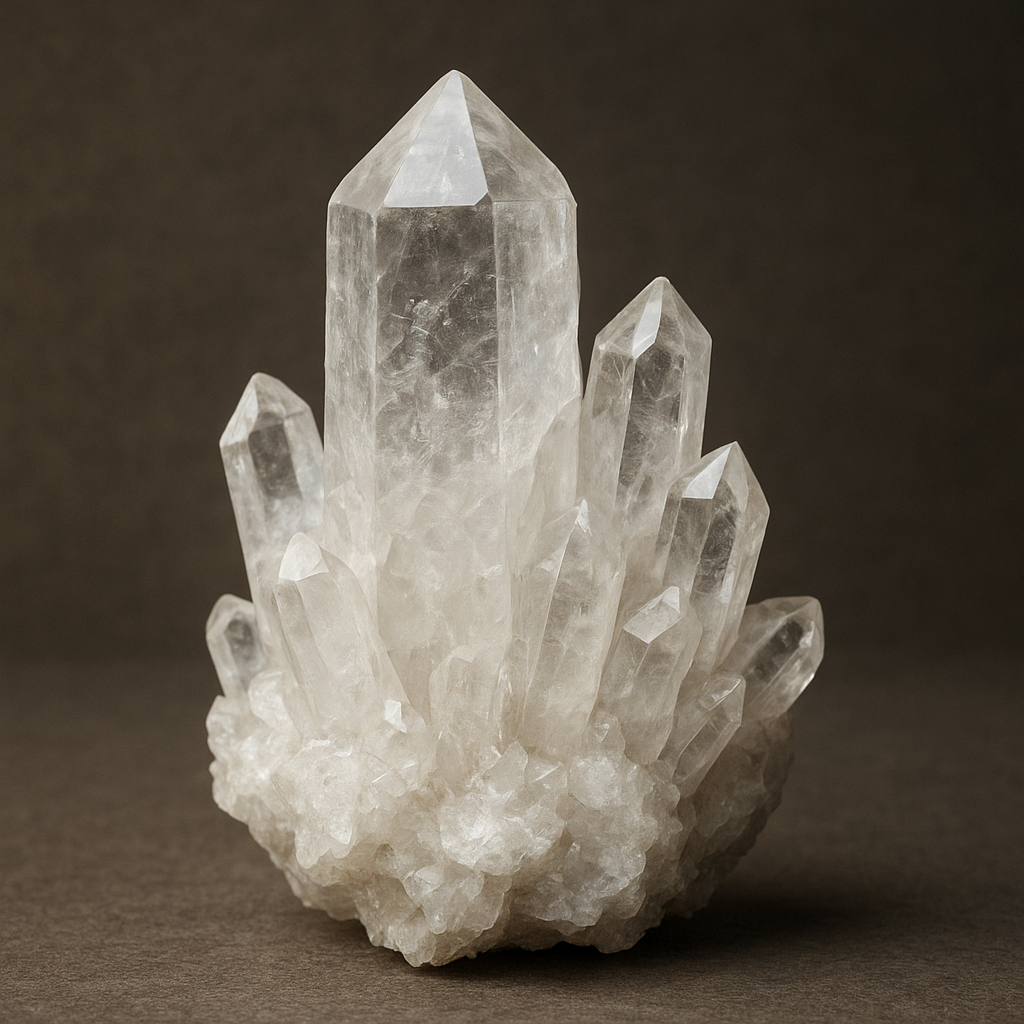
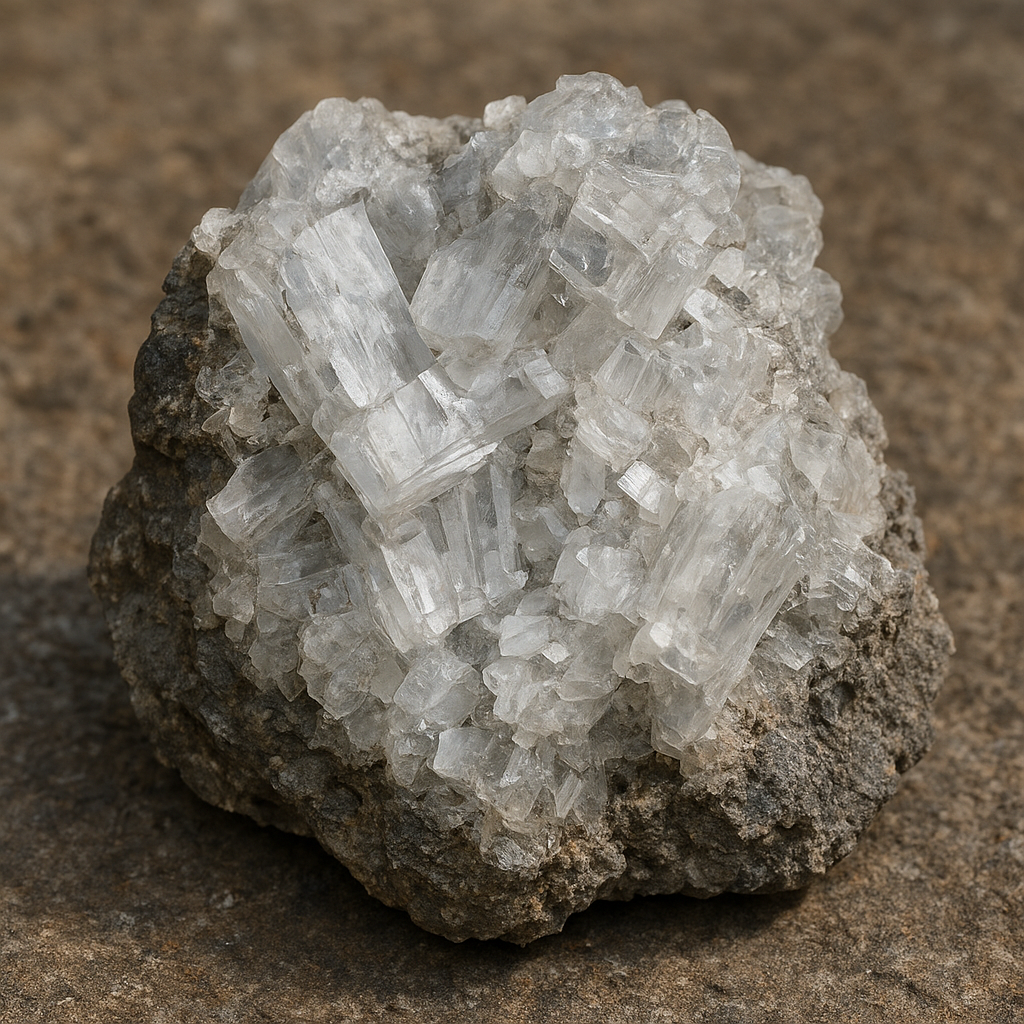
Colemanite is chemically recognized as a hydrated calcium borate, typically written in mineralogical literature as Ca2B6O11·5H2O. It is one of several naturally occurring borate minerals that store boron in an oxidized form, combined with calcium and water molecules in a complex structure. The mineral commonly forms in evaporitic environments where boron is concentrated by the evaporation of saline waters. Its crystals range from prismatic to acicular and may also appear as granular or nodular masses.
Key physical characteristics include a generally colorless to white appearance, though impurities can tint colemanite pale shades of brown, pink, or yellow. It often displays a vitreous to pearly luster and has a Mohs hardness around 4–5, making it softer than many rock-forming minerals but hard enough to withstand handling as a specimen. The specific gravity is relatively low for an industrial ore, typically near 2.4–2.5.
Crystal structure and dehydration behavior are notable for their practical implications. When heated, colemanite loses water and undergoes structural changes that make it amenable to thermal processing: calcination breaks the hydrated lattice down to form boron oxide species that are more readily converted into commercial borates. This thermal reactivity underpins many refining routes used in industry.
Where colemanite occurs and how it forms
Colemanite forms primarily in closed-basin evaporitic settings where boron-bearing waters concentrate through evaporation and interact with calcium-bearing host rocks. There are two common geological scenarios:
- Evaporite basins with alternating episodes of lake flooding and desiccation, where boron salts precipitate and later evolve into complex borates through diagenesis and alteration.
- Hydrothermal or low-temperature diagenetic alteration of earlier borate minerals such as ulexite and borax, producing colemanite as part of the paragenetic sequence in the deposit.
Significant colemanite-bearing deposits tend to form in arid to semi-arid climates where episodic lakes and playas concentrate dissolved elements. The mineral is commonly found together with other borates and evaporite minerals such as borax, ulexite, kernite, tincalconite, halite, and gypsum. These mineral associations are typical of large evaporite basins where repeated cycles of precipitation and alteration produce a diverse borate assemblage.
Prominent localities have global economic importance. Major historical and modern occurrences include deposits in western North America (notably in parts of California and Nevada), and extensive and economically crucial deposits in Turkey. Turkey, in particular, hosts some of the world’s largest borate deposits and has been a major source of colemanite and other borates for decades. The geology of these regions reflects long-lived evaporitic basins and favorable tectonic settings that have trapped and concentrated boron.
Mining and processing
Extraction of colemanite typically involves open-pit mining in shallow, laterally extensive deposits. Because colemanite and associated borate minerals often occur within layered evaporite sequences close to the surface, surface mining is cost-effective and widely used. Standard steps include drilling, blasting or ripping, and haulage to primary crushers where the rock is reduced to manageable sizes for further processing.
Processing aims to liberate the borate mineral from gangue and to convert the naturally occurring borate into forms suitable for industrial uses. Typical processing steps include:
- Crushing and grinding to free colemanite from impurities and to increase surface area for subsequent chemical reactions.
- Thermal treatment (calcination) to dehydrate and partially decompose the mineral, producing reactive boron oxide or metaborate phases.
- Leaching or chemical conversion, in which the calcined or raw ore is treated with water or alkaline solutions (such as sodium carbonate) to form soluble borate compounds (e.g., sodium borate solutions) that can be purified by precipitation or evaporation.
- Purification and conversion to commercial products like boric acid (H3BO3), borax (sodium tetraborate decahydrate), and other specialty boron chemicals.
Refining routes vary by deposit chemistry and desired end products. Some operations emphasize producing refined boric acid for the chemical industry, while others focus on sodium borates for detergents and glass manufacturing. The thermal behavior of colemanite—its controlled loss of water and conversion to more reactive oxides—is central to efficient processing and affects energy consumption and equipment design in plants.
Industrial uses and economic importance
Colemanite’s chief value lies in its role as a **source** of **boron**, a critical element for many modern industries. Boron compounds derived from colemanite and other borates are indispensable in multiple applications:
- Glass and ceramics: Boron oxides lower melting temperatures and improve thermal shock resistance, chemical durability, and optical properties. Borosilicate glass—used in laboratory glassware, cookware, and specialty optics—relies on boron additions to achieve its characteristic stability.
- Fiberglass and insulation: Borates act as flame retardants and enhance thermal stability in glass fiber products and insulation materials.
- Detergents and cleaners: Sodium borates contribute to alkalinity and buffering in many formulations; though their use in detergents has declined in some regions due to regulatory changes, they remain important in specialty cleaners and industrial applications.
- Agriculture: Boron is an essential micronutrient for plants. Borates and boric acid produced from colemanite are used in controlled amounts in fertilizers and micronutrient blends to correct boron deficiencies in soils.
- Metallurgy and enamel frits: Boron compounds act as fluxes in metal joining and welding and are components of enamels and glazes to lower melting points and improve adhesion.
- Specialty chemicals: Boron is a building block for numerous chemical products—flame retardants, boron-containing polymers, and precursors used in pharmaceuticals and agrochemicals.
- Neutron absorption: Boron-10 isotope is valuable as a neutron absorber in nuclear reactors and shielding. While colemanite is not used directly as reactor material, it is a primary source for boron extraction that can eventually supply nuclear-grade boron products.
The diversity of applications means that global demand for boron compounds is broadly correlated with construction, agriculture, and high-tech manufacturing. Because colemanite yields a high proportion of recoverable boron, deposits that contain it are economically attractive when properly located and managed.
Associated minerals, specimen features, and collecting
In the mineral-collecting world, colemanite is appreciated for a variety of crystal habits and the striking associations it forms. Collectors prize well-formed prismatic crystals, delicate acicular aggregates, and botryoidal or stalactitic masses. The mineral may be transparent to translucent, and internal crystal forms can exhibit attractive striations or cleavage planes.
Colemanite frequently occurs alongside:
- Ulexite — a sodium calcium borate noted for its optical fiber-like behavior.
- Borax and tincalconite — sodium borates that are common evaporite minerals in borate-bearing basins.
- Kernite and probertite — other calcium-sodium borates with similar paragenesis.
- Evaporite minerals such as gypsum and halite, reflecting the saline depositional environment.
An interesting property for collectors: some colemanite specimens may fluoresce or phosphoresce under ultraviolet light, revealing hidden contrasts and making them popular in museum displays. The mineral can also develop attractive alteration patterns as it dehydrates or interacts with secondary fluids, producing unique textures and color variations that are sought after by enthusiasts.
Environmental and safety considerations
While boron is essential at trace levels for plant growth and is widely used in consumer and industrial products, excessive boron can be phytotoxic. This means that mine waste and effluent from processing plants require careful management to prevent elevated boron concentrations in soils and surface waters. Modern operations implement water recycling, tailings management, and monitoring programs to limit environmental impacts.
For human handling, colemanite as a raw mineral presents low immediate health hazard in solid form, but dust inhalation during crushing and grinding can pose respiratory risks typical of mineral dusts. Standard industrial hygiene—dust suppression, ventilation, and personal protective equipment—reduces exposure. Additionally, workers involved in chemical processing must follow protocols to manage caustic or hot solutions used to extract borates.
Research, innovations, and lesser-known uses
Research into boron materials continues to expand colemanite’s indirect role in new technologies. Examples include:
- Advanced ceramics and composites that leverage boron-containing phases for improved high-temperature performance.
- Novel flame retardant systems in polymer composites where borates provide both flame suppression and char formation.
- Potential niche uses in waste immobilization and chemical stabilization, where borate matrices help sequester problematic elements.
Academic and industrial research also explores more efficient extraction and refining methods to reduce energy use and waste. Given the global distribution of boron demand and the concentration of high-quality deposits in a few regions, improving recovery rates from ores like colemanite has both economic and sustainability incentives.
Interesting facts and historical notes
– Colemanite’s discovery and early exploitation are part of the broader history of borax and borate mining in arid regions, where early miners and entrepreneurs developed techniques to harvest evaporite minerals for industrial use. The mineral has been a strategic commodity in certain periods because of its role as a boron source.
– In museum and educational settings, colemanite often serves as an example of minerals formed in evaporitic environments and the geochemical concentration of metalloids like boron. Its crystalline forms, dehydration features, and associations with other evaporite minerals illustrate key processes in sedimentary geology.
– On a microscopic and spectroscopic level, colemanite remains of interest for crystallographers and mineralogists studying borate polyhedral units and hydrogen-bonding networks that stabilize hydrated mineral structures.
Concluding thoughts
Colemanite occupies a unique place at the intersection of geology, industry, and collecting. As a useful and abundant source of **boron**, it supports a wide range of modern technologies—from **glass** and **ceramics** to agricultural micronutrients and specialty chemicals. Its formation in evaporite basins ties it to distinctive geological environments and deposit types, while its properties and processing routes make it an important raw material for borate production. Whether encountered as a crystalline museum specimen or as the feedstock in a processing plant, colemanite exemplifies how a single mineral can have diverse roles across science and industry.