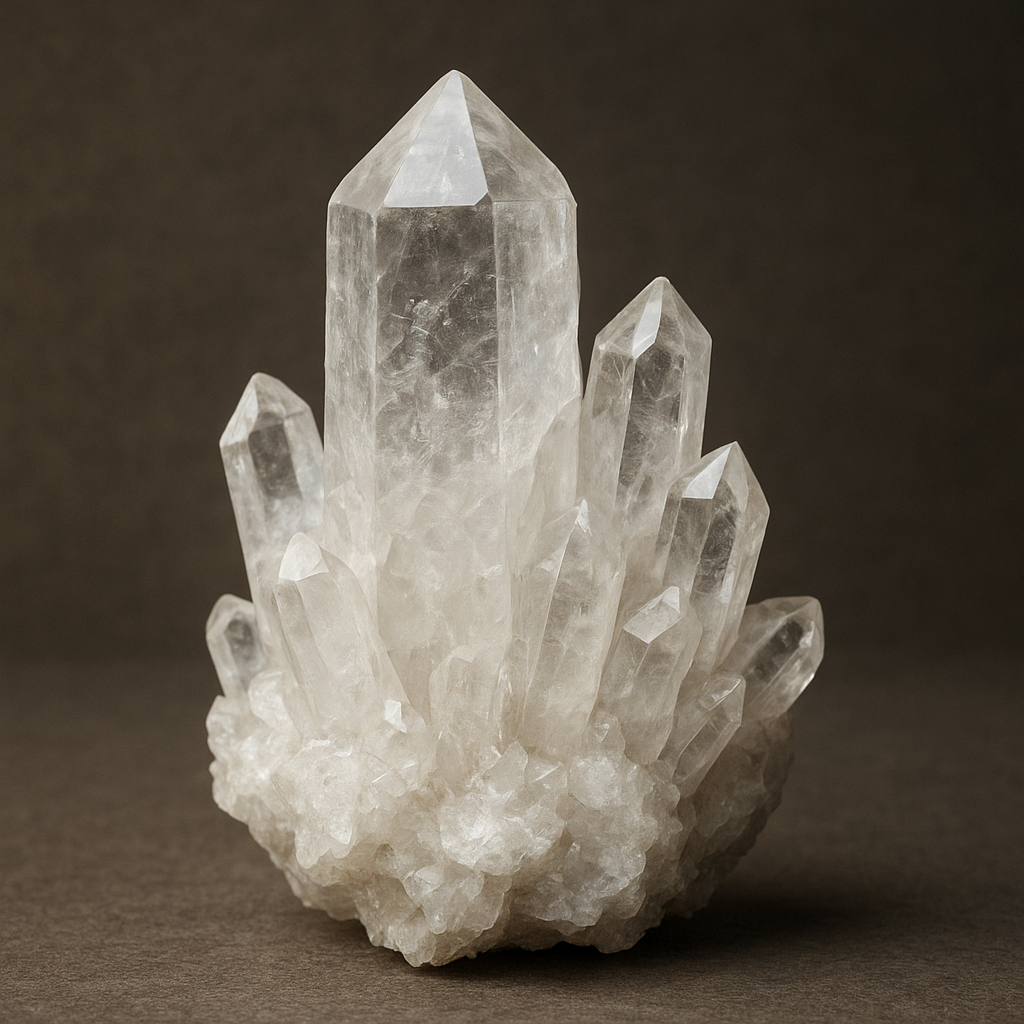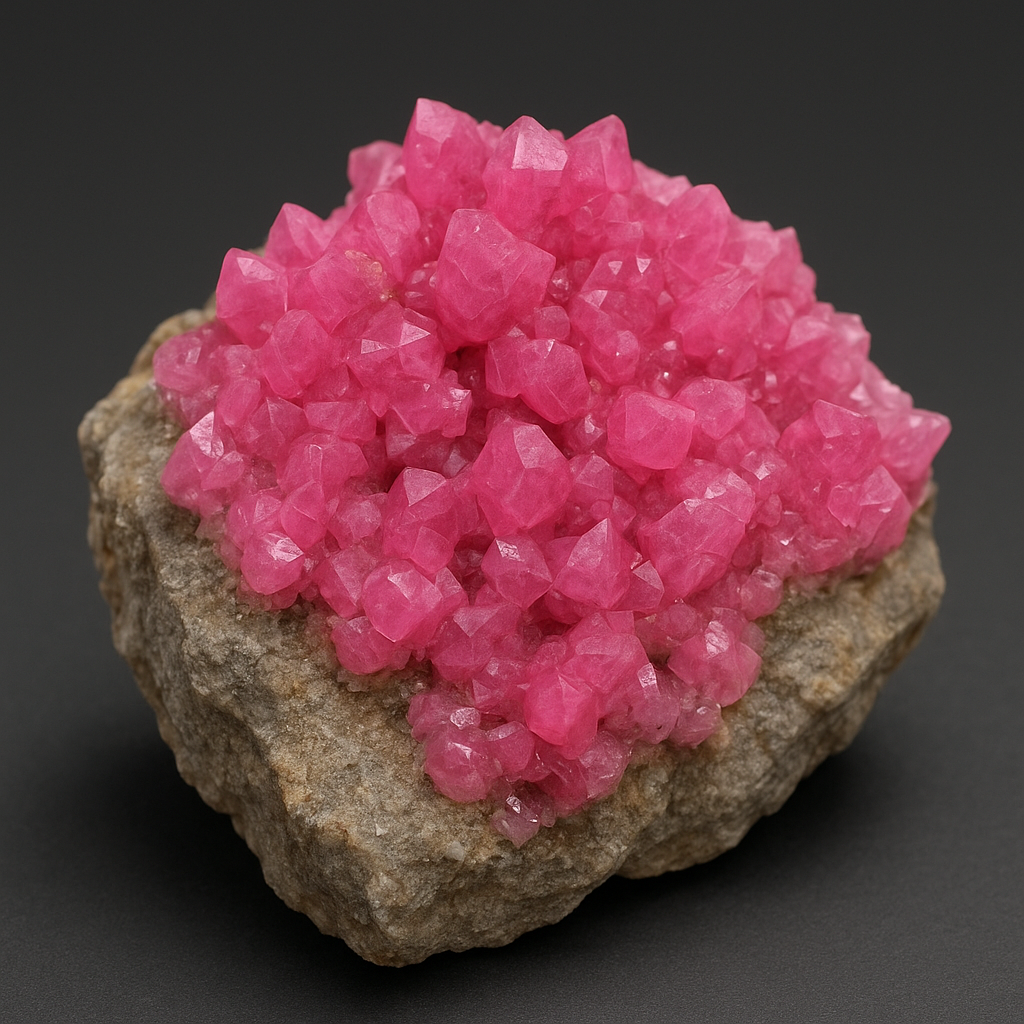
Cobaltoan calcite is a striking variety of the common mineral calcite that owes its vivid pink to magenta hues to the presence of trace cobalt. Although it shares many physical properties with ordinary calcite, its coloration, associations and the geological environments in which it forms make it a favorite among mineral collectors, lapidaries and researchers. This article explores where cobaltoan calcite occurs, how it forms, how it is identified and used, and some of the broader scientific, commercial and ethical issues surrounding specimens and the metal that gives it color.
Geology and Formation: How Cobaltoan Calcite Comes to Be
Cobaltoan calcite is simply calcite (CaCO3) in which a fraction of the calcium ions has been replaced by divalent cobalt ions (Co2+). Substitution of cobalt into the calcite structure is possible because of the similar charges of Ca2+ and Co2+; however, size differences and temperature-dependent solubility limit how much cobalt the lattice will accept. The result, in suitable settings, is a carbonate mineral that displays pink, rose, or magenta coloration ranging from pale blush to intense, saturated tones.
Typical genetic environments
- Hydrothermal veins and low- to moderate-temperature hydrothermal systems where cobalt is mobilized by mineralizing fluids.
- Oxidized supergene zones above primary cobalt sulfide deposits, where secondary carbonate minerals precipitate from groundwater enriched in cobalt.
- Replacement zones and breccias in which carbonate-bearing host rock reacts with cobalt-bearing fluids to produce localized cobalt-rich calcite.
The precipitation of cobaltoan calcite commonly occurs at relatively low temperatures compared with many ore-forming processes; it is often associated with oxidation and late-stage fluid movement. It can form as crusts, botryoidal aggregates, drusy coatings, or scalenohedral crystals and occasionally fills cavities and vugs with attractive pink crystal faces.
Where It Occurs: Notable Localities and Global Distribution
Cobaltoan calcite is found in several cobalt-bearing mining districts around the world. While it is not an ore of cobalt in the economic sense—because cobalt content is usually low—it is a reliable indicator of cobalt-enriched hydrothermal or supergene environments.
- Bou Azzer, Morocco — One of the most famous and productive localities for bright magenta cobaltoan calcite. Specimens from Bou Azzer are prized for their saturated color and crystalline habit.
- Congo (Katanga region, Democratic Republic of the Congo) — Noted for excellent cobaltoan calcite specimens often found in association with other cobalt minerals in former copper–cobalt mining districts.
- Other occurrences — Smaller or less-publicized finds appear in various cobalt-rich districts worldwide, including parts of Europe, North America and South America, usually associated with cobalt and copper mineralization.
Collectors often prefer specimens that show deep pink or magenta colors with well-formed crystal faces or attractive druzy surfaces. Such pieces command higher prices and are commonly seen in museum and private collections.
Physical and Chemical Properties; How to Identify Cobaltoan Calcite
Although visually distinctive, cobaltoan calcite can be confused with several other pink to red carbonates such as rhodochrosite (MnCO3) or with dyed calcite. Careful observation and a few routine tests can help identify it correctly.
Key physical traits
- Crystal system: trigonal (same as calcite), often forming rhombohedral, scalenohedral or prismatic crystals and botryoidal masses.
- Hardness: about 3 on the Mohs scale — softer than many gem materials and easily scratched by a knife.
- Cleavage: perfect rhombohedral cleavage in three directions — broken surfaces often show rhombohedral fragments.
- Reaction to acid: vigorous effervescence with dilute hydrochloric acid (CO2 release), typical of carbonates.
- Color: pink to magenta due to cobalt, but intensity varies and zoning is possible.
- Fluorescence: many specimens show a pink to red fluorescence under ultraviolet light, though fluorescence varies by locality and impurity.
Tests and tools
- Simple acid test with dilute HCl confirms carbonate but not cobalt content.
- UV lamp to observe characteristic fluorescence — useful but not definitive.
- Electron microprobe, X-ray diffraction (XRD), or Raman spectroscopy to confirm cobalt substitution and chemical composition — essential for rigorous scientific work.
- Visual comparison to rhodochrosite: rhodochrosite tends to be harder (3.5–4) and has different crystal habits and associations; chemical analysis distinguishes manganese vs cobalt end-members.
Because some market material is dyed or heat-treated, laboratory analysis or provenance from reputable dealers is recommended for high-value purchases.
Uses: From Collecting to Science and Jewelry
Primarily, cobaltoan calcite is a mineral collector’s gem rather than an industrial raw material. Its uses span decorative, metaphysical and scientific domains.
Collecting and display
The most widespread use of cobaltoan calcite is as a collectible mineral specimen. Museums and private collectors prize pieces with intense color and well-formed crystals. Exceptional Bou Azzer and Congo specimens appear in international mineral shows and auction catalogs, often accompanied by provenance data that traces them back to a particular mine or pocket.
Lapidary and jewelry
Because of its moderate softness and perfect cleavage, cobaltoan calcite must be handled carefully when fashioned into cabochons or other jewelry. It makes attractive, eye-catching stones for pendants, earrings and wearable art pieces that are intended for occasional use rather than daily wear. Properly protected settings and careful cleaning extend the life of jewelry made from this material.
Scientific and geochemical role
To geoscientists, cobaltoan calcite is more than a pretty mineral. It serves as:
- a tracer of cobalt-bearing hydrothermal fluids, helping reconstruct fluid histories in mineralized districts;
- an archive of geochemical conditions (temperature, pH and composition) during late-stage mineralization;
- a subject for studies of trace-element partitioning and solid-solution behavior in carbonates, shedding light on how transition metals substitute into common minerals.
High-precision isotopic and microchemical work on cobaltoan calcite can reveal subtle variations in fluid composition and pathways, with implications for exploration and understanding ore deposits.
Connections to the Cobalt Supply Chain and Ethical Considerations
The element that gives cobaltoan calcite its color — cobalt — is of growing economic importance because of its role in rechargeable lithium-ion batteries and certain high-performance alloys. This has led to increased interest in cobalt-bearing regions, but also to significant social and environmental concerns.
- Much of the world’s mined cobalt is produced as a byproduct of copper and nickel operations; a substantial portion originates from the Democratic Republic of the Congo, where artisanal mining and documented human-rights issues complicate the supply picture.
- While cobaltoan calcite itself is typically collected and sold as a mineral specimen rather than processed for cobalt extraction, increased demand for cobalt-containing materials raises questions about the ethics of buying specimens collected in regions with poor labor practices.
- Reputable dealers increasingly provide provenance and responsible-sourcing information; collectors and lapidaries are encouraged to ask about how and where specimens were obtained.
Because of the environmental and humanitarian stakes tied to cobalt, awareness of provenance and support for transparent supply chains are important, even for the purchase of decorative mineral specimens.
Care, Treatment and Preservation
Caring for cobaltoan calcite requires attention to its physical and chemical sensitivities. The mineral is prone to damage from abrasion, chemical exposure and thermal shock.
- Cleaning: Use only lukewarm water and a soft brush or cloth. Avoid acids, ultrasonic cleaners and steam, all of which can damage the surface or remove color-enhancing coatings.
- Storage: Keep separate from harder minerals to prevent scratches; wrap in soft cloth or store in padded display cases.
- Jewelry care: Don’t wear cobaltoan calcite jewelry while doing household chores, gardening or sports. Avoid exposure to perfumes, cosmetics and cleaning agents.
- Identification of treated material: Be alert for dyed calcite — manufacturers sometimes enhance pale calcite to mimic vivid cobaltoan material. Simple hot-water or solvent tests, combined with UV inspection and microscopic observation, can hint at treatment, but laboratory tests are definitive.
Interesting Scientific and Cultural Notes
Several facts add depth to the appeal of cobaltoan calcite beyond its beauty.
- Color mechanism: The pink to magenta color arises from electronic transitions in Co2+ ions occupying sites in the carbonate matrix. Subtle changes in concentration, site symmetry and accompanying impurities produce the range of hues observed.
- Nomenclature: The mineral is variably referred to as cobaltoan calcite, cobaltian calcite or cobaltocalcite in literature and marketplaces. These terms all indicate significant but variable cobalt substitution in calcite.
- Fluorescent displays: Many collectors enjoy seeing cobaltoan calcite under shortwave or longwave UV lamps; fluorescence can be useful both for display and for preliminary identification.
- Mineral associations: It often occurs alongside other secondary cobalt minerals and common gangue species such as quartz, barite, malachite, azurite and smithsonite — associations that help mineral collectors and geologists infer the paragenesis of an occurrence.
- Specimen mining: High-quality crystals frequently come from small pockets or seams that are exhausted quickly; new discoveries can appear suddenly at old mines when new pockets open, leading to bursts of availability on the market.
Comparisons and teaching uses
Because cobaltoan calcite is visually distinct yet scientifically close to ordinary calcite, it is an excellent teaching example to demonstrate trace-element substitution, solid-solution in minerals, and the relationship between color and chemistry. It also serves as a conversation starter about the modern energy economy because of its link to the broader story of batteries and cobalt demand.
Market, Authentication and Collecting Tips
If you plan to collect or buy cobaltoan calcite, a few practical tips will help you make informed choices.
- Buy from reputable dealers and ask for locality and provenance information — origin greatly affects value.
- Examine specimens under magnification for dye infiltration, unnatural color zoning or surface residues that indicate artificial coloration.
- Consider certification via a recognized gem or mineral laboratory for high-value pieces; microprobe or spectroscopic data confirm cobalt content.
- Understand that specimens with intense color and well-developed crystal faces command premium prices; polished material and cabochons are valuable but should be purchased with care due to the mineral’s softness.
For educators and museums, contextual information about the specimen’s origin and the human and environmental context of cobalt mining can enrich exhibits and provoke meaningful discussions about resource use and responsibility.
Final Remarks on Studying and Appreciating Cobaltoan Calcite
Appreciating cobaltoan calcite means valuing both its aesthetic qualities and its scientific story. The mineral illustrates how trace elements can transform common minerals into objects of beauty and scientific interest, while also linking a small pink crystal to global issues of energy, mining and ethics. Collectors, researchers and jewelers approach cobaltoan calcite from different perspectives, but all share a fascination with the way a trace of cobalt can make calcite into a vibrant and meaningful material.