
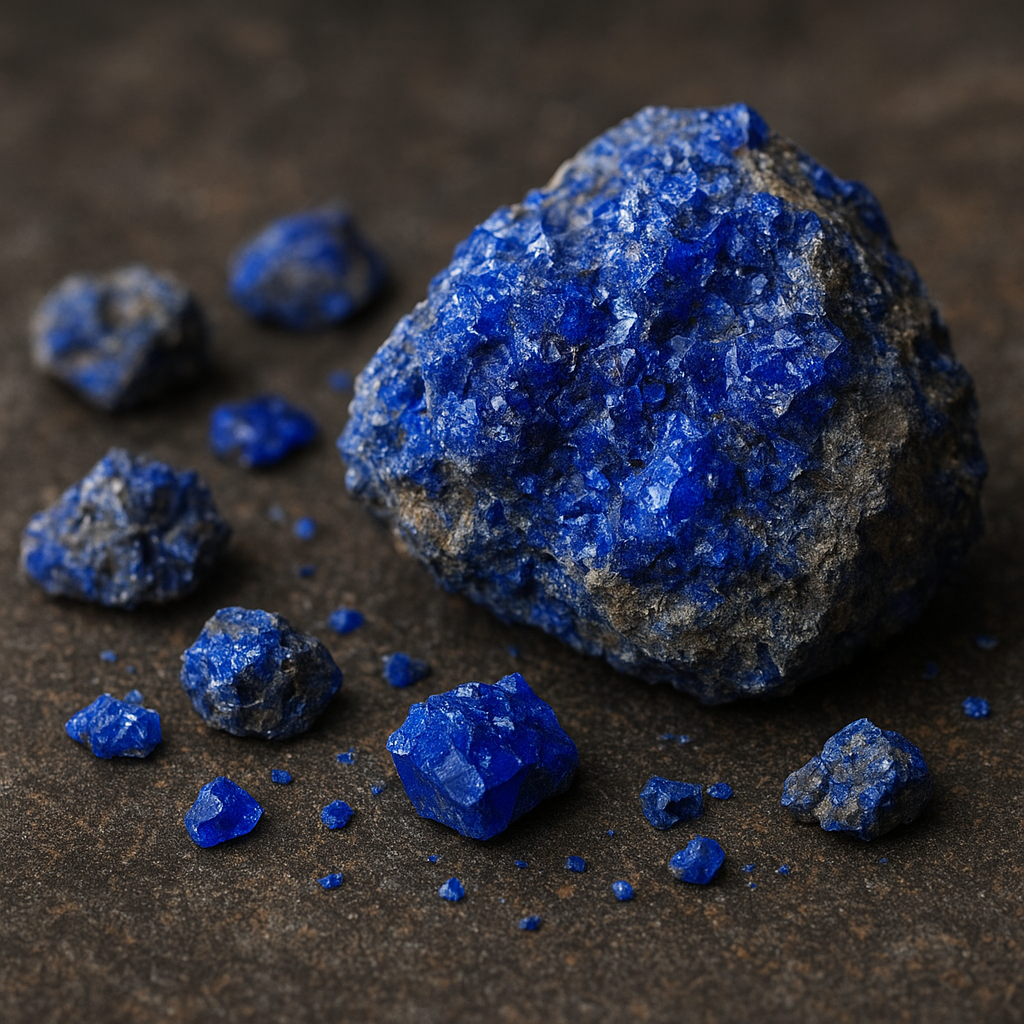
Cobalt is an element that quietly underpins many modern technologies and ancient practices alike. With a distinctive place on the periodic table and a range of physical and chemical properties that make it both versatile and valuable, cobalt appears in ores, biological systems, industrial alloys, and even medical instruments. This article explores where cobalt is found in nature and industry, how it is used across sectors from energy to health care, and the environmental, ethical, and technological issues tied to its production and consumption.
Geology and Natural Occurrence
As a transition metal with atomic number 27, cobalt rarely occurs in nature as a native metal. Instead it is mainly found in mineral deposits and as a byproduct of mining for other metals. Cobalt-bearing minerals are typically associated with nickel and copper sulfide deposits, as well as sediment-hosted stratiform deposits. The element can also appear in lateritic deposits formed by tropical weathering of ultramafic rocks.
Common minerals and geological settings
- Skutterudite and cobaltite: these sulfide and arsenide minerals are classic cobalt ores.
- Erythrite: a secondary hydrated cobalt arsenate often used as an indicator mineral in the field.
- Mixed sulfide deposits: where cobalt substitutes into copper-nickel sulfides produced by magmatic processes.
- Laterites: tropical weathering concentrates cobalt, nickel, and other metals in residual soils.
Cobalt is also disperse in trace amounts in many rocks and soils. Economically recoverable concentrations usually occur where geological processes have concentrated the metal into veins, massive sulfide horizons, or lateritic caps above ultramafic intrusions.
Key producing regions
Production and refining do not always occur in the same place. Historically and currently, large proportions of mined cobalt have been associated with copper and nickel mines. The most prominent sources of mined cobalt are in central Africa, particularly the Congo basin, where cobalt is often produced as a byproduct of copper mining. Other notable countries with significant cobalt resources or production include Russia, Australia, Canada, the Philippines, and Morocco. Global refining and processing capacity, however, is concentrated in a few countries outside the mining sites, which creates geopolitical and supply-chain dynamics that affect global availability.
Applications: From Batteries to Art
Cobalt’s combination of magnetic properties, corrosion resistance, and stable high-temperature strength makes it useful in a surprising variety of applications. The metal and its compounds play crucial roles across energy storage, aerospace, ceramics, pigments, catalysis, and medicine.
Energy storage and batteries
One of the most public-facing uses of cobalt today is in rechargeable batteries. Cobalt is a key component in many lithium-ion cathode chemistries—such as NMC (nickel-manganese-cobalt) and NCA (nickel-cobalt-aluminum)—because it stabilizes the cathode, enables high energy density, and improves cycle life. These features make cobalt-containing batteries popular in smartphones, laptops, and many electric vehicles (EVs).
Industry trends are shifting toward reduced cobalt content to lower cost and mitigate supply risk, with alternatives that include higher-nickel cathodes, lithium iron phosphate (LFP), and ongoing research into cobalt-free cathodes. Even so, for some high-performance applications where energy density and longevity are critical, cobalt remains a valuable element.
Superalloys, magnets, and high-temperature applications
Cobalt’s high melting point and ability to retain strength at elevated temperatures make it an essential alloying element in superalloys for turbine blades, jet engines, and gas turbines. Cobalt-chrome alloys are also used in medical implants (e.g., hip and dental prostheses) because of their wear resistance and biocompatibility. In magnetic materials, certain cobalt alloys are used where high magnetic coercivity and thermal stability are required.
Pigments, glass, and ceramics
Cobalt compounds have colored art history: the vivid blue known as cobalt blue has been valued for centuries in paints, glass coloring, and glazes. Cobalt aluminate and other complex oxides give intense blues that resist fading and high temperatures, which accounts for their use in ceramics and artistic glassmaking.
Catalysis and chemical industry
Cobalt-based catalysts are widely used in hydrocarbon processing and chemical synthesis. Industrial processes such as Fischer–Tropsch synthesis (converting syngas to liquid hydrocarbons), hydrogenation reactions, and catalytic reforming sometimes employ cobalt catalysts because of their activity and selectivity under various conditions.
Medical and radioactive uses
Radioisotopes of cobalt, especially cobalt-60, have important applications in medicine and industry. Cobalt-60 sources are used for external beam radiotherapy in cancer treatment, as well as for sterilizing medical equipment and food irradiation. In biology, cobalt also plays an essential role at trace levels: it is the central atom in cobalamin, commonly known as vitamin B12, which is vital for human metabolism, DNA synthesis, and neurological function.
Mining, Supply Chain, and Ethical Considerations
The concentration of production and the role of cobalt as a byproduct create complex supply-chain dynamics. Alongside technical questions about ore processing and refining, there are pressing social and environmental issues that draw international attention.
Artisanal and industrial mining
In regions with abundant cobalt-bearing ores, both industrial-scale and artisanal, small-scale mining often coexist. Artisanal mining can provide livelihoods for local communities but is frequently associated with poor working conditions, lack of formal regulation, and safety hazards. Reports of child labor and unsafe practices in parts of central Africa have prompted calls for stronger oversight and ethical sourcing mechanisms.
Environmental impacts
Mining and processing can lead to environmental degradation: tailings, acid mine drainage, and contamination of water and soils with metals and processing chemicals. Smelting and refining also carry emissions concerns. These issues require careful mitigation through regulation, reclamation, and best-practice environmental management.
Geopolitics and refining capacity
While mining may be localized, refining and chemical processing capacity is concentrated in a few countries that control much of the downstream supply chain. This imbalance creates vulnerability to trade disruptions and geopolitical leverage. Companies and governments respond by seeking diversified sourcing, building recycling streams, and investing in domestic refining where possible.
Ethics, traceability, and certification
Transparency initiatives and industry-led due diligence programs aim to ensure that ethics and human rights are respected across the cobalt supply chain. Traceability tools, third-party audits, and certification attempts—including pilot projects using blockchain for provenance tracking—try to give downstream manufacturers and consumers confidence that sources meet social and environmental standards. However, establishing fully transparent, verifiable supply chains remains challenging, especially for artisanal production.
Recycling, Alternatives, and Future Trends
Demand for cobalt has been driven strongly by the growth of battery-powered devices and electric vehicles. This has led to intense interest in recycling, alternative chemistries, and efficiency improvements to reduce future dependency on mined cobalt.
Recycling and circular economy
Battery recycling can recover cobalt, lithium, nickel, and other valuable materials through pyrometallurgical and hydrometallurgical processes. Advances in direct cathode recycling aim to preserve cathode structure and chemistry, potentially lowering energy input and cost compared with smelting. Recycling rates for cobalt are growing but still lag behind the potential supply that could be reclaimed if systems for collection and processing scale up globally. Increasing the share of recycled cobalt is a key strategy to reduce environmental impact and supply risk.
Technological innovations and substitution
Manufacturers and researchers are pursuing several routes to reduce reliance on cobalt: designing batteries with lower cobalt content, shifting to cobalt-free chemistries for certain applications, and improving battery management systems that extract more life from each cell. Beyond batteries, alternative materials and processes in catalysts and alloys can sometimes lower cobalt usage, though in many high-performance applications cobalt’s unique properties are not easily matched.
Research frontiers
Cobalt remains the subject of active research across several scientific fields. Examples include cobalt-based catalysts for green hydrogen production (water-splitting), novel cobalt-containing magnetic materials for data storage, and cobalt complexes for organic synthesis. Researchers also study the environmental chemistry of cobalt to better predict its mobility and long-term impacts in mining-affected landscapes.
Health, Safety, and Regulation
Like many industrial metals, cobalt presents occupational and environmental health concerns if not handled responsibly. Understanding these risks helps in implementing controls and regulations that protect workers and communities.
Toxicity and occupational hazards
Acute exposure to high levels of cobalt compounds can irritate the skin, eyes, and respiratory tract. Chronic inhalation of cobalt-containing dust or aerosols is associated with respiratory diseases, including forms of interstitial lung disease. Exposure to cobalt in hard-metal manufacturing (tungsten carbide-cobalt) has been linked to a specific health condition known as hard metal lung disease. Historically, cobalt additives in beer and other products caused cardiomyopathy in some populations when overdosed, a cautionary tale about careful control of exposure.
Regulatory frameworks and limits
Regulators set occupational exposure limits, environmental discharge criteria, and safety standards to limit cobalt risks. Companies must comply with these rules and often implement workplace monitoring, personal protective equipment, and engineering controls to reduce dust and fume exposure. Where cobalt-60 is used, strict radiological safety protocols govern handling, shielding, and disposal of radioactive sources.
Safe handling and transportation
Transport of cobalt concentrates, refined metal, and radioactive isotopes follows international guidelines covering packaging, labeling, and emergency response. Batteries containing cobalt are subject to specialized shipping rules because of fire and thermal-runaway risks. Proper storage, recycling pathways, and end-of-life management are important for minimizing hazards and recovering valuable materials.
Cobalt in Culture, History, and Science
The story of cobalt weaves through art, language, and scientific discovery. The element’s name comes from the German word kobold, meaning “goblin” or “deceptive spirit,” used by miners who found troublesome ores that interfered with furnace operations or yielded toxic arsenic byproducts. Artists prized cobalt pigments for their vivid blues; scientists and technologists harnessed cobalt’s magnetic and chemical behavior for electromagnets, catalysts, and modern batteries.
Historical anecdotes and artistic legacy
Cobalt-based blue pigments appear in Chinese porcelain, Middle Eastern ceramics, and European painting traditions. The depth and stability of cobalt-blue glazes and dyes helped shape aesthetic movements and remain valued in art restoration and reproduction. The miner’s folklore and etymology of cobalt point to a long-standing human relationship with the element—sometimes useful, sometimes troublesome.
Scientific milestones
From being recognized as a distinct metal in the 18th century to its role in 20th- and 21st-century technologies, cobalt’s scientific narrative includes contributions to metallurgy, organometallic chemistry (cobalt complexes used as catalysts), and nuclear science (production and use of cobalt radioisotopes). Its presence in vitamin B12 links it directly to biochemistry and human health.
Throughout its many roles, cobalt remains a material of contrasts: essential yet potentially hazardous, regionally concentrated yet globally important, historically prized for color and modernly prized for energy. As technologies evolve and societies seek cleaner and more equitable supply chains, cobalt’s place in industry and culture will continue to adapt, informed by science, policy, and public concern.