Clinohumite is an uncommon and intriguing member of the humite group of nesosilicates. Its striking colors, unique crystal chemistry, and geological settings make it a subject of interest both for mineral collectors and for researchers who study mantle processes and metasomatism. This article explores the mineralogy, occurrences, applications, and fascinating scientific roles of clinohumite, with attention to the environments in which it forms and the ways it contributes to our understanding of Earth’s interior.
Mineralogy and Crystal Chemistry
Clinohumite belongs to the humite group and is chemically close to the formula Mg9(SiO4)4(F,OH)2, though extensive substitution by Fe, Mn, and other cations is common. The presence of both fluorine and hydroxyl (OH) in its structure is a defining feature: clinohumite can act as a host for volatile components in silicate rocks. Its crystal system is monoclinic, which is why the name begins with “clino-” to distinguish it from the orthorhombic humite polymorphs.
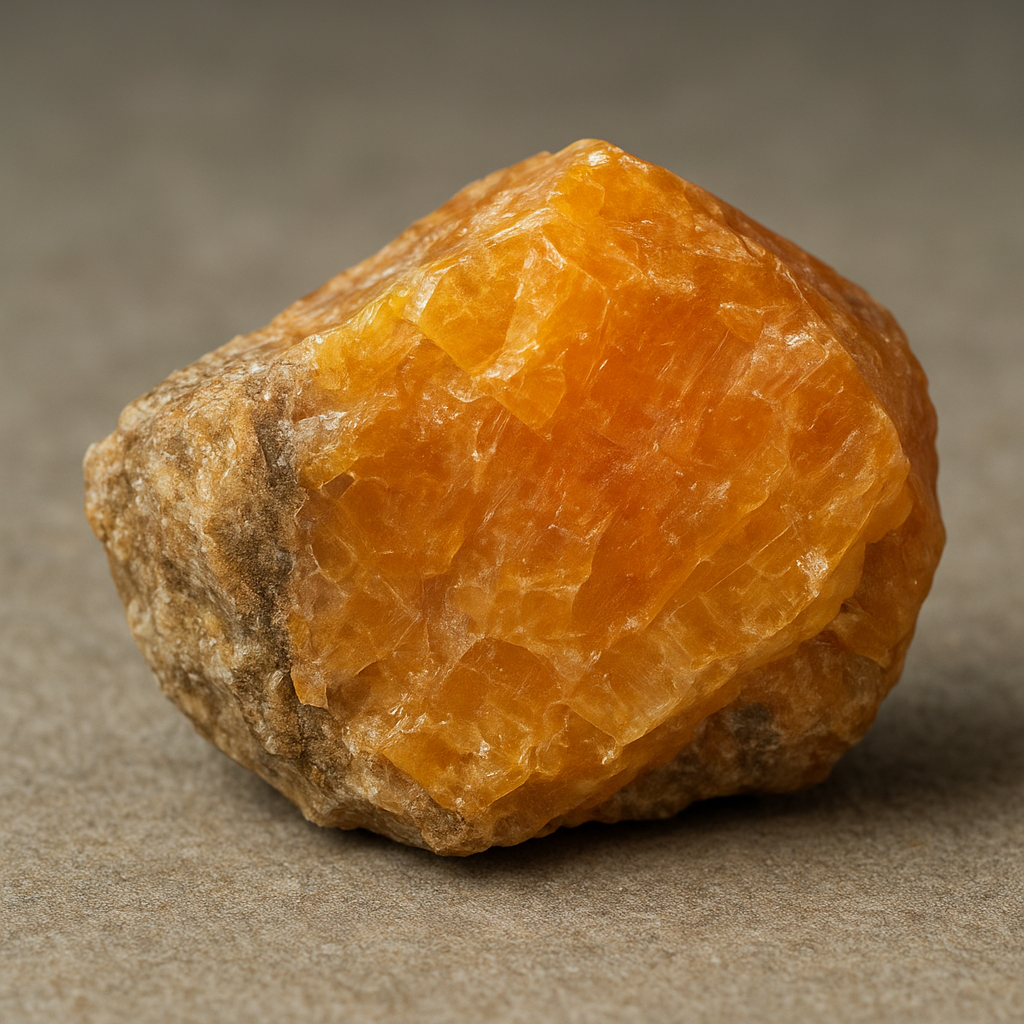
Physically, clinohumite usually demonstrates a range of warm colors — from pale yellow through deep orange and brown to reddish tones — depending on chemical substitutions and trace elements. Important optical and mechanical traits include a specific gravity generally in the 3.1–3.5 range, a Mohs hardness near 6–6.5, and refractive indices that place it among common rock-forming and accessory minerals rather than high-index gemstones. Many crystals show notable pleochroism and variable luster, from vitreous to resinous.
Where Clinohumite Occurs
The geological environments hosting clinohumite are notably diverse, illustrating the mineral’s ability to form in both crustal and upper-mantle settings when the right combination of chemistry, temperature, and fluids is present. Among the most important settings are contact and regional metamorphism zones affecting carbonate-rich rocks, high-temperature skarns, and peridotite xenoliths and mantle peridotites that have experienced metasomatic alteration.
Skarns and Contact Zones
In metamorphosed carbonate rocks and skarn deposits where silica-rich fluids interact with magnesium- and calcium-rich host rocks, clinohumite can crystallize as part of a complex assemblage that may include diopside, forsterite, spinel, and garnet. These environments promote the concentration of magnesium and silica along with volatiles such as fluorine, which stabilizes clinohumite over other humite-group phases under certain pressure–temperature–fluid conditions.
Peridotites and Mantle Xenoliths
Clinohumite is also found in peridotites and xenoliths brought to the surface by volcanism (for example, in kimberlites and basaltic magmas). Here, it is particularly significant because it can contain structural hydroxyl and thereby act as a reservoir for water in nominally anhydrous mantle rocks. The presence of clinohumite in such rocks is often linked to mantle metasomatism — the introduction of silica, fluids, and other elements into previously refractory lithologies.
Notable Localities
Clinohumite is rare enough that certain localities are celebrated among collectors and researchers. One of the most famous is the Dara-i-Pioz region of Tajikistan, renowned for producing transparent, gem-quality orange clinohumite crystals. Other important localities include parts of Russia (such as the Kola Peninsula), Afghanistan, Pakistan, and scattered occurrences in Europe and North America. In many cases, findable crystals are associated with unusual metamorphic or metasomatic histories, making site-specific geology essential to understanding why clinohumite formed there.
Physical Properties, Identification, and Optical Behavior
Identifying clinohumite in hand sample or thin section relies on a combination of color, habit, hardness, and associations with other minerals. Crystals may be prismatic or granular, and larger, gem-quality pieces are prized for their clarity and color. In thin section, clinohumite’s optical characteristics — including pleochroism and interference colors — help distinguish it from look-alike minerals such as zircon or sphene when combined with refractive index measurements.
- Color: pale yellow to deep orange, rarely colorless or brown.
- Hardness: approximately 6–6.5 on Mohs scale.
- Specific gravity: typically 3.1–3.5.
- Crystal system: monoclinic.
- Optical properties: biaxial with moderate birefringence; pleochroism common.
A diagnostic modern tool is electron microprobe and IR spectroscopy, which can quantify the hydroxyl content and the F/OH ratio. The OH content especially makes clinohumite a focus of studies that track hydrogen (water) storage in nominally anhydrous minerals.
Scientific Importance: Water in the Mantle and Trace Elements
One of the most compelling reasons geoscientists study clinohumite is its role as a potential water reservoir in the upper mantle. While olivine and other nominally anhydrous minerals can incorporate only small amounts of OH, clinohumite can hold more substantial hydroxyl content in its lattice. When it is stable in peridotite at mantle pressures and temperatures, clinohumite could sequester water and affect melting, rheology, and geochemical behavior of the mantle.
Trace elements such as Ti, Cr, and Mn often substitute into the clinohumite structure, and these substitutions control color and luminescence. The mineral can therefore record information about the chemistry of the fluids and melts present during its formation. Studies of isotopic compositions and trace-element partitioning in clinohumite provide windows into metasomatic events, mantle heterogeneity, and the history of fluid–rock interaction in both crustal and mantle environments.
Uses, Gemological Aspects, and Collecting
Clinohumite has limited industrial applications due to its rarity and lack of abundant deposits. Its primary value today is scientific and gemological. Large, transparent crystals can be cut into attractive gemstones with a warm orange hue that sometimes approaches the appearance of topaz or certain tourmalines. Because the mineral is not very hard compared with many popular gemstones, it is generally set in jewelry where abrasion risk is low, or kept as collector specimens.
From a gemological viewpoint, clinohumite offers collectors a chance to own a mineral that is both visually appealing and scientifically interesting. Its capacity for strong color and occasional fluorescence under ultraviolet light adds to its appeal. The rarity of gem-quality material keeps prices high in niche markets, while the diversity of crystal habits and sizes influences desirability among private and museum collections.
- Jewelry use: occasional, best for pieces protected from knocks and abrasion.
- Collector value: high for large, well-colored, transparent specimens, especially from renowned localities.
- Scientific value: important for mantle and metasomatic studies.
Interesting Phenomena and Research Frontiers
Several intriguing aspects of clinohumite continue to drive research. First, its ability to store significant amounts of OH under certain conditions invites questions about the global water cycle and how water is exchanged between surface reservoirs and the deep Earth. Second, because clinohumite forms in both crustal skarns and mantle peridotites, it serves as a link between processes at vastly different depths — from contact metamorphism near Earth’s surface to metasomatic alteration hundreds of kilometers down.
Another area of active research is the response of clinohumite to pressure and temperature changes: experimental petrology studies aim to determine the stability field of the mineral, its breakdown products, and the conditions under which it releases stored water. Such breakdown reactions may contribute to melting and fluid generation in the mantle, influencing magmatism and volcanic activity.
Finally, clinohumite’s interaction with trace elements — particularly how it captures or excludes certain elements during formation — is used to interpret the evolution of fluids and melts responsible for large-scale geochemical signatures. In sum, the mineral is a small but powerful recorder of geological history.
Practical Advice for Enthusiasts and Collectors
If you are interested in acquiring clinohumite specimens or gemstones, a few practical tips are useful. First, provenance matters: specimens from celebrated localities such as Dara-i-Pioz are more valuable and better documented. Second, because clinohumite is moderately soft, handling and setting for jewelry must prioritize protection — rings worn daily are less appropriate than pendants or earrings worn occasionally. Third, when purchasing gems, spectroscopic and microprobe data (when available) can confirm the identity, as confusion with other yellow-orange minerals is possible.
For collectors, the most rewarding specimens often display crystal faces, transparency, and association with characteristic partner minerals like forsterite, diopside, and spinel. Well-documented specimens contribute to scientific collections and can be of interest to researchers examining the petrogenesis of the host rocks.
Optical and Luminescent Behavior
Clinohumite can display striking reactions to light that add to its aesthetic and diagnostic appeal. Under certain ultraviolet wavelengths, some clinohumite specimens show vivid fluorescence, often in orange or yellow tones, typically due to trace activators like manganese. Such luminescence can be both a fun collector’s feature and a non-destructive diagnostic tool.
In transmitted and reflected light, careful mineralogical study reveals pleochroism and specific interference colors that help distinguish clinohumite from look-alikes. Modern instruments such as Raman spectroscopy and infrared spectroscopy provide unambiguous fingerprints for identification, particularly useful for small or included gem samples.
Associations and Paragenesis
Understanding the suite of minerals associated with clinohumite provides insight into the temperature–pressure–fluid regime present during formation. In skarns and contact-metamorphosed marbles, clinohumite commonly associates with diopside, forsterite, spinel, garnet, and calc-silicate minerals. In mantle-related rocks, it may be found alongside olivine, orthopyroxene, clinopyroxene, spinel, and amphiboles or phlogopite depending on the degree and nature of metasomatism.
Paragenetic sequences — the chronological order of mineral formation — often record initial high-temperature crystallization followed by fluid infiltration that stabilizes clinohumite. In some localities, clinohumite forms late in the rock’s history as fluids rich in silica and volatiles react with pre-existing magnesium-rich phases.