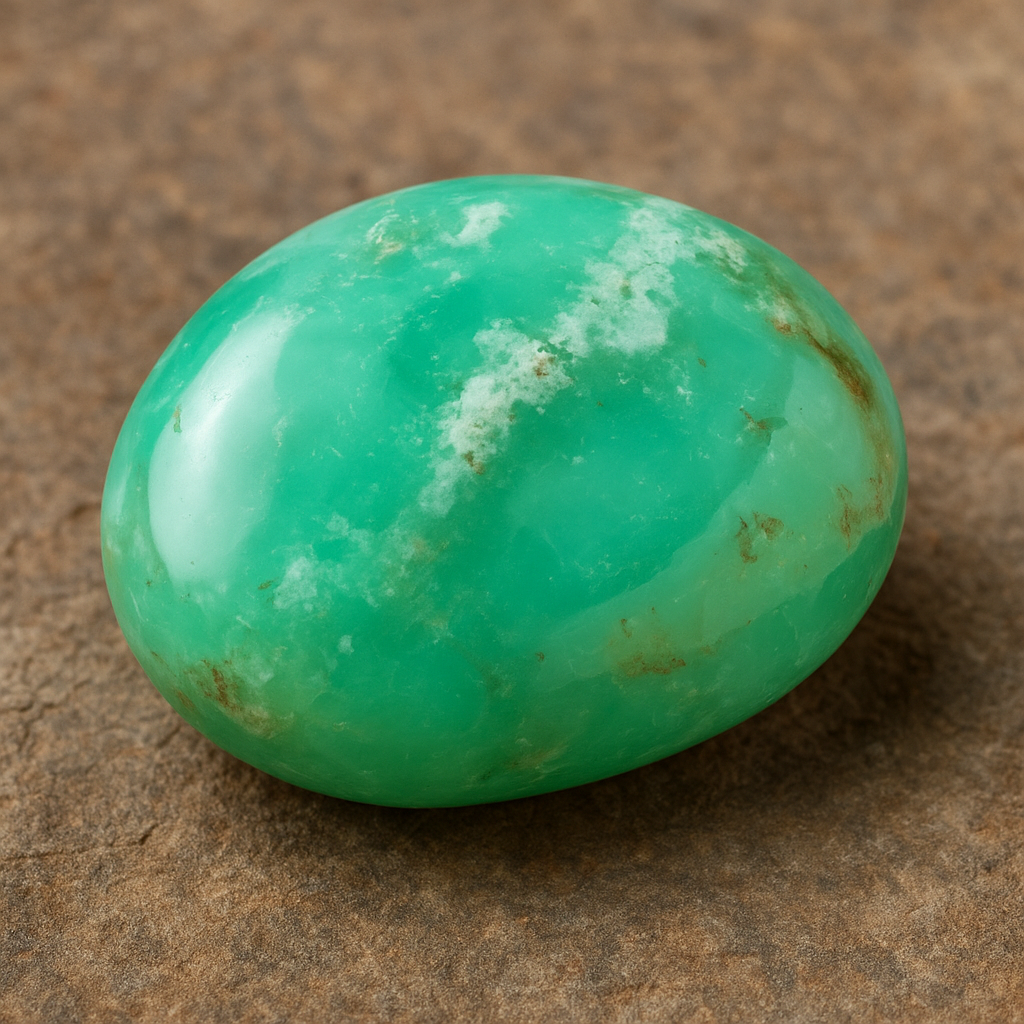
Chrysoprase is a captivating green variety of microcrystalline quartz that has been prized for centuries for its vivid hue and pleasing translucency. This article explores its geological origins, global occurrences, gemological properties, uses in jewelry and art, treatments and care, and the cultural stories that surround it. Along the way we will highlight practical information for collectors, jewelers and anyone fascinated by one of nature’s most beautiful green stones.
Occurrence and Geology
Chrysoprase forms as a secondary deposit of silica in the weathering zones of nickel-rich ultramafic rocks. The characteristic apple-green to deep green color is caused primarily by trace amounts of nickel incorporated into the silica structure as it precipitates from silica-rich solutions. It is a variety of chalcedony, meaning it is composed of cryptocrystalline silica (tiny interlocking quartz crystals) rather than large visible crystals.
Typical geological settings for chrysoprase include fracture fillings, cavities and veins within lateritic profiles and weathered serpentinite bodies. The weathering of olivine and other nickel-bearing minerals releases nickel into local groundwater. When silica is available—often transported as colloidal silica—the nickel can be captured in a gel that later hardens to form the solid, glassy chalcedony recognized as chrysoprase.
Major Localities
- Australia – One of the world’s most important sources. Deposits in both Australia’s Queensland and Western Australia have produced high-quality material historically and in modern times.
- Poland – Notably from Lower Silesia, where chrysoprase has been known and worked since at least the 19th century.
- Russia – The Ural Mountains host occurrences that have supplied the gem trade.
- Germany – Historic European sources with material used in regional carvings and jewelry.
- Brazil, Tanzania, Mexico, USA – Additional occurrences produce attractive material, often in smaller quantities or with different shades and patterns.
Because chrysoprase forms in secondary weathering environments, notable concentrations are often limited and unpredictable, making high-grade material relatively rare compared to other chalcedonies.
Physical and Gemological Characteristics
Chrysoprase is valued primarily for its vivid green color and degree of translucency. It typically ranges from pale green to intense apple-green, with the most prized pieces showing an even, saturated green without brown or black matrix blemishes. The stone’s mechanical properties are similar to other chalcedonies: a Mohs hardness around 6.5–7, a specific gravity typically between 2.58 and 2.64, and a refractive index near 1.54–1.55. Under the microscope, chrysoprase appears cryptocrystalline with a waxy to vitreous luster.
Identification Notes
- Refractive index and specific gravity tests will place chrysoprase within the expected range for chalcedony.
- UV fluorescence is generally weak or absent, so a lack of fluorescence is not diagnostic but consistent with natural material.
- Advanced methods—such as X-ray fluorescence (XRF) or electron microprobe—can detect the nickel content that is characteristic of chrysoprase and help distinguish it from look-alikes.
- Infrared and Raman spectroscopy can confirm the silica structure and detect organic dyes or resin treatments.
Color zoning, small inclusions of limonite or iron oxides, and occasional botryoidal textures in rough pieces are common. High-grade chrysoprase has an even, uniform green throughout and minimal visible inclusions when cut as cabochons.
Uses in Jewelry, Carving and Decorative Arts
Chrysoprase has been fashioned into jewelry and ornamental objects for centuries. Because it polishes well and often has an attractive, even color when cut, it is a favored material for cabochons, beads, cameos, inlays and carved ornaments. Its combination of pleasing color and relative hardness makes it suitable for everyday wear when set in rings, pendants and bracelets.
Common Forms and Cuts
- Cabochon cuts dominate—smooth, domed surfaces best display the color and translucency.
- Beads and strings of polished nuggets are popular in ethnic and contemporary jewelry.
- Carvings and intarsia panels take advantage of larger pieces of uniform color.
- Small faceted chrysoprase exists but is rare because the material is usually too cryptocrystalline to produce brilliant faceting.
Designers historically prized chrysoprase for its fresh green hue. In the late 19th and early 20th centuries, it was especially fashionable in European jewelry movements that celebrated natural motifs; even small decorative objects and intaglios were carved from the stone. Today, modern lapidaries favor chrysoprase for its steady market appeal and distinct tone among green gemstones.
Treatments, Imitations and How to Spot Them
As with many desirable gemstones, chrysoprase appears in treated and imitated forms. Lower-grade material may be dyed to enhance a washed-out green; stabilizing resins are sometimes used to improve durability and polish. Some chalcedony imitations may be assembled or synthetically dyed agates meant to look like chrysoprase. There are also green stones of different chemistry—such as gaspeite, variscite or chrome chalcedony—that can be confused with chrysoprase by color alone.
Detection Methods
- Visual clues: overly uniform, unnaturally intense color or superficial color concentrations near the surface suggest dyeing.
- Hot needle or solvent tests are not recommended because they can damage the stone; instead, laboratory spectroscopy or immersion tests are preferred for accurate detection.
- Instrumental analysis: XRF or microprobe can reveal the presence of significant nickel—strong evidence for true chrysoprase. FTIR and Raman spectroscopy can indicate organic resin impregnation.
Purchasers should ask for reputable gemological reports or buy from trusted dealers. Small, inexpensive pieces intended for fashion jewelry are more likely to be treated or dyed; museum-quality or collectible pieces are usually natural, possibly with slight stabilization but documented accordingly.
Lapidary Techniques and Practical Considerations
Cutting chrysoprase successfully requires attention to thickness and polish. Because the material is cryptocrystalline, translucency can be lost if specimens are cut too thin or if the stone contains heavy inclusions. Lapidaries often work with rough oriented to preserve the most even color and to avoid areas with brown iron staining or veining.
- Best cuts: cabochons of moderate dome height that allow light to diffuse and showcase color.
- Polishing: cerium oxide or aluminum oxide pastes give a high polish; a final soft felt or leather lap brings out the glossy surface.
- Joining and inlay: chrysoprase glues well for inlay work; care should be taken to match thickness and porosity between pieces to avoid staining.
Because chrysoprase is moderately hard but not immune to impact, settings that protect edges and prongs are advisable for rings intended for everyday wear. Its color responds beautifully to well-considered design that contrasts it with metals such as yellow gold or warm-toned alloys, though contemporary designers pair it successfully with silver and white metals too.
Cultural, Historical and Metaphysical Notes
Chrysoprase has a long cultural history. Ancient civilizations prized green stones for their associations with fertility, renewal and the natural world. In later European history, it was used for carved seals, cameos and ornamentation. Its apple-green tones evoked springtime and were especially fashionable during periods that favored naturalistic motifs.
In contemporary crystal and healing communities, chrysoprase is attributed with various metaphysical properties. It is often associated with the heart chakra, emotional healing, and attracting prosperity and joy. While these beliefs are not scientifically validated, they do contribute to the gem’s popularity among collectors and spiritual practitioners.
chrysoprase aficionados often prize the stone for its calming green and its perceived ability to symbolize renewal and personal growth. The stone’s gentle, non-glaring color distinguishes it from more vivid gem greens like emerald or chrome diopside, offering a different aesthetic and symbolic palette.
Market, Value and Ethical Considerations
Value in chrysoprase is driven primarily by color saturation and uniformity, translucency and size. Fine pieces with an intense, even apple-green and good translucency command premium prices. Smaller or less uniform stones are abundant and affordable, making chrysoprase accessible across price ranges.
Ethical sourcing matters. Large-scale mining in sensitive environments and small-scale operations alike can impact local ecosystems. When purchasing, consumers may wish to inquire about the origins of the stone and whether miners or communities benefited. Responsible dealers will often be transparent about treatment, origin and any environmental or labor considerations linked to the material.
Care, Maintenance and Practical Tips for Owners
Caring for chrysoprase is straightforward but benefits from a few precautions. Avoid exposure to strong acids, harsh chemicals, and prolonged high heat which can alter color or damage surface polish. Ultrasonic cleaning may be safe for high-quality, untreated chrysoprase, but it is best avoided if any doubt exists about stabilizing resins or treatments.
- Cleaning: use warm, soapy water and a soft brush; rinse and dry gently with a soft cloth.
- Storage: keep pieces separate to avoid abrasion by harder gemstones or metal settings.
- Routine checks: periodically inspect settings especially for rings to ensure that prongs and bezels remain secure.
For valuable or uncertain pieces, consult a gemologist before attempting aggressive cleaning or repair. Documentation of treatment and origin adds long-term value and confidence for collectors.
Similar Stones and How to Differentiate Them
Several green materials can be confused with chrysoprase by color alone. Knowing the differences helps buyers and collectors make informed choices:
- Gaspeite – a nickel carbonate with a bright apple-green color, but much rarer and usually softer and more brittle; chemical tests distinguish it clearly.
- Prase – another green chalcedony colored by chlorite or other inclusions; prase is often darker or more muted and lacks the nickel signature of chrysoprase.
- Variscite and turquoise – phosphate minerals with green tones but different hardness, specific gravity and crystal chemistry.
- Dye-treated agate – detectable by uneven surface color or absorption bands under magnification and by laboratory spectroscopy.
When in doubt, laboratory testing (XRF, Raman, FTIR or microprobe analysis) will identify elemental composition and reveal telltale signatures such as nickel presence, confirming true chrysoprase.
Why Chrysoprase Continues to Captivate
The enduring appeal of chrysoprase lies in its uncommon combination of soft, inviting green, a pleasing degree of translucency, and versatility in design. It offers an accessible green gemstone alternative to more expensive greens like emerald and maintains a distinctive niche among chalcedonies. For jewelry designers, lapidaries and collectors, chrysoprase presents a balance of aesthetic charm, workable physical properties and rich cultural resonance.
Whether carved into a delicate pendant, set as a bold cabochon, or collected as a mineral specimen, chrysoprase remains a gemstone that rewards both aesthetic appreciation and scientific curiosity. Its story connects mineralogy, human craftsmanship and cultural imagination in a way few stones do—making it a perennial favorite among those who value color, texture and natural beauty.