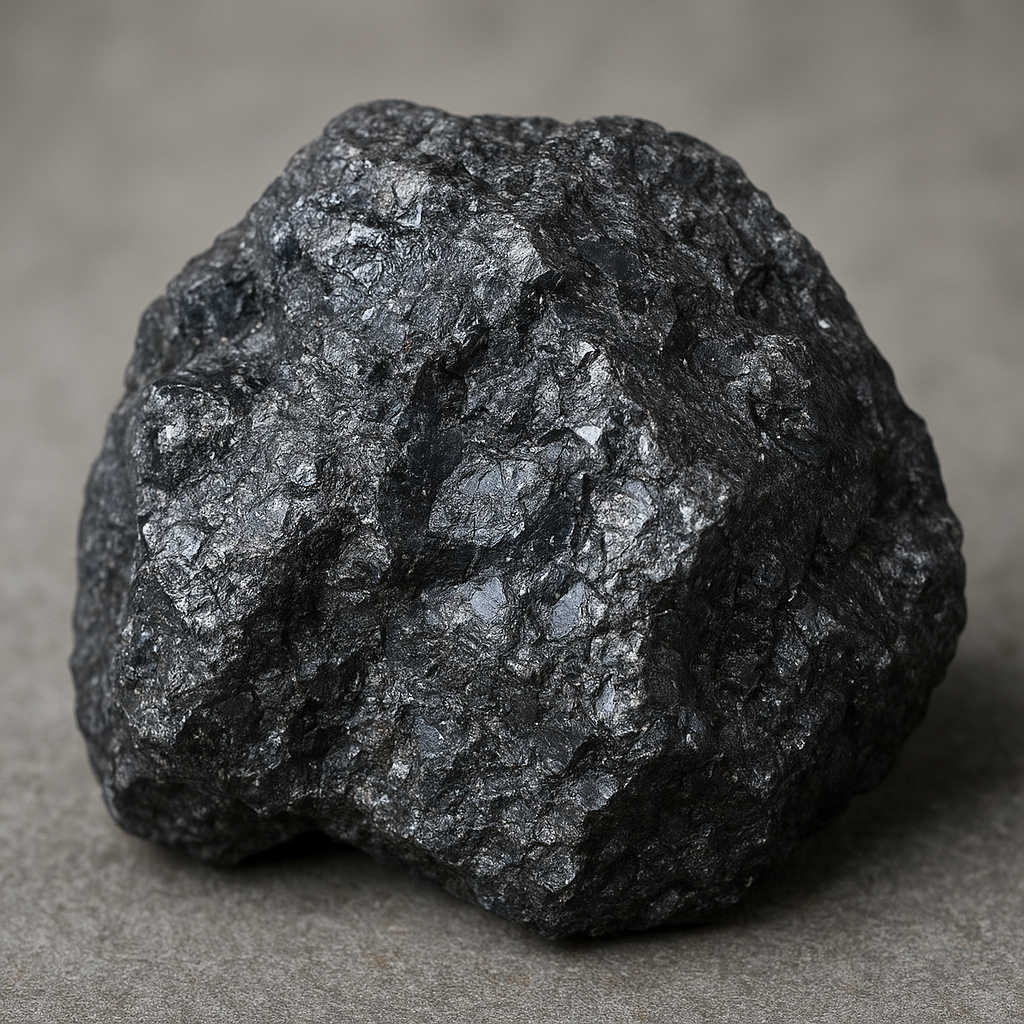
Chromite is a dense, dark mineral that has played a decisive role in modern metallurgy, chemistry, and industry. As the principal ore of chromium, chromite is the gateway between geological processes that concentrate metals and a wide array of industrial applications ranging from stainless steel production to specialized chemical compounds. This article explores the mineral’s chemistry, global distribution, extraction and processing, environmental challenges, and emerging technologies tied to its use. Along the way, several lesser-known and intriguing aspects of chromite will be highlighted, illuminating why this unassuming mineral remains strategically important worldwide.
Mineralogy and chemistry of chromite
Chromite is a member of the spinel group with the general formula FeCr2O4, though composition varies and may include significant amounts of Mg, Al, and Fe in different oxidation states. The defining characteristic of chromite is its high chromium content, often expressed as Cr2O3 percentage, together with appreciable iron and sometimes magnesium. It typically forms in an isometric crystal system and commonly appears as granular masses with a metallic to dull luster.
Crystal structure and solid solution
The spinel structure of chromite is important because it allows substitution among several cations. The ideal arrangement places Fe2+ in the tetrahedral sites and Cr3+ in octahedral sites, but significant solid solution occurs with magnetite (Fe3O4) and other spinels. This compositional flexibility affects density, magnetic properties, and the temperature at which chromite melts or reacts—properties that matter during smelting and refractory use.
Chemistry relevant to industrial uses
- Chromium in chromite is mainly trivalent (Cr3+) in the ore, which must be oxidized or chemically processed to obtain hexavalent species or metallic chromium depending on application.
- Chromite’s behavior under high temperature and reducing conditions determines whether it remains stable or decomposes to yield metallic chromium or other compounds in smelting furnaces.
- Minor elements such as aluminum and magnesium influence melting point and slag formation during metallurgical processing.
Geological occurrence and major deposits
Chromite is most commonly found in ultramafic and mafic igneous rocks, particularly in peridotite and dunite associated with ophiolite sequences and layered mafic intrusions. It concentrates into chromitite layers or lenses during magmatic differentiation and is often associated with minerals like olivine, pyroxene, and serpentine.
Types of chromite deposits
- Layered intrusions: Large, tabular bodies where chromitite layers formed during fractional crystallization (e.g., Bushveld Complex in South Africa).
- Ophiolitic deposits: Podiform chromitites in obducted oceanic lithosphere, often producing high-grade, massive chromite bodies (e.g., Turkey, the Philippines, parts of Albania).
- Placer deposits: Secondary concentrations where chromite crystals are redistributed by weathering and transported by rivers or waves.
Major producing regions and their characteristics
- South Africa – Home to the Bushveld Complex, one of the world’s largest chromite reserves. Produces large volumes of ore for ferrochrome and metallurgical use.
- Kazakhstan – Significant deposits in the ophiolitic terrains; a major global exporter of chromite ore.
- Turkey – Podiform chromitites in ophiolite belts; important for both high-grade ore and strategic supply.
- India, Finland, Zimbabwe, and the Philippines are also notable producers with varied deposit types and ore grades.
Exploration continues in many regions because chromite remains a strategic commodity; new geophysical and geochemical techniques have improved the ability to locate deeper or smaller chromitite bodies.
Industrial applications and downstream processing
The most important application of chromite is as the source of chromium, a metal critical to stainless steel and other alloys. The conversion of chromite ore into usable chromium products involves several metallurgical and chemical routes.
Ferrochrome and stainless steel
The dominant industrial pathway is the production of ferrochrome via carbothermic smelting in submerged arc furnaces. In this process, chromite is reduced with carbon (coke) at high temperatures to produce an alloy containing iron and chromium. Ferrochrome feedstock is indispensable for manufacturing stainless steel, which relies on chromium’s corrosion-resistant passive oxide layer. Nearly all chromium metal used in industry originates from ferrochrome production.
Chemicals and chromium compounds
- Chromium chemicals are produced by roasting and leaching or by electrolytic routes. These chemicals include chromium trioxide (CrO3), basic chromium sulfate for tanning, and various salts used as catalysts and pigments.
- Chromium compounds are used to manufacture dyes, pigments (e.g., chromium green), and corrosion inhibitors.
- Preparation of hexavalent chromium (Cr6+) compounds requires oxidation of trivalent chromium and is carefully controlled due to toxicity concerns.
Refractories, foundry sands and other uses
Chromite’s high melting point and thermal stability make it valuable in refractory bricks and castables used to line furnaces and kilns, particularly where resistance to basic slags is required. Chromite sand also finds use in foundry molds for casting high-temperature alloys.
Specialized and emerging uses
- Chromite spinels are precursors for synthetic materials in electronics and catalysis research.
- Chromium-bearing catalysts are used in selective chemical reactions, though environmental concerns have pushed research toward greener alternatives.
- Nanostructured chromium oxides derived from chromite are being explored for battery electrodes, sensors, and photocatalysts.
Mining, beneficiation and environmental considerations
Extraction and processing of chromite bring a set of technical and environmental challenges. Mining methods vary from open-pit and underground mechanized mining to small-scale operations in ophiolitic terrains. Once mined, ore typically undergoes crushing, gravity separation, and sometimes flotation to upgrade the chromite content before smelting.
Beneficiation techniques
- Gravity concentration exploits chromite’s high density relative to gangue minerals.
- Magnetic separation can be effective when magnetite or other magnetic phases are present.
- Fine-grain ores may require froth flotation or high-intensity separators to produce marketable concentrates.
Environmental impacts and health risks
Chromite mining and processing can create environmental hazards if not managed responsibly. The primary concerns include:
- Dust and particulate emissions from mining and crushing, which can affect local air quality.
- Generation of tailings and waste rock that may produce acidic or alkaline drainage depending on gangue minerals.
- Production and accidental release of hexavalent chromium during certain chemical treatments, which poses significant health risks including carcinogenicity and severe skin and respiratory effects.
Effective mitigation strategies include sealed processing circuits, proper tailings management, dust suppression, water treatment systems capable of reducing hexavalent chromium to the less harmful trivalent state, and strict occupational health measures for workers.
Economics, markets and strategic importance
Chromite’s economic significance stems from its role in producing chromium metal and ferrochrome, which are indispensable for stainless steel and several alloy systems. Consequently, chromite is considered a critical raw material in many countries, and supply security is often a policy concern.
Market structure and key players
- Global supply is concentrated: a handful of countries (notably South Africa, Kazakhstan, India, Turkey) supply most of the market. This concentration can lead to supply risks and price volatility.
- Large industrial consumers, particularly steelmakers, maintain long-term contracts and sometimes strategic stockpiles to stabilize supply.
- Price drivers include global steel demand, energy costs for smelting, and environmental regulation that affects production costs and the feasibility of certain processing routes.
Recycling and circular economy
Recycling of chromium primarily occurs via scrap stainless steel recovery. Because chromium is locked in the alloy matrix, recycling is energy-efficient compared with primary production and helps reduce pressure on chromite mining. Increasing recycling rates is a priority for resource conservation and can mitigate some environmental impacts of primary production.
Historical, cultural and future perspectives
The element chromium was discovered in the late 18th century and quickly found uses in pigments and metallurgy. Historically, chromite-derived pigments produced vivid greens and yellows used in paints and textiles, though many of these applications have declined due to health and environmental regulations concerning hexavalent chromium.
Cultural applications and art
Chromium pigments influenced art and industrial design, giving designers a palette of durable, vibrant colors. Chrome plating—electroplating a thin layer of chromium metal—became symbolic of the machine age, used for decorative and corrosion-resistant finishes on vehicles, appliances, and household fixtures.
Research frontiers and sustainability
- Research is active in developing less hazardous chromium processing methods, including hydrometallurgical routes that minimize air emissions and the formation of hexavalent chromium.
- Scientists are investigating novel uses of chromium compounds in catalysis, energy storage, and electronic materials where the element’s redox behavior and complex oxides offer useful properties.
- From a sustainability viewpoint, improving mine rehabilitation, reducing carbon intensity of ferrochrome production, and increasing stainless steel recycling rates are major priorities for the industry.
Policy and geopolitics
Because chromite and chromium are essential to modern industry, national policies often treat them as strategic. Export controls, mine nationalization, and investment incentives for domestic processing are tools governments use to retain value within their borders. As countries pursue green transitions and infrastructure upgrades, demand for stainless steel and high-performance alloys will influence chromite markets for decades.
Interesting facts and side topics
- Chromite is one of the few chromium-bearing minerals that occur in significant economic quantities; others are rare or minor.
- Chromium’s name derives from the Greek word chroma, meaning color, because of brightly colored chromium compounds.
- Chromite grains can be durable in sediments and therefore serve as geological proxies in provenance studies, helping to trace ancient erosion and transport pathways.
- Advanced mineralogical techniques, such as electron microprobe and laser ablation ICP-MS, reveal trace element signatures that help distinguish different deposit types and ore-forming processes.
Chromite links Earth processes to industrial systems. Its geology determines where the ore is found and how it behaves in furnaces; its chemistry determines which products can be made; and its environmental footprint shapes how industry and regulators manage extraction and use. The mineral’s future will be shaped by technology, policy, and the broader push toward more sustainable materials cycles—while its fundamental importance to alloys and high-temperature materials remains unchanged.