
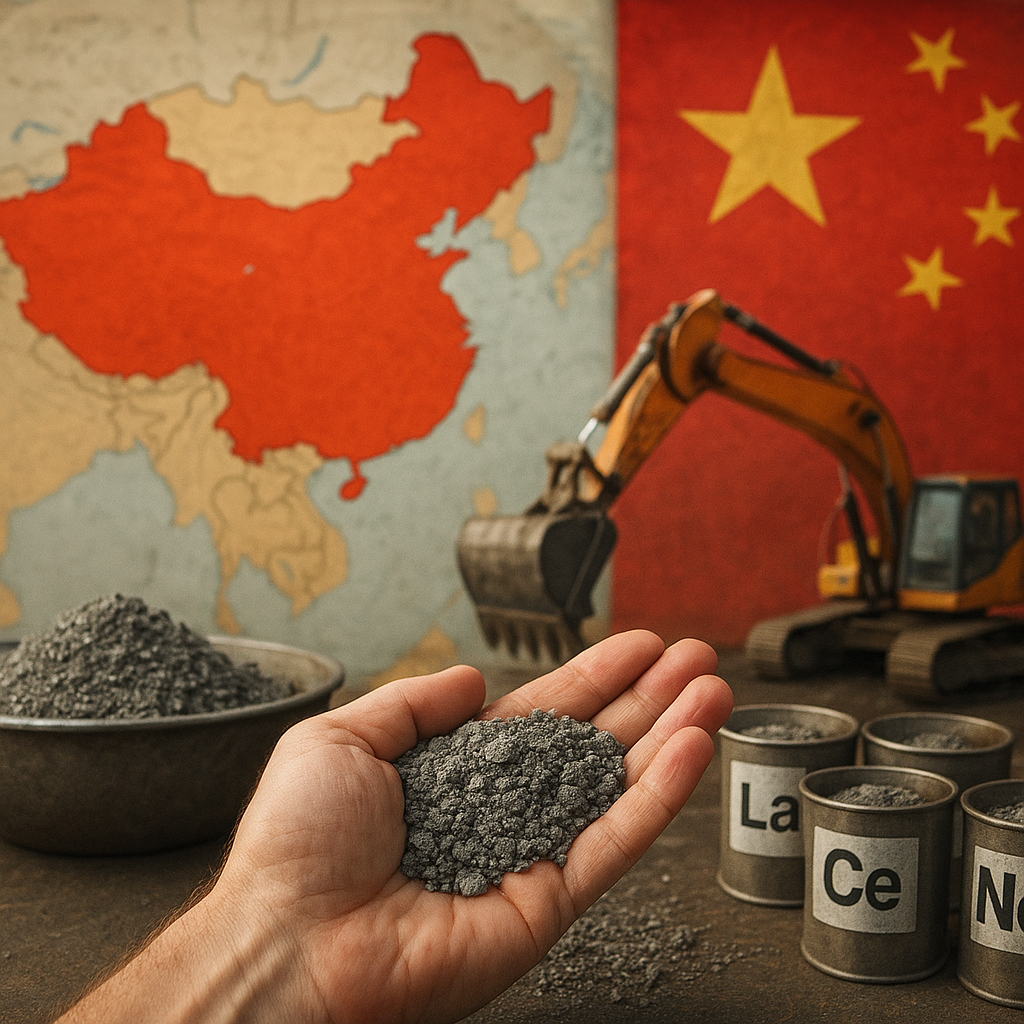
The global transition to advanced electronics, renewable energy and next-generation defense systems has made minerals known as rare earths indispensable. While these elements are not especially scarce in the Earth’s crust, the value chain that turns ore into high-purity metals and components is highly concentrated. This article examines how China built and maintained dominance in rare earth processing, the economic and strategic consequences for other nations, and the policy choices available to reduce vulnerability while promoting a resilient, sustainable supply of these critical minerals.
Origins of dominance: how China gained an edge
Understanding the present requires a short tour through the history of the rare earth industry. Deposits containing lanthanides and related elements were discovered worldwide over the 20th century, but extracting commercially viable concentrates and then separating the chemically similar lanthanides into usable products proved technically demanding and capital intensive. China’s ascent was not inevitable; it was the result of deliberate policy choices, geological fortune and industrial persistence.
Several factors explain China’s leadership:
- Concentration of reserves and early investment. China hosts large deposits (for example, in Inner Mongolia and southern provinces) and in past decades invested heavily in mining and initial beneficiation.
- Massive expansion of chemical separation capacity. The most difficult part — producing high-purity separated rare earth oxides and metals — requires complex hydrometallurgical and solvent-extraction processes. Through coordinated industrial policy and reinvestment of profits, Chinese firms built scale and expertise in these operations.
- Cost advantages that included lower labor costs, access to affordable energy and, historically, more lenient environmental enforcement. The processing of rare earth ores generates hazardous waste and radioactive by-products; China paid an environmental and social price for rapid industrialization that competitors often avoided.
- Downstream integration. China did not only refine ores; it moved into manufacturing permanent magnets, polishing powders, catalysts and other value-added goods, capturing more economic value along the chain.
The result: while many countries may host raw deposits, around the turn of the 21st century China became the dominant hub for converting raw materials into usable components. Estimates commonly place China’s share of global rare earth processing capacity at well over 80 percent at various points in the last two decades, a figure that underpins both economic leverage and strategic concern in importing countries.
Mechanisms of leverage: how processing dominance translates into influence
Possession of processing capacity confers several forms of power over international markets.
Market pricing and supply control
Because the bulk of high-purity separation and metal production occurred inside China, it could influence global prices by adjusting export volumes, domestic consumption, or pricing strategies. Export restrictions and quotas implemented in the past highlighted how processing-country policies can ripple globally when alternative processing remains limited.
Strategic chokepoints
The processing stage is a natural chokepoint: mining produces concentrates often destined for overseas refiners; if those refiners are concentrated in one country, supply disruptions — whether from regulatory changes, diplomatic disputes or industrial accidents — can stall entire industries. Sectors that rely on permanent magnets (electric vehicle motors, wind turbines, precision electronics) are vulnerable to such interruptions.
Technological dependence
Technology companies and defense contractors need consistent and predictable access to specific elements such as neodymium, praseodymium, dysprosium and terbium. Long-term supply uncertainty can shift corporate location decisions, R&D priorities and procurement strategies.
Geopolitical signaling
At the geopolitical level, control of critical minerals processing acts as a lever in trade negotiations and strategic dialogues. Demonstrations of willingness to restrict supplies, even temporarily, can prompt other countries to accelerate diversification and stockpiling.
Environmental and social costs of processing concentration
The chemistry involved in rare earth separation produces acidic effluents, tailings with low-level radioactivity, and significant volumes of contaminated water and soil when not managed properly. Historically, much of this environmental burden occurred in production areas within China, generating local health impacts and ecological degradation.
Over the past decade China has tightened environmental regulations, causing some consolidation and modernization of plants, but cleanup and remediation remain costly and technically challenging. This environmental dimension is central to why many Western firms find it difficult to recreate processing capacity at home: complying with higher environmental standards raises production costs and forces investments in pollution control technologies that offset the price advantage previously enjoyed by large Chinese operators.
Global implications: industry, security and climate goals
The concentration of processing capacity in one country has wide-ranging implications that extend beyond commerce.
- Industrial policy and supply security: Governments and firms must weigh the costs of onshoring or nearshoring processing capabilities against the economic benefits of open trade. For industries like electronics and automotive manufacturing, supply chain resilience increasingly factors into long-term planning.
- Defense readiness: Military platforms often require specialized materials; policymakers worry that reliance on foreign processors could jeopardize access to critical components during crises.
- Energy transition: The global drive toward clean energy — wind turbines, electric vehicles, efficient motors — depends on reliable supplies of certain rare earths used in high-strength permanent magnets. Supply bottlenecks could slow deployment or raise costs, complicating decarbonization pathways.
- Trade and diplomatic tensions: Past episodes of trade friction over rare earths highlighted how resource interdependence can be weaponized or perceived as such, feeding broader strategic competition between states.
Responses and alternatives: how others are reacting
In response to concentration risks, states and firms are pursuing multiple strategies simultaneously. No single option eliminates vulnerability; rather, a portfolio approach can reduce risk while balancing economic, environmental and strategic objectives.
1. Diversification of supply
Countries with known deposits are attempting to develop both mining and domestic processing. Examples include efforts to restart or expand domestic rare earth value chains in North America, Australia, India and parts of Europe. These projects seek to move beyond mining to build separation and metal-making facilities.
2. Strategic partnerships and alliances
Multilateral cooperation can spread the cost and risks of establishing new processing capacity. Joint ventures, technology-sharing agreements and coordinated demand forecasting among allied states can make investments more attractive to private capital.
3. Investment in environmentally compliant processing
New processing plants in non-Chinese jurisdictions must meet stricter environmental standards. That raises costs, but also offers an opportunity to adopt cleaner hydrometallurgical processes, advanced wastewater treatment and better waste management practices that reduce long-term liabilities.
4. Recycling and circular economy approaches
Recovering rare earths from end-of-life products — magnets, electronics and specialized industrial equipment — can complement primary supply. While recycling technologies are still developing and face collection and economics challenges, scaling this approach can reduce dependence on primary processing. Governments are increasingly funding research and pilot programs in magnet recycling and urban mining.
5. Substitution and design changes
Research into alternatives to rare earth elements for certain applications, or designs that use smaller quantities, can reduce exposure to supply shocks. However, for many high-performance applications, no ready substitutes exist that match the efficiency and compactness provided by rare-earth-based magnets.
Policy levers and business decisions
Policymakers and industry leaders must consider a mixture of short- and long-term measures.
- Financial incentives such as tax credits, grants or low-interest loans to build processing plants and support R&D.
- Regulatory frameworks that fast-track permits for sustainable facilities while ensuring high environmental protections.
- Public procurement policies that favor domestically processed or allied-sourced materials for critical infrastructure and defense.
- Support for workforce development and advanced metallurgy programs to build the technical skills required for separation chemistry and materials engineering.
- International diplomacy aimed at creating stable market rules, reducing the likelihood of abrupt export controls and fostering transparency in trade flows.
Technical challenges in building alternative capacity
Establishing competitive processing outside existing hubs is not simply a matter of financing. The technical hurdles include mastering solvent extraction sequences, managing radioactive waste streams, achieving high recovery rates, and producing consistent high-purity products required by downstream manufacturers. These are non-trivial challenges that require time, targeted investment and often decades of operational experience.
Private firms and governments can accelerate progress by funding pilot plants, sharing best practices, and creating standardized product specifications so buyers trust new suppliers. Collaboration with universities and national laboratories can also shorten learning curves and commercialize cleaner processing technologies.
Business strategies for companies operating in this space
Firms exposed to rare earth supply risks pursue a mix of procurement, production and innovation strategies:
- Diversified sourcing contracts and longer-term off-take agreements to secure access to refined materials.
- Investment in upstream stakes — from junior miners to processing startups — to capture more of the value chain.
- Partnerships with governments to co-invest in strategic facilities, often coupled with offtake guarantees.
- R&D investment into recycling, substitution and product redesign to reduce material intensity.
Looking ahead: scenarios and strategic choices
Several plausible futures exist depending on policy choices and market dynamics. In one scenario, diversification and investment lead to a more distributed processing industry with stronger environmental controls, though higher unit costs. In another, slow progress keeps the status quo, preserving current efficiencies but maintaining strategic vulnerabilities. A third, less desirable scenario would see sporadic disruptions driving protectionism and market volatility, raising costs for consumers and slowing the clean energy transition.
Recognizing that no country can instantly replicate decades of accumulated capability, the most pragmatic approaches blend realistic timelines with aggressive investment, international cooperation and technological innovation. For many countries, the question is less whether to reduce dependence on a single supplier than how to do so in a way that balances supply chain resilience, economic competitiveness and environmental sustainability.
Key takeaways for decision-makers
Policymakers and industry leaders should prioritize:
- Coordinated investments in alternative processing and recycling capacity.
- Strengthening alliances for critical mineral security and transparent trade norms.
- Improving environmental standards to ensure new capacity is sustainable and publicly acceptable.
- Supporting innovation in materials science to reduce reliance on a narrow set of elements where possible.
The strategic importance of rare earths to modern economies ensures that processing capacity will remain a focal point of industrial policy and geopolitical competition. Whether the global system evolves toward greater diversification and sustainability or remains concentrated will depend on choices made by governments, companies and researchers in the coming years. Addressing this challenge requires sustained commitment, technical skill and international cooperation if markets are to deliver secure supplies without compromising environmental and social objectives.
